For the Record


White House bans four journalists from covering Trump-Kim dinner because of shouted questions
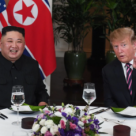
Strenuous Objections:


The White House "abruptly banned" reporters affiliated with the Associated Press, Bloomberg News, the Los Angeles Times and Reuters from covering President Trump's first dinner with North Korean Supreme Leader Kim Jong Un at the bilaterial summit in Hanoi "after some of them shouted questions at the leaders during their earlier meetings." Although Press Secretary Sarah Huckabee Sanders initially moved to restrict access to all print reporters, print pooler Vivan Salama of The Wall Street Journal was allowed to remain at the dinner. The decision immediately was condemned by White House Correspondents' Association President Olivier Knox, AP spokesperson Lauren Easton and Los Angeles Times Executive Editor Norman Pearlstine.


Why I’m placing my bets on the American Journalism Project

"Meaningful Grants":


Elizabeth Green of Chalkbeat and John Thornton of Austin Ventures have co-founded the American Journalism Project, a venture philanthropy foundation that will disburse "meaningful grants to the most promising local news institutions, both those that are already emerging and some that don’t yet exist." The organization has raised $42 million of its $50 million starting goal from a variety of sources, including the Knight Foundation, Craig Newmark Philanthropies, Laurene Powell Jobs's Emerson Collective and the Facebook Journalism Project.

New York Media Ends Sales Process

Not For Sale:


Following months of speculation, New York magazine parent company New York Media "has decided not to move ahead with a sale after reviewing its strategic options." The company currently is owned by the heirs of investment banker Bruce Wasserstein, including CEO Pam Wasserstein.

Everybody Makes Podcasts. Can Anyone Make Them Profitable?

Niche Audiences:


Although popular podcasts have begun to "attract audiences rivaling those of cable-TV shows," most programs reach fewer than 130 people and fail to attain profitability. Despite this disparity, "newer podcasters are paying for studio time, upgrading equipment, and hiring artists to design logos that stand out in Apple’s podcast app." Producer Gina Delvac said: "You have to have that professional gloss to get any amount of attention."

The Morning Call’s journalists are starting a union: ‘We want a voice’ in newsroom decisions, they say

"A Better Newspaper":


Thirty-eight of 48 eligible employees at the Allentown, Pa.-based Morning Call announced Monday that they intend to unionize. "We know unionizing doesn't magically solve the problems with the news industry,” reporter Michelle Merlin said. "But it does give us our best shot at controlling and predicting our working conditions."

At Deadspin, can the cool kids of the sports Internet become its moral authority?

"Call Out Hypocrisy":


The sports blog Deadspin has evolved from a Gawker-owned "irreverent boys club" into an "unabashedly ­progressive voice in sports and beyond," publishing notable pieces on "barriers of entry in an industry dominated by white men" and "important corrections when sportswriters fumble coverage of domestic violence." According to Editor-in-Chief Megan Greenwell, "There is lots of coverage right now that still speaks to sports as the fun stuff away from the rest of the world. Deadspin never does that and will never do that."


‘Safety in numbers’: Philippine fact-checkers team up to debunk election misinformation

"Safety in Numbers":


Following the recent indictment of Filipina journalist Maria Ressa on cyber libel charges, 11 news organizations and three universities have teamed up to launch Tsek.ph, a fact-checking site oriented toward the Philippines' May midterm elections. "Because of Tsek.ph and other consortiums of journalists and media organizations that have resulted from [the] government’s hostile attitudes toward Philippine media, they are responding more courageously and more openly and more publicly to attacks on the media," said Yvonne Chua, co-founder of Vera Files, a contributing organization.

How Esquire lost the Bryan Singer story

"We'll Get There":


Corroborated by months of research, an exposé of director Bryan Singer's alleged predatory behavior by Esquire staffers Alex French and Maximillian Potter was published by The Atlantic in January, after Esquire declined to publish the story. "Here’s what I can say," Potter told CJR. "I genuinely, wholeheartedly believe, if I got hit by a bus tomorrow, and had to talk to the Big Guy, and he asked me, 'Hey, do you know why they killed this piece?,' I’d say, 'No.'"