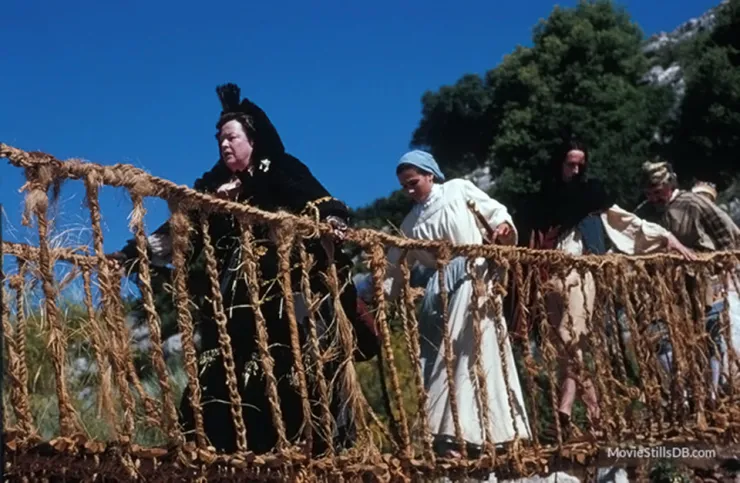
When a Pulitzer Prize jury recommended Thornton Wilder’s The Bridge of San Luis Rey for the 1928 Novel prize, it ignored the rules. The word “wholesome” in the Novel prize definition had troubled juries (and many authors) for a decade, but it was finally gone by 1928. Yet the definition still required that the winning novel reflect the “atmosphere of American life, and the highest standard of American manners and manhood.” Set in Peru, Wilder’s book had nothing to do with life and manhood in the United States.
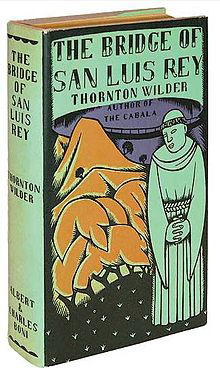
The Bridge of San Luis Rey, Wilder’s second novel, tells the story of five people who plunge to death when the Incan rope bridge they are walking on collapses. Exploring the events that led them to be on the bridge at that moment inspires a philosophical examination of chance and inexplicable tragedy.
A 31-year-old Wisconsin native, Thornton Wilder was teaching French at a Lawrenceville, N.J., prep school when he wrote the book. Its success allowed him to resign so that he could write and lecture full time. He used his royalties to build a house in Hamden, Conn., where he lived with his parents and sister. The house was nicknamed “The House The Bridge Built.”The book was a bestseller in 1927. By the time it was awarded the prize, it had been through 17 printings and sold close to 300,000 copies.
The Pulitzer jury was unanimous in recommending The Bridge of San Luis Rey for the prize. Attempting to head off possible problems, jury chair Richard Burton of Columbia University praised the moral value of the book in his report to the advisory board.
“This piece of fiction,” he wrote, ‘is not only an admirable example of literary skill in the art of fiction, but also possesses a philosophic import and a spiritual elevation which greatly increases its literary value.”
Another juror, Robert M. Lovett of The New Republic, acknowledged that it would be “mere subterfuge to say that it has anything to do with the highest standard of American manners and manhood.” He named other books that year but deemed them of “less literary merit."
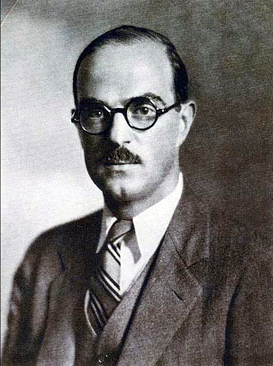
Thornton Wilder
Fackenthal sent Wilder a confidential note advising him that he had won the 1928 prize. A few days later he received a note from a dismayed Wilder claiming that “in the confusion of examination week and in the sheer pleasure of the news I must have stowed the letter away so carefully that I cannot find it.”
Thornton Wilder went on to win two more Pulitzer Prizes in Drama, for Our Town in 1938 and The Skin of Our Teeth in 1943.
The Bridge of San Luis Rey continues to be popular and influential. It has never been out of print since it was published in 1927. The novel is often referenced in situations that involve overwhelming human loss. Author John Hersey sited it as an influence on his New Yorker essay and subsequent book, Hiroshima, about the attack on that city during World War II. And ten days after the 9/11 attacks in New York City, Prime Minister Tony Blair gave a speech honoring British victims that he ended with the final lines of The Bridge of San Luis Rey:
But soon we will die, and all memories of those five will have left earth, and we ourselves shall be loved for a while and forgotten. But the love will have been enough; all those impulses of love return to the love that made them. Even memory is not necessary for love. There is a land of the living and a land of the dead, and the bridge is love. The only survival, the only meaning.
Sources: Pulitzer Prize office files, The Pulitzer Prizes by John Hohenberg (New York: Columbia University Press, 1974), http://www.neabigread.org/books/thebridgeofsanluisrey/readers-guide/
http://www.theguardian.com/world/2001/sep/21/september11.usa11