Although early jury reports on the Pulitzer Prize in Poetry generally disclose little about the decisions, at least some do convey the range of books the juries liked.
Between 1928 and 1930, for example, the juries considered books by three African-American poets — Langston Hughes, James Weldon Johnson and Countee Cullen. Not until two decades later, however, did Gwendolyn Brooks become the first African-American poet to win the prize.
Youth was sometimes served. The 1935 jury considered the 25-year-old James Agee and wound up recommending the work of Audrey Wuerdemann, a 23-year-old experimental poet. Agee won the Fiction prize 23 years later for A Death in the Family.
Robert Frost and Edward Arlington Robinson were the two dominant American poets of this time. Even when a jury found their new books worthy, these were often set aside to avoid the complaint that the field of Pulitzer-eligible poets was thin. Nevertheless, Frost won in 1924, ’31, ’37 and ‘43, Robinson in 1922, ’25 and ’28.
Throughout these years, the Poetry jury chair, and thus the hand behind the sample of reports excerpted below, was Wilbur L. Cross, a Yale English professor who also served as Connecticut’s governor during the Great Depression.
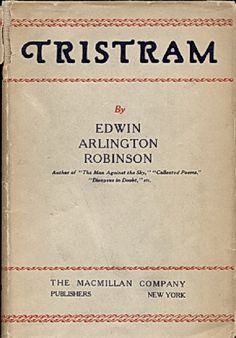
Robinson's Tristram
1928
Edward Arlington Robinson, Tristram
There were submitted for the Pulitzer Poetry Prize this year forty-four volumes. Though there is nothing unusual in this number, the quality of the verse is, on the whole, better than it has been in the last few years. Any one of the following ten volumes would be worthy of the Prize:
Tristram by Edwin Arlington Robinson
The Possessed by William Rose Benét
The King’s Henchman by Edna St. Vincent Millay
The Bright Doom by John Hall Wheelock
Little Henrietta by Lizette Reese
The Evergreen Tree by Kathleen Millay
In Towns and Little Towns by Leonard Feeney
Fine Clothes to the Jew by Langston Hughes
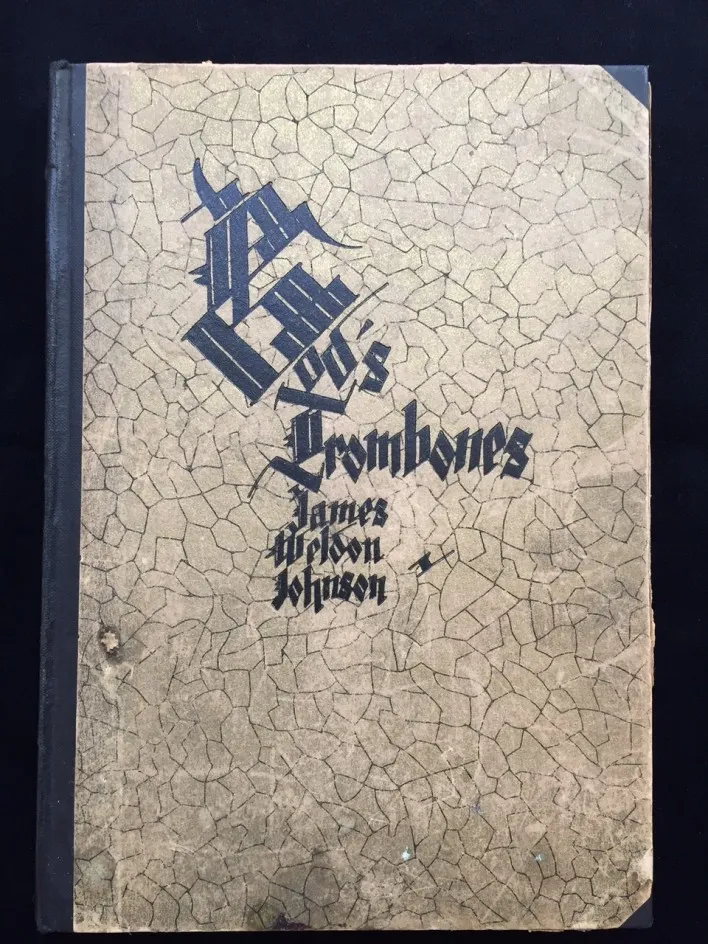
God’s Trombone [sic] by James Weldon Johnson
Upper Night by Scudder Middleton
The members of the committee, however, regard Edwin Arlington Robinson’s Tristram as the outstanding volume. The decision is unanimous.
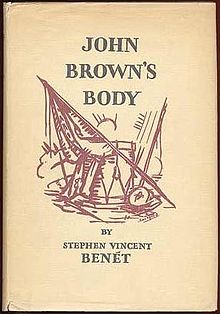
Benét's John Brown's Body
1929
Stephen Vincent Benét, John Brown’s Body
The competition is notable in that it includes Robert Frost, Edwin Arlington Robinson, and Edna St. Vincent Millay. The Committee sets Frost aside, on the ground that the prize has already been awarded to him for rather better work. Robinson’s volume is mainly a selection from some of his most beautiful sonnets, which have already been published. Miss Millay’s volume, though excellent, is hardly on a par with her best work, for which she received the Pulitzer Prize a few years ago.
After due consideration, each member of the Committee has come to the conclusion that the prize should go to Stephen Vincent Benét for John Brown’s Body, published by Doubleday, Doran. This is a poem of wide scope, with very few weaknesses in structure. The verse and theme are of great variety, running from description and character sketches to lyrics of very great beauty. It is a pleasure to recommend, without any dissent in the Jury, this poem for the Pulitzer Prize.
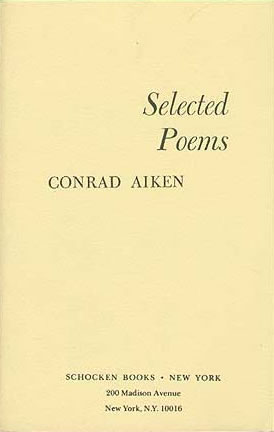
Aiken's Selected Poems
1930
Conrad Aiken, Selected Poems
Had not Edward Arlington Robinson already received the prize three times we might have recommended this year his new volume, entitled Cavender’s House, but we concluded that we had better eliminate this volume, or rather use it as a standard for the judgment of the others.
After a good deal of consideration we set aside with much reluctance all but the four following volumes: Selected Poems of Conrad Aiken; Dear Judas, by Robinson Jeffers; The Black Christ, by Countee Cullen; Phidias, by J.G. Howard. From these four we chose for recommendation to your committee, Selected Poems of Conrad Aiken, published by Charles Scribner’s Sons. This volume, though uneven in quality, contains some very fine poems, whether considered for their thought or for their technique. The decision of the Jury is unanimous.
Wuerdemann's Bright Ambush
1935
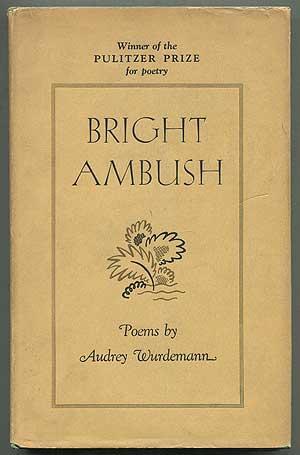
Audrey Wuerdemann, Bright Ambush
We all agreed that Edwin Arlington Robinson’s Amaranth was the best volume, but we decided not to recommend the award to Mr. Robinson because he has already received the award three times.
We debated the question of Edna St. Vincent Millay’s Wine from These Grapes, which contains some poems which made a strong appeal to us. Finally we decided to pass by Miss Millay because she has also received the prize for verse better than most of the poems in the present volume. Moreover, the volume which we finally selected to place first on our list is fully equal, taken whole, to Wine from These Grapes.
After eliminating Robinson and Miss Millay, we unanimously agreed to give the first place to Bright Ambush by Audrey Wurdemann, a young woman only twenty-three years of age. Her work is still experimental, but she has acquired a beautiful technique on a variety of themes. Some of the other young poets, like James Agee in Permit Me Voyage, have single poems as good as hers but not so uniformly excellent. We think the prize should go to Miss Wurdemann.