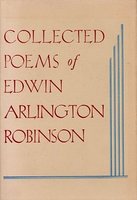
Edwin Arlington Robinson's Collected Poems.
The first Pulitzer Prize poetry jury met in New Haven on Feb. 11, 1922, and chose Edward Arlington Robinson’s Collected Poems for the prize. Robinson’s two competitors were Amy Lowell and Edna St. Vincent Millay.
Harriet Monroe, the influential editor of Poetry: A Magazine of Verse, wasn’t crazy about the choice, appearing to favor Millay, but her real beef was with the makeup of the jury that selected Robinson.
The award came five years after the first Pulitzers were awarded in other categories. Joseph Pulitzer’s will mentioned no poetry prize. In 1918-19, Columbia University, home of the new Pulitzer Prizes, also managed the Poetry Society of America’s $500 annual award. After the society discontinued its prize in 1920, the Pulitzer Advisory Board initiated an annual prize for poetry, with a monetary award of $1,000.
The chair of the three-member poetry jury was Wilbur L. Cross, a Yale University literature professor. He went on to run poetry juries for a quarter century, including his two terms as Connecticut’s governor during the Great Depression.
The 1922 jury considered 28 books. Cross and another juror favored Robinson’s Collected Poems. The third juror put Lowell first, followed by Millay and Robinson. In Cross’s report, he cited this juror’s “reluctant consent” for Robinson and followed up with an assurance that the recommendation was wholehearted.
Here is a well-known Robinson poem, which appeared in the Collected:
The Mill
The miller’s wife had waited long,
The tea was cold, the fire was dead;
And there might yet be nothing wrong
In how he went and what he said:
“There are no millers any more,”
Was all that she had heard him say;
And he had lingered at the door
So long that it seemed yesterday.Sick with a fear that had no form
She knew that she was there at last;
And in the mill there was a warm
And mealy fragrance of the past.
What else there was would only seem
To say again what he had meant;
And what was hanging from a beam
Would not have heeded where she went.And if she thought it followed her,
She may have reasoned in the dark
That one way of the few there were
Would hide her and would leave no mark:
Black water, smooth above the weir
Like starry velvet in the night,
Though ruffled once, would soon appear
The same as ever to the sight.
Robinson won two more Pulitzer Prizes for Poetry during the 1920s and was a contender several other times.
Monroe, the Poetry editor, editorialized at least twice about the beginnings of the poetry prize. Her first commentary questioned why Joseph Pulitzer had excluded poetry from the prizes in his will. The second complained mildly about the jury’s 1922 choice and asserted that only poets were really qualified to judge the prize.
Here is Monroe’s 1922 assessment:
A NEW PULITZER PRIZE
The award of a Pulitzer Prize of one thousand dollars to the Collected Poems of Edwin Arlington Robinson is a most agreeable surprise, as this is the first Pulitzer Prize ever granted to a poet.
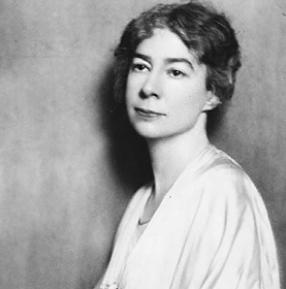
Sara Teasdale
Four years ago, when the Poetry Society of America gave its first annual five hundred dollars to Sara Teasdale's Love Songs, the award, being made in conjunction with the Pulitzer prizes, was falsely attributed to the same origin. An editorial in Poetry for August, 1918, called attention, as follows, to the omission of poetry from the will:
“Mr. Pulitzer's will, creating a school of journalism at Columbia University, with annual thousand-dollar prizes for a novel, an editorial, a book of science, etc., omitted poetry. Probably he never thought of it — nobody was thinking of poetry during the period when his will was drawn. Of course the omission of poetry from any prize-list which included at least two literary products, the novel and the play, was preposterous; and we may hope that the present donor, or other donors, may permanently atone for the slight with an annual prize as large as the other prizes.
“The poem of each year — or book of poems — must be, we submit, at least as prize-worthy as the editorial of the year. It may be, of course, of a value immeasurably greater, for, by the favor of the gods, it may be a masterpiece, an enduring work of genius — a distinction which could scarcely be claimed for any editorial.”
When this year's awards were announced, with Mr. Robinson's book among them, the editor wrote to Columbia University a letter inquiring about the improved status of poets; and received the following answer:
“To the Editor: In reply to your letter of May 24th I beg to say that the poetry prize to which you refer was established by the Advisory Board of the School of Journalism at their meeting in May, 1921, at which meeting it was on motion unanimously 'Resolved, That a prize of One thousand dollars be established for the best volume of verse published during the year by an American author.’
“The Board at the same time discontinued another prize for which there had been no competition, which action set free sufficient funds to establish the poetry prize. Frank D. Fackenthal*.”
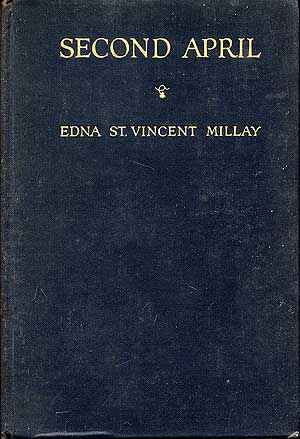
Edna St. Vincent Millay's Second April
The initial award is of course worthy of all praise, though the committee may have regretted that they could not honor also Miss Millay's Second April. Indeed, the year 1921, presenting two such books, was singularly rich. The three members of the poetry jury were Wilbur L. Cross, Richard Burton and Ferris Greenslet. Though we cannot criticize the verdict in this case, we must repeat once more our plea that all juries should be strictly professional, and that poets alone have the right and the authority to award honors in their art. H. M.
*Frank Fackenthal, a secretary to Nicholas Murray Butler, president of Columbia, administered the Pulitzer Prizes for many years.
Sources: Pulitzer jury files; Harriet Monroe, Poetry: A Magazine of Verse, Vol XX, April-September, 1922.