Finalist: Alex Kingsbury of The New York Times
Nominated Work
Over the past five years, incidents of political violence in the United States by right-wing extremists have soared. Few experts who track this type of violence believe things will get better anytime soon without concerted action. Domestic extremism is actually likely to worsen. The attack on Paul Pelosi, the husband of the speaker of the House of Representatives, was only the latest episode, and federal officials warn that the threat of violence could continue to escalate after the midterm elections.
The embrace of conspiratorial and violent ideology and rhetoric by many Republican politicians during and after the Trump presidency, anti-government anger related to the pandemic, disinformation, cultural polarization, the ubiquity of guns and radicalized internet culture have all led to the current moment, and none of those trends are in retreat. Donald Trump was the first American president to rouse an armed mob that stormed the Capitol and threatened lawmakers. Taken together, these factors form a social scaffolding that allows for the kind of endemic political violence that can undo a democracy. Ours would not be the first.
Yet the nation is not powerless to stop a slide toward deadly chaos. If institutions and individuals do more to make it unacceptable in American public life, organized violence in the service of political objectives can still be pushed to the fringes. When a faction of one of the country’s two main political parties embraces extremism, that makes thwarting it both more difficult and more necessary. A well-functioning democracy demands it.
The legal tools to do so are already available and in many cases are written into state constitutions, in laws prohibiting private paramilitary activity. “I fear that the country is entering a phase of history with more organized domestic civil violence than we’ve seen in 100 years,” said Philip Zelikow, the former executive director of the 9/11 Commission, who pioneered legal strategies to go after violent extremists earlier in his career. “We have done it in the past and can do so again.”
As the range of violence in recent years shows, the scourge of extremism in the United States is evident across the political spectrum. But the threat to the current order comes disproportionately from the right.
Of the more than 440 extremism-related murders committed in the past decade, more than 75 percent were committed by right-wing extremists, white supremacists or anti-government extremists. The remaining quarter stemmed from a range of other motivations, according to a study by the Anti-Defamation League. There were 29 extremist-related homicides last year: 26 committed by right-wing extremists, two by Black nationalists and one by an Islamic extremist. The Department of Homeland Security has warned again and again that domestic extremism motivated by white supremacist and other right-wing ideologies is the country’s top terrorism threat.
Some of the most spectacular recent episodes of political terrorism are etched into the nation’s collective memory: mass shootings in El Paso and Buffalo, bomb and arson attacks against mosques and synagogues, a plot by a paramilitary group to kidnap Michigan’s governor, the storming of the Capitol on Jan. 6.
There have been attacks on conservatives, too: In June, a man was arrested outside Brett Kavanaugh’s home after he said he wanted to kill the justice, and in 2017, Representative Steve Scalise was shot at a baseball field. But the number and nature of the episodes aren’t comparable, and no leading figures in the Democratic Party condone, mock or encourage their supporters to violence in ways that are common from politicians on the right and their supporters in the conservative media.
In addition to these high-profile events, the threat of violence has begun to have a corrosive effect on many aspects of public life: the hounding of election workers until they are forced into hiding, harassment of school board officials, threats to judges, armed demonstrations at multiple statehouses, attacks on abortion clinics and anti-abortion pregnancy centers, bomb threats against hospitals that offer care to transgender children, assaults on flight attendants who try to enforce Covid rules and the armed intimidation of librarians over the books and ideas they choose to share.
Meanwhile, threats against members of Congress are more than 10 times as numerous as they were just five years ago. “I wouldn’t be surprised if a senator or House member were killed,” Senator Susan Collins told The Times this fall.
Many — far too many — Americans now consider political violence not only acceptable but perhaps necessary. In an online survey of more than 7,200 adults, nearly a third of people answered that political violence is usually or always justified. The study, conducted by researchers at the University of California, Davis, and released in October, came to the alarming conclusion that “MAGA Republicans” (as opposed to those who identified themselves as traditional Republicans) “are more likely to hold extreme and racist beliefs, to endorse political violence, to see such violence as likely to occur and to predict that they will be armed under circumstances in which they consider political violence to be justified.”
Any violence suppresses participation in democratic decision making, and it can negate the decisions that are made. “The damage that this violence itself and the conspiracies driving it are causing to our democracy are already substantial and are likely to produce significant democratic decline if not arrested soon,” Rachel Kleinfeld of the Carnegie Endowment for International Peace told the Jan. 6 committee.
There are four interrelated trends that the country needs to address: the impunity of organized paramilitary groups, the presence of extremists in law enforcement and the military, the global spread of extremist ideas and the growing number of G.O.P. politicians who are using the threat of political violence not just to intimidate their opponents on the left but also to wrest control of the party from those Republicans who are committed to democratic norms.
Over the coming weeks, relying on extensive reporting and deep analysis, this series plans to explore solutions, such as identifying members of violent paramilitary groups who may work in law enforcement or the military, stemming the money and technology that fuel these movements and describing how the Republican Party can fight its worst, violent fringes.
Preserving the health of our democracy is as much a matter of preventive care as it is the application of a tourniquet. A promising place to start combating political violence is with extremist paramilitary groups.
While the majority of such violence in the United States comes at the hands of people not strictly affiliated with these groups — the man who is accused of attacking Mr. Pelosi, for example, echoed their hatred of Nancy Pelosi, but it’s not clear whether the man had links to any of them — they are nonetheless often the vanguard of violent episodes, such as the Jan. 6 attack on the Capitol, and they are active in spreading their brands of ideological extremism online.
They go by many names: the Oath Keepers, the Proud Boys, the Boogaloo Bois, the Three Percenters, the Wolverine Watchmen. Some fancy themselves militias, but they aren’t, according to the law. These groups have been around in their modern incarnations since the end of the Vietnam War, and their popularity has waxed and waned. In fact, political violence is as old as the nation itself; right-wing frustrations with democratic outcomes have birthed militia movements throughout American history. Most notably, the Ku Klux Klan has spent over a century and a half, from Reconstruction to the present day, terrorizing Black Americans and others in service of political ends.
Today, levels of political violence are high and climbing. In 2020 the Center for Strategic and International Studies found that violence from all political ideologies reached its highest level since the group began collecting data in 1994. And extremist paramilitary groups have again become a common presence in American life, on college campuses, at public protests and at political rallies.
But it is unacceptable in a democracy for organized groups of men armed with military-style firearms and dressed in body armor to appear regularly at political rallies or to act as security for public officials and office seekers. Indeed, in nearly every state the subordination of the military to civil authorities is written explicitly into their constitutions.
“When private armies organize into military-style units that are neither responsible to, nor under the command of, the civil power of the state authorities, they may violate this constitutional command to the detriment of civil order,” concluded a report from the Institute for Constitutional Advocacy and Protection at Georgetown Law, which compiled a state-by-state compendium of laws banning so-called militias.
There is no federal anti-paramilitary law, though Congress should consider one. States, however, do have legal instruments to deal with these extremist groups, even if they rarely show the will to use them. When they do, these laws are effective.
In 1979 in Seadrift, Texas, the tension between white fishermen and newly arrived refugees from Vietnam who had begun to work the same waters turned deadly. A Vietnamese American fisherman shot and killed a white fisherman on the town dock in a dispute over fishing that, by 1981, had grown into a campaign of boat burnings, cross burnings and death threats from a group called the Knights of the Ku Klux Klan. One Klan flier posted in Seadrift at the time echoed the language of so-called great replacement theory: “After years and years of whites fishing along the Texas coast, the government has brought in Vietnamese replacements for them. White people are being replaced by nonwhites all over the United States.”
White fishermen, wearing hoods and holding AR-15 rifles, would cruise the waterfront to intimidate Vietnamese American fishermen. Kirk Wallace Johnson, in his new book, “The Fishermen and the Dragon,” describes an incident in which the white fishermen dangled an effigy from an outrigger. In 1981, the Vietnamese Fishermen’s Association turned to lawyers, including Morris Dees of the Southern Poverty Law Center and Mr. Zelikow. They brought a case against the Klan using an anti-paramilitary statute that was on the books in Texas.
It was the first time in more than a century that the law had been used, Mr. Zelikow said, and it was the premise for the request to a judge to shut down the Klan campaign and its paramilitary training facilities. The lawyers developed a standard to define the illegal activity — one that distinguished hunters from paramilitary extremists. Illegal paramilitaries had, as an expert who testified put it, “command structure, training and discipline so as to function as a combat or combat support unit.”
The judge found in their favor and shut down the Klan. The strategy was used again in the mid-1980s by the Southern Poverty Law Center to shutter another Klan organization in North Carolina, which also explicitly outlaws paramilitary groups.
“We prohibit the existence of private military groups because they are a danger to society and to democracy. Unless we want to accept their presence and proliferation, we need to be willing to use the legal tools that we have to disrupt their activities,” Mr. Zelikow said in an interview.
In 2017, Mr. Zelikow, who lives in Charlottesville, Va., wrote about this legal strategy after the Unite the Right rally. He assisted another team of lawyers, led by a former federal prosecutor, Mary McCord, who soon after used a similar approach to bar nearly two dozen extremist paramilitary groups and their leaders from returning to Charlottesville on the first anniversary of the rally. And last month, Ms. McCord led a successful effort to get a court injunction against a paramilitary organization in New Mexico.
Maintaining a monopoly on force is, after all, a basic function of any government, and the Supreme Court upheld the legality of anti-paramilitary laws in 1886. Still, some legal scholars worry that the current court may decide that anti-paramilitary statutes run afoul of the Constitution’s guarantee of the right of free association and free speech. The current ultraconservative Supreme Court’s expansive view of the Second Amendment may also one day lead it to overturn anti-paramilitary laws, though the court did say in its 2008 decision on the individual right to bear arms that the amendment didn’t prevent states from outlawing paramilitary groups.
These laws are some of the best available tools the nation has to stop political violence without infringing on First Amendment freedoms, they have been effectively used in both liberal and conservative states, and they have overcome political opposition.
In Idaho, for example, critics of the state’s ban on private paramilitary activity called it an infringement on rights and freedoms. The state’s House of Representatives overwhelmingly passed a bill in February to repeal it. Then, in June, police arrested dozens of masked members of the Patriot Front white supremacist paramilitary group who, officials said, were in the back of a moving truck en route to disrupt an L.G.B.T.Q. Pride event.
Confronted with the immediate possibility of violence, Gov. Brad Little, a Republican who initially backed the effort to repeal the anti-militia law, spoke out forcefully against the threat of violence. “Intimidation, scare tactics and violence has no place in our great state,” he said. “All Americans should be able to peacefully express their constitutionally guaranteed right to free speech without the threat of violence. It is what has always set America apart from other nations.”
While the repeal bill passed the Idaho House, it died in the Senate and doesn’t appear likely to become law.
The power of the law to disrupt even the most prominent purveyors of extremism is on display in the trial of Stewart Rhodes and four other members of the Oath Keepers. In relation to their participation in the Jan. 6 attack, they are facing federal charges of seditious conspiracy, which carries a maximum sentence of 20 years in prison.
Mr. Rhodes’s defense is that the group is an educational group or a veterans’ assistance group, and he offers a variety of other excuses designed to show that they do not meet the legal standard of an unsanctioned paramilitary group. This standard and the laws against paramilitaries draw a clear line between repugnant ideology, which our democracy has always allowed, and politically motivated violence, which no democracy can survive.
The American public is gradually and alarmingly becoming inured to the presence of this violence, but it is the duty of our lawmakers to take this threat seriously and to use the tools they have to stop it.
On Oct. 12, 2018, a crowd of Proud Boys arrived at the Metropolitan Republican Club in Manhattan. They had come to the Upper East Side club from around the country for a speech by the group’s founder, Gavin McInnes. It was a high point for the Proud Boys — which until that point had been known best as an all-male right-wing street-fighting group — in their embrace by mainstream politics.
The Metropolitan Republican Club is an emblem of the Republican establishment. It was founded in 1902 by supporters of Theodore Roosevelt, and it’s where New York City Republicans such as Fiorello La Guardia and Rudy Giuliani announced their campaigns. But the presidency of Donald Trump whipped a faction of the Metropolitan Republican Club into “an ecstatic frenzy,” said John William Schiffbauer, a Republican consultant who used to work for the state G.O.P. on the second floor of the club.
The McInnes invitation was controversial, even before a group of Proud Boys left the building and violently confronted protesters who had gathered outside. Two of the Proud Boys were later convicted of attempted assault and riot and given four years in prison. The judge who sentenced them explained the relatively long prison term: “I know enough about history to know what happened in Europe in the ’30s when political street brawls were allowed to go ahead without any type of check from the criminal justice system,” he said. Seven others pleaded guilty in the episode.
And yet Republicans at the New York club have not distanced themselves from the Proud Boys. Soon after the incident, a candidate named Ian Reilly, who, former club members say, had a lead role in planning the speech, won the next club presidency. He did so in part by recruiting followers of far-right figures, such as Milo Yiannopoulos, to pack the club’s ranks at the last minute. A similar group of men repeated the strategy at the New York Young Republicans Club, filling it with far-right members, too.
Many moderate Republicans have quit the clubs in disgust. Looking back, Mr. Schiffbauer said, Oct. 12, 2018, was a “proto” Jan. 6.
In conflicts like this one — not all of them played out so publicly — there is a fight underway for the soul of the Republican Party. On one side are Mr. Trump and his followers, including extremist groups like the Proud Boys and the Oath Keepers. On the other side stand those in the party who remain committed to the principle that politics, even the most contentious politics, must operate within the constraints of peaceful democracy. It is vital that this pro-democracy faction win out over the extremists and push the fringes back to the fringes.
It has happened before. The Republican Party successfully drove the paranoid extremists of the John Birch Society out of public life in the 1960s. Party leaders could do so again for the current crop of conspiracy peddlers. Voters may do it for them, as they did in so many races in this year’s midterm elections. But this internal Republican Party struggle is important for reasons far greater than the tally in a win/loss column. A healthy democracy requires both political parties to be fully committed to the rule of law and not to entertain or even tacitly encourage violence or violent speech. A large faction of one party in our country fails that test, and that has consequences for all of us.
Extremist violence is the country’s top domestic terrorist threat, according to a three-year investigation by the Democratic staff members of the Senate Committee on Homeland Security and Governmental Affairs, which reported its findings last week. “Over the past two decades, acts of domestic terrorism have dramatically increased,” the committee said in its report. “National security agencies now identify domestic terrorism as the most persistent and lethal terrorist threat to the homeland. This increase in domestic terror attacks has been predominantly perpetrated by white supremacist and anti-government extremist individuals and groups.” While there have been recent episodes of violent left-wing extremism, for the past few years, political violence has come primarily from the right.
This year has been marked by several high-profile acts of political violence: an attempted break-in at an F.B.I. office in Ohio; the attack on Paul Pelosi, the husband of the speaker of the House; the mass shooting at a supermarket in Buffalo by a white supremacist; an armed threat against Justice Brett Kavanaugh; a foiled plan to attack a synagogue in New York.
It is impossible to fully untangle the relationship between conspiracy theories and violence. But what Americans do know should sound alarms: A survey this year found that some 18 million Americans believe that the 2020 election was stolen from Donald Trump and that force is justified to return him to power. Of those 18 million, eight million own guns, and one million either belong to a paramilitary group or know someone who does. That’s alarming because violent people who belong to communities, online or offline, where violence is widely accepted are more likely to act. A portion of the G.O.P. has become such a community.
The full extent of this violence is not well documented. The Senate committee’s damning report concluded that the federal government, specifically the F.B.I. and the Department of Homeland Security, has “failed to systematically track and report data on domestic terrorism as required by federal law, has not appropriately allocated its resources to match the current threat and has not aligned its definitions to make its investigations consistent and its actions proportional to the threat of domestic terrorism.” Those shortcomings need to be urgently remedied.
Beyond the obvious need for better data on extremist violence, preventing or stopping the spread of extremism is complicated, although there are some important, concrete steps that can be taken. This board has argued for stronger enforcement of state anti-militia laws, closer monitoring of extremists in law enforcement and the military, and better international cooperation to tackle this transnational issue. Social media companies need to develop new tools to keep extremist material off their platforms and adjust their algorithms so users aren’t exposed to ever more extreme content.
Yet one of the most effective ways to deter political violence is to make it unacceptable in public life. To do that, all political leaders have an important role to play. In a speech in September, President Biden did his part, when he identified the threat that the dominance of specifically “MAGA Republicans” poses not just to the Democratic Party but to the entire country. “They promote authoritarian leaders, and they fan the flames of political violence that are a threat to our personal rights, to the pursuit of justice, to the rule of law, to the very soul of this country,” Mr. Biden said.
A couple of months after that speech, Americans voted in midterm elections in which hundreds of “MAGA Republicans” who had enthusiastically spread extremist statements, lies and conspiracy theories ran for local, state and federal offices. Voters rejected many of them, and while that is encouraging, elections alone are not enough.
The campaign season was marked by numerous incidents in which many Republicans used speech that has been linked to violence. They depicted gay and transgender people as “groomers”; they helped spread the racist so-called great replacement theory that has inspired numerous mass shootings; they promoted the QAnon conspiracy theory, not to mention ubiquitous lies about fraud and the 2020 election, which led to the Jan. 6 attack.
Despite voters’ repudiation of many of his acolytes, Mr. Trump has announced his return to the campaign trail, a move that promises to dial up the enthusiasm of his most devoted adherents. They include, of course, members of the Proud Boys. During a debate during the 2020 campaign, Mr. Trump refused to disavow them or their movement and instead told them to “stand back and stand by.” And so they did until Jan. 6.
Mr. Trump’s reinstatement on Twitter means not only further proliferation of “degrading and dehumanizing discourse,” as Brian L. Ott, an author of “The Twitter Presidency: Donald J. Trump and the Politics of White Rage,” warned in these pages a few days ago, but also a greater likelihood of violence. As Mr. Ott explains: “Social media generally and Twitter specifically lend themselves to simple, urgent, unreflective and emotionally charged communication. When the message is one of intolerance and violence, the result is all but certain.”
Leaders in politics, law enforcement, the media and elsewhere have an obligation to do everything they can to remove from public life those who participate in or endorse political violence.
The onus falls on Republicans. While voters this month rejected some of the most extreme candidates, the party is still very much under the spell of Mr. Trump and his brand of authoritarianism. Two prominent Republicans who have been outspoken about right-wing extremism and baseless lies, Representatives Liz Cheney and Adam Kinzinger, have been driven out of office. Meanwhile, the spread of conspiracy theories that have already inspired violence continues unabated from politicians and conservative media.
Even if Mr. Trump doesn’t become the party’s nominee for president, the party and many of its supporters seem to have convinced themselves that the spread of extremism in service of their causes is not an urgent concern. Those who can influence the direction of the party — its voters and its biggest donors and supporters — must do everything they can to convince them otherwise. American democracy depends on it.
Democrats, too, have a role to play. They should not spend money on far-right fringe candidates in the primaries with the hopes of beating them in general elections. To do so only further pollutes the public square, even if it can lead to Democratic victories, as it apparently did this year. Rather than giving in to the temptation to tar the entire party with the actions of its worst members, Democrats should continue to find opportunities for bipartisanship whenever possible.
The alternative is allowing extremism to run rampant until the degradation of American politics is complete.
A scene in Roanoke, Texas, this summer gave a chilling preview of what that future might look like if violence from the right begets violence from the left, in a country deeply divided and with far more guns than people. A group of armed right-wing demonstrators turned up to protest a drag queen brunch only to find another group of people, dressed in black and holding military-style rifles. The second group called themselves the Elm Fork John Brown Gun Club and reportedly took it upon themselves to provide security for the event. The local police separated the two groups and made no arrests, but this kind of confrontation is not a sign of healthy democratic debate.
Political disagreement need not include the menace of violence. Americans, and their political leaders, have the ability to choose a different future.
On May 29, 2020, Steven Carrillo decided that his moment to take up arms against the government had arrived.
It was a Friday in downtown Oakland, Calif., and at 9:44 p.m., Mr. Carrillo opened the sliding door of a white van and, according to court documents, opened fire with a rifle at the Ronald V. Dellums Federal Building and courthouse. Officer David Patrick Underwood was killed inside a guard booth, and his partner was seriously injured. The van sped away into the night.
About a week later, Mr. Carrillo, who was tied to the antigovernment paramilitary boogaloo movement, was arrested after he ambushed and murdered a police officer and wounded several others with homemade explosives and an assault rifle in another attack some 60 miles away. Mr. Carrillo wasn’t just linked to an antigovernment paramilitary group; he was also an active-duty sergeant in the Air Force. This summer, he was sentenced to 41 years in prison for attacking agents of the government he’d sworn to protect and defend.
There has been a steady rise in political violence in the United States — from harassment of election workers and public officials to the targeting of a Supreme Court justice to an attack on the husband of the speaker of the House of Representatives and, of course, the attack on the Capitol on Jan. 6. An alarming number of Americans say that political violence is usually or always justified, and this greater tolerance for violence is a direct threat to democratic governance.
America needs to reduce this threat. In recent years, the majority of political violence has come at the hands of members of right-wing extremist groups or unaffiliated adherents of their white supremacist and antigovernment ideologies. This editorial board argued in the first of this series that better enforcement of state and federal laws banning private paramilitary activity could help dismantle some of the groups at the vanguard of this violence.
One of the most troubling facts about adherents of extremist movements is that veterans, active-duty military personnel and members of law enforcement are overrepresented. One estimate, published in The Times in 2020, found that at least 25 percent of members of extremist paramilitary groups have a military background.
Still, only a tiny number of veterans or members of the active-duty military or law enforcement will ever join an extremist group. Their overrepresentation is partly due to extremist groups focusing on recruiting from these populations because of their skills. But the presence of these elements within the ranks of law enforcement is cause for extra concern. Of the more than 900 people arrested in connection with the Jan. 6 attacks, 135 had military or law enforcement backgrounds. The Program on Extremism at George Washington University found that among those in policing, 18 are retired, and six are active. One Capitol Police officer who was not on the scene that day but was aware of the attack later advised a participant on how to avoid being caught.
For decades, police departments, the Pentagon and the Department of Veterans Affairs have known about the problem, yet they have made only halting progress in rooting out extremists in the ranks.
Jan. 6 changed that. Secretary of Defense Lloyd Austin was so alarmed by the events of that day that he ordered all military commands to reinforce existing regulations prohibiting extremist activity and to query service members about their views on the extent of the problem. The Defense Department standardized its screening questionnaires for recruits and changed its social media policies, so that liking or reposting white nationalist and extremist content would be considered the same as advocating it. Service members could face disciplinary action for doing so. The department also began preparing retiring members to avoid being recruited by extremist groups.
But those reforms were more easily ordered than executed. A department inspector general report released this year found that the Pentagon’s sprawling bureaucracy was unable to identify the scope of the problem across the services because it used numerous reporting systems that were not interconnected. Commanders often didn’t have a clear understanding of what was prohibited. As a result, the department “cannot fully implement policy and procedures to address extremist activity without clarifying the definitions of ‘extremism,’ ‘extremist,’ ‘active advocacy’ and ‘active participation,’” the report concluded.
After 20 years of the war on terrorism, the country is now seeing many veterans joining extremist groups like the Proud Boys.
The end of wars and the return of the disillusioned veterans they can produce have often been followed by a spike in extremism. The white power movement grew after the end of the Vietnam War, with veterans often playing leading roles. Antigovernment activity climbed in the 1990s after the first Iraq war, culminating in the bombing of the Alfred P. Murrah Federal Building in Oklahoma City by Timothy McVeigh, an Army veteran who had served in Operation Desert Storm. “These groups can give disaffected veterans a sense of purpose, camaraderie, community once they leave military service,” said Cassie Miller, an extremism researcher at the Southern Poverty Law Center.
In 2012, Andrew Turner ended his nine-year Navy career at Walter Reed National Military Medical Center with a shattered hand and loathing of the government. He’d served around the world, from South Korea to Iraq, and the experience had left him disabled and furious. “When the military was done with me, they threw me on a heap. I took it personally and was so angry,” he said in an interview.
In 2013 a fellow service member suggested that he check out a group called the Oath Keepers. Mr. Turner, then 39, joined the Maryland chapter, paid his dues and “initially felt that esprit de corps that I’d missed from the military,” he said. He felt a bond and even spent time with the group’s founder, Stewart Rhodes, who is currently on trial and charged with seditious conspiracy for his role in the Jan. 6 attacks. (Mr. Rhodes has denied ordering the group to attack the Capitol and stop the certification of the 2020 election results, as the government contends.) There’s a photo of them at the World War II Memorial in Washington, holding an Oath Keepers banner.
But Mr. Turner soon realized that the group was not the apolitical, service-oriented veterans’ association he thought it to be. In private online forums, discussions were full of racist language, and members flirted with violence. He walked away after six months. “It’s easy to find vulnerable people at their weakest moments. I was naïve, but if anyone joins the Oath Keepers today, they know exactly what they’re getting into,” he said.
Experts in the field recommend some basic steps the military should take that could make a difference. Better training, counseling and discussion of the true nature of extremism are vital and must start long before service members retire and need to continue after they do. Better staff training and better funding for the Department of Veterans Affairs are also critical to meeting this challenge, so that members who are struggling can be coaxed down a different path.
While the military can exert fairly strict control over men and women in uniform, civilian law enforcement agencies face a different set of challenges in addressing extremists or extremist sympathizers in the ranks.
At least 24 current and former police officers have been charged with crimes in relation to the Jan. 6 attacks, and dozens of others have been identified as part of the crowd at the Capitol. Some officers who participated wanted things to go further than they did. “Kill them all,” Peter Heneen, a sheriff’s deputy in Florida, texted another deputy during the attack. The streets of the capital, he wrote, needed to “run red with the blood of these tyrants.”
Experts who track the tactics of extremist movements have been sounding the klaxon about the growing presence of antigovernment and white supremacist groups in law enforcement for years. “Although white supremacist groups have historically engaged in strategic efforts to infiltrate and recruit from law enforcement communities, current reporting on attempts reflects self-initiated efforts by individuals, particularly among those already within law enforcement ranks, to volunteer their professional resources to white supremacist causes with which they sympathize,” an F.B.I. intelligence assessment concluded in 2006.
Last year a leaked membership roster of the Oath Keepers, a violent paramilitary group involved in the Jan. 6 attacks that recruits police officers and military personnel, included some 370 members of law enforcement and more than 100 members of the military, according to an Anti-Defamation League Center on Extremism analysis. An investigation by Reuters this year found that several police trainers around the country — who together have trained hundreds of officers — belong to extremist paramilitary groups or expressed sympathy for their ideas. One trainer, for instance, posted on social media that government officials disloyal to Donald Trump should be executed and that the country was on the brink of civil war.
A recent investigation by the Marshall Project found that hundreds of sheriffs nationwide are part of or are sympathetic to the ideas behind the constitutional sheriffs movement, which holds that sheriffs are above state and federal law and are not required to accept gun laws, enforce Covid restrictions or investigate election results. The Anti-Defamation League describes the Constitutional Sheriffs and Peace Officers Association as an “antigovernment extremist group whose primary purpose is to recruit sheriffs into the antigovernment ‘patriot’ movement.”
Identifying members of extremist groups and those sympathetic to their ideology to make sure they don’t join the thin blue line in the first place should be a priority for departments and governments nationwide. Yet most departments don’t have explicit prohibitions on officers joining extremist paramilitary groups, according to a 2020 study by the Brennan Center for Justice.
Since Jan. 6, however, some states have successfully pushed for reforms. This fall, California passed a law that requires law enforcement agencies to screen candidates for participation in groups that promote hate crimes or genocide. In April, Minnesota’s police officer standards board proposed a series of rule changes, including barring people who belong to or support extremist groups from getting a law enforcement license. Public hearings, which are set to be held on those changes, deserve support. Other states and communities should look closely at these measures as a model.
Prosecutors in communities all over the United States also have a powerful tool already at their disposal: cross-examination during criminal trial. All defendants in criminal cases have a constitutional right to know about potentially exculpatory evidence. If an arresting officer is a member of a hate group or expresses extremist beliefs, that should be a subject of cross-examination by the defense.
If prosecutors were more aggressive about vetting police officers for extremist views, “defendants will get fairer trials, the public will be informed of problem officers through public trials, and police and prosecutors get the opportunity to identify problematic police officers and take action to rid the force of these officers,” wrote Vida Johnson, a professor at Georgetown Law, in a 2019 law review article.
Americans have a nearly unlimited right to free speech and association, and any effort to stop extremist violence must ensure that those rights are protected. Reforms should be carefully structured to avoid the abuses that occurred in the wake of the Sept. 11 attacks — the violations of civil liberties, mass surveillance and the accelerated militarization of the police, to name a few. But protecting freedom of expression need not stand in the way of tackling extremism in police departments.
Officers around the country have rightly been fired for racist or extremist actions. But punishment for harboring extremist sympathies is a finer line, because Americans have the right to believe what they like. So, the treatment of officers with extremist beliefs and extremist connections is often uneven. This year, a New York prison guard who belonged to a right-wing hate group was ultimately fired — not just for membership but also for trying to smuggle hate literature into the prison. This may be a useful model in determining where extremist ideology crosses the line to actions that can be addressed by law or regulation.
Other recent attempts to root out extremism have been less clear-cut. An unidentified police officer in Chicago was given a four-month suspension but was not dismissed after it was discovered that he had ties to the Proud Boys. Last month, a police officer in Massachusetts was found to have been involved in the Unite the Right rally in Charlottesville, Va. He resigned, and the district attorney announced an investigation into all closed and pending cases he had worked on.
Coordinating the efforts of the nation’s roughly 18,000 law enforcement agencies has been notoriously difficult. Federal standards or even guidelines about how to deal with extremism — in recruiting officers, disciplining existing ones or even sharing information — would go a long way toward harmonizing law enforcement’s response. But carrying out such changes would require both local attention to detail and the political will to do so. It would also require staffing law enforcement with people committed to the rule of law, rather than rule by force. As one congressional staff member working on homeland security issues put it: “People have to decide this is a priority. We can’t legislate hearts and minds.”
Across the board, extremists and their sympathizers, whether they act on their beliefs or just spread them, erode the public’s trust in the institutions that are designed to keep the country safe. Extremists bearing badges can put at risk ongoing police investigations by leaking confidential information. In the military, extremists pose a threat to good order and discipline. In law enforcement, extremists — particularly white supremacists — pose a threat to the people they are meant to protect, especially people of color. In federal agencies, extremists can compromise national security and make our borders even less secure. Protecting those institutions and the nation they serve demands urgent action.
Sometime in May 2020, Payton Gendron, a 16-year-old in upstate New York, was browsing the website 4chan when he came across a GIF.
It was taken from a livestream recording made the previous year by a gunman as he killed 51 people and wounded more than 40 others at two mosques in Christchurch, New Zealand. The killer had written a manifesto explaining that he was motivated by the fear of great replacement theory, the racist belief that secretive forces are importing nonwhite people to dilute countries’ white majorities.
Seeing the video and the manifesto “started my real research into the problems with immigration and foreigners in our white lands — without his livestream I would likely have no idea about the real problems the West is facing,” Mr. Gendron wrote in his own manifesto, posted on the internet shortly before, officials say, he drove to a Tops grocery store in Buffalo and carried out a massacre of his own that left 10 Black people dead.
The authorities say Mr. Gendron’s attack in May mimicked the massacre in Christchurch not just in its motivation but also in tactics. He reduced his caloric intake and cataloged his diet to prepare physically, as the Christchurch killer did. He practiced shooting. He wrote slogans on his rifle, as the Christchurch gunman did. He livestreamed his attack with a GoPro camera attached to his helmet, with the idea of inspiring other attacks by fellow extremists. Mr. Gendron’s screed ran to 180 pages, with 23 percent of those pages copied word-for-word from the Christchurch killer’s manifesto, according to an investigative report on the attacks released last month by New York’s attorney general, Letitia James.
On the day of the shooting, State Senator James Sanders echoed the horrified response of many: “Although this is probably a lone-wolf incident, this is not the first mass shooting we have seen, and sadly it will not be the last,” he said.
It’s unfortunate that the term “lone wolf” has come into such casual use in the years since the Sept. 11 attacks. It aims to describe a person — nearly always a man — who is radicalized to violence but unconnected to an organized terrorist group like Al Qaeda. But it is wrong to think about violent white supremacists as isolated actors.
There are formal white supremacist organizations going by names like Atomwaffen Division (Canada, Germany, Italy, Britain, United States), Honor and Nation (France), the All-Polish Youth (Poland). But while the majority of adherents to the white supremacist cause aren’t directly affiliated with these groups, they describe themselves as part of a global movement of like-minded people, some of whom commit acts of leaderless violence in the hopes of winning more adherents and destabilizing society.
The atomized nature of the global white extremist movement has also obscured the public’s understanding of the nature of their cause and led to policy prescriptions that aren’t enough to address the scope of the threat. Thoughts and prayers alone will not solve the problem, nor will better mental health care, important though all those things are. One missing piece of any solution is acknowledging that right-wing extremist violence in the United States is part of a global phenomenon and should be treated that way.
There has been a steady rise in political violence in the United States in the years since Donald Trump became president. Threats against sitting members of Congress have skyrocketed. The husband of the speaker of the House was assaulted in his home by a man wielding a hammer. This year, venues from school board meetings to libraries have been the sites of physical clashes. The majority of the political violence in the past few years has come from right-wing extremists, experts say.
The country cannot accept violence as a method of mediating its political disagreements. There are steps the United States should take now, including cracking down on illegal right-wing paramilitary groups and weeding extremists out of positions of power in law enforcement and the military. Extremists succeed when they have access to power — be that positions of power, the sympathy of those in power or a voice in the national conversation. They should be denied all three.
Violent right-wing extremists harbor a variety of beliefs, from a loathing of the government to explicit white supremacy. During his time in office and in the years since, Mr. Trump and his political allies have not only encouraged political violence, through their silence or otherwise, they have also helped bring explicitly white supremacist ideas like the “great replacement” into mainstream politics and popular culture. “This extremism isn’t going to go away or moderate until the people who have normalized it realize their culpability in the things that it inspires,” Oren Segal, the vice president of the Center on Extremism at the Anti-Defamation League, said in an interview.
White supremacy has been part of the story of this country since its earliest days, but the modern notion of replacement is a foreign import. It was outlined in 2012 by Renaud Camus, a French author who has written that immigrants with high birthrates are a threat to white European society. He built on the ideas of another Frenchman, Jean Raspail, who wrote the 1973 book “The Camp of the Saints,” which imagined a flotilla of immigrants who overthrow French society.
The book is a touchstone in white supremacist circles and is popular with some prominent Republicans. Stephen Miller, a senior official in the Trump administration, once recommended the book to the staff of Breitbart when he was a Senate aide, according to emails obtained by the A.D.L. A former Iowa congressman known for defending white supremacy, Steve King, has said that everyone should read it.
The idea of hostile replacement by immigrants has gained currency and some acceptance around the world, even after inspiring mass killers in New Zealand and Buffalo, Norway and South Carolina. Extremists driven to murder are a tiny fraction of those who subscribe to racist ideologies, but the mainstreaming of their ideas can make the turn to violence easier for some.
That’s why it is alarming to see the great replacement idea espoused by political leaders around the globe, including Jordan Bardella, who this month was confirmed as the successor to Marine Le Pen as head of France’s leading far-right party. It has been cited approvingly by Viktor Orban, the prime minister of Hungary and darling of some American conservatives. Tucker Carlson of Fox News talks about it often. An alarming poll by The Associated Press-NORC this year found that about one in three American adults believes that “a group of people is trying to replace native-born Americans with immigrants for electoral gains.” Last year a poll found that 61 percent of French people believe that, too.
That the great replacement theory has gone mainstream is a victory for white supremacists and their cause. “White power activists in the 1990s thought that political action on their cause was not possible — that the door to that was closed. That’s not true anymore,” said Kathleen Belew, a professor at Northwestern and author of “Bring the War Home: The White Power Movement and Paramilitary America.”
One of the best ways to counter a global ideology of violent extremism in a country that also wants to protect civil liberties is to create problems for extremists — to work to make them less popular and less capable, notes Daniel Byman in his new book, “Spreading Hate: The Global Rise of White Supremacist Terrorism.”
Domestic law enforcement agencies in the United States already have effective tools to target organized extremist groups, including wiretaps and undercover informants. They also don’t face language and cultural barriers that they may have had focusing on jihadis. A pervasive problem, though, is the political will to turn the power of the state against white supremacists. Too often, extremism researchers point out, there’s a reluctance in white-majority nations to see white extremists as threatening as nonwhite foreigners.
The United States is also newer to thinking about this white extremism as a transnational problem. “European intelligence officials have long expressed frustration that their U.S. counterparts have not answered their requests for legal assistance and information,” Mr. Byman wrote.
The Biden administration has at least started to heed the warnings of more than a decade’s worth of intelligence reports suggesting that domestic extremism is a problem with a global reach. The National Strategy for Countering Domestic Extremism, released last year, noted that “aspects of the domestic terrorism threat we face in the United States, and in particular those related to racially or ethnically motivated violent extremism, have an international dimension.”
The strategy laid out some good ideas about solutions to the threat, such as wider and deeper information sharing between the U.S. government and foreign nations about extremist groups and their networks, their finances and their movements. It directed the State Department to leverage public diplomacy to raise awareness about the threat and help counter extremist propaganda and disinformation. The strategy also noted that the cross border nature of extremist networks means the authorities can intercept their communications. The tip that helps thwart the next attack by white supremacists inside the United States could very well come from overseas.
The strategy also raised the possibility of designating some foreign right-wing extremist groups as foreign terrorist organizations or “specially designated global terrorists,” which would make it illegal for Americans to support or receive training from them. But such an approach isn’t a panacea and carries serious risks — it could hamper efforts to de-radicalize extremists, for instance — and runs counter to a lesson of the war on terrorism, which was that not all extremist groups posed an equal danger to the homeland.
It is encouraging that this strategy is in place, but it needs more attention and urgency, from lawmakers and from the American public, to be successful. Congressional oversight committees will hold annual hearings to see whether the United States is making progress on this strategy, but so far it is not clear how effective it has been.
Another approach tried in about a dozen countries around the world is de-radicalization programs, which encourage extremists to either change their minds or at the very least reject violence. The German and British governments in addition to the United States have had some success with de-radicalization programs aimed at white supremacists. In Germany, EXIT-Deutschland works with neo-Nazis. In Britain, a program called Prevent that originally focused on jihadists has now been reoriented to white supremacists, though there are complaints that the net of problematic right-wing views is being cast too widely.
As with all these approaches, one of the precarious aspects of the domestic fight against far-right and white supremacist extremists is that the government’s response must try to avoid alienating people who believe in things like expansive gun rights or strict limits on immigration yet eschew violence. Often, they are the only credible messengers who can reach the deeply radicalized and talk them back from a more violent course.
This tension is evident around efforts by social media companies to crack down on extremist content. When mainstream companies like Facebook ban content, it can push people who are interested in extremist or offensive material to lesser-known platforms, like 4chan, where moderation is less aggressive and moderators have fewer resources.
There is hope, however, that better automatic monitoring of content and enforcement of platforms’ terms of service, which take freedom of expression concerns into account, can push extremist material to the fringes. The massacre in Buffalo, for instance, was livestreamed on the platform Twitch. About two minutes after the first shots were fired, the stream was taken offline. As social media experts told The Times, that was “the best that could reasonably be expected.”
The quick response and the scrubbing of subsequent copies of the video and the manifesto from the internet was made possible in part by groups like the Global Internet Forum to Counter Terrorism, which was founded by Facebook, Microsoft, Twitter and YouTube in 2017 and now includes more than a dozen platforms.
The consortium can flag extremist content like videos of shootings and tag it in a way that other platforms can search for and remove copies that pop up on their services. In the nine weeks after the Buffalo shooting, Meta automatically removed around one million pieces of content related to the attacks.
Of course, the automated tools aren’t perfect. The New York attorney general’s office found videos of the shooting or links to them on Reddit, Instagram and Twitter, and links to the manifesto on Rumble, Facebook, YouTube and TikTok. Tech companies can and should invest more money and resources in content moderation at scale, but that alone will not purge the internet of extremism — especially when the networks for sharing it cross international borders, span continents and come in countless languages.
Recognizing that violent white supremacy is a global problem should help the United States and its allies develop more cooperative, international solutions. Success will be difficult to measure; the ideology may never disappear, but levels of violence can be reduced. Most important, if lawmakers and ordinary Americans make a concerted effort to drive extremist rhetoric out of mainstream politics, the influence of these groups will again fade.
A year ago, Representative Thomas Massie of Kentucky posted a Christmas photo on Twitter. In it, Mr. Massie, his wife and five children pose in front of their ornament-bedecked tree. Each person is wearing a big grin and holding an assault weapon. “Merry Christmas! ps. Santa, please bring ammo,” Mr. Massie wrote on Twitter.
The photo was posted on Dec. 4, just four days after a mass shooting at a school in Oxford, Mich., that left four students dead and seven other people injured.
The grotesque timing led many Democrats and several Republicans to criticize Mr. Massie for sharing the photo. Others lauded it and nearly 80,000 people liked his tweet. “That’s my kind of Christmas card!” wrote Representative Lauren Boebert of Colorado, who then posted a photo of her four sons brandishing similar weapons.
These weapons, lightweight and endlessly customizable, aren’t often used in the way their devotees imagine — to defend themselves and their families. (In a recent comprehensive survey, only 13 percent of all defensive use of guns involved any type of rifle.) Nevertheless, in the 18 years since the end of the federal assault weapons ban, the country has been flooded with an estimated 25 million AR-15-style semiautomatic rifles, making them one of the most popular in the United States. When used in mass shootings, the AR-15 makes those acts of violence far more deadly. It has become the gun of choice for mass killers, from Las Vegas to Uvalde, Sandy Hook to Buffalo.
The AR-15 has also become a potent talisman for right-wing politicians and many of their voters. That’s a particularly disturbing trend at a time when violent political rhetoric and actual political violence in the United States are rising.
Addressing violent right-wing extremism is a challenge on many fronts: This board has argued for stronger enforcement of state anti-militia laws, better tracking of extremists in law enforcement and the military, and stronger international cooperation to tackle it as a transnational issue. Most important, there is a civil war raging inside the Republican Party between those who support democracy and peaceful politics and those who support far-right extremism. That conflict has repercussions for all of us, and the fetishization of guns is a pervasive part of it.
The prominence of guns in campaign ads is a good barometer of their political potency. Democrats have sometimes used guns in ads — in 2010, Joe Manchin of West Virginia, running for the Senate, shot a hole through a copy of the cap-and-trade climate bill with a single-shot hunting rifle. Since then, guns have all but disappeared from Democratic messaging. But in the most recent midterm elections, Republican politicians ran more than 100 ads featuring guns and more than a dozen that featured semiautomatic military-style rifles.
In one of the most violent of those ads, Eric Greitens, a Republican candidate for Senate in Missouri and a former Navy SEAL, kicks in the door of a house and barges in with a group of men dressed in tactical gear and holding assault rifles. Mr. Greitens boasts that the group is hunting RINOs — a derogatory term for “Republicans in name only.” The ad continues, “Get a RINO hunting permit. There’s no bagging limit, no tagging limit, and it doesn’t expire until we save our country.”
Twitter flagged the ad, Facebook banned it for violating its terms of service, and Mr. Greitens lost his race for office. He may have been playacting in the ad, but many other heavily armed people with far-right political views are not. Openly carried assault rifles have become an all too common feature of political events around the country and are having a chilling effect on the exercise of political speech.
This intimidating display of weaponry isn’t a bipartisan phenomenon: A recent New York Times analysis examined more than 700 demonstrations where people openly carrying guns showed up. At about 77 percent of the protests, those who were armed “represented right-wing views, such as opposition to L.G.B.T.Q. rights and abortion access, hostility to racial justice rallies and support for former President Donald J. Trump’s lie of winning the 2020 election.”
As we’ve seen at libraries that host drag queen book readings, Juneteenth celebrations and Pride marches, the Second Amendment’s right to bear arms is fast running up against the First Amendment’s right to peaceably assemble. Securing that right, and addressing political violence in general, requires addressing the armed intimidation that has become commonplace in public places and the gun culture that makes it possible.
A growing number of American civilians have an unhealthy obsession with “tactical culture” and rifles like the AR-15. It’s a fringe movement among the 81 million American gun owners, but it is one of several alarming trends that have coincided with the increase in political violence in this country, along with the spread of far-right extremist groups, an explosion of anti-government sentiment and the embrace of deranged conspiracy theories by many Republican politicians. Understanding how these currents feed one another is crucial to understanding and reversing political violence and right-wing extremism.
The American gun industry has reaped an estimated $1 billion in sales over the past decade from AR-15-style guns, and it has done so by using and cultivating their status as near mythical emblems of power, hyper-patriotism and manhood. Earlier this year, an investigation by the House Committee on Oversight and Reform found that the gun industry explicitly markets its products by touting their military pedigree and making “covert references to violent white supremacists like the Boogaloo Boys.” These tactics “prey on young men’s insecurities by claiming their weapons will put them ‘at the top of the testosterone food chain.’”
This marketing and those sales come at a significant cost to America’s social fabric.
In his recent book “Gunfight: My Battle Against the Industry That Radicalized America,” Ryan Busse, a former firearms company executive, described attending a Black Lives Matter rally with his son in Montana in 2020. At the rally, dozens of armed men, some of them wearing insignia from two paramilitary groups — the 3 Percenters and the Oath Keepers — appeared, carrying assault rifles. After one of the armed men assaulted his 12-year-old son, Mr. Busse had his epiphany.
“For years prior to this protest, advertising executives in the gun industry had been encouraging the ‘tactical lifestyle,’” Mr. Busse wrote. The gun industry created a culture that “glorified weapons of war and encouraged followers to ‘own the libs.’”
The formula is a simple one: More rage, more fear, more gun sales.
A portion of those proceeds are then funneled back into politics through millions of dollars in direct contributions, lobbying and spending on outside groups, most often in support of Republicans.
All told, gun rights groups spent a record $15.8 million on lobbying in 2021 and $2 million in the first quarter of 2022, the transparency group OpenSecrets reported. “From 1989 to 2022, gun rights groups contributed $50.5 million to federal candidates and party committees,” the group found. “Of that, 99 percent of direct contributions went to Republicans.”
It is important, of course, to distinguish between the large majority of law-abiding gun owners and the small number of extremists. Only about 30 percent of gun owners have owned an AR-15 or similar rifle, a majority support common sense gun restrictions and a majority reject political violence.
Institutions and individuals — prominent politicians, for instance, and responsible gun owners — could do far more to insist that assault weapons have no place in public spaces, even if they are permitted in many states, where the open carry of firearms is legal. Public condemnation of such displays is a good place to start.
Republicans should also show more courage in condemning extremists in their own ranks. When Representative Massie posted his Christmas photo, Representative Adam Kinzinger of Illinois responded on Twitter: “I’m pro second amendment, but this isn’t supporting right to keep and bear arms, this is a gun fetish.” There’s a difference between celebrating Christmas secure in the knowledge that you have a weapon to defend your home and family and sending out a photo of your arsenal days after a school shooting.
Democrats, while they may hope for stricter gun laws overall, should also recognize that they do share common ground with many gun owners — armed right-wing extremists and those who fetishize AR-15s do not represent typical American gun owners or their beliefs. That’s especially true given the changing nature of who owns guns in the United States: women and Black Americans are among the fastest-growing demographics.
This summer, for the first time in decades, Congress passed major bipartisan gun safety legislation — a major accomplishment and a sign that common ground is not terra incognita. It should have gone further — and can in the future: preventing anyone under 21 from buying a semiautomatic weapon, for instance, and erasing the 10-year sunset of the background-check provision. States should also be compelled to pass tougher red-flag laws to take guns out of the hands of suicidal or potentially violent people. Mandatory gun-liability insurance is also an idea with merit.
States and the federal government should also pass far tougher regulations on the gun industry, particularly through restrictions on the marketing of guns, which have helped supercharge the cult of the AR-15. New York’s law, which allows parties like victims of gun violence and the state government to sue gun sellers, manufacturers and distributors, is a good model for other states to follow.
Federal regulators should also do more to regulate the arms industry’s marketing practices, which are becoming more deadly and deranged by the year. They have the legal authority to do so but, thus far, not the will to act.
Americans are going to live with a lot of guns for a long time. There are already more than 415 million guns in circulation, including 25 million semiautomatic military-style rifles. Calls for confiscating them — or even calls for another assault weapons ban — are well intentioned and completely unrealistic. With proper care and maintenance, guns made today will still fire decades from now. Each month, Americans add nearly two million more to the national stockpile.
But even if common-sense regulation of guns is far from political reality, Americans do not have to accept the worst of gun culture becoming pervasive in our politics. The only hope the nation has for living in and around so many deadly weapons is a political system capable of resolving our many differences without the need to use them.
Whoever shot the small steel ball through the front window of the Brewmaster’s Taproom in Renton, Wash., this month wasn’t taking chances. The person wore a mask and removed the front and rear license plates of a silver Chevrolet Cruze. The police still have no leads.
The bar’s owner, Marley Rall, thought the motivation seemed clear: The attack followed social media posts from conservatives angry about the bar’s Drag Queen Storytime and Bingo, slated for the following weekend.
The Taproom sits in a two-story office park a 15-minute drive from downtown Seattle. It has a little outside patio and about two dozen local craft beers on tap. Dogs are welcome. A sign on the door reads: “I don’t drink beer with racists. #blacklivesmatter.” Now there’s also a note with an arrow pointing to the hole in the window reading: “What intolerance looks like.”
Over the past two years, criticism of the bar’s long-running monthly Drag Queen Storytime had been limited to nasty voice mail messages and emails. But talk on right-wing message boards has turned much darker, Ms. Rall said. One post this month about the Taproom event read: “Drag Queen Storytime Protest. STOP Grooming Kids! Bring signs, bullhorns, noisemakers.”
Ms. Rall knew how protests like this could escalate. There was an incident in 2019 at a library drag queen story hour about 10 minutes from the bar, where members of the Proud Boys and other paramilitary groups got into a shouting match with supporters of the event.
Was the shot at the Taproom a warning? She had no way to know, so she kept the event on the calendar.
Sitting in a corner of the Taproom a few hours before her story time was set to begin, Sylvia O’Stayformore said she didn’t care if the Proud Boys showed up to an event that was aimed at teaching children empathy. Protesters or not, she had a show to put on. “I’d never be intimidated by all this,” she said.
Far-right activists have been waging a nationwide campaign of harassment against L.G.B.T.Q. people and events in which they participate. Drag queen story events are similar to other public readings for children, except that readers dress in a highly stylized and gender-fluid manner and often read books that focus on acceptance and tolerance. This month alone, drag queen events were the target of protests in Grand Prairie, Texas; San Antonio; Fall River, Mass.; Columbus, Ohio; Southern Pines, N.C.; Jacksonville, Fla.; Lakeland, Fla.; Chicago; Long Island; and Staten Island.
On Monday, protesters vandalized the home of a gay New York City councilor with homophobic graffiti and attacked one of his neighbors in protest of drag queen story hours held at libraries.
The protests use the language of right-wing media, where demonizing gay and transgender people is profitable and popular. Tucker Carlson, a Fox News host who rails against transgender people and the medical facilities that serve them, has the highest-rated prime-time cable news program in the country. Twitter personalities with millions of followers flag drag events and spread anti-trans rhetoric that can result in in-person demonstrations or threats. Facebook pages of activist groups can mobilize demonstrators with ease.
Some Republican lawmakers are using the power of the state in service of the same cause. Several states are trying to restrict or ban public drag shows altogether, amid a record number of anti-L.G.B.T.Q. bills introduced this year. Republican politicians also used a barrage of lies about trans people in their campaign ads during the midterm elections, funded to the tune of at least $50 million, according to a report released in October from the Human Rights Campaign Foundation.
This campaign isn’t happening in a vacuum. Levels of political violence are on the rise across the country, and while some of it comes from the left, a majority comes from the right, where violent rhetoric that spurs actual violence is routine and escalating. At anti-L.G.B.T.Q. events, sign-waving protesters are increasingly joined by members of the street-fighting Proud Boys and other right-wing paramilitary groups. Their presence increases the risk of such encounters turning violent.
In a series of editorials, this board has argued for a concerted national effort against political violence. It would require cracking down on paramilitary groups, tracking extremists in law enforcement, creating a healthier culture around guns and urging the Republican Party to push fringe ideas to the fringes. Every American citizen has a part to play, and the most important thing we all can do is to demand that in every community, we treat our neighbors — and their civil liberties and human rights — with respect.
One way to do that is to call out and reject the dehumanizing language that has become so pervasive in online discussions, and in real life, about particular groups of people. Calling L.G.B.T.Q. people pedophiles is an old tactic, and it makes ignoring or excusing any violence that may come their way easier. While direct calls for violence are beyond the pale for most Republican politicians, and the causes of specific violent acts are not easily traced, calling transgender people pedophiles or “groomers” is increasingly common and usually goes unchallenged.
Marco Rubio, a Republican senator from Florida, released a TV ad recently in which he said: “The radical left will destroy America if we don’t stop them. They indoctrinate children and try to turn boys into girls.” A conservative activist group recently ran ads in several states, including one that said, “Transgenderism is killing kids.” This year, as Florida lawmakers debated the so-called Don’t Say Gay bill, a spokeswoman for Gov. Ron DeSantis of Florida posted on Twitter: “If you’re against the Anti-Grooming Bill, you are probably a groomer or at least you don’t denounce the grooming of 4-8 year old children. Silence is complicity.”
The silence from a great majority of Republicans on the demonization of, and lies about, trans people has indeed meant complicity — complicity in what experts call stochastic terrorism, in which vicious rhetoric increases the likelihood of random violence against the people who are the subject of the abusive language and threats.
Drag queen story hours aren’t the only current target for right-wing extremists. On Aug. 30, an operator at Boston Children’s Hospital, a pioneer in providing gender-affirming care, answered the telephone at about 7:45 p.m. and received a disturbing threat. “There is a bomb on the way to the hospital,” the caller said. “You better evacuate everyone, you sickos.” It was the first of seven bomb threats the hospital received over several months. The most recent came on Dec. 14.
After extremists posted online the address of a physician who works with trans children at the hospital, the doctor had to flee the home. “These have been some of the hardest months of my life,” the doctor said.
Around the country, at least 24 hospitals or medical facilities in 21 states have been harassed or threatened in the wake of right-wing media attacks, according to a tally this month by the Human Rights Campaign Foundation. To protect their employees, some hospitals are stripping information about the transgender services they provide from their websites. The messages that appear to trigger these attacks are often outlandish lies about what care these medical facilities actually provide. As a result, many hospitals feel they have no choice but to protect their staff, even if it means making the care they provide less visible. Removal of official information creates a risk that more disinformation could fill the void.
Given the transnational nature of extremism, these threats can come from anywhere. The F.B.I. arrested three people in connection with the various threats against Boston doctors. One person lived in Massachusetts, another in Texas and the third in Canada.
Data collected by the Armed Conflict Location and Event Data Project, which tracks political violence, puts the harassment of hospitals into a wider, troubling context. Acts of political violence against the entire L.G.B.T.Q. community have more than tripled since 2021; anti-L.G.B.T.Q. demonstrations have more than doubled in the same period. And the nature of the intimidation is changing: Protesters dressed as civilians have been replaced by men in body armor and fatigues; signs have been replaced by semiautomatic rifles.
Even dictionary publishers have become targets. This year, a California man was arrested for threatening to shoot up and bomb the offices of Merriam-Webster because he was angry about its definitions related to gender identity.
Political violence comes in many forms, and the country now faces a choice: Either violence becomes endemic to our democracy or Americans decide not to tolerate it. That’s a tall order in a country where too many people consider political violence to be sometimes acceptable.
There are important things that Americans can do. This series has called for the use of state-level anti-militia laws against extremist groups. It has looked at what it would take to root extremists out of law enforcement and the military. It has called for greater international cooperation in combating extremists who share ideologies across national borders. It has pushed Republican politicians to do more to get extremists out of their ranks, temper their extremist rhetoric and return the party to one that eschews violence for political gain. It has condemned the toxic “tactical” gun culture that has no place in a peaceful democracy.
Yet there are also fundamental constitutional protections of what Americans can do in public life. They enjoy the right to assemble and state their views, however repugnant. They have the right to keep and bear arms, though the Supreme Court has distorted that right out of all reasonable proportion. Politicians have the right to speak to voters, even if that means riling them up and exploiting their prejudices for political or financial gain. Those are the tensions of living in a free and open society.
If Americans are going to put a lid on political violence, they’ll need more than law enforcement and legislation to do it.
At The Brewmaster’s Taproom, Ms. Rall asked the police not to make their presence too obvious for fear of escalating whatever protests occurred. So the police installed cameras to keep an eye on the front door and the parking lot but kept their cars out of sight.
Hours before the scheduled start of story time, people started trickling into the parking lot outside the bar. They came first in threes and fours, then by the van load. They brought signs and bullhorns and noise makers. By the time Sylvia O’Stayformore had applied her makeup and done a mic check, some 250 people were standing outside in the cold rain.
But no one was there to attack anyone. They were members of the community who had come to show their support — a city councilor, a truck driver, a retired Marine, a gay rights activist. They brought a small brass band.
The anti-trans protesters didn’t show up. The shot through the window had made the local news; perhaps they knew they would be challenged.
Inside the bar, Ms. O’Stayformore read “’Twas the Night Before Christmas,” “The Little Blue Truck’s Christmas” and a few other stories to nine children who squeezed into the crowd among the bar patrons. She led the audience in a round of “Jingle Bells.”
“It is scary that this violence is happening to our community around the country,” Ms. O’Stayformore said. “It’s a scary time. But it is heartening to see this community support come out to back us.”
The heartening thing about the problem of political violence is that those Americans who reject it far outnumber those who don’t.
They have power — to vote and donate money, to lobby elected leaders and set high standards for police departments. They have the power to change the channel or close the tab to ignore violent rhetoric. And they have the power to support the most vulnerable members of their communities from immediate threats, in person if necessary. That’s what a healthy and vibrant democracy looks like.
Biography
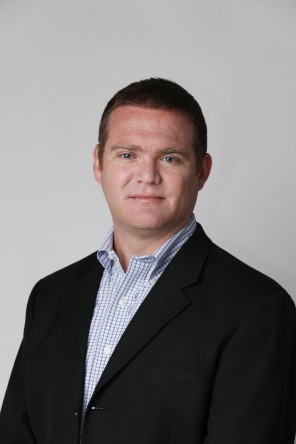
Alex Kingsbury has been an editor with The New York Times and a member of its editorial board since 2018. Previously, he sat on the editorial board of The Boston Globe and was deputy editor of The Globe’s Ideas section. Before that, Mr. Kingsbury was a senior associate producer at WBUR, Boston’s NPR news station, for the programs “On Point With Tom Ashbrook” and “Radio Boston.” From 2004 to 2011, he was an editor at U.S. News & World Report.
Born and raised in New England, he holds a B.A. in history from George Washington University and an M.S. from the Columbia University Graduate School of Journalism.