Finalist: Gabrielle Lurie and Stephen Lam of the San Francisco Chronicle
Nominated Work
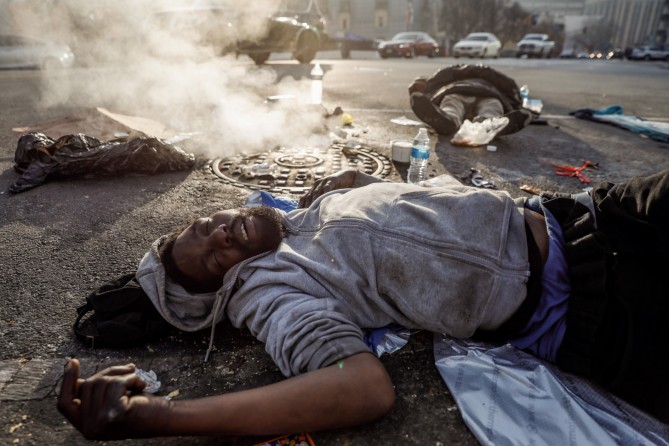
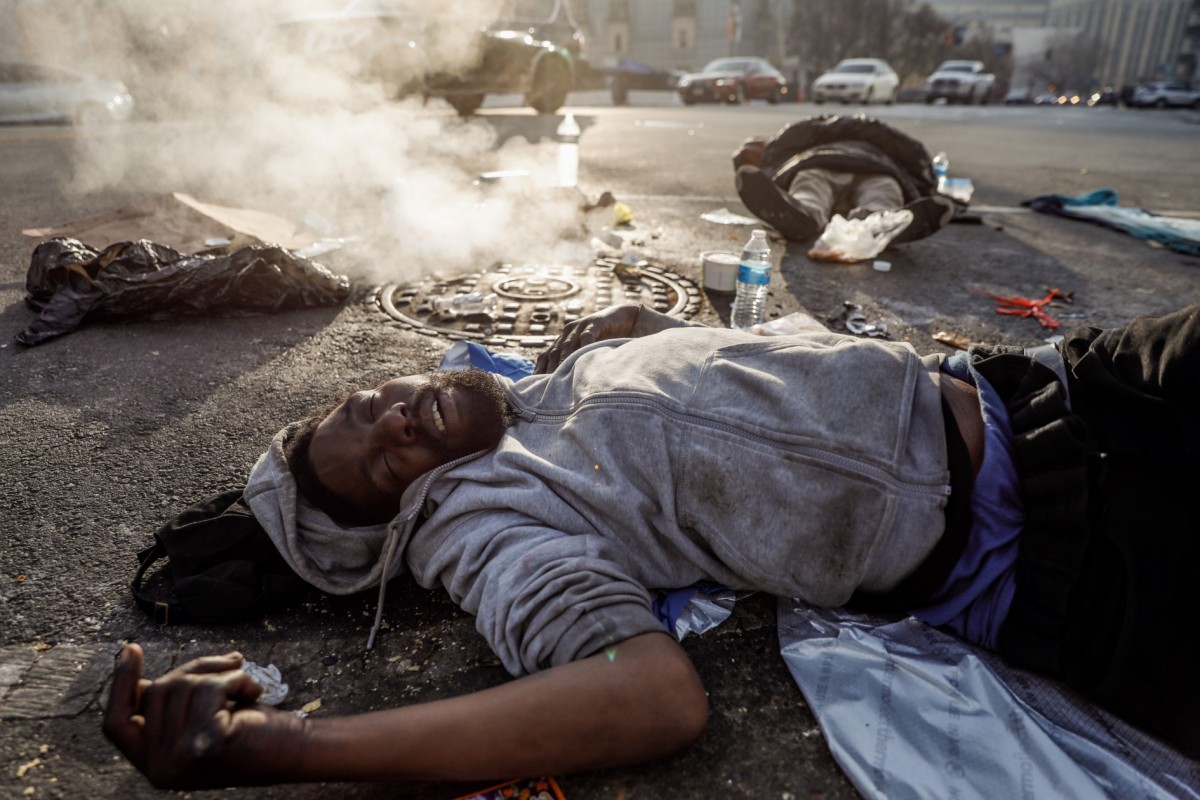
J.T. Farrell, 32, rests on a warm steam grate near City Hall, Thursday, Jan. 13, 2022 in San Francisco, Calif. Farrell, an unhoused person who uses fentanyl, hangs around the Tenderloin district during the day but finds it too dangerous at night. Black San Franciscans, like J.T., have been particularly harmed by the city’s overdose epidemic. In 2022, Black people were almost five times more likely to die of accidental overdoses than the average resident. (Gabrielle Lurie / San Francisco Chronicle)
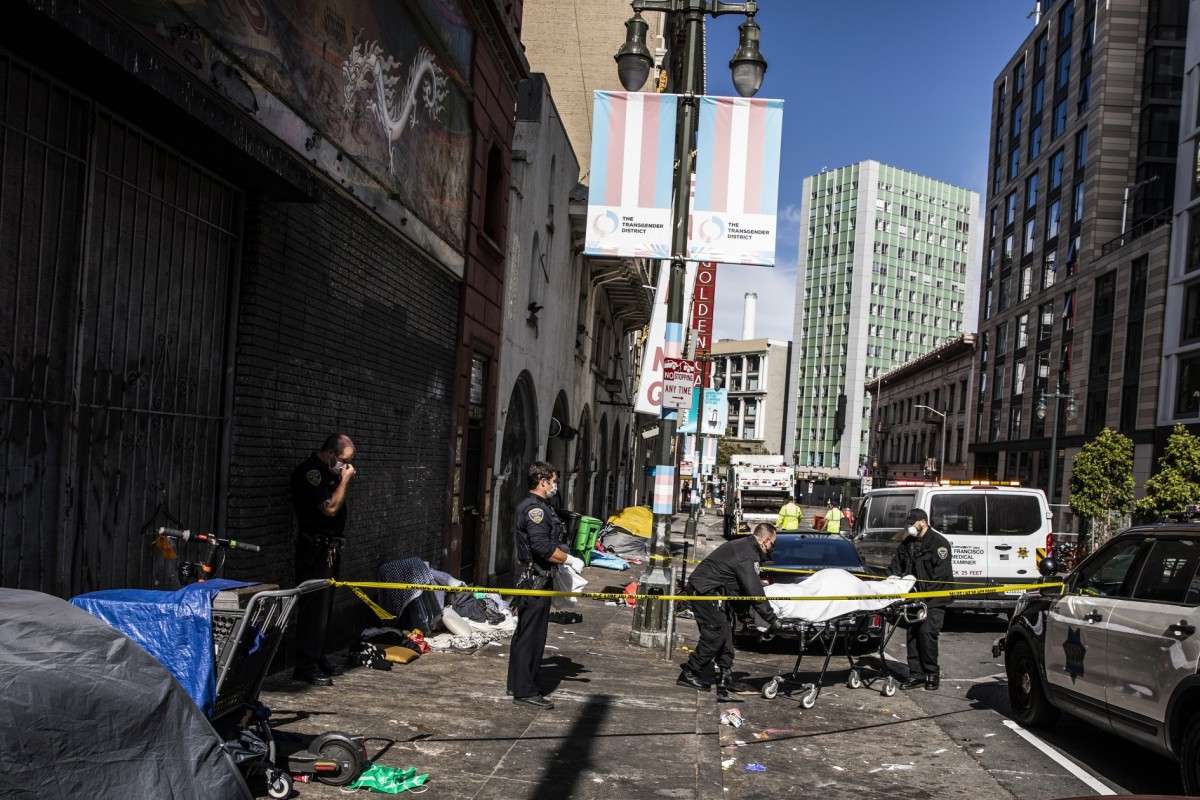
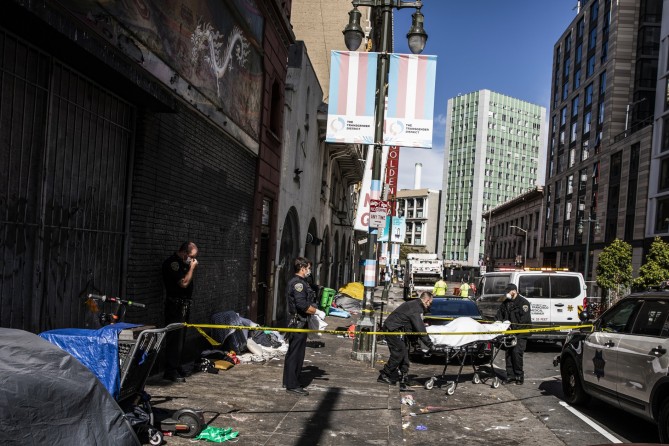
Officers with the San Francisco Police Department watch as members of the Medical Examiner’s office remove the body of an overdose victim near the corner of Golden Gate and Jones Street in San Francisco’s Tenderloin neighborhood, Monday, Aug. 2, 2021. Early in the fentanyl epidemic, scores of people in San Francisco overdosed after the opioid was cut into other substances they believed they were taking. Now thousands struggling with addiction are intentionally smoking and injecting fentanyl, drawn to its potency and cheap price. Many, though, say they wish they had never tried it. Two milligrams of the drug, the equivalent of a few grains of salt, can kill someone who hasn’t built up a tolerance to it. The painkiller is often given to the sickest in hospitals and must be carefully administered. But the illicit fentanyl now killing people in San Francisco is cooked up in labs — often in China and Mexico — and trafficked via delivery services like UPS and DHL. Doses bound for the city are sometimes mixed with other drugs or fillers, packaged in foil and sold for $20 to $40 a gram. (Stephen Lam / San Francisco Chronicle; published Feb. 21, 2022)
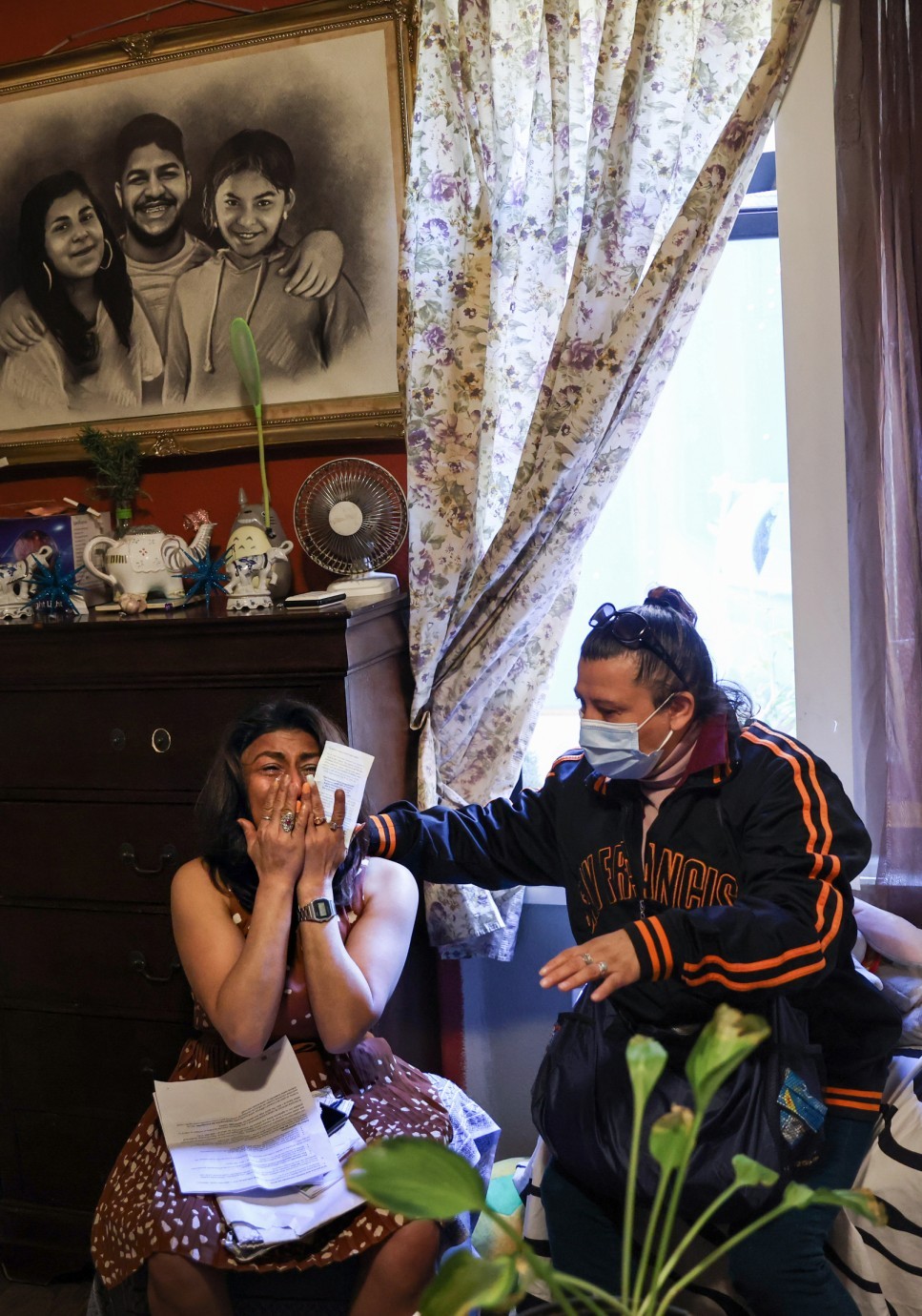
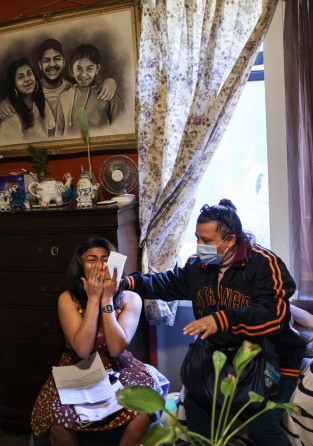
Hazel Mayorga, 39, (left) gets emotional as she talks to her friend Graciela Cortez, 54, on the one-year anniversary of her daughter’s death from an overdose in San Francisco. Photographed on Wednesday, March 9, 2022. Paris Serrano was 14 when she became the youngest person in San Francisco to die after taking a fatal dose of fentanyl in 2021. Paris’ death is a reminder that the fentanyl epidemic ravaging the city is not merely a street-life problem. “Most of the coverage around fentanyl overdoses in San Francisco has been focused on homeless single adults in the Tenderloin,” said Trent Rhorer, director of the Human Services Agency, which oversees child protective services. “But the reality is fentanyl is touching more than that — it touches families, too.” (Gabrielle Lurie / San Francisco Chronicle)
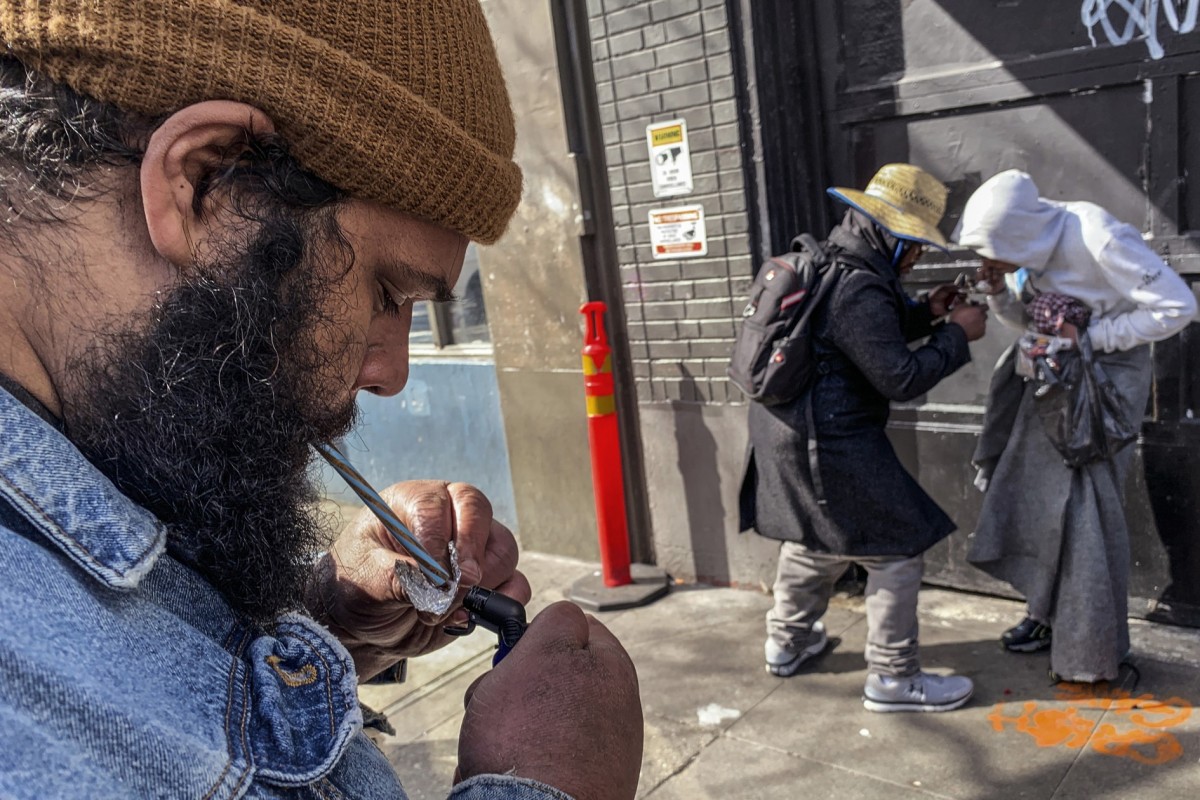
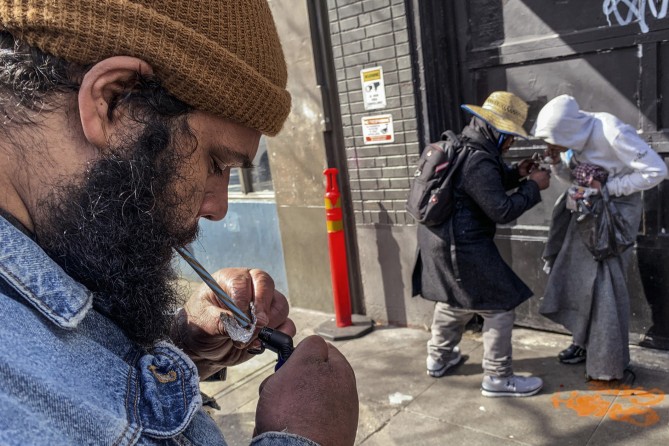
Anthony Alexander, 42, who is addicted to fentanyl, smokes fentanyl on Hyde Street after he was turned away from a detox program in San Francisco, Monday, March 15, 2021. It was the second time in a week that Alexander had been unable to obtain detox treatment. That is not what San Francisco voters envisioned in 2008 when they passed a measure requiring the city to provide and fund enough free or low-cost addiction treatment to meet demand. While the measure’s definition of “on demand” is vague, the idea was to ensure that those ready for help can get it — immediately. That’s critical because such a moment of resolve can be fleeting. “For a patient to then all of a sudden decide, ‘Yes, I’m ready for treatment,’ means that all of those variables are coming together all of a sudden,” said Dr. Tipu Khan, a medical director for Health-RIGHT 360, a statewide drug treatment program. “If we don’t meet them right then and there, we lose them again until all those stars align.” Alexander’s brother was 42 when he died from an overdose, the same age Anthony is now. If his brother were alive today, he would be 55. “I don’t think anyone wants to be a drug addict, or I don’t,” Alexander said. “I would like to be 55.” He said he is less worried about dying from fentanyl than about having a life forever strangled by it. (Stephen Lam / San Francisco Chronicle; published Feb. 21, 2022)
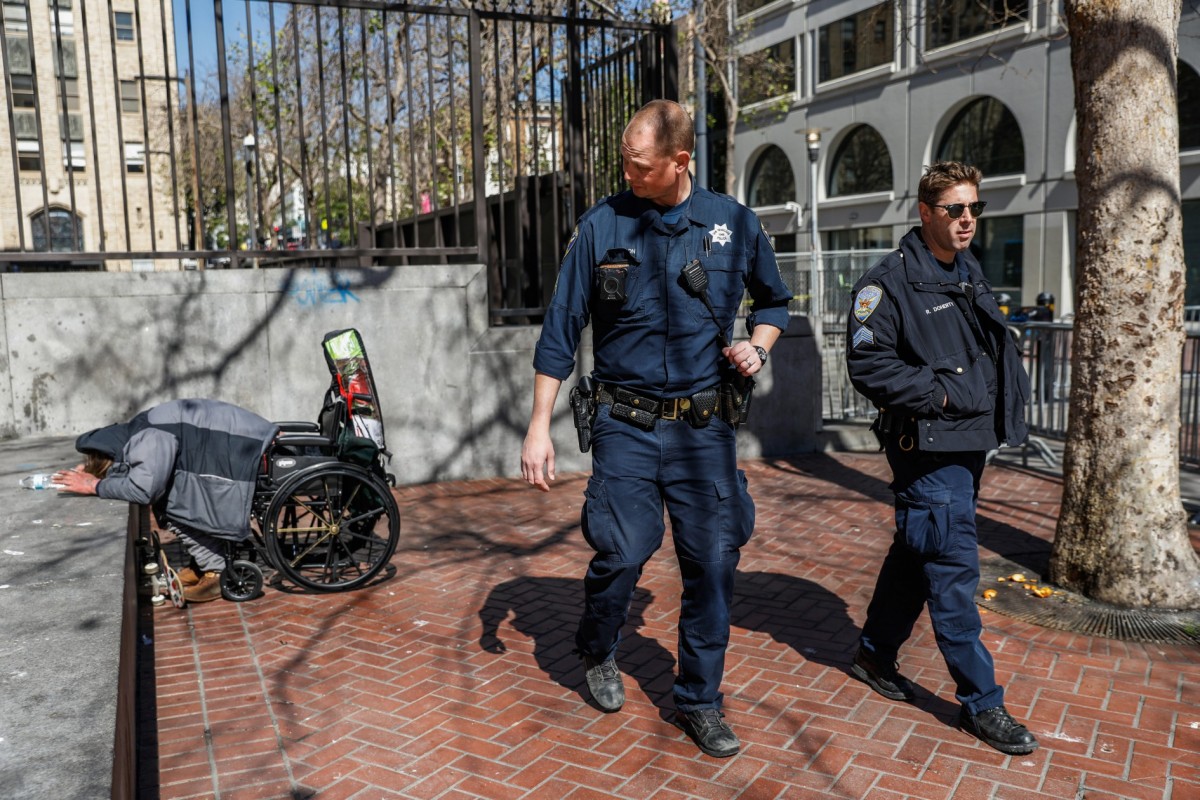
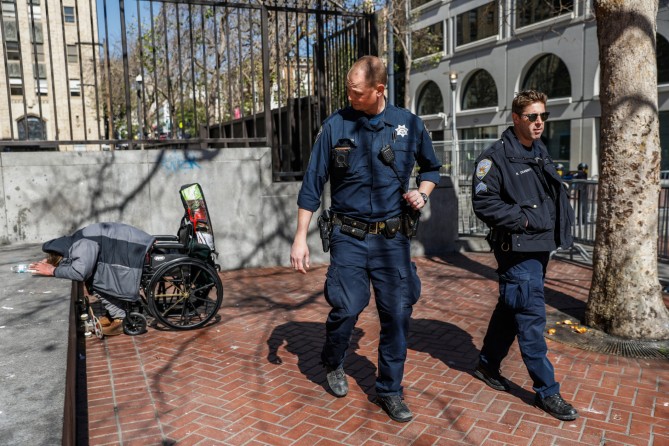
Police officers Mark Mitchinson (left) and Ryan Doherty walk away after checking on a man who was slumped over in the Civic Center on Friday, Feb. 25, 2022. Police officers express frustration that the criminal justice system is a revolving door for dealers. Each day, police in the Tenderloin find themselves walking around making sure people passed out in doorways and on corners are alive. On particularly bad days, Tenderloin police officers may reverse 10 overdoses with Narcan. Sometimes they return to the same person just a few hours later. (Gabrielle Lurie / San Francisco Chronicle)
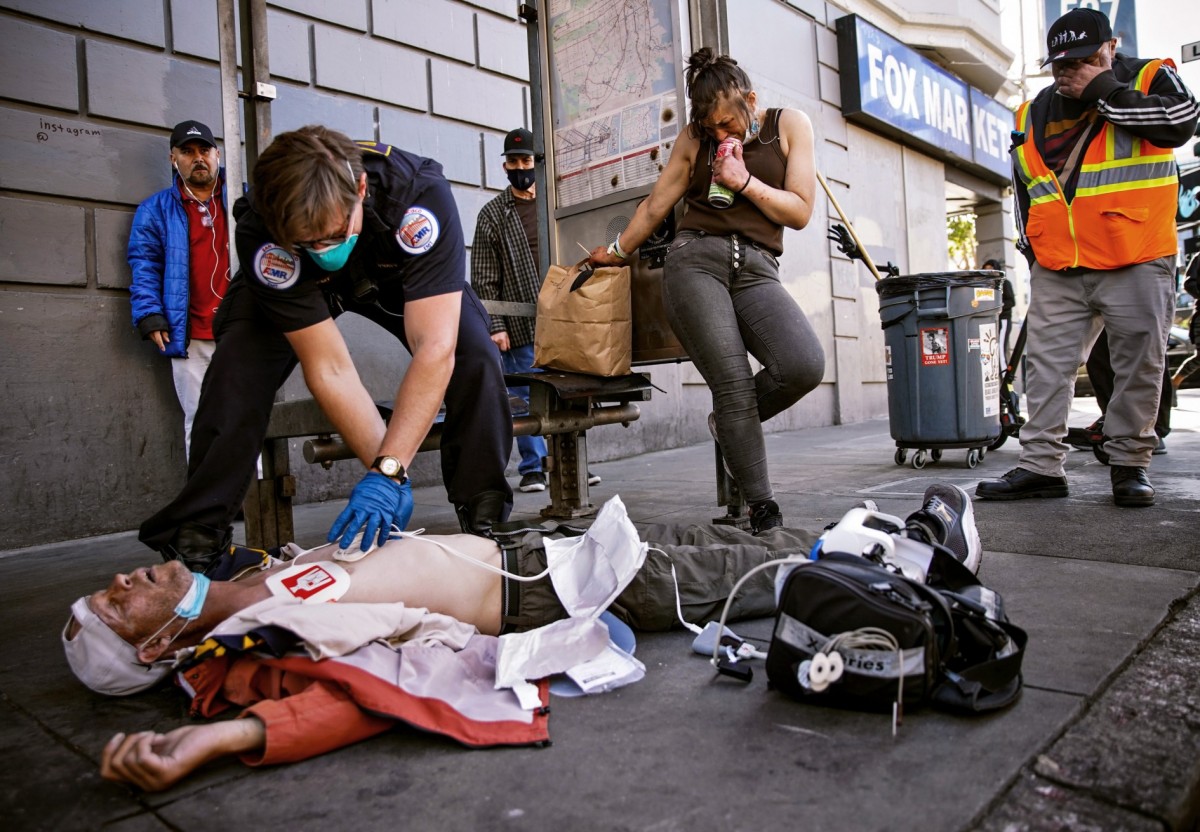
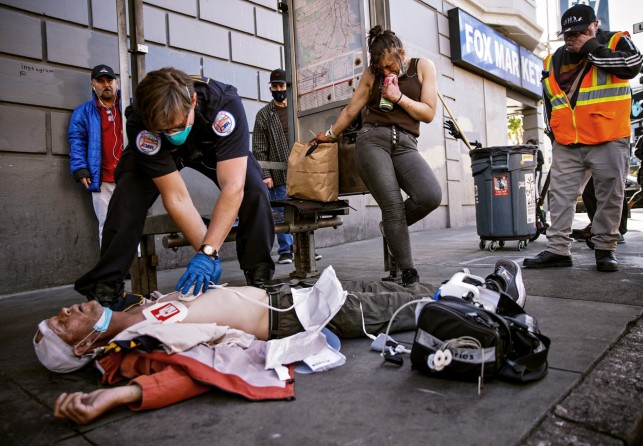
An emergency medical technician tries to revive David Thomas Larson, 49, following an overdose at the corner of Eddy and Larkin Streets as bystanders including Jessica DiDia, who is addicted to fentanyl, look on, Monday, Feb. 28, 2022 in San Francisco. DiDia said she made eye contact with Larson seconds before he fell from his seat at the bus stop and hit the ground. She yelled out to people passing by to call for an ambulance. Larson was not revived at the scene but recovered after he was transported to the hospital. (Gabrielle Lurie / San Francisco Chronicle)
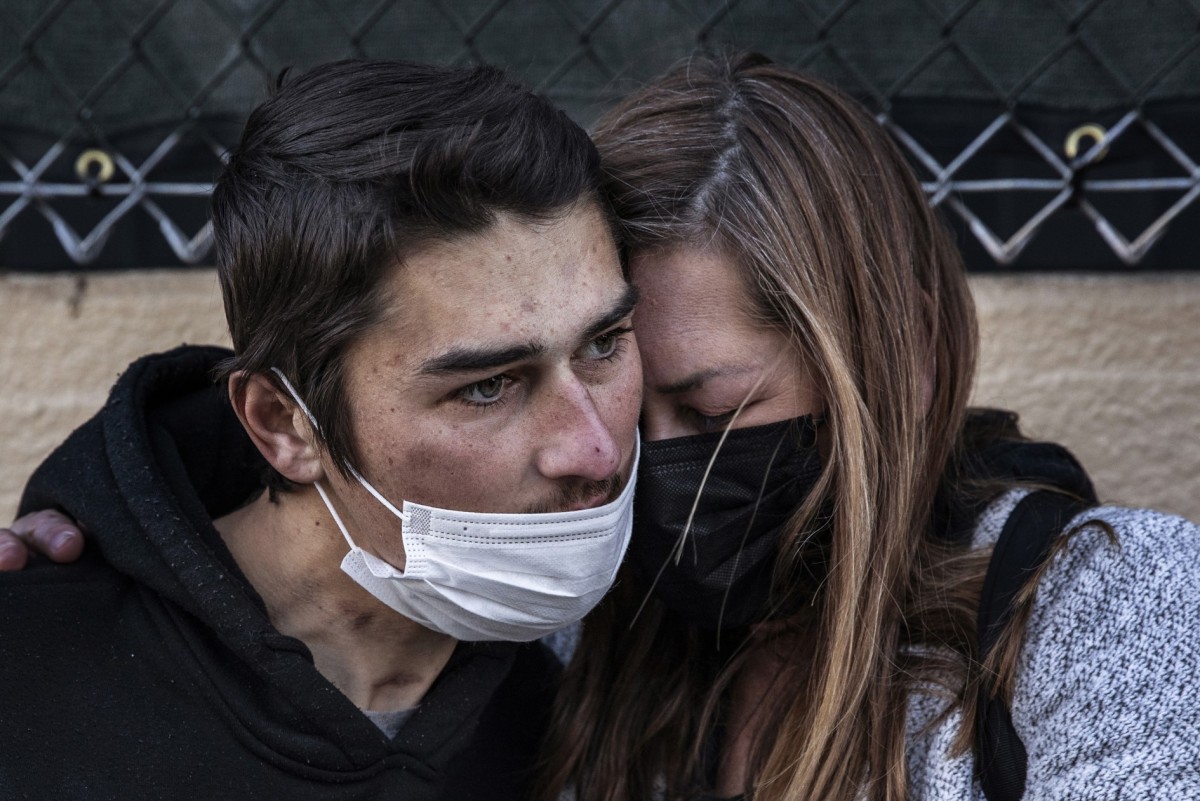
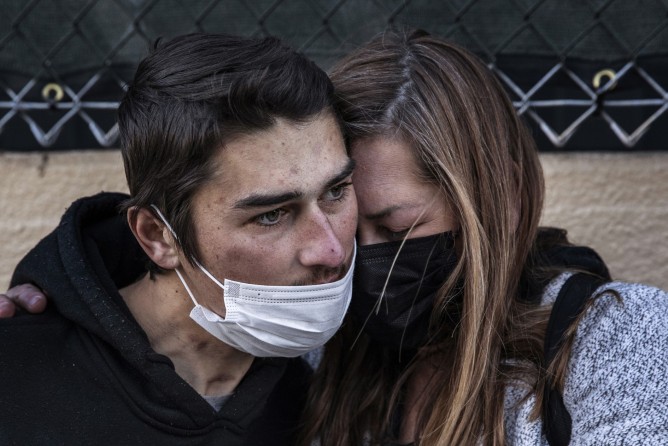
Morgan Stanphill, 27, left, looks into the distance as he is embraced by mother Kelly Stanphill, right, as they say goodbye to each other after a visit in San Francisco, on Thursday, Feb. 25, 2021. According to his mom, Morgan has survived at least 40 overdoses. He has survived thanks to others giving him Narcan, the overdose-reversing nasal spray. He has been addicted to fentanyl and living in the Tenderloin for the past few years. Kelly knows he could die there. She wants to help him, but doesn’t know how. She can’t force him to get help. All she can do is remind him that she loves him and will be there when he's ready. “He’s a good person. The drugs make him someone different,” says Kelly. “So I always tell him I love him. Whether it’s a text message or a phone call — because I keep thinking that could be the last conversation.” (Stephen Lam / San Francisco Chronicle; published Feb. 21, 2022)
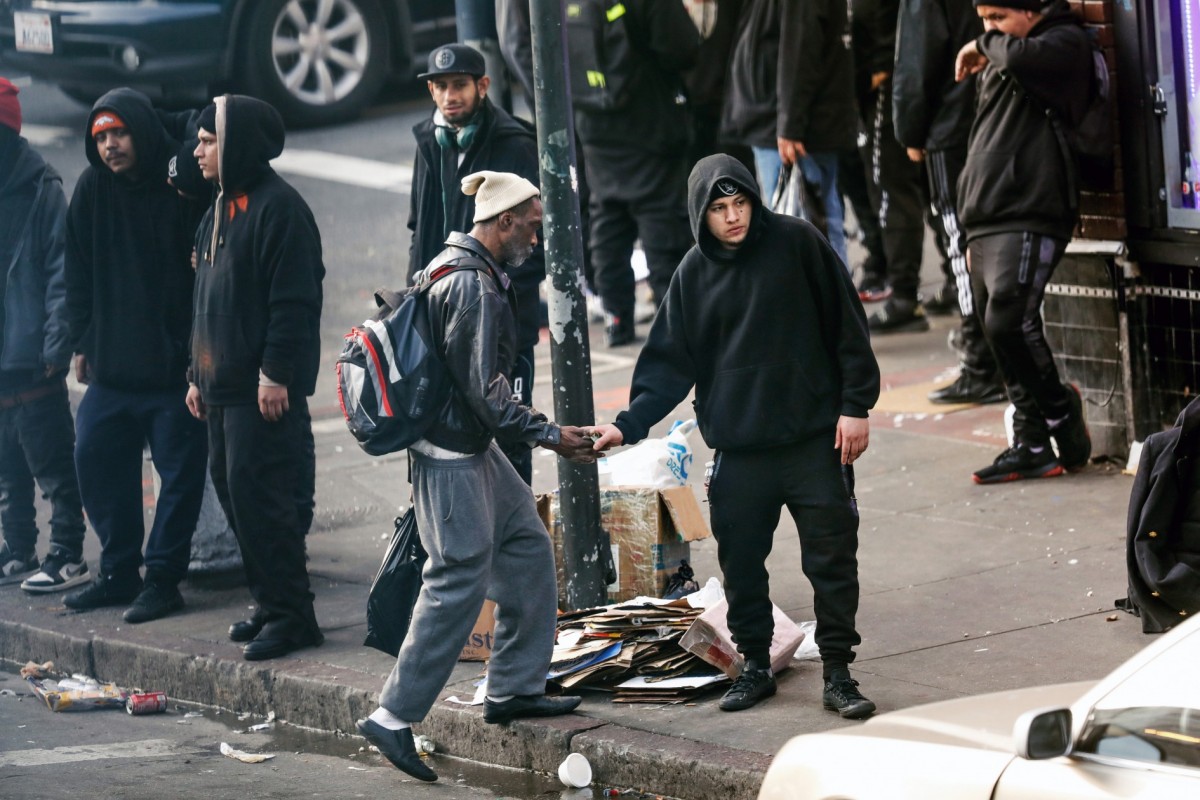
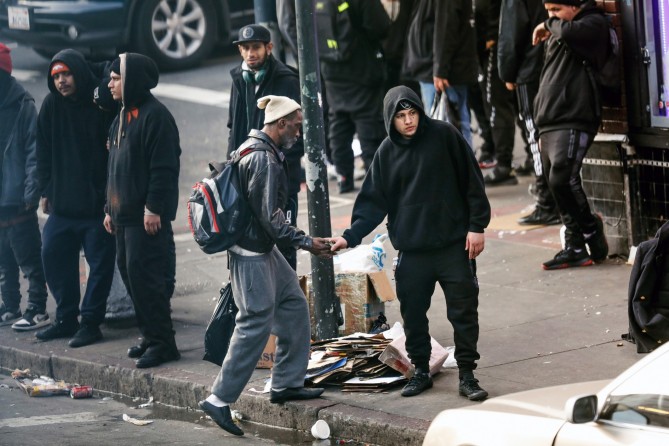
A drug deal is made on the corner of Eddy and Hyde Streets, Friday, Jan. 14, 2022 in San Francisco. Law enforcement efforts involving drugs can feel futile. The supply of fentanyl has grown exponentially and the Tenderloin, full of vulnerable people and low-income families, endures the presence of a constant open-air drug market that city leaders would never tolerate in wealthier neighborhoods. The seeds for the current crisis began when a crackdown on the rampant overuse of prescription opioids in the early 2000s sent people addicted to them to the illicit heroin market. Then came a surge in overdoses and a squeeze on the heroin supply. But the demand remained, so dealers cut their product with fentanyl, which is stronger, readily available and much more deadly. (Name withheld to protect the photographer / San Francisco Chronicle)
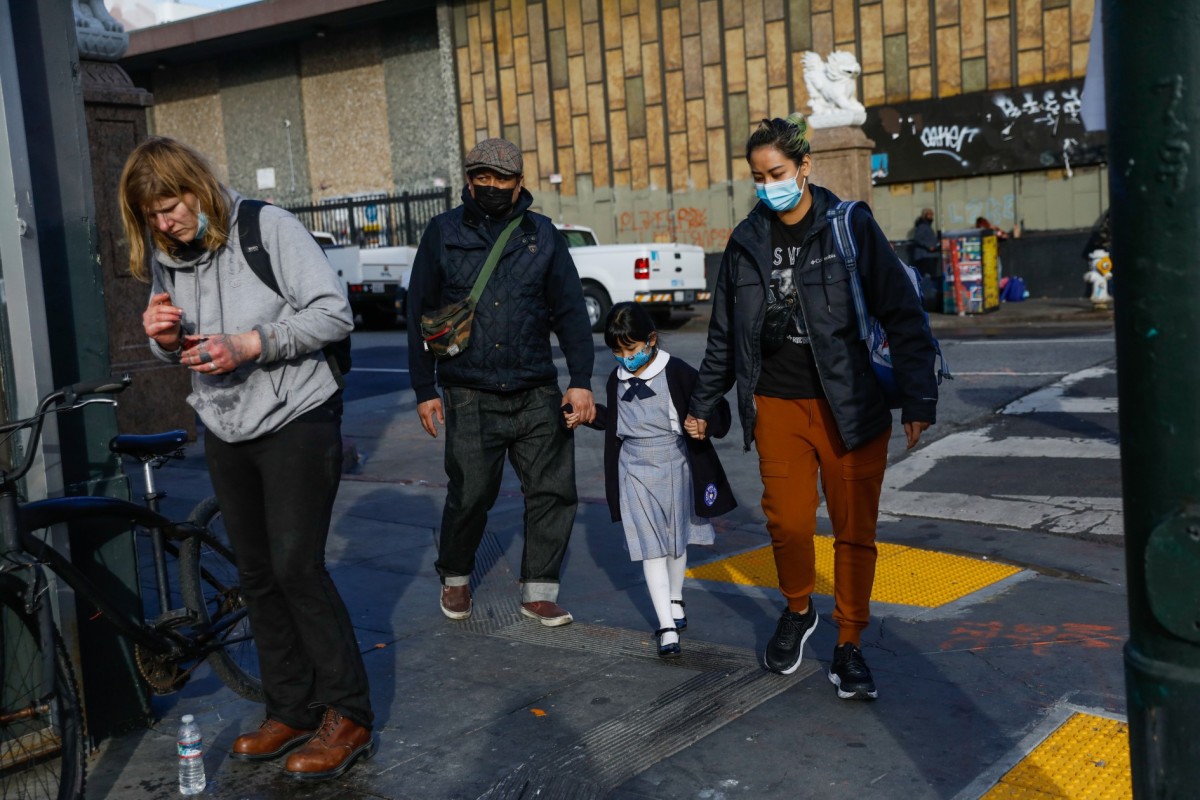
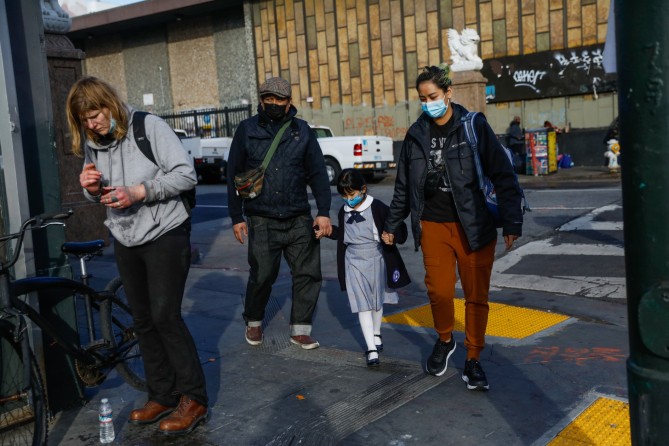
Pinyo Charoensuk (left) and Mutajarin Niyamosot hold their daughter’s hand as they walk home from her school, Tuesday, Jan. 18, 2022. Her parents are so fearful in their Tenderloin neighborhood that Lapats, 6, hasn’t been to the local playground in more than six months. In 2022, a 10-month-old boy accidentally ingested fentanyl at a San Francisco playground. Paramedics administered Narcan at the scene and reversed the overdose, saving his life. The fear of crime in the neighborhood is not unfounded. The family’s Thai restaurant, located below their home, has been burglarized. (Gabrielle Lurie / San Francisco Chronicle)
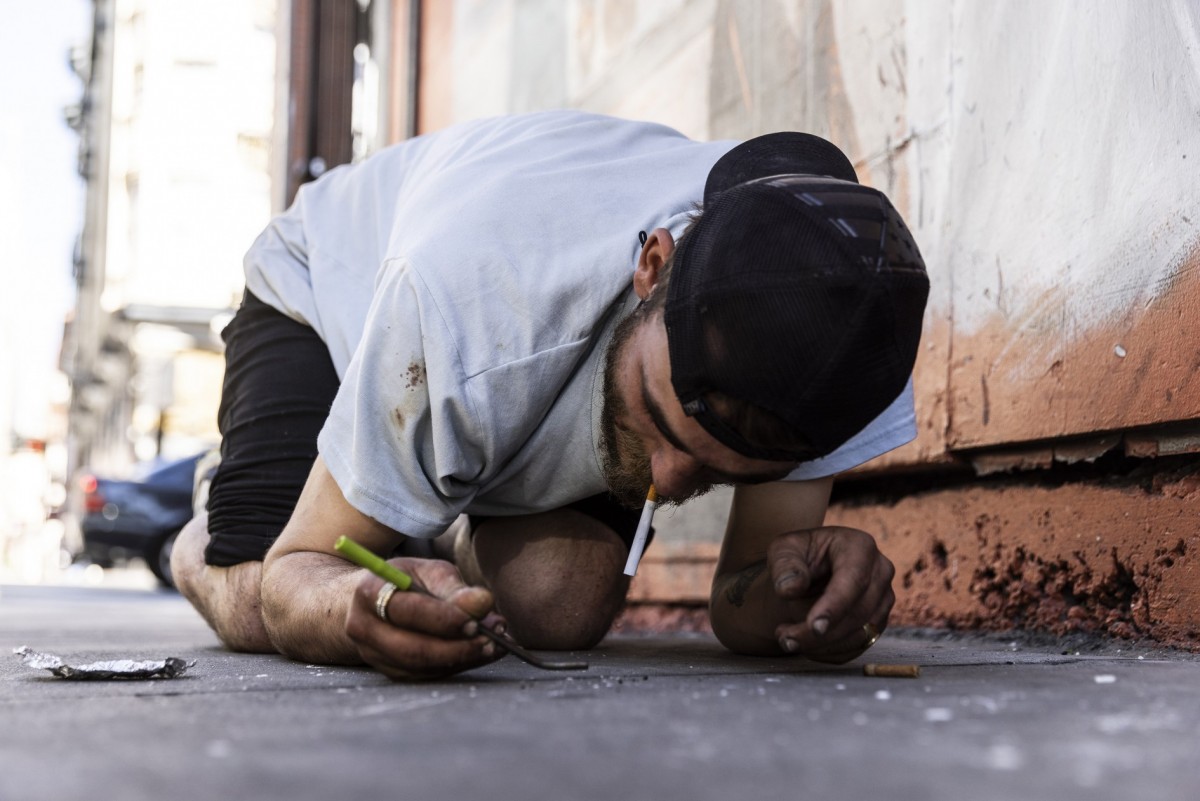
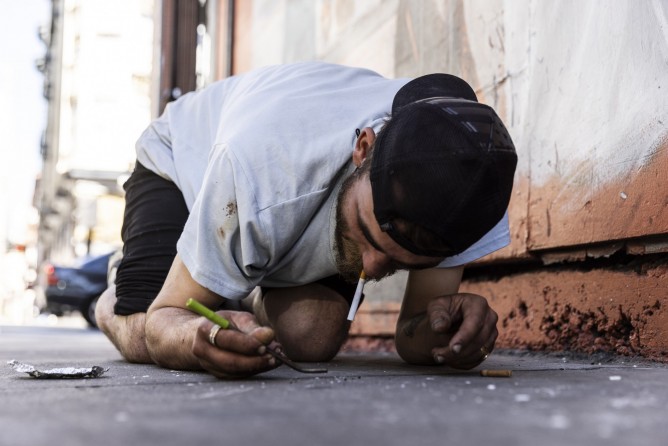
Peter Taylor, 23, searches for scattered fentanyl after dropping his foil because his hands were trembling uncontrollably on Minna Street near the shuttered Minna Hotel in San Francisco on Tuesday, March 22, 2022. Taylor, who is originally from San Jose, has been using fentanyl for about 10 months. (Stephen Lam / San Francisco Chronicle)
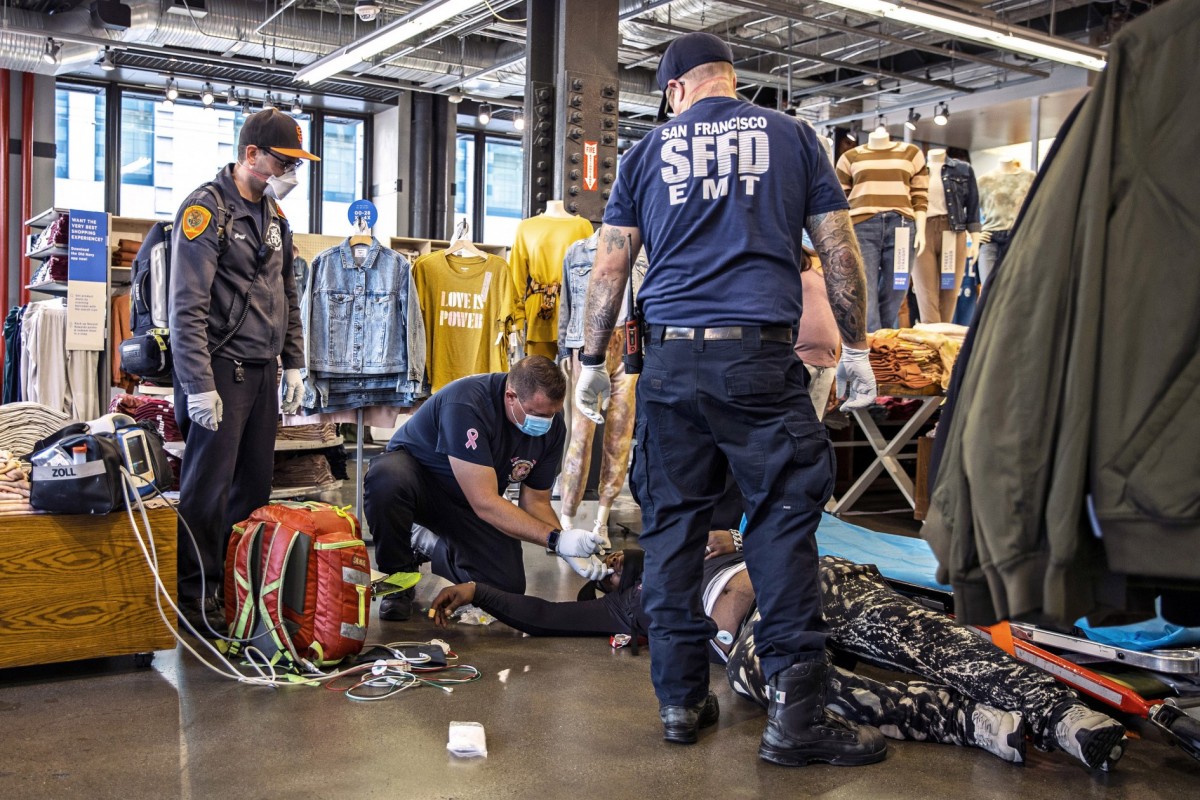
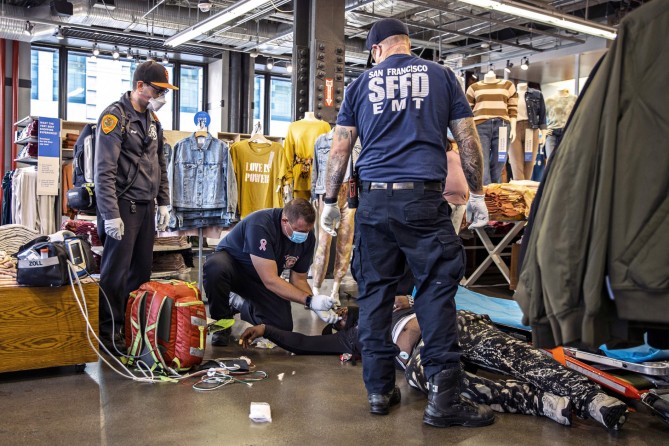
Emergency personnel with the San Francisco Fire Department prepare to inject a dose of Naloxone on an unconscious patient in an Old Navy store in San Francisco, Thursday, Oct. 28, 2021. Numerous people are doing lifesaving work on the front lines of the drug crisis, but city leaders have not created a clear, urgent and cohesive plan to intervene – despite budgeting $71.4 million for treatment and overdose prevention programs in the last fiscal year alone. (Stephen Lam / San Francisco Chronicle; published Feb. 21, 2022)
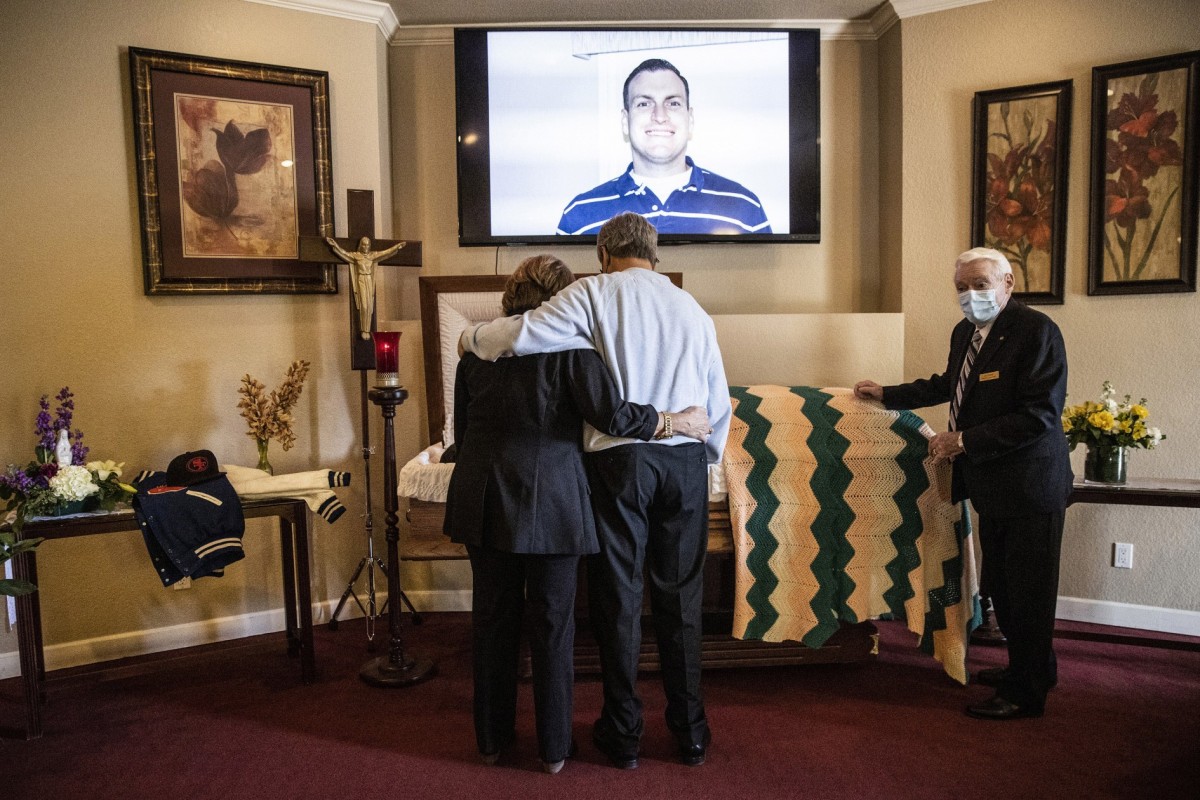
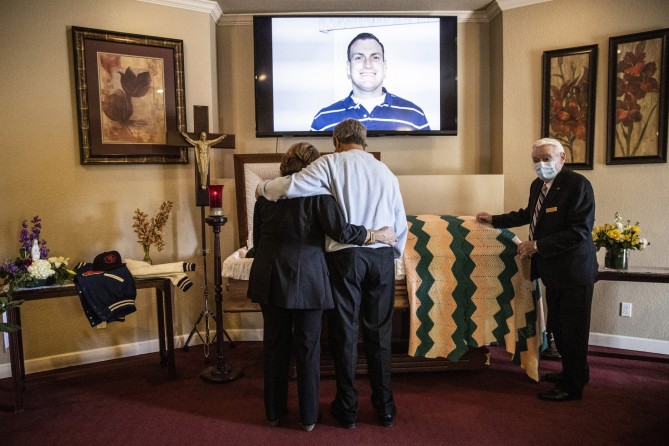
Susan Choate embraces husband Steve Brye as Don Ouimet prepares to close the casket holding her son Jeffrey during a memorial service at Ouimet Brothers Concord Funeral Chapel in Concord, Calif., Friday, Jan. 21, 2022. Jeffrey Choate, 36, was found dead after a suspected fentanyl overdose on Sunday, Jan. 2. At Susan’s request, a mortuary staffer cut a snippet of Jeffrey’s hair and put it in a Ziploc bag. Later, at home, she opened Jeffrey’s baby book and placed it beside a lock she had kept from his first haircut. A prison sentence and working as an incarcerated firefighter had helped get Jeffrey get sober, but he relapsed after his release. He’d returned to the Tenderloin, rented a hotel room and plunged into a three-week, drug-fueled descent. “Being out in SF now is unreal,” texted Jeffrey. “It has gotten so much worse. So many people I know have died from fentanyl. If I end up there one more time, I will be dead.” Six months later, he died. (Stephen Lam / San Francisco Chronicle)
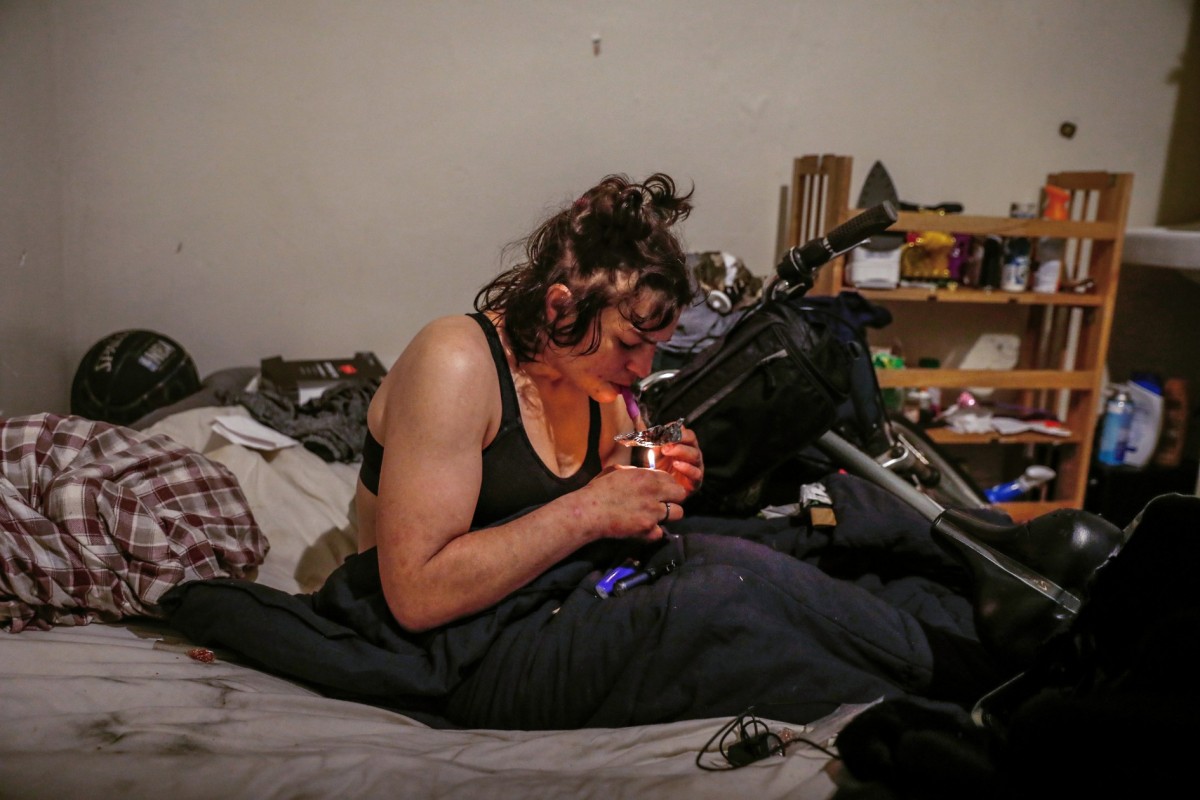
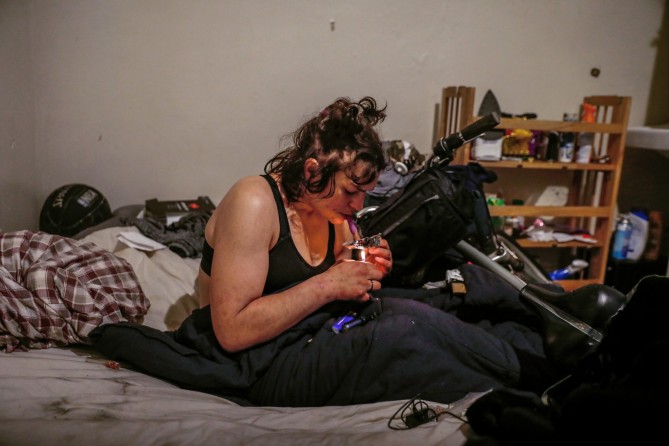
Jessica DiDia, 34, who is unhoused and struggles with addiction, smokes a mixture of fentanyl and crack in her boyfriend Abdul Cole’s hotel room in San Francisco, Thursday, Jan. 13, 2022. Fentanyl starts with a comforting high but is soon followed by crippling cravings for more. The first time she used fentanyl she thought she was buying pure crack cocaine. “I felt it going up my spine. I felt like it exploded and then I died,” she said. “The feeling of the near-death experience is indescribable. Complete nothingness.” She said police officers have administered Narcan to her eight times. “I’ve OD'd at least 50 times,” Jessica said. Despite multiple pleas for treatment from her mother, Laurie Steves, Jessica refuses to go to rehab. “Who cares if I die? Everyone dies,” she said. (Gabrielle Lurie / San Francisco Chronicle)
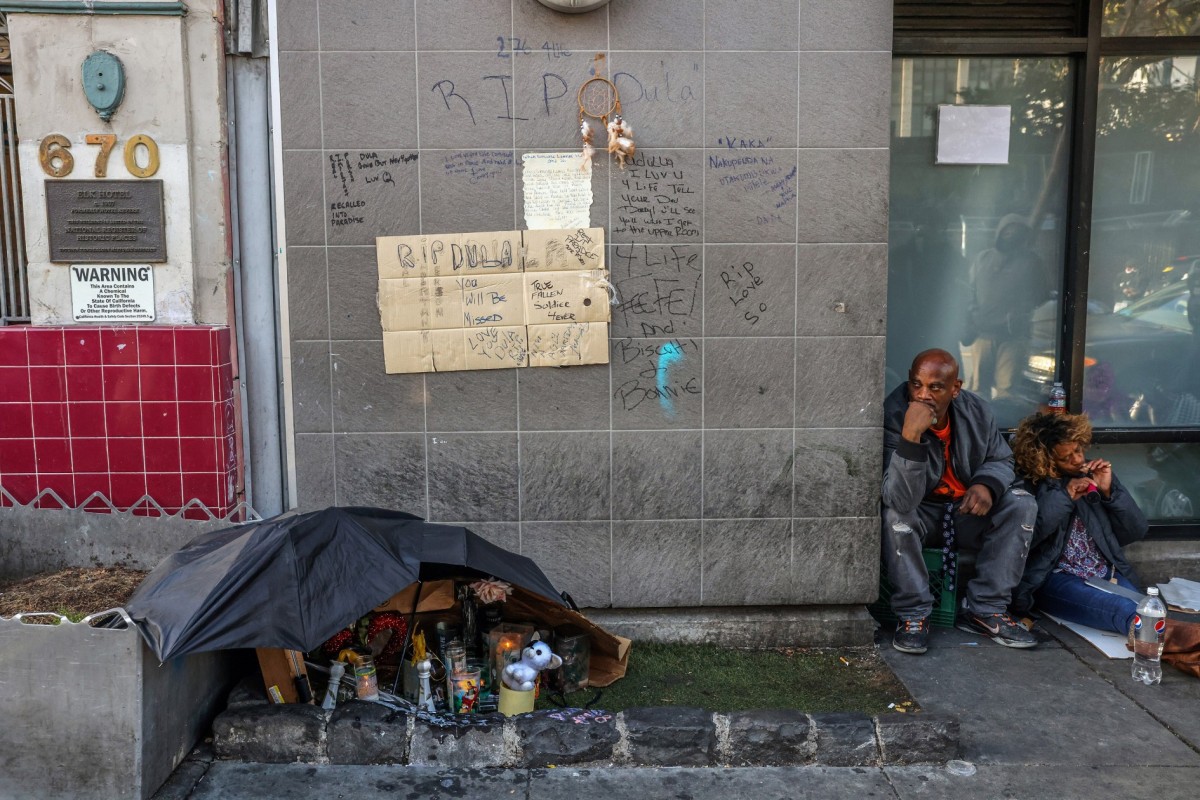
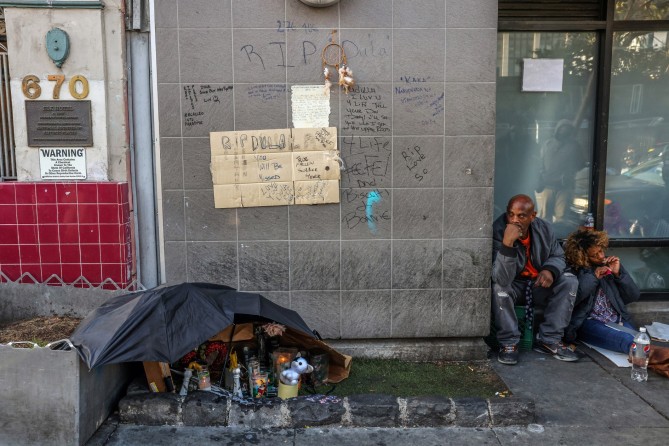
Candles line a street memorial for Jessica’s boyfriend Abdul “Dula” Cole on Friday, April 15, 2022. Dula grew up in San Francisco, graduated from McAteer High School and was drafted by the Florida Marlins baseball team. But that early promise turned to tragedy. He died alone in his room in a single-room-occupancy hotel on Eddy Street, his body found by his case manager days after his death. The cause of death was an accidental overdose from crack laced with fentanyl. He was 46. The risk of a fatal overdose is highest when fentanyl is taken alone indoors and the chances of life-saving intervention are the lowest. (Gabrielle Lurie / San Francisco Chronicle)
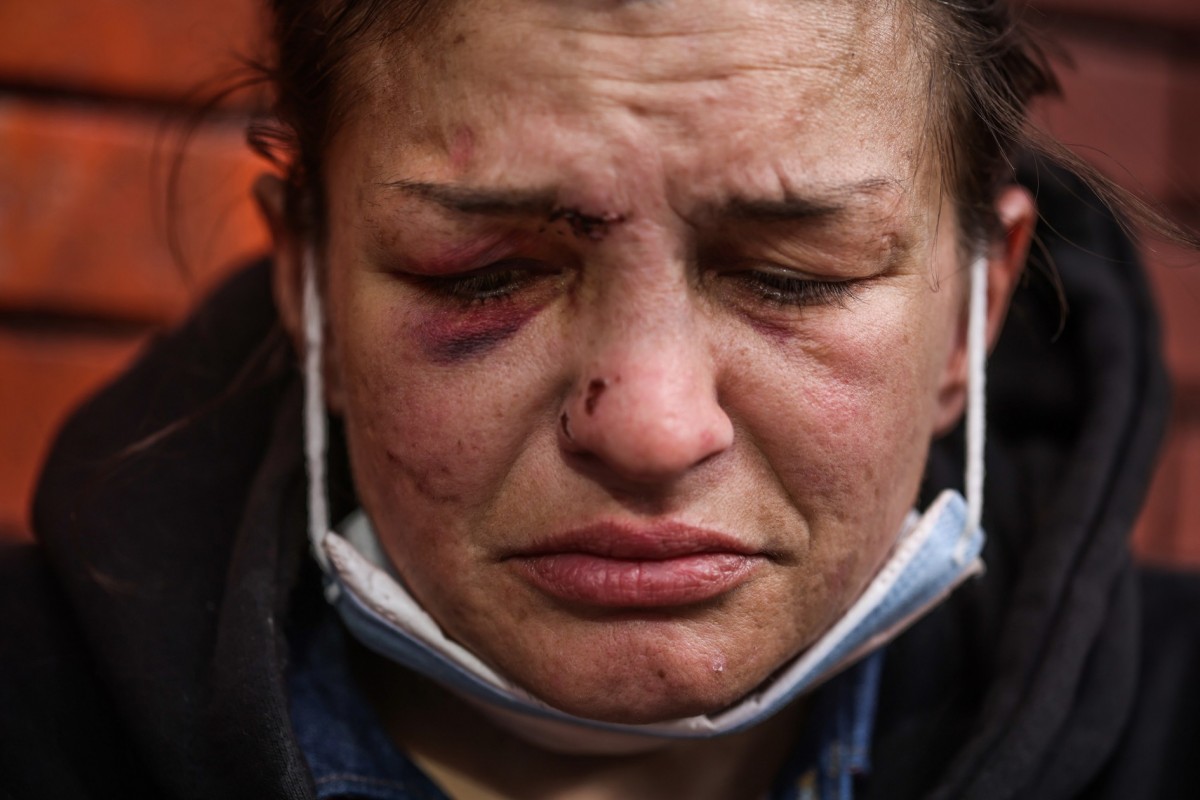
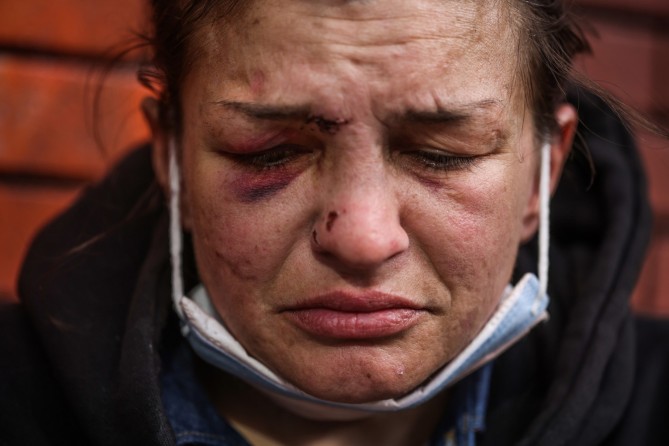
Jessica DiDia’s face is bruised after she was beaten by several people while trying visit her boyfriend Dula’s memorial, Tuesday, May 10, 2022. Her attackers blamed Jessica for his death. She said he has felt aimless without Dula, who had provided her a place to sleep in his SRO hotel room when the desk clerk would allow it. He also provided physical protection on the streets and emotional support. Didia said she has begun to suffer from seizures and memory loss. “It’s been terrible,” she said. “I lost everything all at once.” (Gabrielle Lurie / San Francisco Chronicle)
Biography
Gabrielle Lurie is a staff photographer at the San Francisco Chronicle. Originally from Washington D.C., Gabrielle previously worked as a freelancer in the Bay Area, where she photographed for clients like the New York Times, Wall Street Journal and The Guardian. She is a graduate of NYU’s Tisch School of the Arts where she studied fine art photography and art history. Gabrielle focuses on longer term stories on topics ranging from homelessness and wildfires to immigration and wealth disparity. Recently, she began organizing the Bay Area Women Photograph group where photographers in the Bay Area gather for events, to share ideas and collaborate on work. Her images have been recognized by The Pulitzer Prizes, Pictures of the Year International, National Press Photographers Association, The 30: New and Emerging Photographers to Watch, American Photography, the Emmy Awards and more.
Stephen Lam has been a staff photographer for the San Francisco Chronicle since 2021. Prior to returning to the Chronicle, where he had interned a decade prior, Lam was a sought-after independent photographer in the Bay Area. His versatility, adaptability and attention to detail led him to work with a broad spectrum of editorial and commercial clients including Reuters, Getty Images, Der Spiegel, L'Oréal and Salesforce. A native of Hong Kong, Lam is fluent in Cantonese and English.