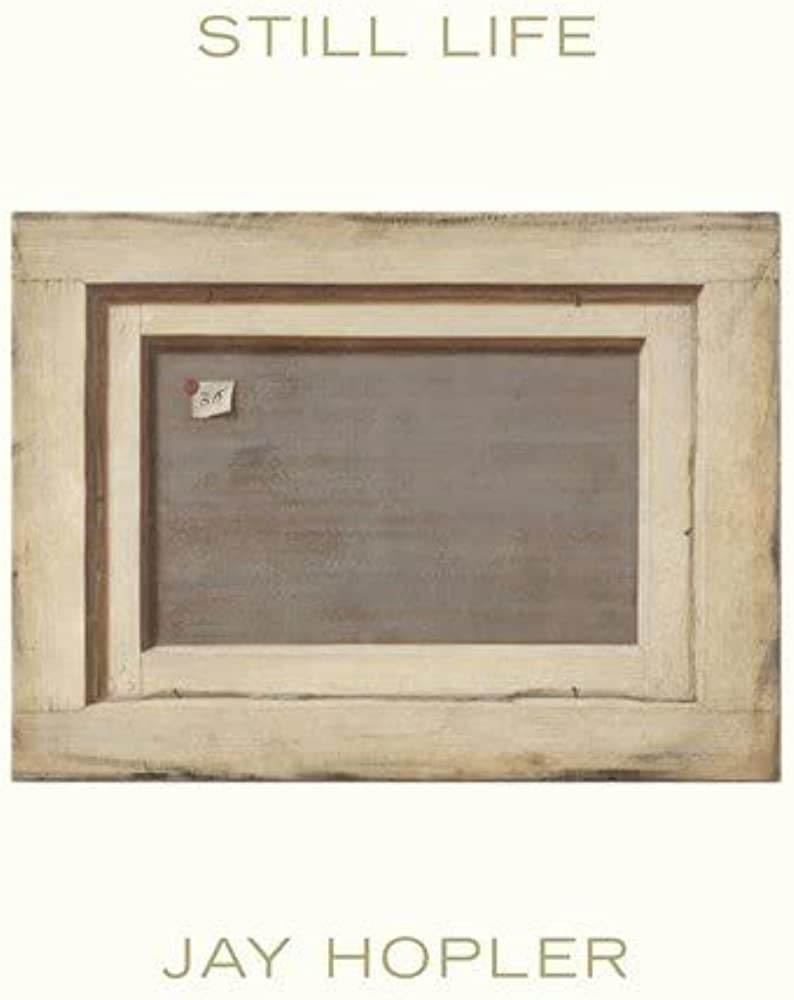
Finalist: Still Life, by the late Jay Hopler (McSweeney’s)

A startling and darkly funny collection of sonnets, lyrics, epigrams and songs that produces a jolt of electric joy as the poet grapples with his end-of-life concerns and mortal fears.

Nominated Work

Still Life


Still Life has been named a best book of the year by NPR and Time magazine. Longlisted for the 2022 National Book Award.

Confronted with a terminal cancer diagnosis, Jay Hopler—author of the National Book Award-finalist The Abridged History of Rainfall—got to work. The result of that labor is Still Life, a collection of poems that are heartbreaking, terrifying, and deeply, darkly hilarious. In an attempt to find meaning in a life ending right before his eyes, Hopler squares off against monsters real and imagined, personal and historical, and tries not to flinch. This work is no elegy; it’s a testament to courage, love, compassion, and the fierceness of the human heart. It’s a violently funny but playfully serious fulfillment of what Arseny Tarkovsky called the fundamental purpose of art: a way to prepare for death, be it far in the future or very near at hand.

Praise for Still Life

“Hopler gestures toward the poetic tradition in formal lyrics, offers a satirical self-obituary, and even includes a musical score. It all adds up to a sturdy ship of death and a transcendent love song to life and to his wife: ‘it was she that lit the world.’”
—Craig Morgan Teicher, NPR

“In the wake of a terminal cancer diagnosis, poet Jay Hopler pondered his own mortality with wit, searing insight, and a clear-eyed sense of courage in his third and final poetry collection […] The collection is a bittersweet triumph. Hopler confronts his fears—big and small, real and imagined—in a magnificent demonstration of the strength of the heart”
—Cady Lang, Time

“People with advanced aggressive cancers automatically become authorities on mortality. Poets with such cancers have been dealt, at great cost, four aces. And for the wild ones, like Jay Hopler, cancer can be a field day. The bleak friskiness here is not new, nor is the swaggering rancor (like Berryman, who was also proud to be right in his dire predictions). What is new is gratitude: for the ‘atomic girl’ it is his extraordinary good fortune to meet and ultimately marry; for the opportunity of art, which lends to his passions’ duration. There is a difference, marked in these poems, between rage at the fact of mortality and rage at the diagnosis of its imminence. And the latter infuses Hopler’s extravagant jokes and glittering improvisations with the urgency and weight of last words.”
—Louise Glück, winner of the 2020 Nobel Prize in Literature

“Still Life is astonishing, a collection that faces up to the injustice of untimely death and discovers—not insulated from despair and rage but arrived at somehow *through* them—an extraordinary, difficult, electric joy. No book I have read in years has moved me so deeply; no book has felt so full of life.”
—Garth Greenwell, author of Cleanness and What Belongs to You

Praise for Jay Hopler

“By these poems, your faith will be shattered and restored, restored and wondrously shattered again.”
—Craig Morgan Teicher

“Hopler’s vision and voice, both painfully complex because of how much of the world he allows to attach to him, to stake its claim on him, teach us we are in the presence of lasting, inimitable poems. No one writes like Hopler. And no one ever will.”
—Katie Ford
Biography

By Kimberly Johnson

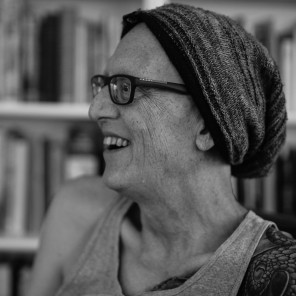
Jay Hopler, 51, award-winning poet and translator, was himself translated from one register of existence to another on June 15, 2022. He died at his home in Salt Lake City, Utah, one week after the publication of his third collection of poetry, Still Life, which he began writing the day he was diagnosed with metastatic prostate cancer.

Jay was born in San Juan, Puerto Rico, on November 23, 1970. From his earliest days, he loved language and poetry, and intended to become a writer when he grew up. He earned an MA from the Johns Hopkins Writing Seminars and an MFA from the Iowa Writers Workshop before going on to complete a PhD in American Studies at Purdue University. At his passing, he was director of the creative writing program at the University of South Florida, in Tampa. His first collection of poetry, Green Squall, won the 2006 Yale Younger Poets Prize, selected by Nobel laureate Louise Glück, who would become a dear friend. His second collection of poetry, 2016’s The Abridged History of Rainfall, was a finalist for the National Book Award. His translation project The Museum of Small Dark Things: 25 Poems by Georg Trakl, appeared in 2016, and his first book, The Killing Spirit: An Anthology of Murder for Hire, was published in 1996. With his spouse, poet and literary scholar Kimberly Johnson, he edited Before the Door of God: An Anthology of Devotional Poetry. His many literary honors included a Whiting Award, the Rome Prize in Literature, two Florida Book Awards, a Lannan Foundation Fellowship, and, in 2022, a fellowship from the John Simon Guggenheim Memorial Foundation.

Winners

Prize Winner in Poetry in 2023:

Carl Phillips

A masterful collection that chronicles American culture as the country struggles to make sense of its politics, of life in the wake of a pandemic, and of our place in a changing global community.   Poetry

Finalists

Nominated as finalists in Poetry in 2023:

dg nanouk okpik

Poems of deep attention and prismatic intelligence, which render a collapsing biosphere from the perspective of an ancient Arctic culture rooted in community, survival and guardianship.

The Jury

Stephanie Burt(Chair)

Professor of English, Harvard University

Sherwin Bitsui

Associate Professor of English, Northern Arizona University

Carolyn Forché

Professor of English, Georgetown University

Paisley Rekdal

Distinguished Professor of English, University of Utah

A. Van Jordan

Professor of English, Stanford University

Winners in Poetry

Diane Seuss

A virtuosic collection that inventively expands the sonnet form to confront the messy contradictions of contemporary America, including the beauty and the difficulty of working-class life in the Rust Belt.

Natalie Diaz

A collection of tender, heart-wrenching and defiant poems that explore what it means to love and be loved in an America beset by conflict.

Jericho Brown

A collection of masterful lyrics that combine delicacy with historical urgency in their loving evocation of bodies vulnerable to hostility and violence.

Forrest Gander

A collection of elegies that grapple with sudden loss, and the difficulties of expressing grief and yearning for the departed.

2023 Prize Winners

Kyle Whitmire of AL.com, Birmingham

For measured and persuasive columns that document how Alabama's Confederate heritage still colors the present with racism and exclusion, told through tours of its first capital, its mansions and monuments–and through the history that has been omitted.

Staff of The Wall Street Journal

For sharp accountability reporting on financial conflicts of interest among officials at 50 federal agencies, revealing those who bought and sold stocks they regulated and other ethical violations by individuals charged with safeguarding the public’s interest.