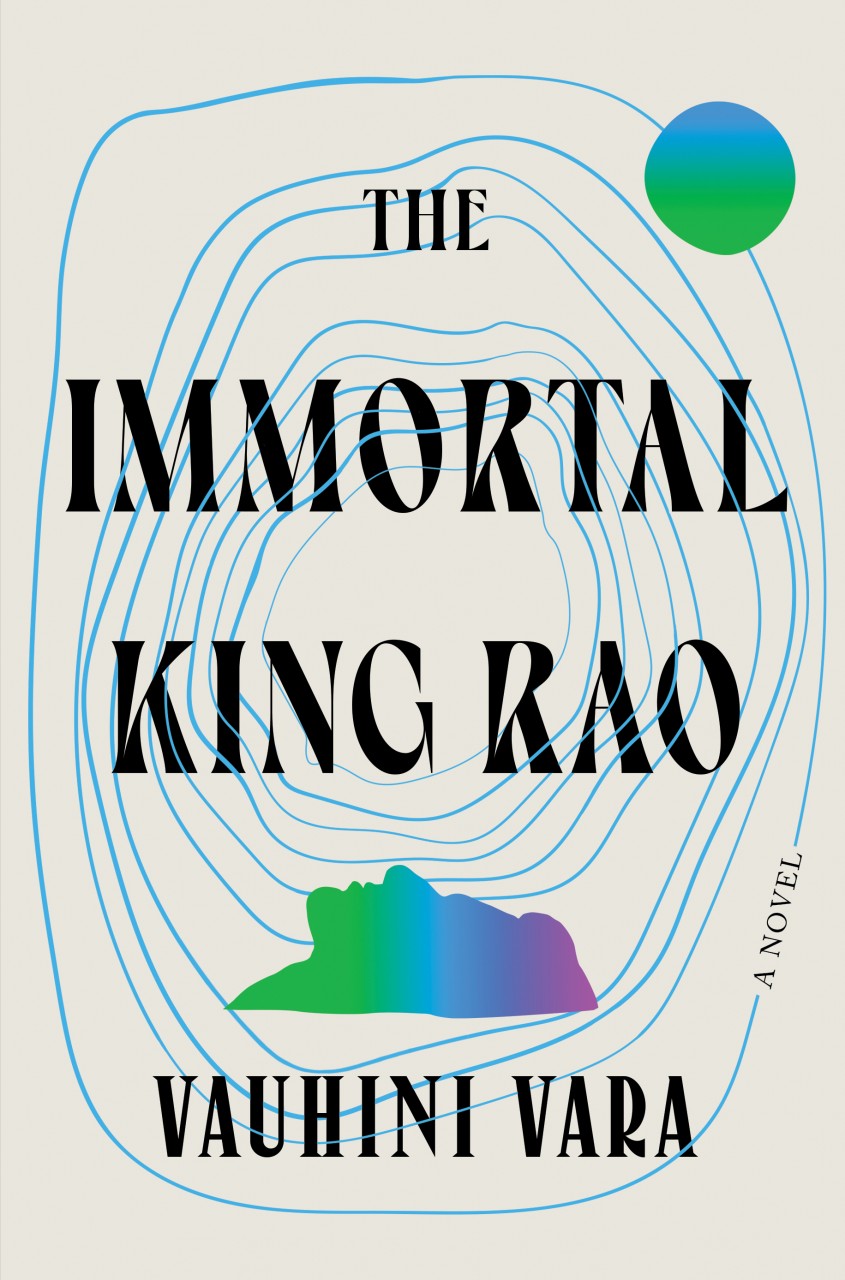
Finalist: The Immortal King Rao, by Vauhini Vara (W. W. Norton & Company)

About a tech genius turned exile and the daughter who is struggling to break free of his hold, a complicated family saga that is also an ambitious novel exploring topics such as climate change and the legacy of colonialism in a vibrant and surprisingly humorous voice.

Nominated Work

The Immortal King Rao


One of Vulture's Books We Can’t Wait to Read in 2022
One of The Millions' Most Anticipated Books of 2022
One of The Guardian's Fiction to Look Out for in 2022
One of MS Magazine's Most Anticipated Books of 2022
One of Literary Hub's Most Anticipated Books of 2022
An Indian Express Book to Look Out for in 2022

In an Indian village in the 1950s, a precocious child is born into a family of Dalit coconut farmers. King Rao will grow up to be the most accomplished tech CEO in the world and, eventually, the leader of a global, corporate-led government.

In a future in which the world is run by the Board of Corporations, King’s daughter, Athena, reckons with his legacy—literally, for he has given her access to his memories, among other questionable gifts.

With climate change raging, Athena has come to believe that saving the planet and its Shareholders will require a radical act of communion—and so she sets out to tell the truth to the world’s Shareholders, in entrancing sensory detail, about King’s childhood on a South Indian coconut plantation; his migration to the U.S. to study engineering in a world transformed by globalization; his marriage to the ambitious artist with whom he changed the world; and, ultimately, his invention, under self-exile, of the most ambitious creation of his life—Athena herself.

The Immortal King Rao, written by a former Wall Street Journal technology reporter, is a resonant debut novel obliterating the boundaries between literary and speculative fiction, the historic and the dystopian, confronting how we arrived at the age of technological capitalism and where our actions might take us next.

Biography

Vauhini Vara has worked as a Wall Street Journal technology reporter and as the business editor for The New Yorker. From a Dalit background, she is a graduate of the Iowa Writers’ Workshop and an O. Henry Prize winner. This is her first novel.

Winners

Prize Winner in Fiction in 2023:

Hernan Diaz

A riveting novel set in a bygone America that explores family, wealth and ambition through linked narratives rendered in different literary styles, a complex examination of love and power in a country where capitalism is king. Fiction

The Jury

Sabina Murray(Chair)

Professor of English, University of Massachusetts Amherst

Brit Bennett

Author, Brooklyn, N.Y.

Phil Klay

Professor of the Practice, English, Fairfield University

Héctor Tobar

Associate Professor of English, Chicano/Latino Studies and Literary Journalism, University of California, Irvine

Colson Whitehead*

Author, New York, N.Y.

Winners in Fiction

Joshua Cohen

A mordant, linguistically deft historical novel about the ambiguities of the Jewish-American experience, presenting ideas and disputes as volatile as its tightly-wound plot.

Louise Erdrich

A majestic, polyphonic novel about a community’s efforts to halt the proposed displacement and elimination of several Native American tribes in the 1950s, rendered with dexterity and imagination.

Colson Whitehead

A spare and devastating exploration of abuse at a reform school in Jim Crow-era Florida that is ultimately a powerful tale of human perseverance, dignity and redemption.

Richard Powers

An ingeniously structured narrative that branches and canopies like the trees at the core of the story whose wonder and connectivity echo those of the humans living amongst them.

2023 Prize Winners

Kyle Whitmire of AL.com, Birmingham

For measured and persuasive columns that document how Alabama's Confederate heritage still colors the present with racism and exclusion, told through tours of its first capital, its mansions and monuments–and through the history that has been omitted.

Staff of The Wall Street Journal

For sharp accountability reporting on financial conflicts of interest among officials at 50 federal agencies, revealing those who bought and sold stocks they regulated and other ethical violations by individuals charged with safeguarding the public’s interest.