Eight Lesser-Known Film Adaptations of Drama Prize Winners
You've seen "A Streetcar Named Desire" and "Rent." But what about "State of the Union"?
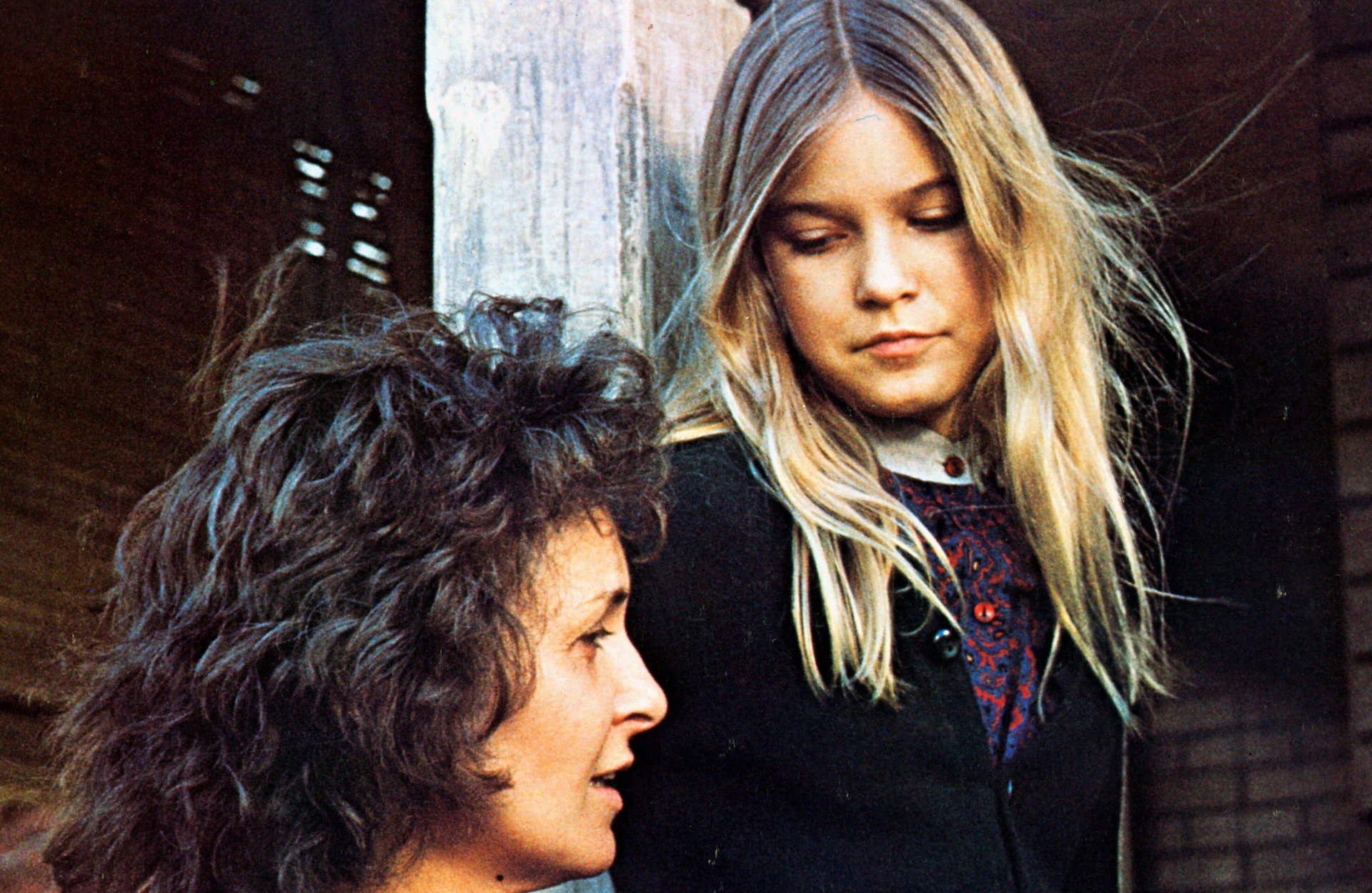
Joanne Woodward (left) and daughter Nell Potts in Paul Newman's 1972 adaptation of "The Effect of Gamma Rays on Man-in-the-Moon Marigolds." (Turner Classic Movies)
From "South Pacific" to "Cat on a Hot Tin Roof" to "Glengarry Glen Ross," dozens of Pulitzer Prize-winning plays and musicals have become cultural touchstones as film adaptations. But for every "Driving Miss Daisy" or "Fences," there are films that have faded from the popular consciousness, never resonated with audiences or acquired a reputation distinct from their source material. In this list, we will explore seven of these films — and a masterwork of American cinema with a hidden Pulitzer connection.
1.
"Miss Lulu Bett" by Zona Gale
2.
"Anna Christie" by Eugene O'Neill
A mordant (and pre-Code) explication of the legacy of familial neglect, alcoholism, rape and prostitution, "Anna Christie" resonated with the Depression-era audiences. Although contemporary reviewers were flummoxed by Garbo's "flat, rather toneless" voice, the actress, Brown and Daniels received Academy Award nominations for their work.
3.
"The Green Pastures" by Marc Connelly
According to TCM's Kerryn Sherrod, "Imagine, if you can, a 'Southern-style Heaven' where black English vernacular is spoken, fish fries and free cigars are plentiful, and the Hall Johnson Choir sings spirituals in the background all day." "[B]y downplaying, and outright distorting, African-American folk religion, and by side-stepping any confrontation with race problems," argued G. S. Morris of Bright Lights Film Journal, "Connelly fails to provide any real arena for racial reconciliation, instead affirming stereotypes and making it safe for white agnostics to find solace in a forgiving Uncle Tom."
Largely repudiated by civil rights activists, the 1936 film, co-directed by Connelly and Hollywood workman William Keighley ("The Adventures of Robin Hood," "The Man Who Came to Dinner"), was a financial success, grossing nearly $3.8 million by 1939 and selling 6,000 tickets per hour at Radio City Music Hall during its commercial zenith. The last surviving charter member of the Algonquin Round Table, Connelly co-wrote the screenplay for Victor Fleming's adaptation of "Captains Courageous" (1937) and enjoyed a second career as a television actor before dying at the age of 90 in 1980.
4.
"Of Thee I Sing" by Ira Gershwin (lyrics), George S. Kaufman & Morrie Ryskind (book) and George Gershwin (score; not credited in Pulitzer Prize citation)
"Duck Soup" by Leo McCarey (director) and Herman J. Mankiewicz (producer); Bert Kalmar and Harry Ruby (screenplay); Arthur Sheekman and Nat Perrin (additional dialogue); The Marx Brothers (stars/improvisation)
Produced by Kaufman's onetime Algonquin Round Table confederate Herman Mankiewicz — who shepherded a generation of New York-bred Hollywood screenwriters before earning an Academy Award for his nebulous contributions to Orson Welles's "Citizen Kane" (1941) — "Duck Soup" swapped out the progressive rudiments of Kaufman and Ryskin's plot (U.S. president who ran on "love" platform forsakes beauty pageant winner for shrewd administrator) for Freedonian political intrigue and cynical power grabs worthy of the banking tensions (chronicled by 2018 History finalist Kim Philips-Fein in "Invisible Hands: The Businessmen's Crusade Against the New Deal") that underscored the beginnings of FDR's social welfare programs. Yet the sheer physicality (culminating in a food fight/singalong not entirely unlike the concluding singalong of "Of Thee...") and eclectic score make "Duck Soup" the spiritual adaptation of this riotous Pulitzer classic.
5.
"The Time of Your Life" by William Saroyan
Although complicated by the era's Production Code standards (emblematized by the sanitization of a murder and the imposition of a romantic ending), the play initially was adapted as a project under the aegis of the Cagney family in 1948. James Cagney starred as Joe, while sister Jeanne portrayed morally ambiguous prostitute Kitty Duval; as with many of their projects, younger brother and business manager William served as the film's producer. Interestingly, cinematographer James Wong Howe (who previously collaborated with the Cagneys on "Yankee Doodle Dandy") was the husband of novelist Sanora Babb, whom Saroyan had pursued romantically over the course of a nine-year correspondence that ended in 1941. The film failed to resonate with preview audiences, leading Cagney to request a new denouement from Saroyan; however, the writer's fee could not be accommodated by what remained from the coffers of the spendthrift $2 million production. Despite these troubles, the "ennui" (Bosley Crowther)-laden film still managed to recoup $1.5 million at the box office.
A decade later, Jackie Gleason (as Joe), Jack Klugman and Betsy Palmer starred in a critically-acclaimed 90-minute adaptation aired on CBS's "Playhouse 90." The supporting cast included future "Bewitched" star Dick York, noted character actor Bert Freed and — defying type — socialites Dina Merrill and Gloria Vanderbilt. Long unavailable to the general public, it may be viewed at the Paley Center for Media in New York City.
6.
"State of the Union" by Russel Crouse and Howard Lindsay
Believed to have been inspired by the 1940 presidential campaign of Wendell Willkie (a pro-business Democrat who ran as a liberal Republican against Franklin Roosevelt and carried on a lengthy, public extramarital affair with book critic Irita Van Doren, the wife of 1939 Biography winner Carl Van Doren), the plot concerns the dark horse Republican candidacy of aircraft manufacturer Grant Matthews, who is equally anathematized by big business and big labor. As his campaign progresses, Matthews is forced to grapple with the outsized power of special interests; his precarious relationship with his wife, Mary; and the patronage of his lover, newspaper tycoon Kay Thorndyke (portrayed by an aged-up Angela Lansbury following her Academy Award-nominated turns in "Gaslight" and "The Picture of Dorian Gray"). Unlike Wilkie, who remained a moderating force in American politics throughout World War II and even discussed forming a postwar third party with Roosevelt, a humbled Matthews reconciles with his wife and withdraws from the campaign.
Despite the success of its Broadway run, the imprimatur of the film's stars and its improbably catalytic role in convincing Harry Truman to seek his own term, "State of the Union" did not meet box office expectations, in part because the "happy-accidental" pairing of Hepburn and Tracy (facilitated by the last-minute withdrawal of Claudette Colbert following conflicts with Capra) led audiences to assume that the picture would be a screwball comedy in the vein of "Woman of the Year" (1941) or "Without Love" (1945). (Nevertheless, it was the 14th highest-grossing film of the year, outpacing such classics as "Key Largo," "Foreign Affair," and "The Naked City.") Indeed, gadfly film scholar Raymond Carney has gone so far as to characterize "State" as a "hard-boiled film noir." Seldom screened for decades after Capra acquired the rights to the film, "State" has been widely available since 2006.
7.
"Long Day's Journey into Night" by Eugene O'Neill
Shot on a low budget of $435,000 at Chelsea Studios in Manhattan, the 1962 adaptation found the director working with an array of notable talent, including producer Ely Landau, who secured the film rights from Monterey after mounting an acclaimed television adaptation of "The Iceman Cometh"; cinematographer and old Lumet hand Boris Kaufman; Ralph Richardson; Robards, who reprised his stage role of womanizing alcoholic Jamie; and veteran character actor Dean Stockwell as the O'Neill-esque, tuberculosis- and wanderlust-afflicted Edmund. Katharine Hepburn portrayed the family's morphine-addicted matriarch, Mary Cavan Tyrone, in a bellicose and critically divisive Academy Award-nominated performance largely underpinned by her climactic slap of Stockwell.
Producer Joseph E. Levine hoped that "Long Day's" would galvanize the fledgling American art cinema following the unexpected commercial success of De Sica's "Two Women" and Fellini's "8 1/2." But the film failed to recoup its budget, leading the impresario to quip, "You cannot stay in business by making O'Neill pictures. I will never get my money out of [it]."
Nevertheless, "Long Day's" has endured as a daimonic force of the popular unconscious in American culture — the unsaid penumbra of family reunions — spawning four Broadway revivals and several screen adaptations, including a 1973 ITV television production with Laurence Olivier.
8.
"The Effect of Gamma Rays on Man-in-the-Moon Marigolds" by Paul Zindel
Zindel's work was arguably ahead of its time, capturing an unabashedly blue-collar, "dirty realist" zeitgeist that would inform the work of two-time Pulitzer finalist Raymond Carver (who first enjoyed national exposure with the publication of "Neighbors" in Esquire in 1971), underground poetry stalwart Charles Bukowski (who left his day job as a postal sorter to write his first novel in 1970) and Bob Rafelson's "Five Easy Pieces." It was, perhaps, with an eye toward the unexpected commercial success of the latter film (which earned over $18 million on a $1.6 million budget) that saw "Marigolds" bypass a Broadway production for the silver screen.
Directed by Paul Newman and adapted by late-bloomer screenwriter Alvin Sargent (who earned his first Academy Award nomination for "Paper Moon" the following year), the resulting 1972 film was a family affair — Newman's wife, Joanne Woodward, starred as Beatrice, while daughter Nell Potts portrayed the voluble Matilda. (Bridgeport, Conn. stood in for Staten Island due to its proximity to the Newmans' longtime family home in Westport.)
Although Woodward and her daughter earned acclaim for their performances, Newman's direction divided critics, with future Pulitzer winner Roger Ebert castigating his perceived lack of visual style. Long unavailable on VHS or DVD, the film was reissued on Blu-ray in 2018. Despite its lukewarm reception, "Marigolds" was the virtual blueprint for one of the most epochal films of the 1970s: John Cassavetes's "A Woman Under the Influence," in which the desperation of Zindel's work is recast in a masculinized setting driven by Peter Falk's performance as a beleaguered construction worker.
While Zindel continued to work in the theater and as a screenwriter through 1989, he found his most enduring calling as a writer of young adult fiction, exemplified by the "Pigman" series and "Confessions of a Teenage Baboon." The American Library Association recognized his "significant and lasting contribution to young adult literature" with the Margaret A. Edwards Award a year before his death in 2002. "Paul Zindel knows and understands the reality young adults deal with day-to-day," the citation read. "He has the ability to depict young adults in an honest and realistic way. The characters he developed nearly 40 years ago still speak to today's teens."