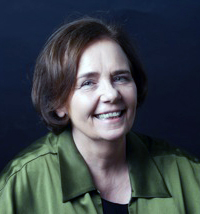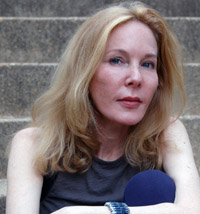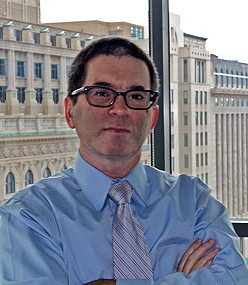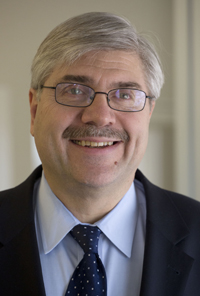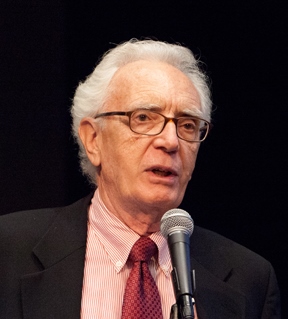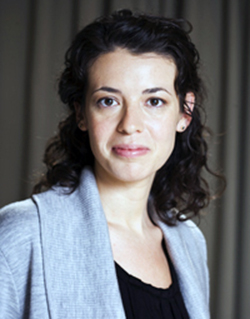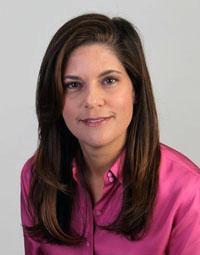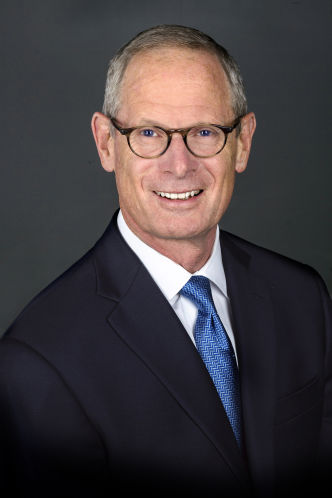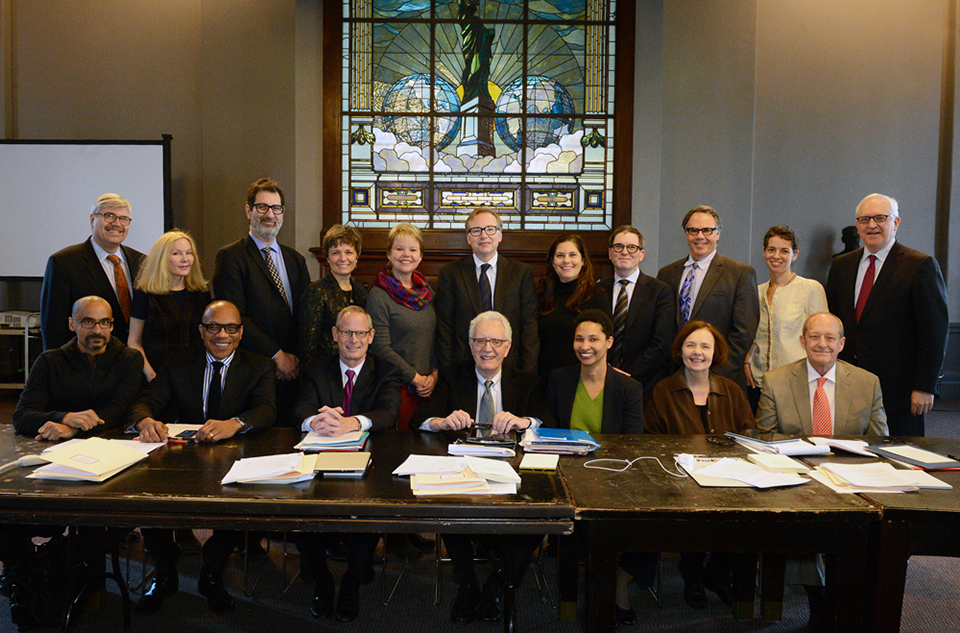
front row, left to right: J. Diaz, E. Robinson, P. Tash, S. Gissler, D. Allen, G. Collins. R. Beck; back row, left to right: J. Daniszewski, K. Boo, S. Engelberg, J. Dehli, K. Willey, S. Coll, A. Marques, B. Blau, S. Hahn, Q. Hudes and P. Gigot (absent from photo: L. Bollinger)
Gail Collins joined the editorial board of The New York Times in 1995 and six years later became the first woman editor of The Times’ editorial page. At the beginning of 2007, she stepped down and took a leave in order to finish a book, When Everything Changed: The Amazing Journey of American Women from 1960 to the Present. She returned to the paper as an Op-Ed columnist later in 2007.
Katherine Boo, a staff writer for The New Yorker magazine, was a reporter at The Washington Post when her series on mistreatment of mentally challenged people in Washington, D.C., resulted in the 2000 Pulitzer Prize for Public Service for The Post. The Pulitzer citation praised her work for exposing "wretched neglect and abuse in the city’s group homes for the mentally retarded, which forced officials to acknowledge the conditions and begin reforms."
Robert Blau, a New York City native, has carved an eclectic path up the journalistic ranks. He wrote about music, reviewed movies and covered the police beat, before turning his attention to investigative reporting and editing. Following a Nieman Fellowship at Harvard University in 1997, he began overseeing all major enterprise at the Chicago Tribune, including its years-long probe of the failures of the criminal justice system in Illinois, which yielded numerous reforms and was emulated by news organizations across the country.
John Daniszewski became AP’s vice president for international news in 2009 after three decades as a reporter, editor and correspondent who has been on assignment in more than 70 countries in Europe, Africa, the Middle East, Latin America and Asia. He is responsible for more than 500 editors and reporters in some 100 bureaus outside the United States producing coverage from some of the most complex and challenging news-gathering environments.
Columbia Journalism School Dean Steve Coll is a staff writer at The New Yorker, the author of eight books of nonfiction, and a two-time winner of the Pulitzer Prize. Between 1985 and 2005, he was a reporter, foreign correspondent and senior editor at The Washington Post. There he covered Wall Street, served as the paper’s South Asia correspondent in New Delhi, and was the Post’s first international investigative correspondent, based in London. He served as managing editor of the Post between 1998 and 2004.
Sig Gissler has been administrator of the Pulitzer Prizes since 2002. A longtime faculty member at Columbia's Journalism School, he is the former editor of the Milwaukee Journal. During his 25 years with the paper, he served as reporter, editorial page editor and associate editor before becoming editor in 1985. Gissler left the paper in 1993 to become a senior fellow at the Freedom Forum's Media Studies Center, exploring media coverage of race.
A playwright and educator, Quiara Alegría Hudes won the 2012 Pulitzer Prize for Drama for her play Water by the Spoonful. Variety hailed the play as “a combination poem, prayer and app on how to cope in an age of uncertainty, speed and chaos.”
As executive editor of The Miami Herald, Aminda Marqués Gonzalez has oversight and responsibility for the newspaper’s print and online news operation, which reaches 1.2 million readers a week.
Paul C. Tash is the chairman and CEO of the Tampa Bay Times and the Times Publishing Company, St. Petersburg, Fla.
A native of South Bend, Indiana, Tash graduated summa cum laude from Indiana University in 1976. He received a Marshall Scholarship and graduated magna cum laude with a bachelor of laws degree from Edinburgh University in Scotland in 1978.