Associated Press, by Rodrigo Abd, Manu Brabo, Narciso Contreras, Khalil Hamra and Muhammed Muheisen

Lee C. Bollinger, President of Columbia University (left), presents the 2013 Breaking News Photography prize to (left to right) Muhammed Muheisen, Manu Brabo, Narciso Contreras, Rodrigo Abd and Khalil Hamra of the Associated Press.
Winning Work
To the Judges:
Descended into chaos, Syria was both a signal story of 2012 and a difficult and monumentally dangerous one to cover. Bringing news of this full-blown civil war to the world required repeated trips into the war zone, without government permission or protection; it demanded sensitive negotiations with shadowy groups of fighters. And always, there were the dangers of shelling, bombardment and errant bullets, the risk of abduction or capture.
Time after time throughout 2012, five Associated Press photographers endured these perils to show us that when war hits, everything we take for granted is shattered. The homes we live in, the streets we walk down, our routines, our families and friends and our sense of normalcy are all transformed by violence.
These images take us deep into the suffering of civilians in a war that has left more than 60,000 dead, displaced more than a million people internally and sent hundreds of thousands more fleeing over Syria’s borders, mainly into Turkey. The images connect us personally to Syrians’ experience as the war suddenly struck their lives, tearing them quite literally apart throughout 2012. They also show us fierce resistance by the Free Syrian Army in the face of repeated advances by government forces, often shelling civilian areas as they try to quell anti-regime protests that started peacefully in 2011.
The lead image drives it home directly. A father overcome with grief cradles the lifeless body of his young son on his knees, oblivious to all but his loss.
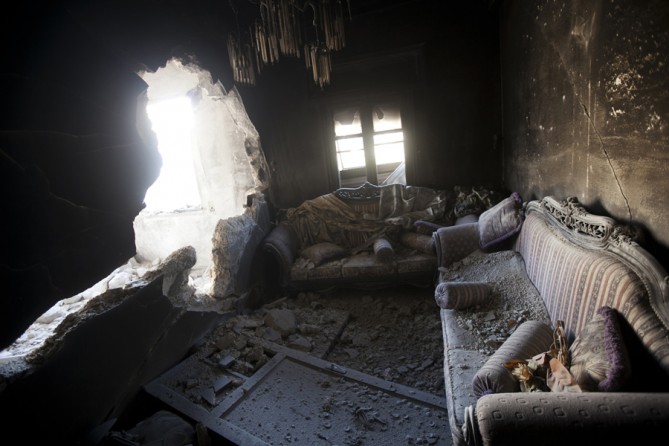
Without showing a single person, the photo of a destroyed Aleppo apartment haunts us with a family’s story. We know nothing about those who lived there. But a charred living room wall, rubble on a sofa’s upholstery, a chandelier shrouded in dust and darkness -- and that cold light from the hole punched into their home -- tell us all about the loss they carry with them wherever they have fled.
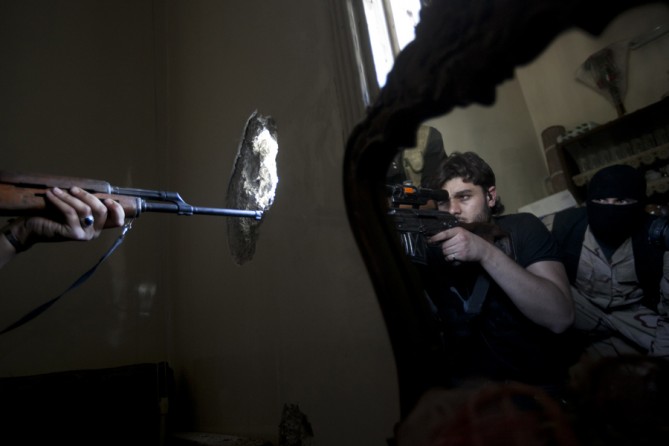
In what could be a companion photo, another home is turned into a sniper’s nest. The frame puts the viewer in the middle of stories flowing from every direction -- the mirror’s homey intimacy, the intensity in the eyes of the gunmen crouched among family furniture and the rifle barrel pointing to the unseen violence outside.
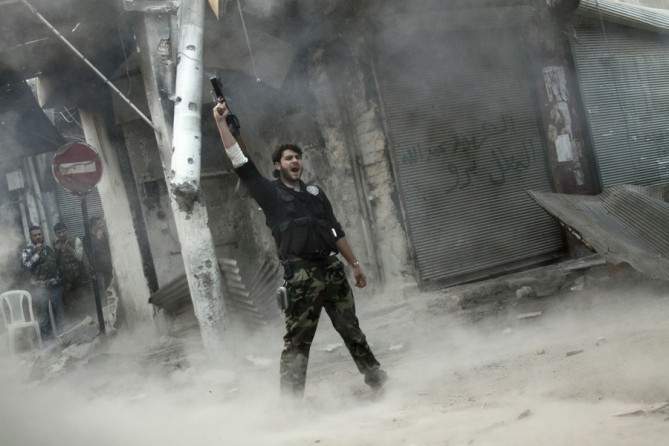
One dramatic scene centers on the bravado of a rebel who has just fired a rocket. But from the dust swirling around him emerges the rest of the story: layer upon layer of ruin on a city street corner.
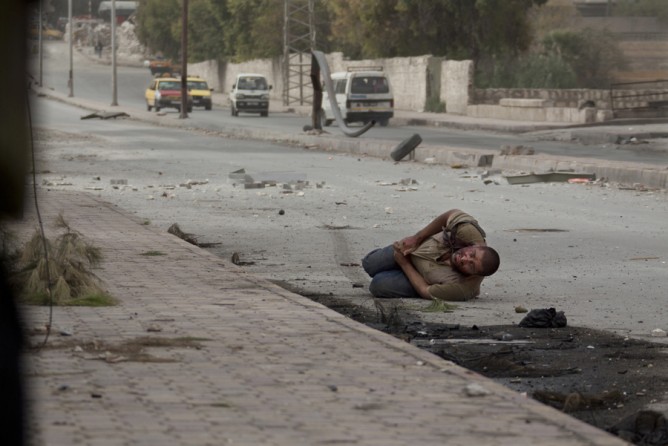
Another searing image captures a civilian, lying helpless in the street after being shot by a sniper as traffic in the background stops and turns away.
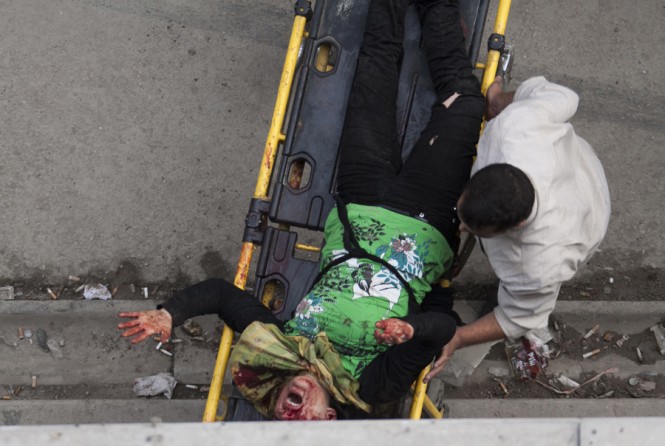
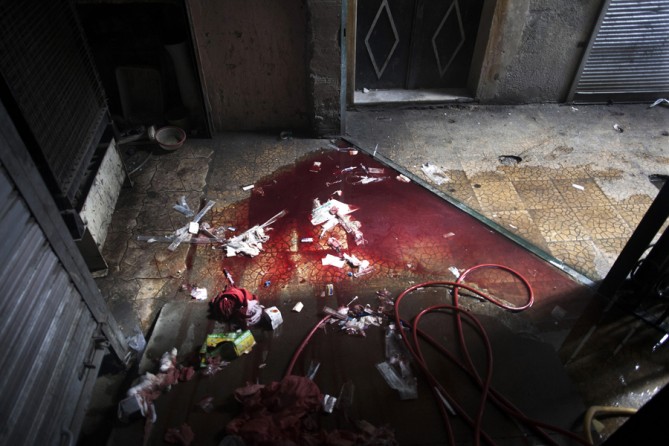
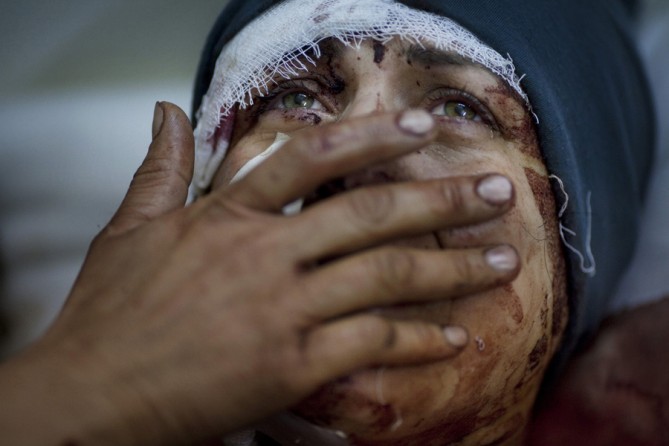
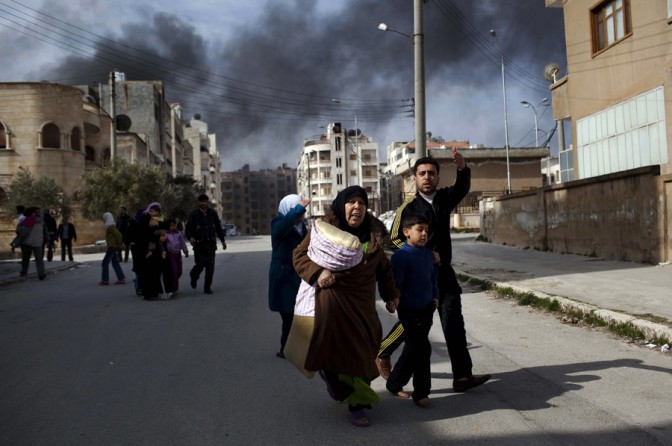
When we see the people caught in the middle, the focus is on how their lives have been overturned. Families flee the fighting carrying a few basic possessions as smoke rises into the air. A woman screams while being stretchered into a makeshift hospital. The debris of triage floats in a puddle of blood and a wounded woman’s eyes communicate shock and seeming disbelief that this can be happening.
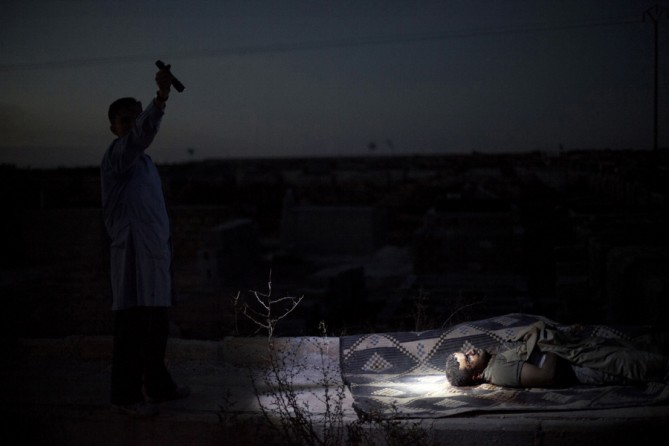
A flashlight beam focuses the eye on the body of a man killed in shelling -- a symbol of the war’s human cost. But what overwhelms the picture is the darkness of the countryside beyond, a landscape foreboding a war seemingly without end.
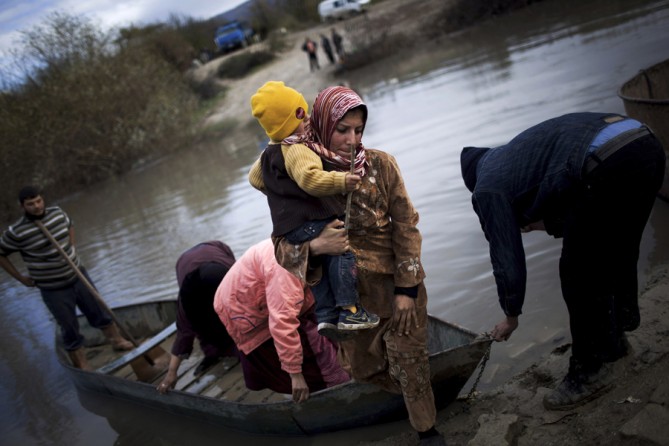
For the refugees, forced to flee their country the journey is long and ends in bare refugees camps where they live in tents. A mother carrying her child curls her lip in determination as she steps from a rowboat onto a muddy riverbank, crossing into an uncertain future in Turkey.
For these images that allowed viewers the world over to experience what it is like to live in a war raging inside one’s own home -- images that combine immediacy, compassion and artistry -- I am proud to nominate AP photographers Rodrigo Abd, Manu Brabo, Narciso Contreras, Khalil Hamra and Muhammed Muheisen for the 2013 Pulitzer Prize in Breaking News Photography.
Sincerely,
Santiago Lyon
Director of Photography
Associated Press
Winning Work
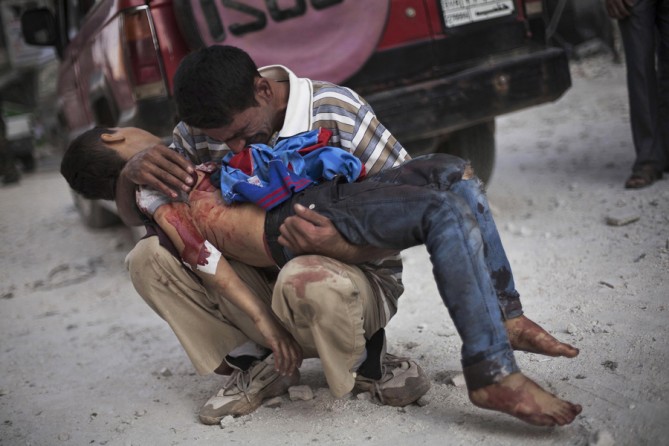
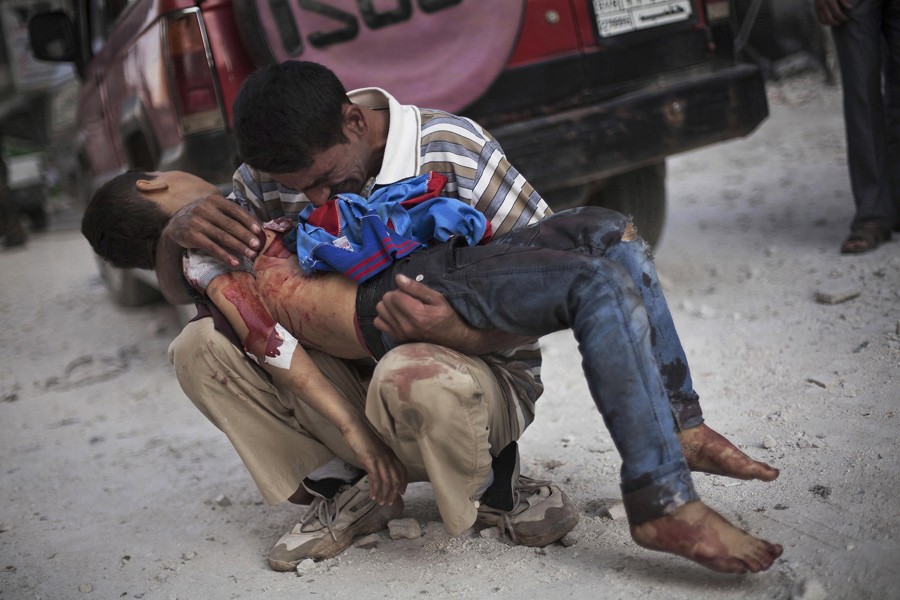
A Syrian man cries while holding the body of his son near Dar El Shifa hospital in Aleppo, Syria, Oct. 3, 2012. The boy was killed by the Syrian army. (Manu Brabo, Associated Press - October 3, 2012)
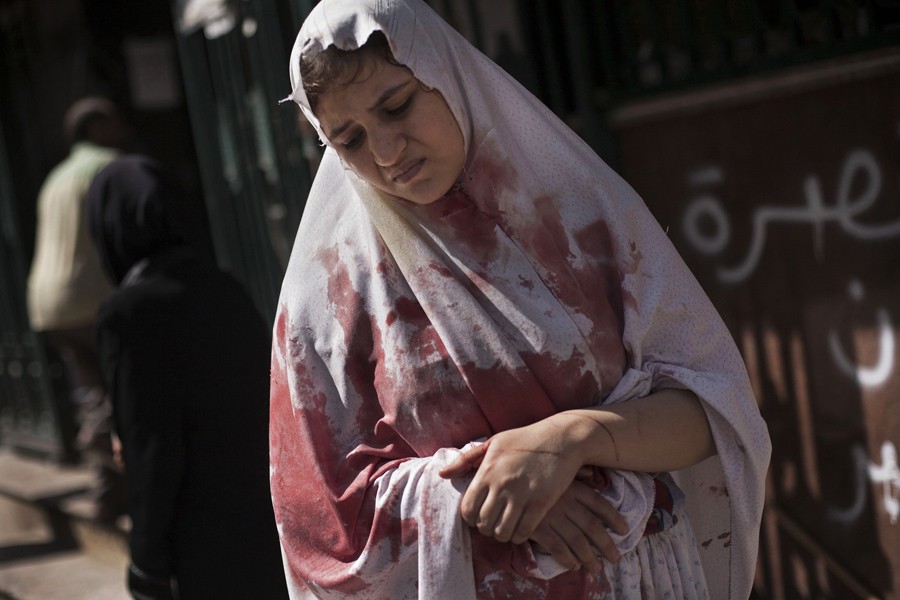
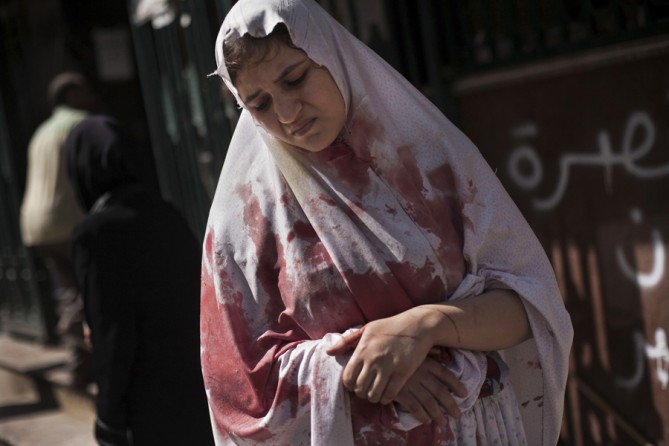
A wounded woman still in shock leaves Dar El Shifa hospital in Aleppo, Syria, Sept. 20, 2012. Dozens of Syrian civilians were killed, four children among them, in artillery shelling by Syrian government forces in the northern Syrian town. (Manu Brabo, Associated Press - September 20, 2012)
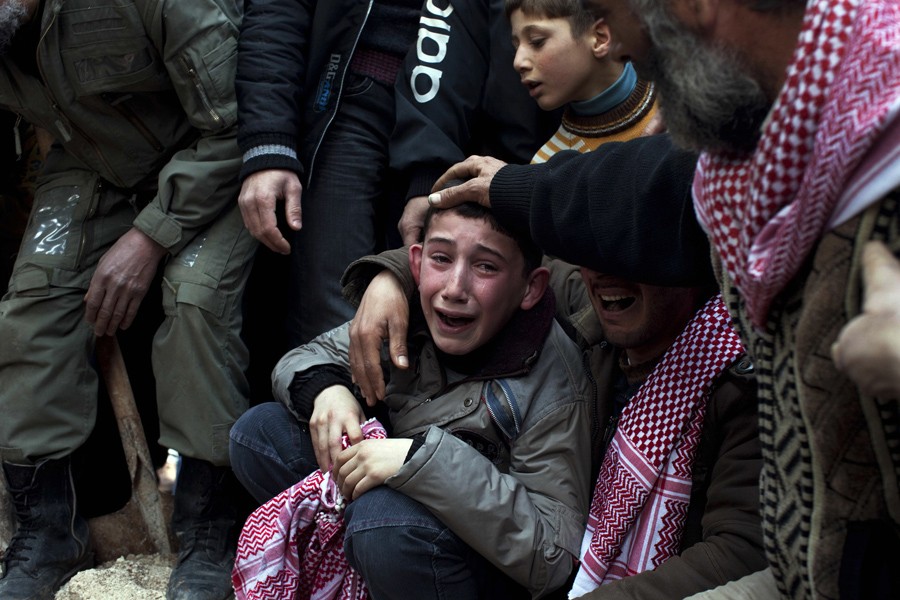
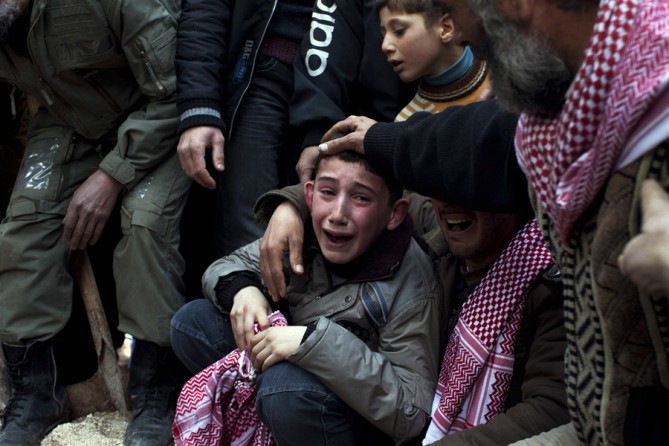
A boy named Ahmed mourns his father, Abdulaziz Abu Ahmed Khrer, who was killed by a Syrian army sniper, during his funeral in Idlib, northern Syria, March 8, 2012. (Rodrigo Abd, Associated Press - March 8, 2012)
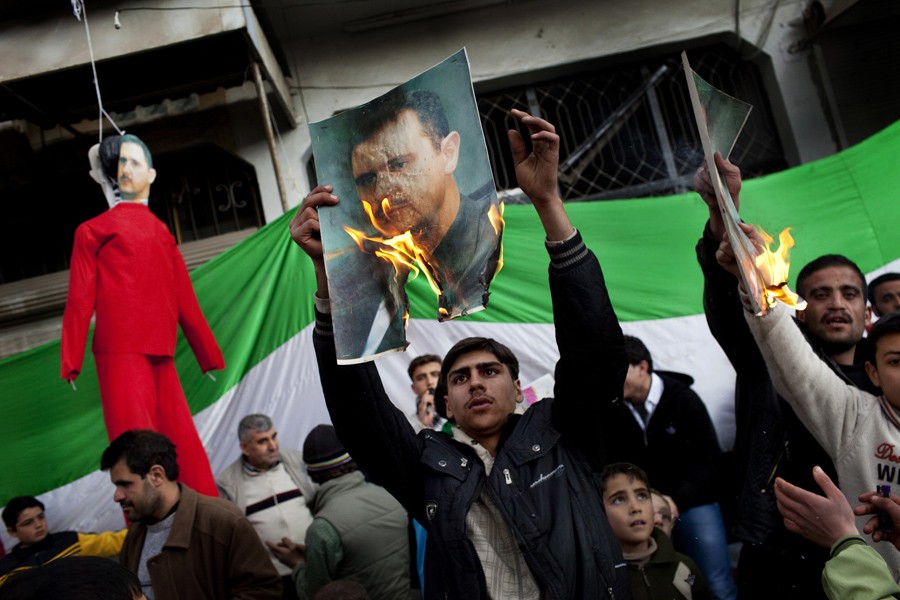
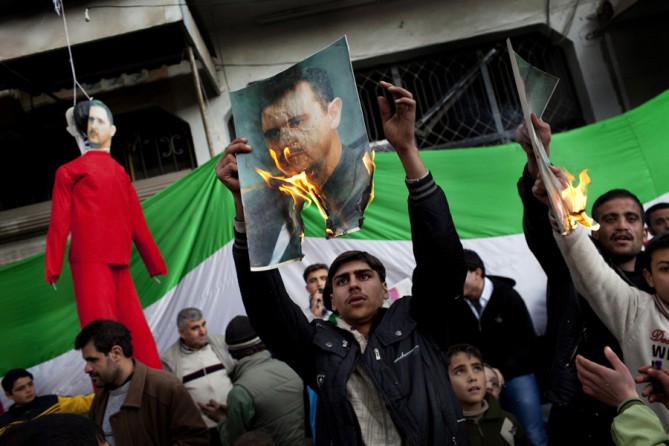
People burn portraits of Syrian President Bashar Assad during a demonstration against his regime in the outskirts of Idlib, northern Syria, Feb. 26, 2012. (Rodrigo Abd, Associated Press - February 26, 2012)
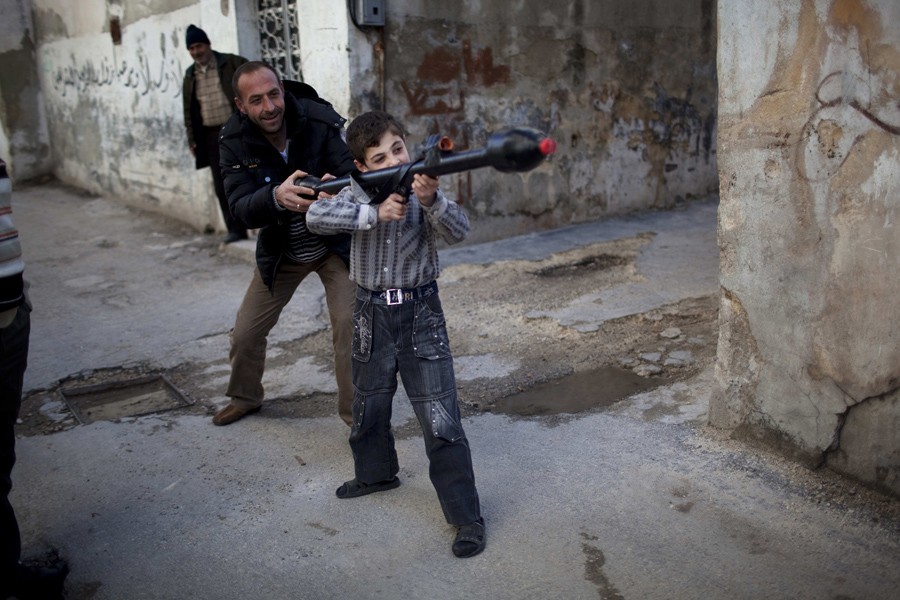
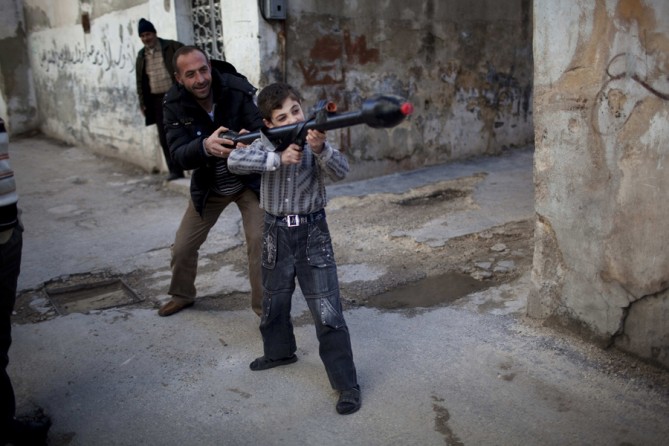
A man teaches Bilal, 11, how to use a toy rocket propelled grenade in Idlib, northern Syria, March 4, 2012. (Rodrigo Abd, Associated Press - March 4, 2012)
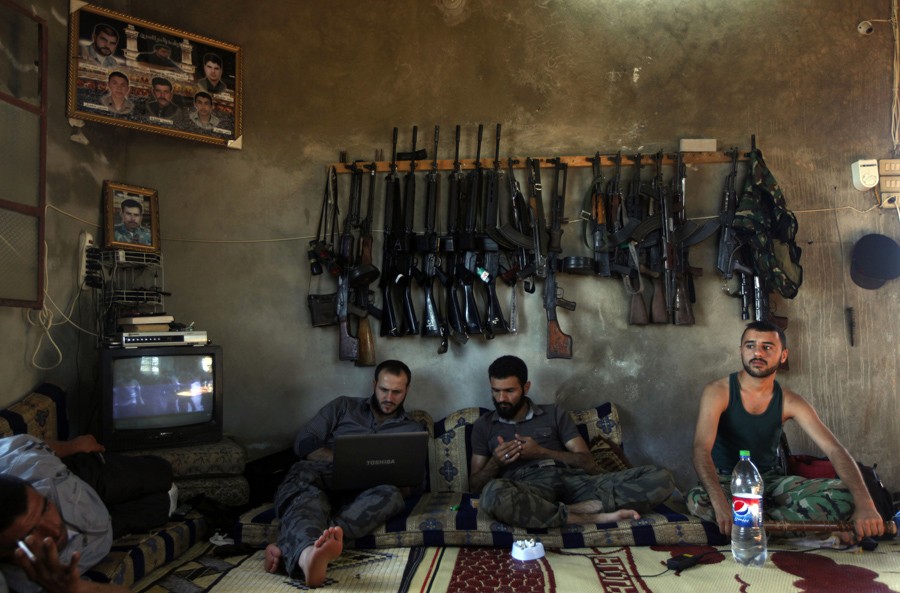
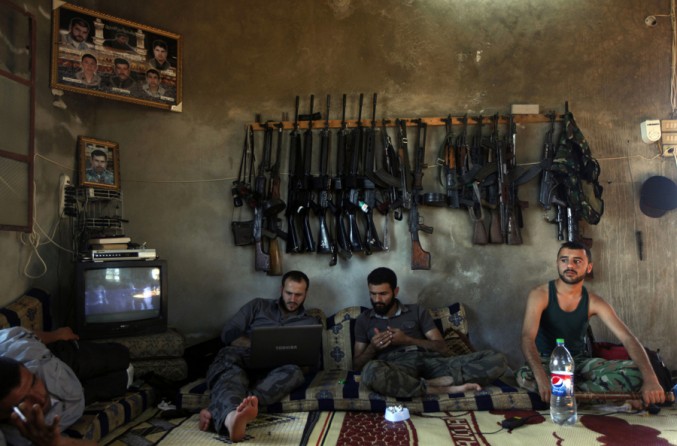
Free Syrian Army fighters sit in a house on the outskirts of Aleppo, Syria, June 12, 2012. (Khalil Hamra, Associated Press - June 12, 2012)
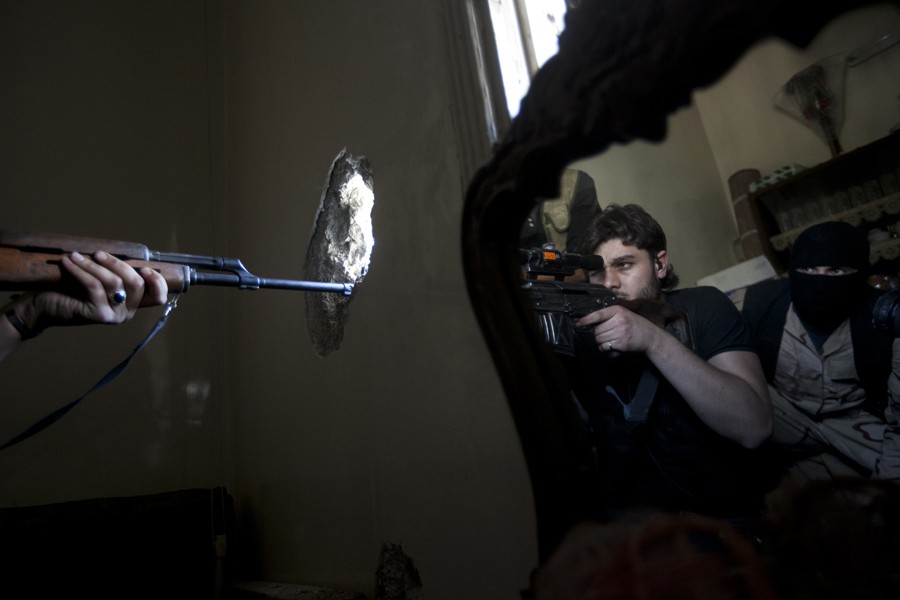
A rebel sniper aims at a Syrian army position, as he and another rebel fighter are reflected in a mirror inside a residential building in the Jedida district of Aleppo, Syria, Oct. 29, 2012. (Narciso Contreras, Associated Press - October 29, 2012)
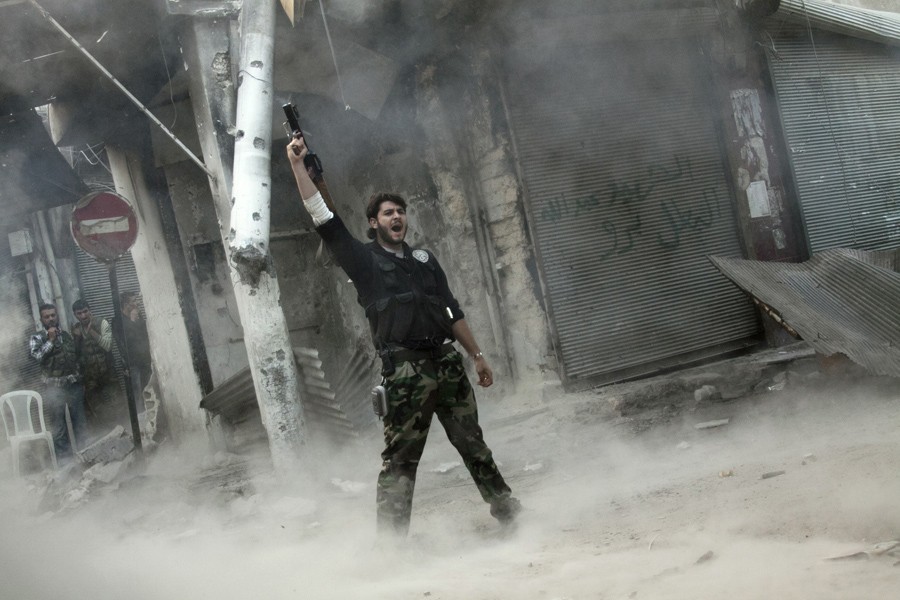
A rebel fighter gestures for victory after firing a shoulder-fired missile toward a building where Syrian troops loyal to President Bashar Assad were hiding as they attempted to gain terrain against the rebels during heavy clashes in the Jedida district of Aleppo, Syria, Nov. 4, 2012. (Narciso Contreras, Associated Press- November 4, 2012)
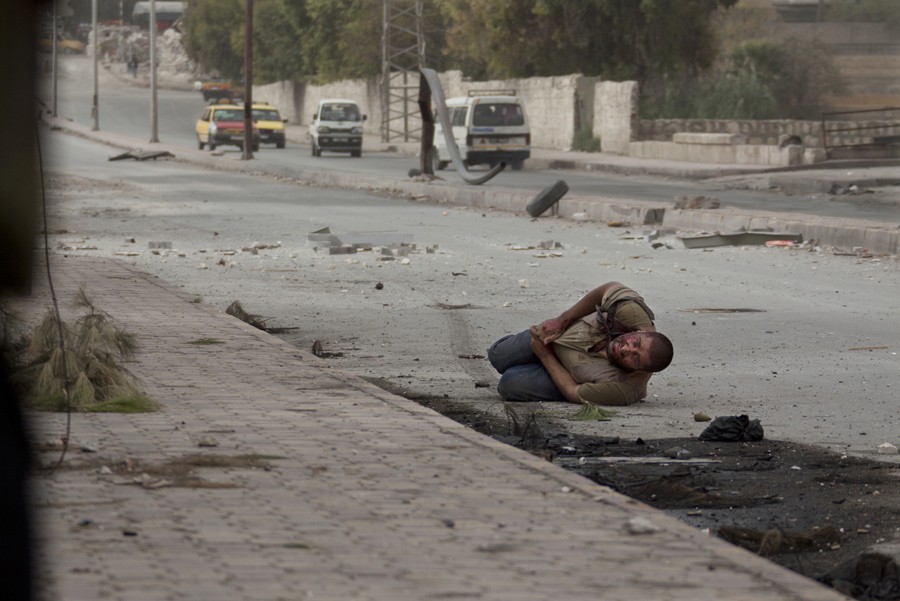
A wounded Syrian civilian lies in the street with a shot to his stomach as he tries to escape the line of fire after he was targeted by a Syrian army sniper while walking near the frontline in the Bustan al-Qasr neighborhood of Aleppo, Syria, Oct. 20, 2012. (Narciso Contreras, Associated Press - October 20, 2012)
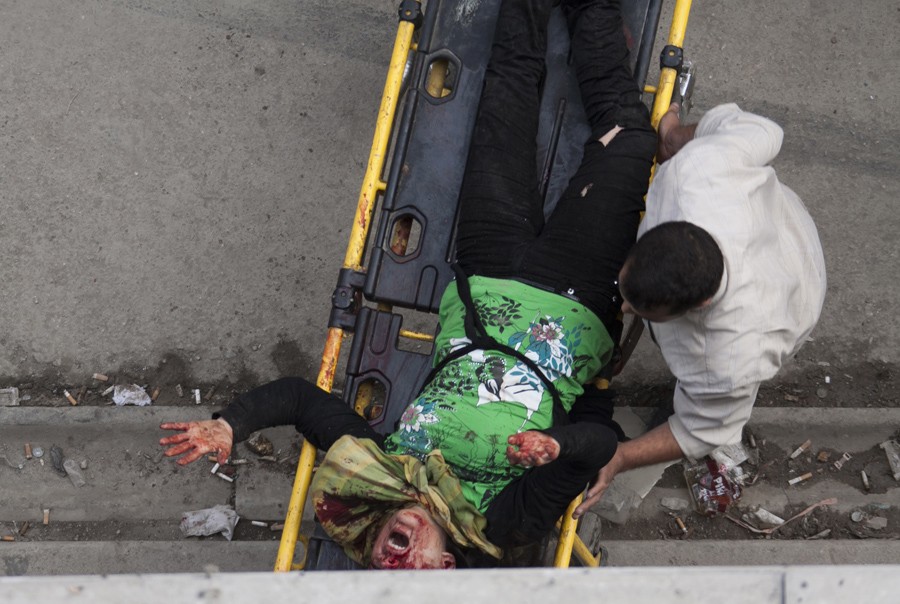
A Syrian man wheels a severely injured woman to a hospital for treatment after an artillery shell landed near a bakery in Aleppo, Syria, Oct. 23, 2012. (Narciso Contreras, Associated Press - October 23, 2012)
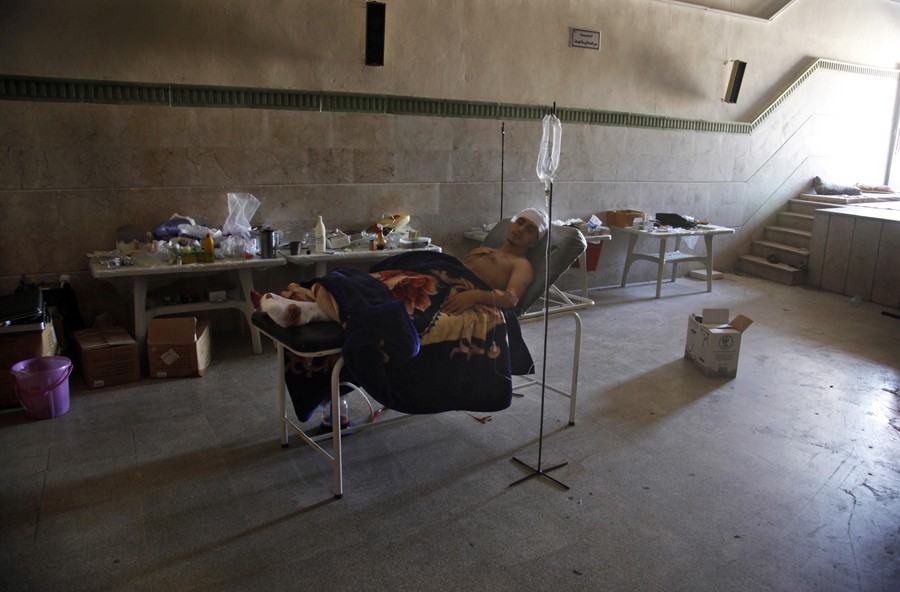
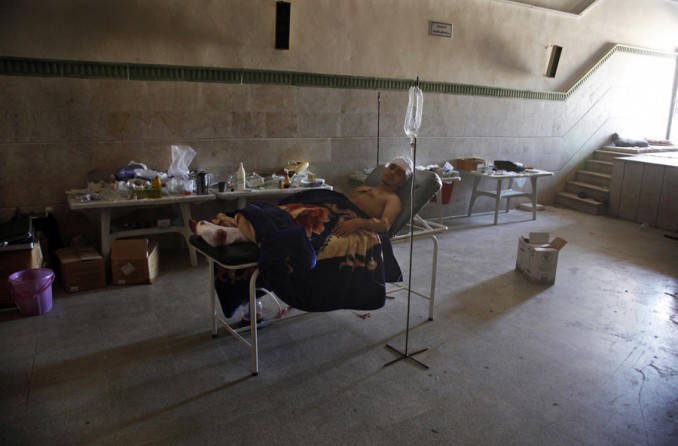
Mahmoud, a 21-year-old Palestinian resident of Syria who would only give his first name, rests in a field hospital after he was found Aug. 6, 2012, with three gunshot wounds in the town of Anadan on the outskirts of Aleppo, Syria. Mahmoud described being the only survivor of a massacre in which he and 10 other men were blindfolded, beaten and sprayed with bullets. (Khalil Hamra, Associated Press - August 6, 2012)
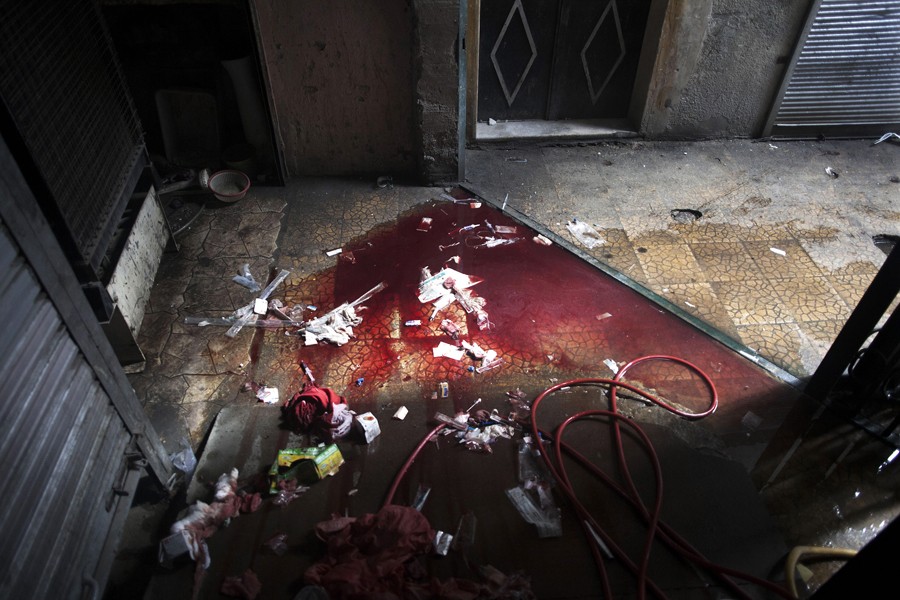
Blood and used medical supplies spill out of the back door of Dar al-Shifa hospital in Aleppo, Syria, Oct. 11, 2012. (Manu Brabo, Associated Press- October 11, 2012)
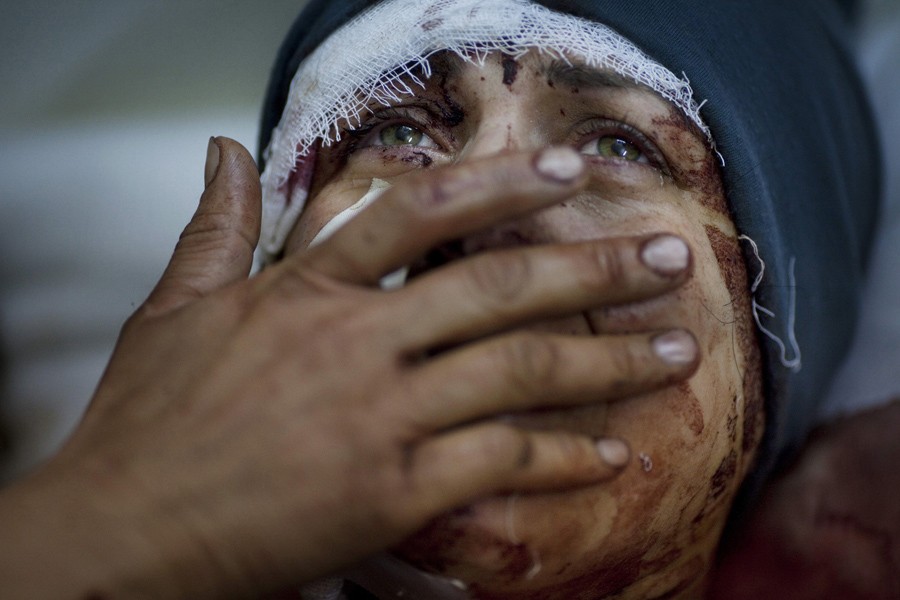
A woman named Aida cries as she recovers from severe injuries after the Syrian army shelled her house in Idlib, northern Syria, March 10, 2012. Aida's husband and two children were killed in the attack. (Rodrigo Abd, Associated Press - March 10, 2012)
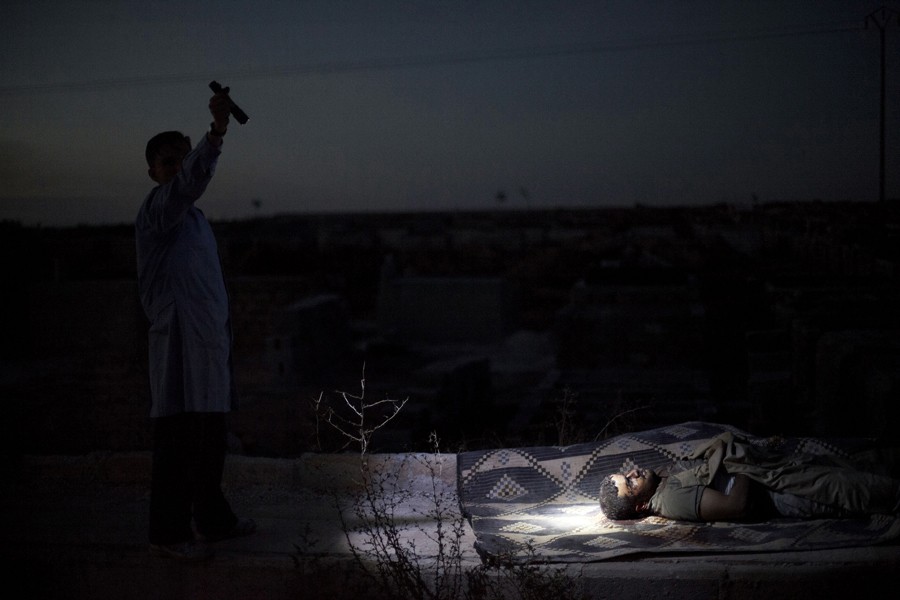
A man points a flashlight towards the body of a Syrian man killed by Syrian army shelling at a graveyard, in Aleppo, Syria, Oct. 13, 2012. (Manu Brabo, Associated Press - October 13, 2012)
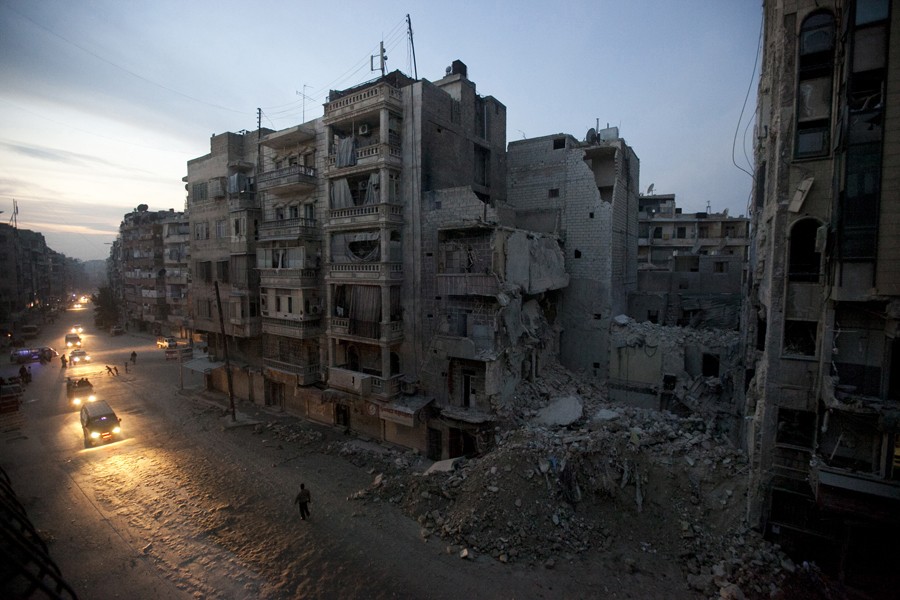
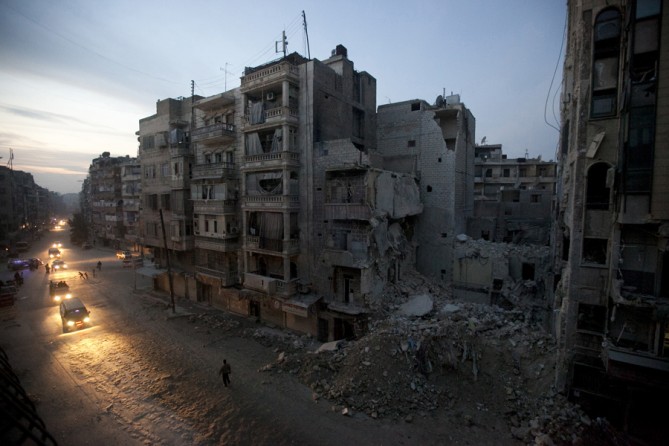
Night falls on a Syrian rebel-controlled area of Aleppo, Nov. 29, 2012, as destroyed buildings, including Dar Al-Shifa hospital, are seen on Sa'ar street after airstrikes targeted the area a week before. (Narciso Contreras, Associated Press- November 29, 2012)
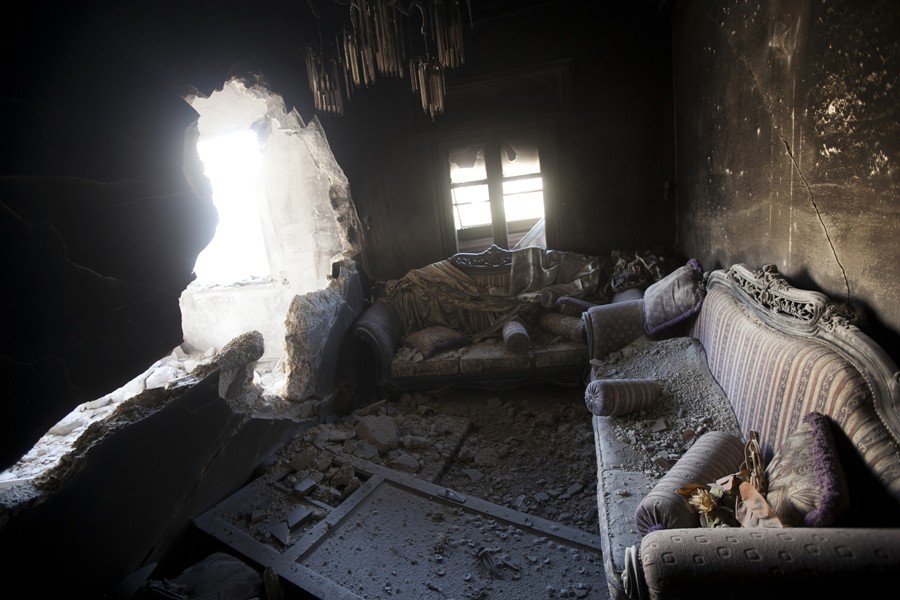
An apartment destroyed by tank shelling is seen in a building in the Karm al-Jabel neighborhood after several days of intense clashes between rebel fighters and the Syrian army in Aleppo, Syria, Oct. 28, 2012. (Narciso Contreras, Associated Press - October 28, 2012)
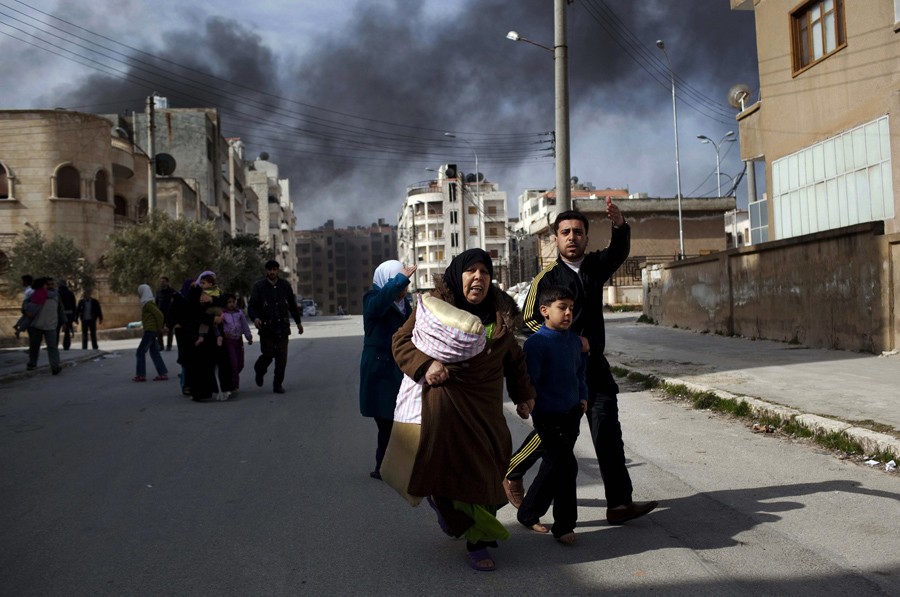
A family escapes from fierce fighting between Free Syrian Army fighters and government troops in Idlib, northern Syria, March 10, 2012. (Rodrigo Abd, Associated Press - March 10, 2012)
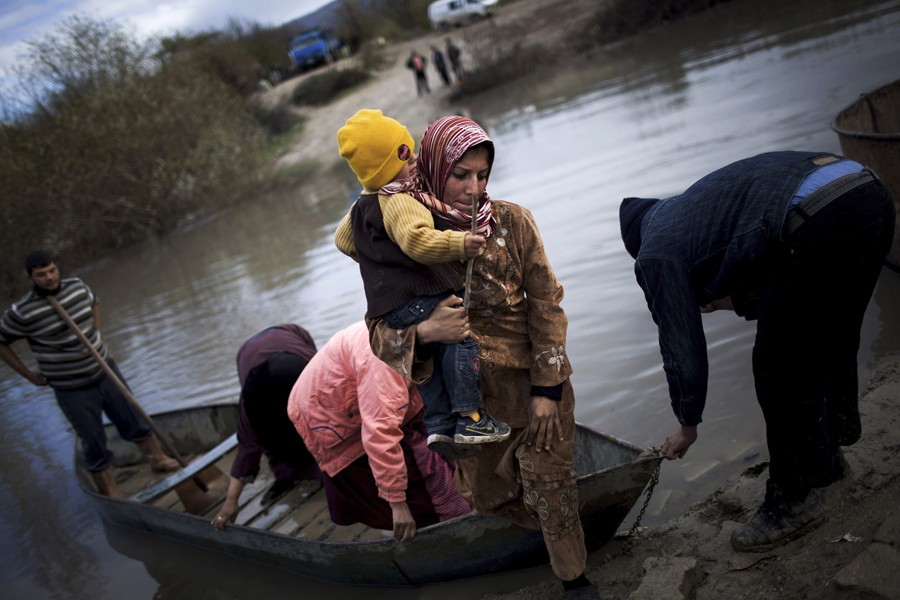
Syrian refugees cross from Syria to Turkey via the Orontes River, near the village of Hacipasa, Turkey, Dec. 8, 2012. (Manu Brabo, Associated Press - December 8, 2012)
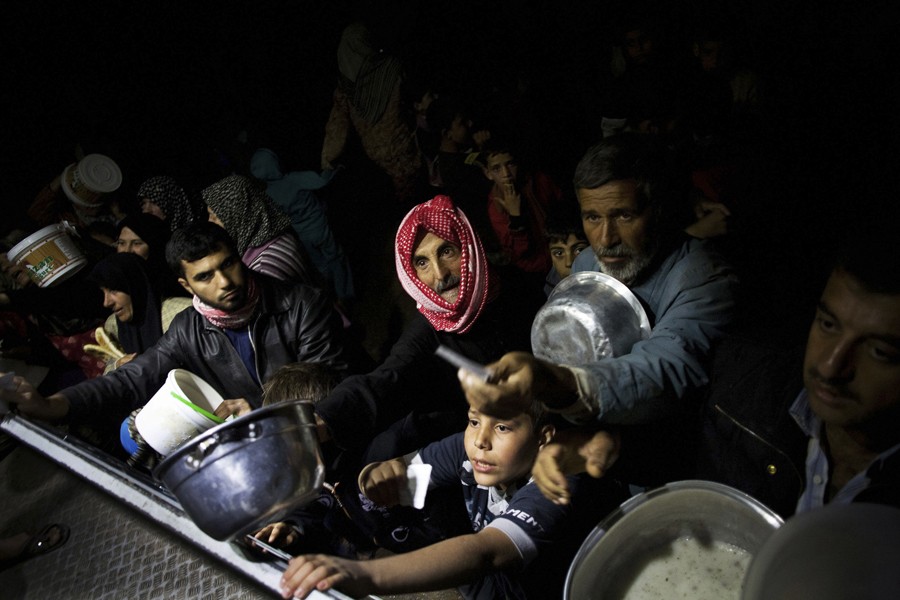
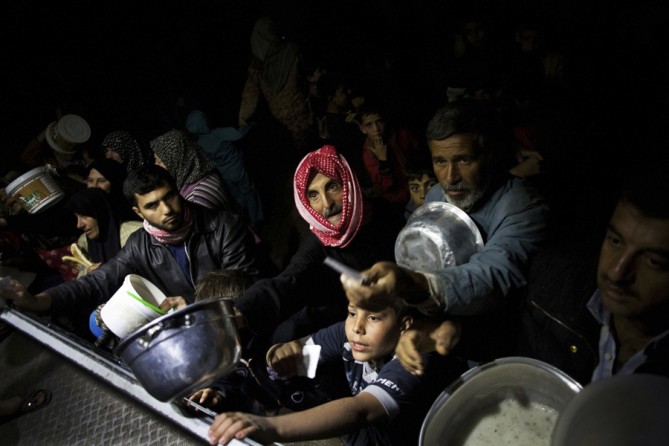
Displaced Syrian men wait for food near an NGO charitable kitchen in a refugee camp near Azaz, Syria, Oct. 23, 2012. Photo by Manu Brabo (Manu Brabo, Associated Press - October 23, 2012)
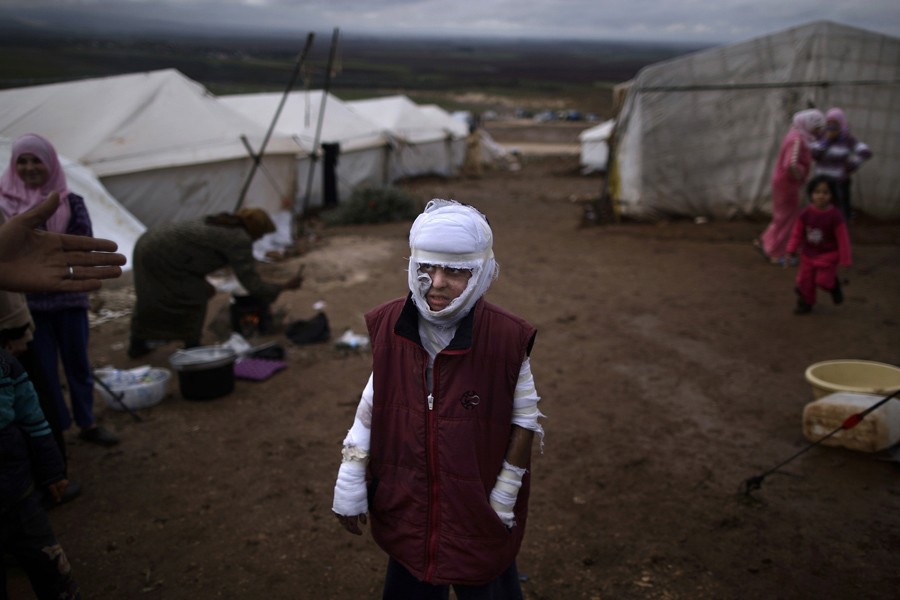
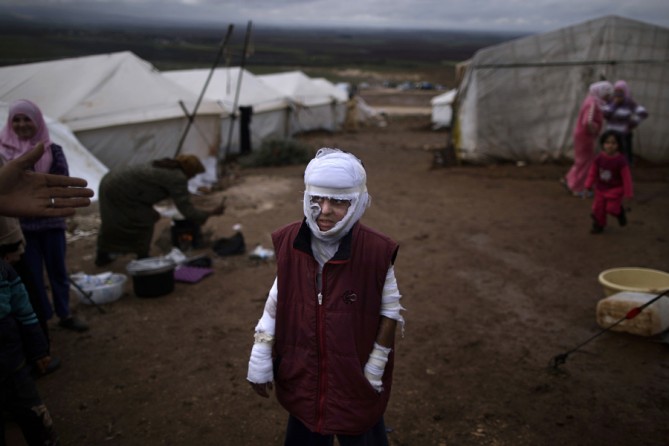
Abdullah Ahmed, 10, who suffered burns in a Syrian government airstrike and fled his home with his family, stands outside their tent at a camp for displaced Syrians in the village of Atmeh, Syria, Dec. 11, 2012. (Muhammed Muheisen, Associated Press - December 11, 2012)
Biography

Rodrigo Abd has been a staff photographer for the Associated Press since 2003, based first in Guatemala and now in Peru. Born in Argentina in 1976, Abd covered covered political turmoil in Bolivia in 2003 and Haiti in 2004. He also covered the Venezuelan presidential elections in 2007 and 2011, and the Haitian earthquake in 2010. In 2010, he was twice embedded with US troops in Afghanistan. In 2011 he covered the revolution in Libya and in 2012 he covered the Syrian civil war. He has won multiple awards for his work.

Manu Brabo, born in Spain in 1981, is a freelance photojournalist whose work is focused mainly on social conflicts around the world. Since 2007 he has worked on the impact of natural disasters, political changes, uprisings, revolutions and wars in countries such as Honduras, Haití, Bolivia, Kosovo, Libya, Egypt, and Syria. He has won multiple awards for his work.

Narciso Contreras is a Mexican freelance photographer whose work focuses on religious communities, human nature and conflicts, the latter being his main focus for the past three years. Born in Mexico City in 1975, Contreras studied philosophy and photography in university, conducted research for many years, and has been a professional photographer for the last five years.

Khalil Hamra is a Palestinian-Egyptian photographer born in Kuwait in 1979 who joined the AP in 2002 based in Gaza. Since 2010 he has been based in Cairo, from where he has covered the Egyptian revolution and the civil war in Syria. In 2009, Hamra was recognized by the Overseas Press Club of America with its Robert Capa Gold Medal for his series covering the war in Gaza. He has won multiple other awards for his work.

Muhammed Muheisen, born in Jerusalem in 1981, is a Jordanian national based in Islamabad as The Associated Press’ chief photographer for Pakistan. He joined the AP in 2001, covering major events in the Middle East, the Israeli-Palestinian conflict, and the Iraqi conflict, as well as events in Saudi Arabia, China, Afghanistan, Yemen, Egypt, Syria and France. In 2005 he was a member of the AP team that won the Pulitzer Prize for Breaking News Photography. He has won multiple awards for his work.