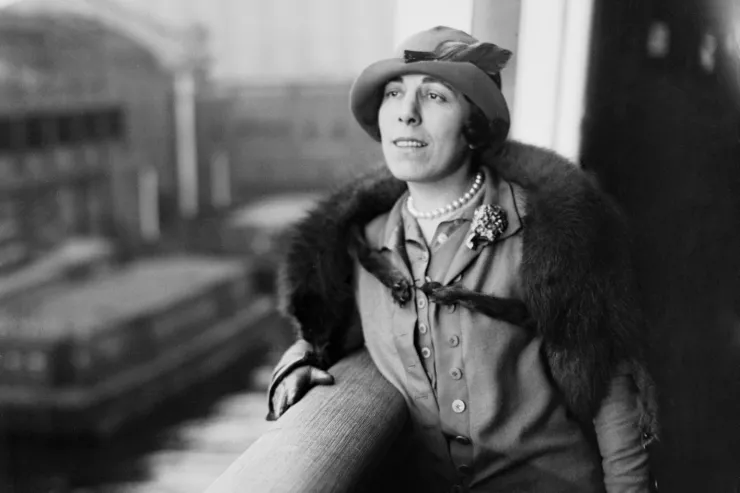
When William Allen White, a member of the 1925 Novel jury, did not see his good friend Edna Ferber’s So Big on the list of official Pulitzer entries, he wrote two letters, one to the book’s publisher, the other to the secretary of the Pulitzer Prizes. An unintended consequence of White’s campaign for So Big was a fellow juror’s decision to turn down his $100 honorarium so as not to “soil my fingers.”
“I am one of the judges of that contest and have not received the book,” White wrote So Big’s publisher. “I don’t need the book; I have read it until I can sing it, but I want to know if it has been formally entered.”
To Frank Fackenthal, the prize secretary, he wrote: “Is Edna Ferber’s ‘So Big’ on the list of novels entered for the Pulitzer Prize? I don’t see it on the list submitted to me. I certainly think that it should go in the first nine anyway.”
White had been a member of the Biography juries of 1923 and 1924. This was his first Novel jury. He owned and edited the Emporia Gazette in Kansas and had written fiction and poetry. With his straightforward editorial style and commonsense approach, he became widely known as a spokesman for Middle America. His 1922 editorial on free speech, “To an Anxious Friend,” won a Pulitzer Prize. Later he served on the Pulitzer Prize Board for six years. His autobiography won a posthumous Pulitzer Prize in 1947.
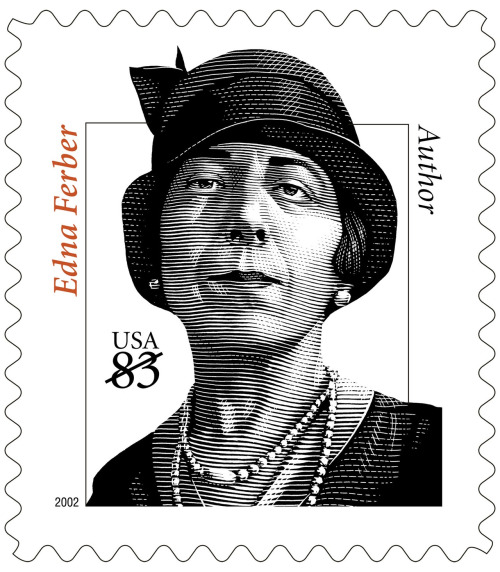
Mark Summers' 2002 stamp was part of the Distinguished Americans series issued by the U.S. Postal Service.
Ferber was also a Midwestern champion of the average American. She was born in Kalamazoo, Mich., in 1885 and began her career as a reporter in Wisconsin. She met White while both were covering the Democratic National Convention in Chicago in 1912 and dedicated her second novel to him in 1917. Ferber moved to New York City and became a regular at the Algonquin Round Table, a literary and social group.
So Big sold more than 300,000 copies, making it the bestselling novel of 1924. It told the story of Selina Peake DeJong’s journey from schoolteacher to farmer’s wife to single mother in the rural Midwest. Women’s rights issues and shifting class distinctions, both popular topics during early 1920s America, were its themes.
In The New York Times review of So Big, Louise Maunsell Field wrote: “It is a thoughtful book, this of Edna Ferber’s, clean and strong, dramatic at times, interesting always, clear-sighted, sympathetic, a novel to read and to remember.” The Los Angeles Times reviewer Lillian C. Ford called So Big “a very American novel” and said Ferber “shows herself bent on becoming a serious novelist, one to be reckoned with.”
The 1925 Novel jury consisted of two professors of comparative literature and White. The chair, Jefferson B. Fletcher of Columbia University, had trouble deciding among the entries. Balisand, Joseph Hergesheimer’s novel about a Revolutionary War hero, was the favorite of O.W. Firkins of the University of Minnesota. White favored So Big, and he and Firkins both made Laurence Stallings’s Plumes, the story of a soldier who returns from World War I disabled and disillusioned, their second choice. Firkins rated So Big “a poor third.”
Fletcher tried to strike a compromise.
“Mr. White’s preference for So Big rests upon his conviction that Miss Ferber has presented a needed lesson and that moreover the book sustains powerfully to the end its human interest,” Fletcher reported to the board. “His objection to Balisand is that he recognizes its artistic skill but regards its motive as ‘trivial.’ Professor Firkins on the contrary stresses very highly indeed the distinguished style and the thoughtfulness of Balisand ...
“I agree with Professor Firkins heartily as to the artistic distinction of Balisand and do not myself find its motive trivial. ... At the same time its dramatic interest does, I think, fall off seriously in its latter half. Again, there is no disputing the strong emotional appeal and lively narrative interest of So Big. On the other hand this very appeal to the feelings is at times, as it seems to me, rather raw.”
Fletcher suggested that the advisory board give each book a prize.
White followed up a few days later conceding that Balisand should be the sole winner, but then argued for two paragraphs that So Big was the better book:
“Every author consciously or unconsciously dramatizes an idea and the idea back of Balisand was thin and trivial, and besides, Balisand’s hero was a cad,” White wrote. By contrast, “Miss Ferber’s thesis was one badly needed in America and one which was dramatized with much skill.” He hoped would take his argument into account and at least consider So Big for the prize.
“This is, in no sense, a protest,” he wrote. “I shall feel entirely happy in the award to Balisand if the judges confirm the committee’s report.”
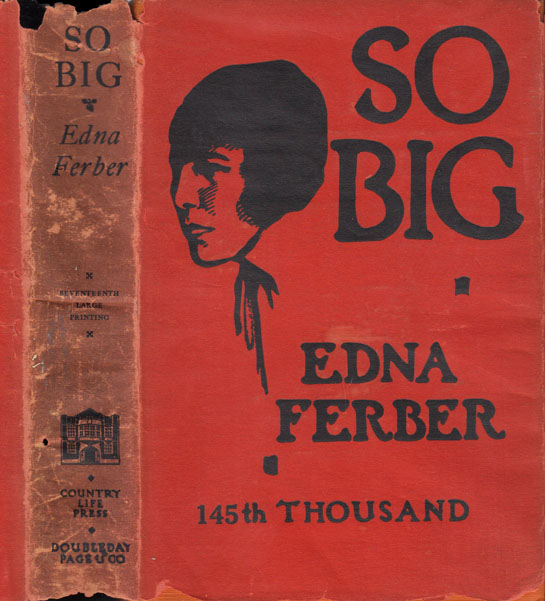
'So Big' dustjacket.
Firkins was not entirely happy when the board chose So Big. He wrote Fackenthal:
“I wish to register my emphatic protest against the award of the Pulitzer novel prize for 1924 exclusively to Miss Ferber’s So Big. I acquiesced, unreluctantly, though not unregretfully, in Mr. Fletcher’s recommendation that the prize be divided between So Big and Balisand. I do not like divisions, but I love honesty even more than I hate divisions; the divided award seems to me an honest presentation of the committee’s honestly divided mind. Even so the award was slightly unfair to Balisand. The unfairness becomes gross when So Big, the doubtful equal, is placed by the Advisory Board’s award in the position of the unquestionable superior. I will not soil my fingers with pay for any share that I may have had even in the innocent preliminaries that have issued in the iniquitous decision. I return herewith the hundred-dollar check, and shall feel entirely free — after April 27th — to communicate my views of this transaction to my personal friends or to the American public.”
Fackenthal tried to mollify Firkins with the notion that jurors were considered expert advisers to the board and were not responsible for the final decisions.
“You have been put to much work and inconvenience and, I have no doubt, expense through this matter and the stipend is an off-set to that and I hope you will accept it even though the Board’s action has not been entirely satisfactory to you.”
Sources: Pulitzer jury files; biography.com, Edna Ferber entry; The Daily Beast, “American Dreams, 1924: ‘So Big’ by Edna Ferber,” March 29, 2014.