
Finalist: The Life and Poetry of Frank Stanford, by James McWilliams (University of Arkansas Press)

A finely-researched work that illuminates the story of a little-known yet consequential literary figure, whose life helps us better understand the cultural history of the American South.

Nominated Work

The Life and Poetry of Frank Stanford


When twenty-nine-year-old Frank Stanford put three bullets in his chest on June 3, 1978, he ended a life that had been inextricably linked with poetry since childhood. Deeply influential but largely unknown outside his corner of the poetry world, this prodigy of the American South inspired a cult following that has kept his reputation and work flickering on the periphery of the American literary tradition ever since.

The Life and Poetry of Frank Stanford offers for the first time a comprehensive study of Stanford’s life and work, introducing to a broad readership poetry that remains both captivating to poets and, in its celebration of everyday experience over academic erudition, accessible to those who rarely read poetry.

Stanford’s poems range from one line to his 15,283-line epic, The Battlefield Where the Moon Says I Love You. The vital thread running through all of his poetry is an ear for language that vies with Walt Whitman in its expansiveness and generosity. Stanford’s omnivorous attraction to vernacular, particularly Black and rural vernacular, centered on an admiration for the marginalized and eccentric. Blending the Southern Gothic of Faulkner and O’Connor with a racially egalitarian vision, his poetry thrives on the stories and traditions of the oppressed and forgotten.

The themes that preoccupied Stanford’s prolific output—language, sex, death, class, geography, commercialism, surrealism, film, race—also preoccupied the poet in his daily life, which was marked by heavy drinking, philandering, mental instability, emotional abuse, and, through it all, an inveterate desire for beauty. Constantly attentive to this tension, biographer James McWilliams traces the short and painfully complicated life of this hidden talent who left a lifetime’s worth of poetry that, through its grounding in the mundane, achieved a vision of the transcendent.
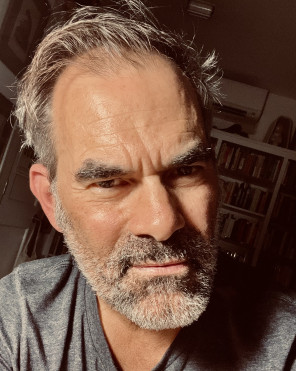
Biography

James McWilliams is a writer and historian who teaches at Texas State University. His work has appeared in Oxford American, Virginia Quarterly Review, The New York Times Book Review, The American Scholar, and Mississippi Review.

Winners

Prize Winner in Biography in 2026:

Amanda Vaill

A lively and detailed biography of two daughters of wealthy and influential Dutch landowners who colored our nation’s history, using present tense to tell their story and past tense to chronicle the dramatic sweep of the American Revolution. Biography

Finalists

Nominated as finalists in Biography in 2026:

Lance Richardson

The life of a talented, complicated writer who rejected conformity and whose experiences informed the philosophical and spiritual dimensions of his work.

The Jury

Marie Arana(Chair)

Author and Inaugural Literary Director, Library of Congress

Joseph Crespino

Interim Dean, Emory College of Arts and Sciences and Jimmy Carter Professor of History, Emory University

Jonathan Eig*

Author, Chicago

Christopher McAuley

Professor Emeritus of Black Studies, University of California, Santa Barbara

Amy Reading

Author, Ithaca, N.Y.

Winners in Biography

Jason Roberts

A beautifully written double biography of Carl Linnaeus and Georges-Louis de Buffon, 18th century contemporaries who devoted their lives to identifying and describing nature’s secrets, and who continue to influence how we understand the world.

Jonathan Eig

A revelatory portrait of Martin Luther King, Jr. that draws on new sources to enrich our understanding of each stage of the civil rights leader’s life, exploring his strengths and weaknesses, including the self-questioning and depression that accompanied his determination.

Beverly Gage

A deeply researched and nuanced look at one of the most polarizing figures in U.S. history that depicts the longtime FBI director in all his complexity, with monumental achievements and crippling flaws.

the late Winfred Rembert as told to Erin I. Kelly

A searing first-person illustrated account of an artist’s life during the 1950s and 1960s in an unreconstructed corner of the deep South–an account of abuse, endurance, imagination, and aesthetic transformation.

2026 Prize Winners

M. Gessen of The New York Times

For an illuminating collection of reported essays on rising authoritarian regimes that draw on history and personal experience to probe timely themes of oppression, belonging and exile.