Saher Alghorra, contributor, The New York Times
Winning Work
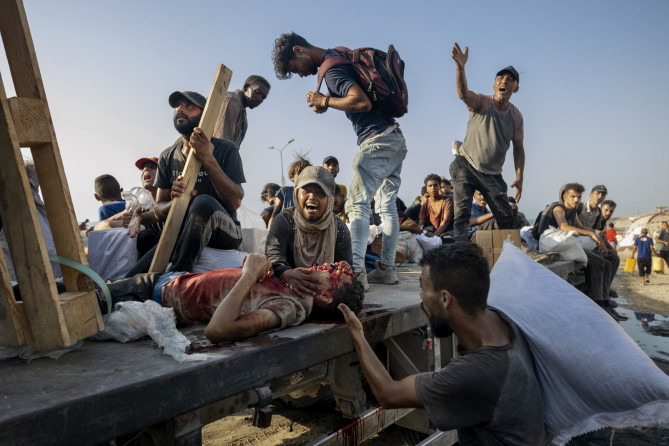
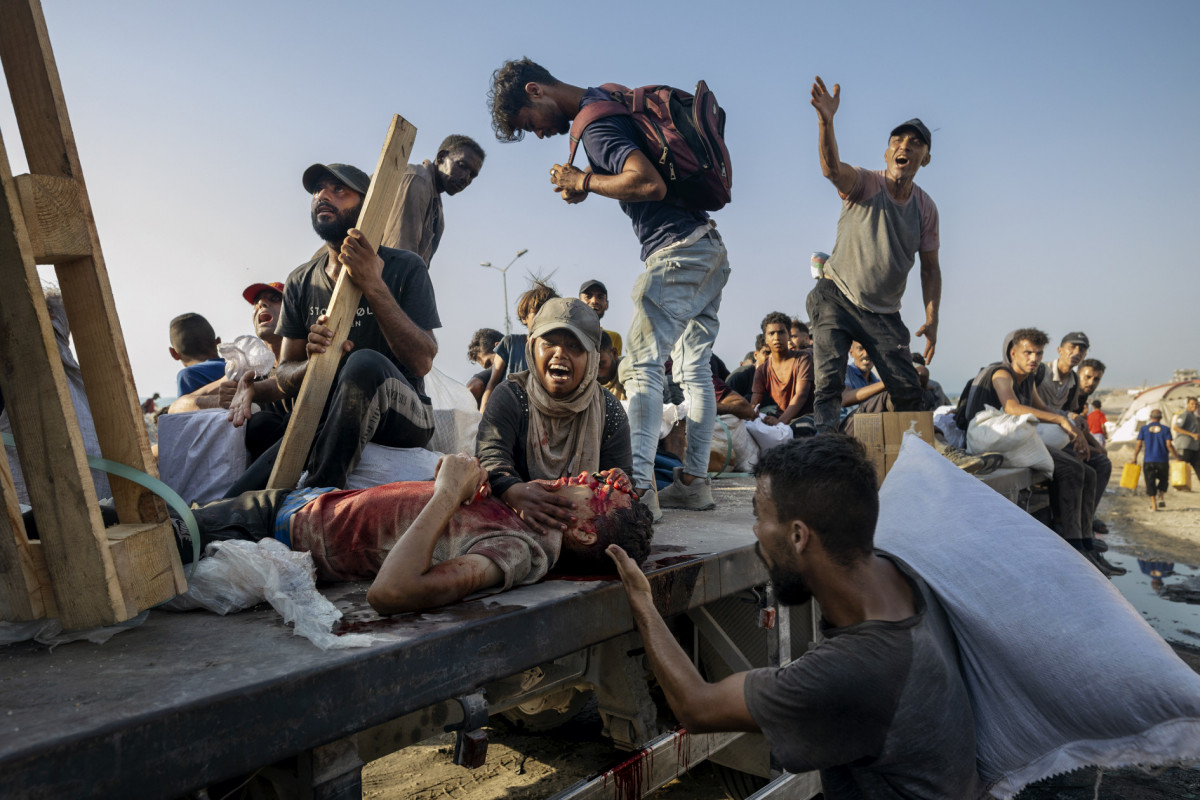
“My son,” a woman screamed as a truck carried her and her injured son to Hamad Hospital in northern Gaza. “My son. My son.” He had been shot while trying to get aid near the Zikim crossing between Gaza and Israel — an increasingly common story as the war went on. Israeli restrictions on aid meant desperate people routinely risked their lives taking aid from trucks or lining up at aid distribution points. Hundreds of Palestinians were killed seeking aid, even as famine was declared in northern Gaza. The woman’s son had been trying to grab aid from this truck — the same one that was now taking him to the hospital. (08/14/2025)
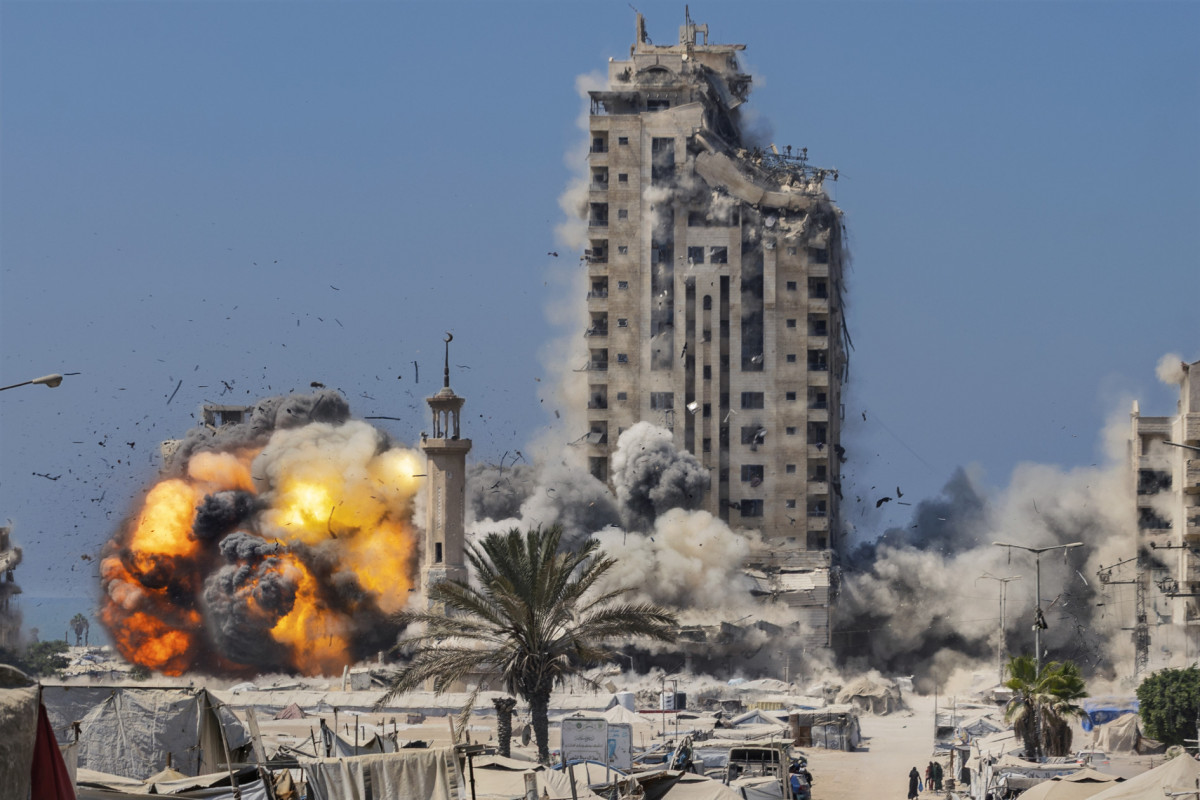
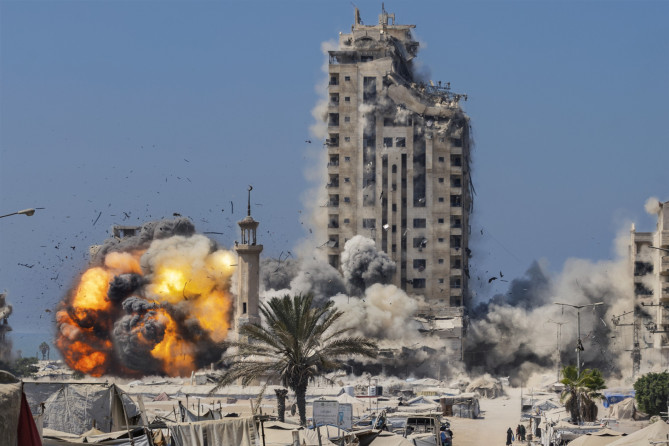
The Israeli military bombed the Mushtaha Tower, a Gaza City landmark, as it stepped up attacks on the city in preparation for mounting a wider offensive there. The high-rise collapsed in a pillar of dark smoke. Hundreds of thousands of Palestinians were believed to be sheltering in ruined buildings and tents around Gaza City. The Israeli military said the building had been used by Hamas for military and intelligence-gathering activities; Hamas denied doing so. (09/05/2025)
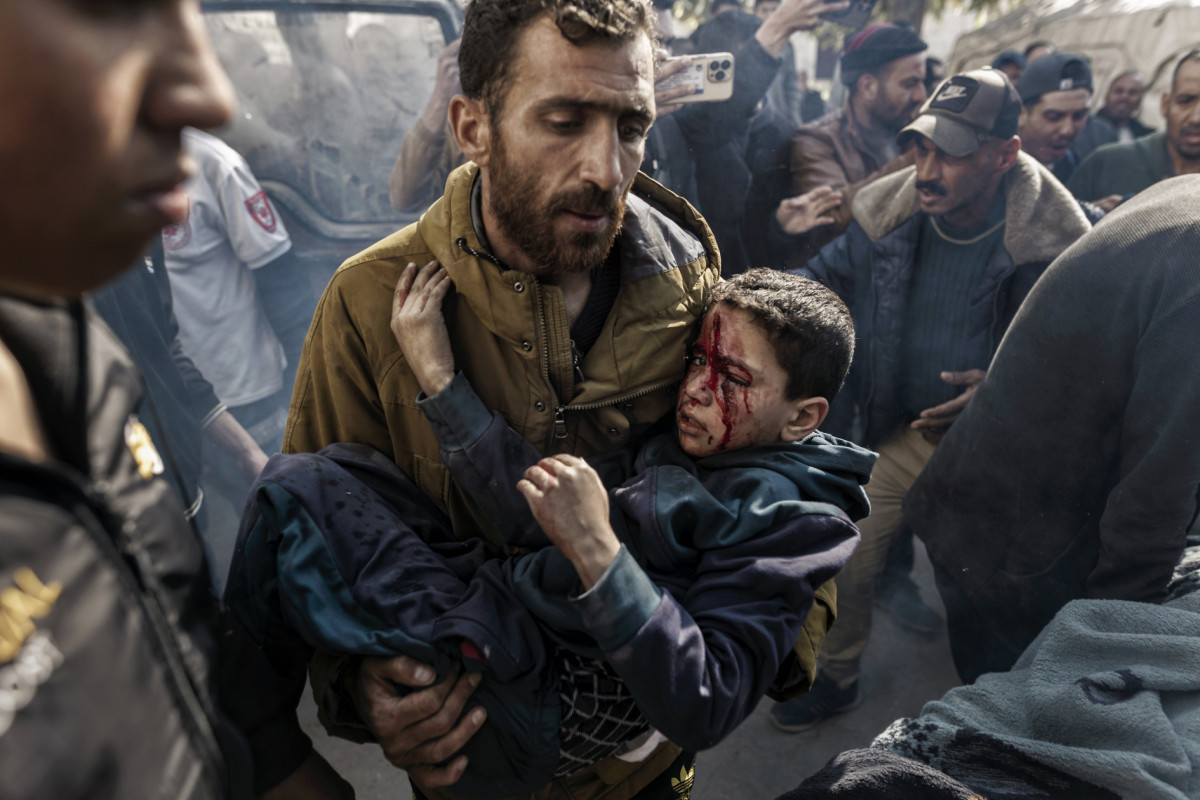
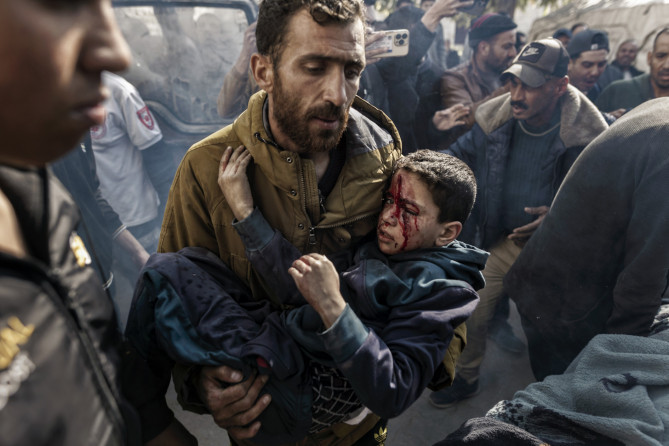
A child wounded in Gaza City in April being transferred to a hospital. An Israeli reconnaissance aircraft had attacked the Al-Thalathini neighborhood of Gaza City, killing one Palestinian and wounding several others, most of them children. (04/12/2025)
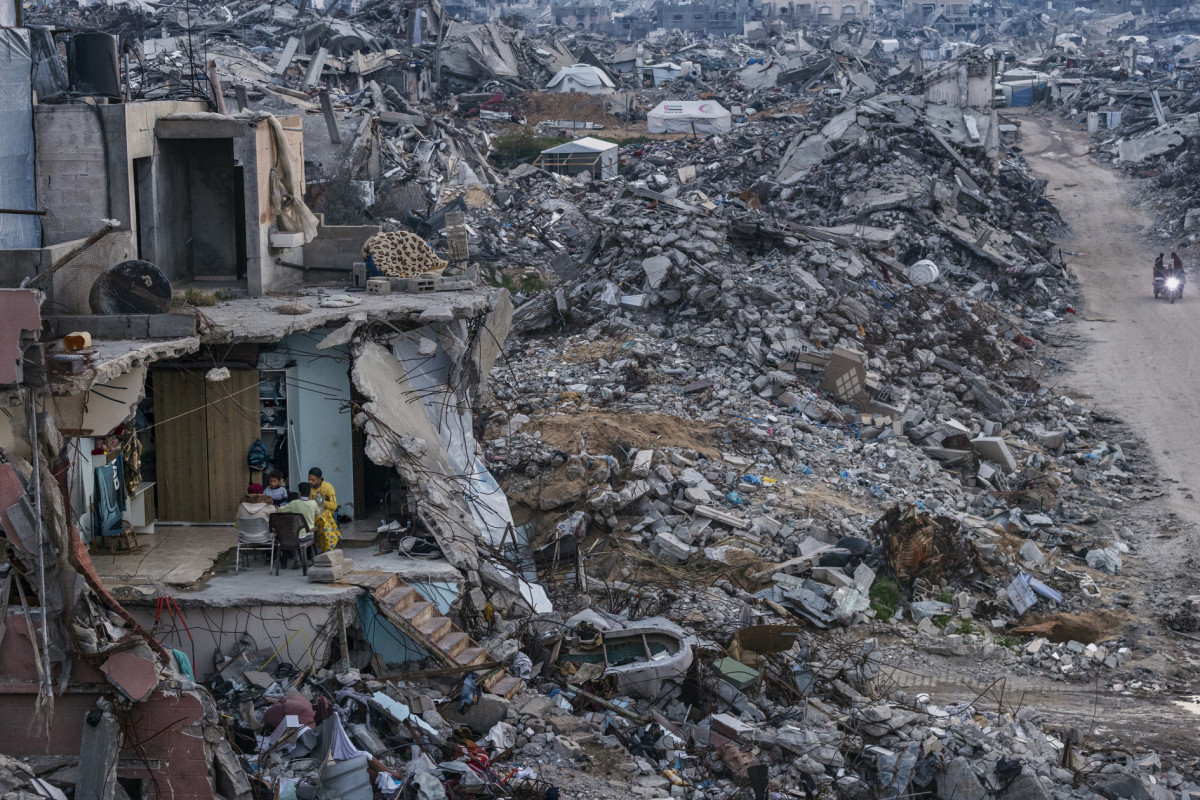
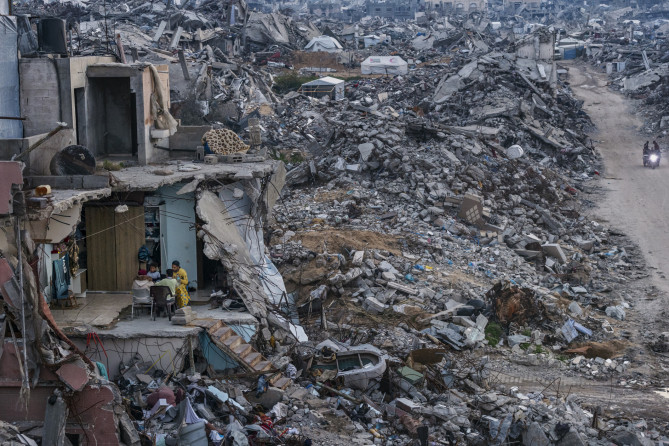
Tamer Hassan al-Shafei’s family sat down to break their daily Ramadan fast in the charred remains of their home, overlooking the ruins of Beit Lahia, in Gaza. The Islamic holy month, during which observant Muslims fast until sunset, fell during a fragile ceasefire in the war. It was a humble meal, not the usual Ramadan spread. Meat and other luxuries were out of reach because of the shortage of food entering Gaza. He, his wife and his children ate cheap basics — hummus and falafel — instead. “I took their pictures because I felt they were clinging to life, tending to their wounds and trying to rebuild their lives with the simplest of means,” said Alghorra. (03/04/2025)
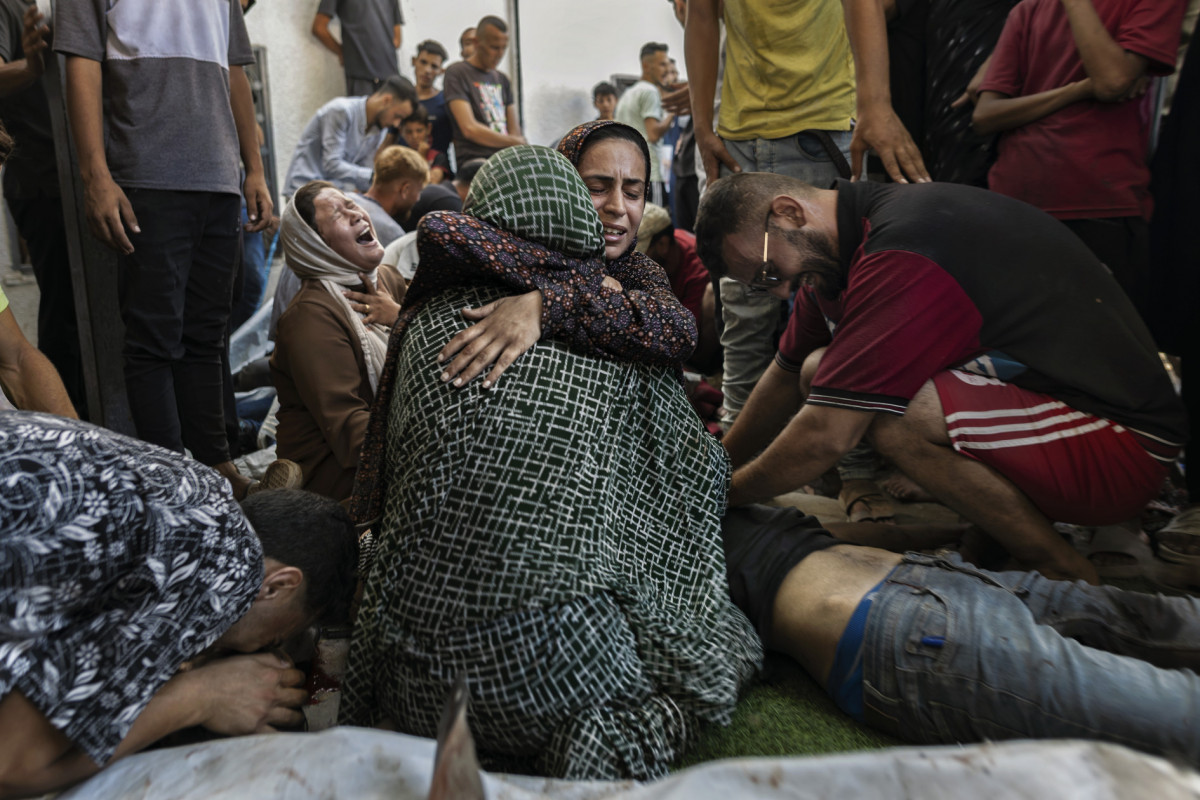
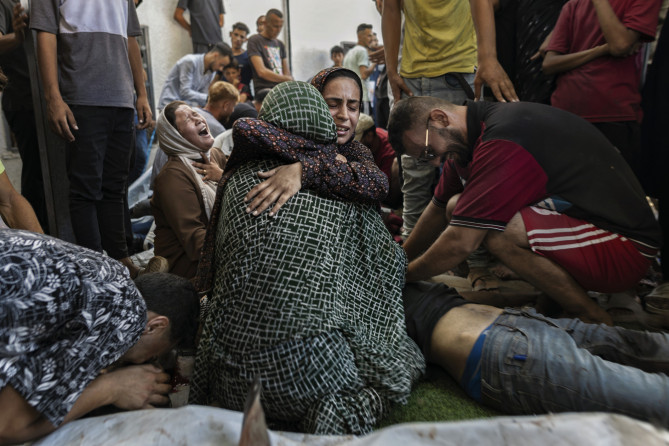
People mourning at a hospital after the Israeli military attacked a beachfront cafe west of Gaza City in June. Gaza authorities said 32 people were killed, including a journalist, and dozens were wounded. Some had come to Al-Baqa Cafe to get Wi-Fi, some to hang out, one woman for “me time,” just her and a good book. Al-Baqa sat facing the beach and the waves, away from the wreckage of Gaza City. There, it seemed almost possible to relax, to forget, if only for the space of a few cups of coffee. “The hospital courtyard was filled with the dead, and the screams still echo in my mind,” Alghorra said. “One woman’s screams caught my attention in this photo, but as soon as I looked through my camera, I found that in every corner there was a scene — a farewell, a story, a moment of grief.” (06/30/2025)
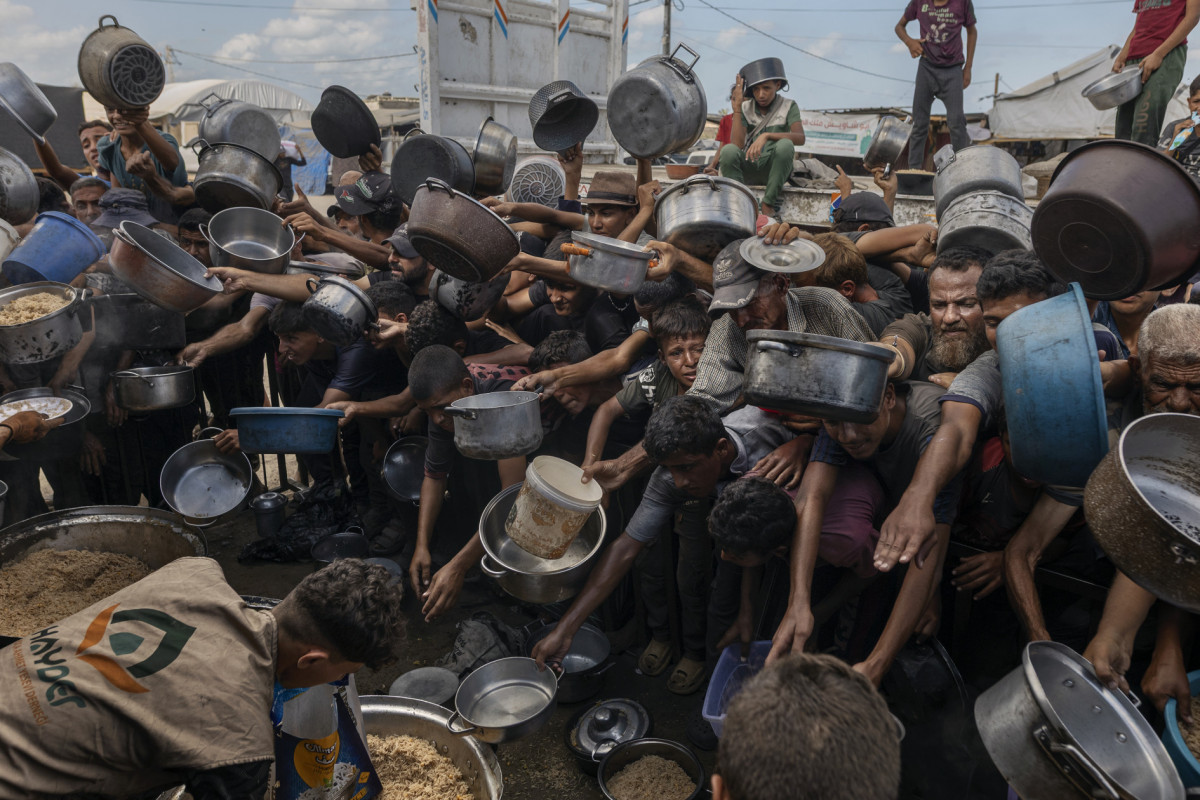
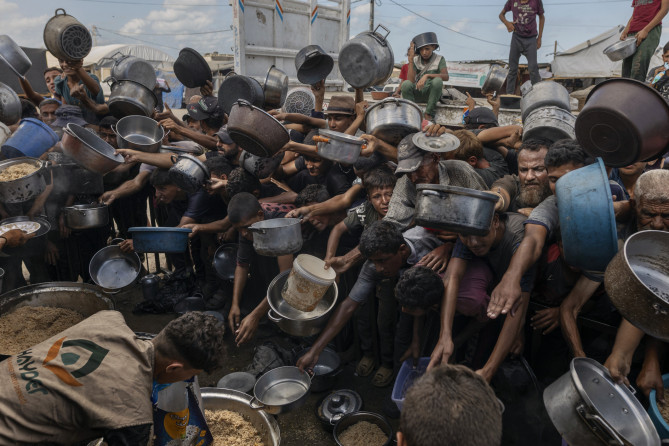
Every morning during the war, Gazans braced for a daylong struggle to obtain life’s necessities. Here, Palestinians at the Al-Mawasi camp for displaced people wait to receive a free meal. Thousands of people had crowded into the area after the fighting intensified elsewhere in Gaza, further straining humanitarian services. Amid Israel’s stringent restrictions on aid to Gaza, the only food available to many Gazans — particularly those among the 90% of the population that is displaced and mostly living in tents — came from local charity kitchens, some of which were looted as the hunger crisis deepened. Others closed for lack of supplies. (09/01/2025)
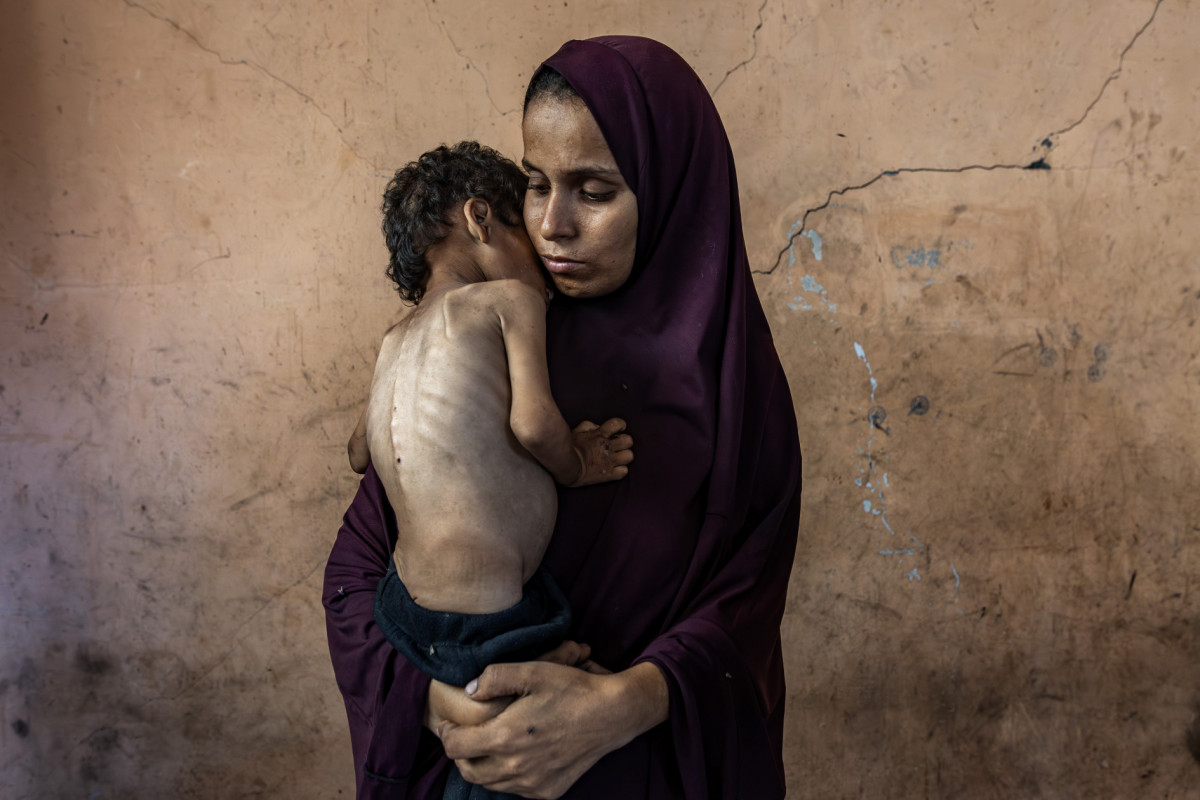
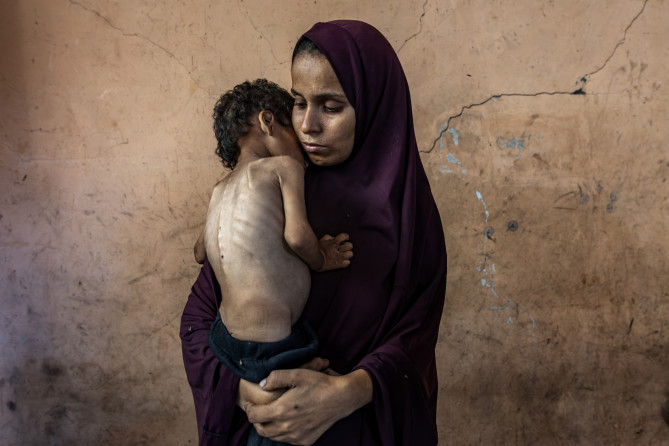
Yazan Abu al-Foul, 2, with his mother, Naeema Abu al-Foul, on July 19. They were living in a damaged building beside a beach in Gaza City, where Naeema watched as her son deteriorated. Their family could not find enough food to feed him, and hospitals told them that they did not have the supplies to provide inpatient care for him. “What shocked me while taking this photo was that, before capturing it, I had tried to play with him to make him feel at ease. But I found the child like something without a soul — extremely frail, unresponsive to any of my attempts. His eyes stared, barely able to open. Taking this photo tore me apart,” Alghorra said. (07/19/2025)
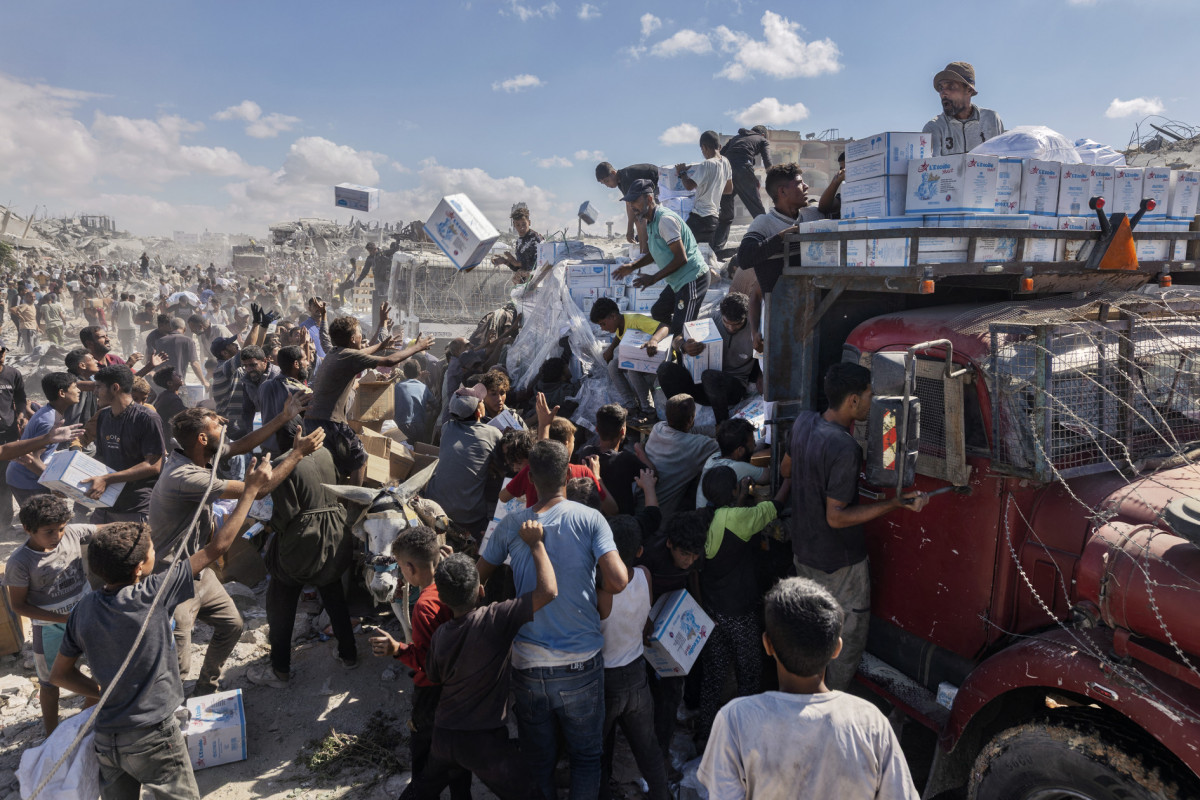
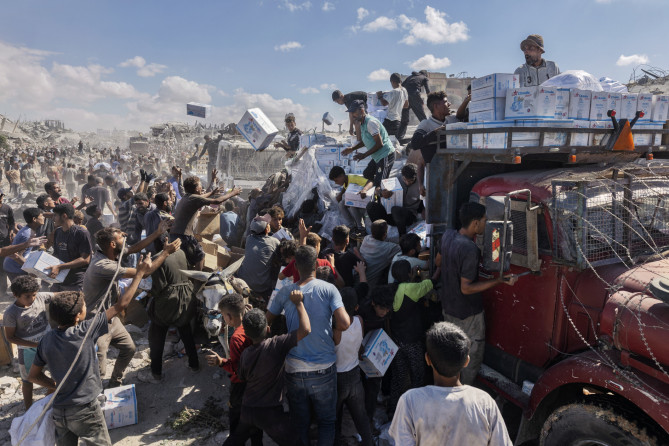
Hundreds of Palestinians run toward a convoy of aid trucks in Khan Younis, southern Gaza, that had just entered the territory. Though the October 2025 ceasefire had just taken effect two days before, people were still desperately hungry. It took only about 20 minutes for each truck to be stripped bare. The strongest among the hungry people climbed the trucks, even as they kept moving, their horns blaring in ineffectual protest. In the race for food, young men fared best. Children had to look for what openings they could. (10/12/2025)
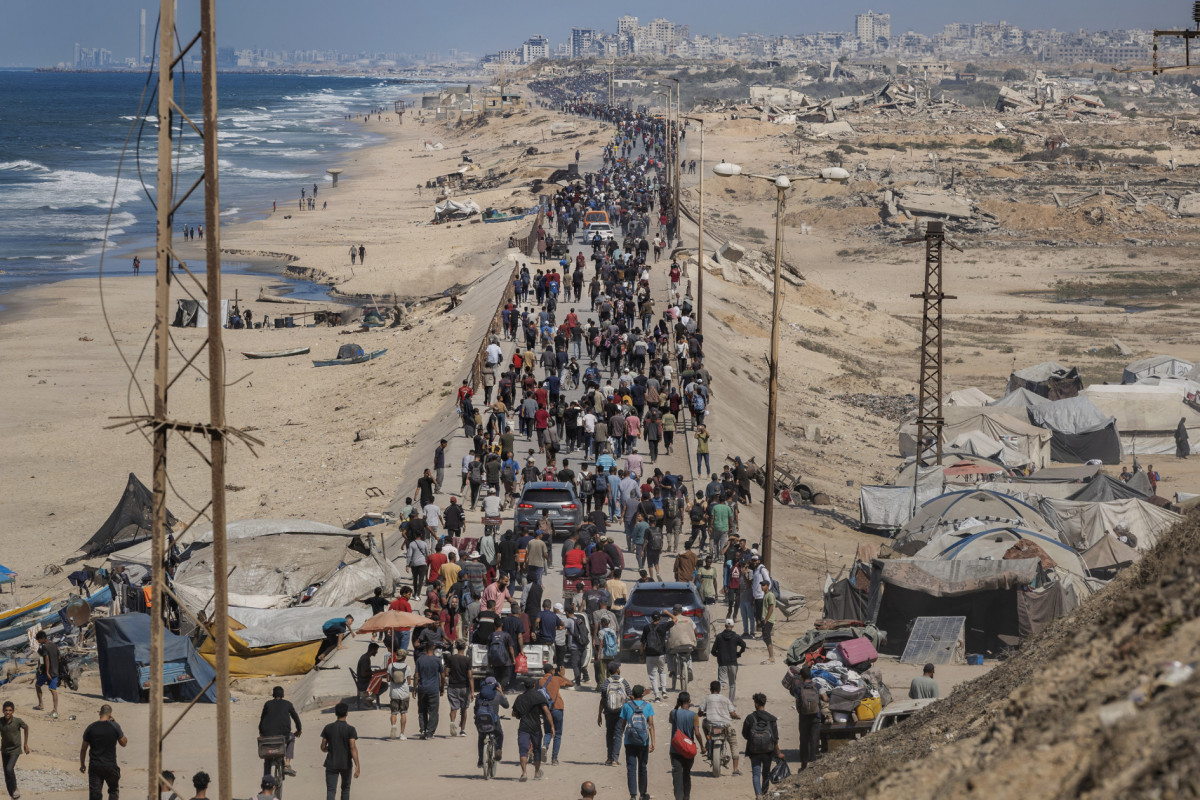
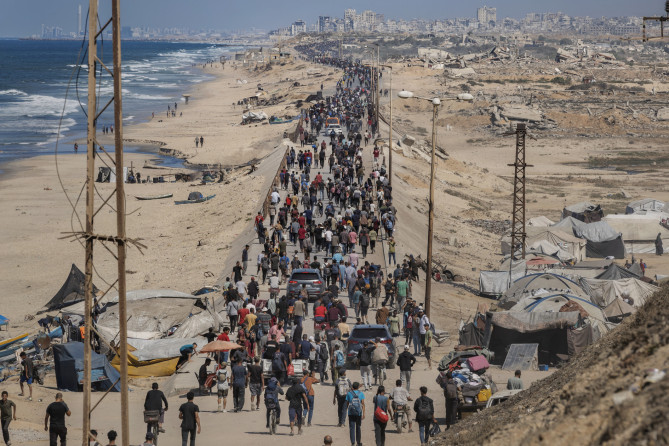
Displaced Palestinians began the long walk to Gaza City, in northern Gaza, after the October 2025 truce between Israel and Hamas started at noon. They were returning home after being displaced during the war — in many cases, so many times they’d lost count. (10/10/2025)
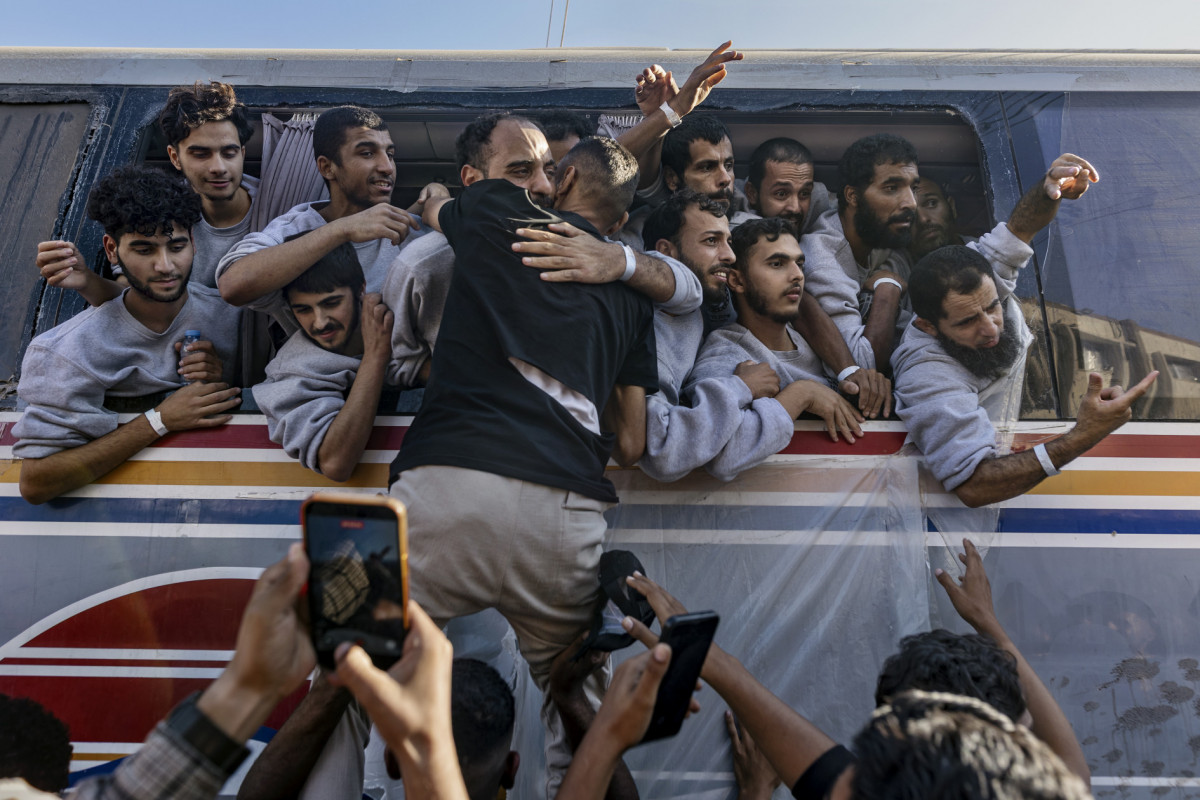
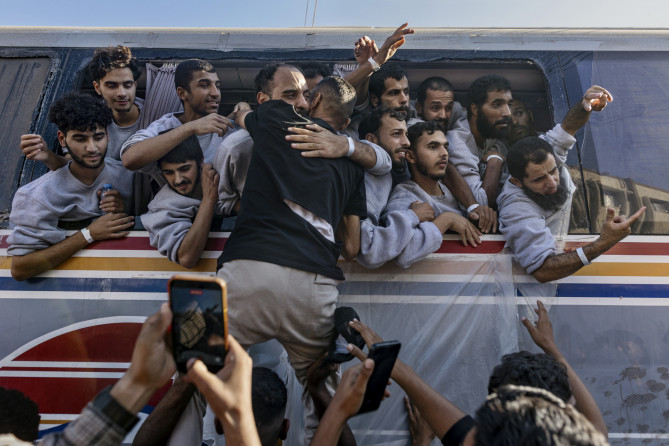
Palestinian prisoners arriving at Nasser Hospital in southern Gaza after being released from Israeli detention as part of the ceasefire deal. Israel freed about 2,000 Palestinian detainees in total. (10/13/2025)
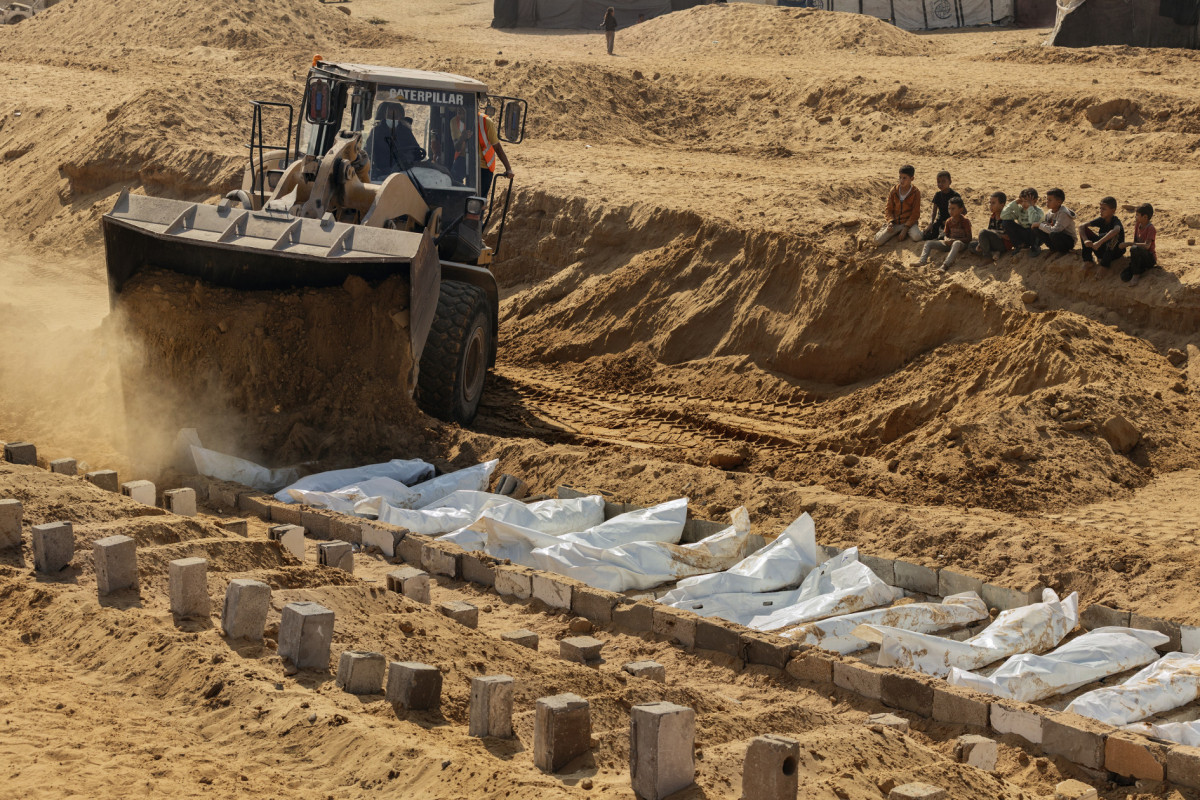
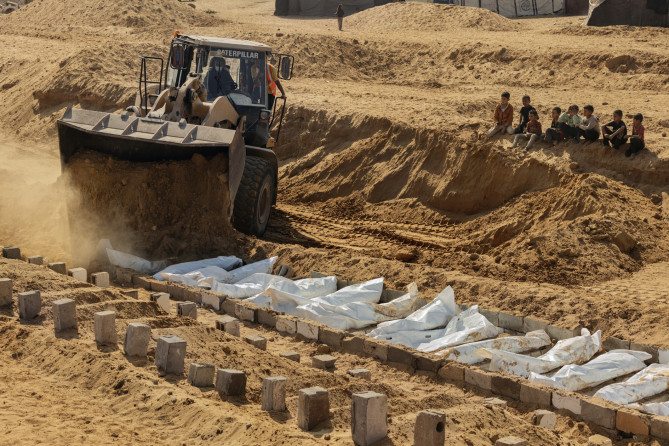
Bodies returned to Gaza as part of the ceasefire deal were buried in a mass grave in a cemetery for the unidentified in Deir al-Balah, in central Gaza. They had been handed back to Gazan authorities by Israel, which said they were dead Palestinian combatants. But forensic doctors said they had been unable to identify the remains. That left officials and families with many unanswered questions about who the dead were, the circumstances of their deaths and what had happened to them before they died. (11/10/2025)
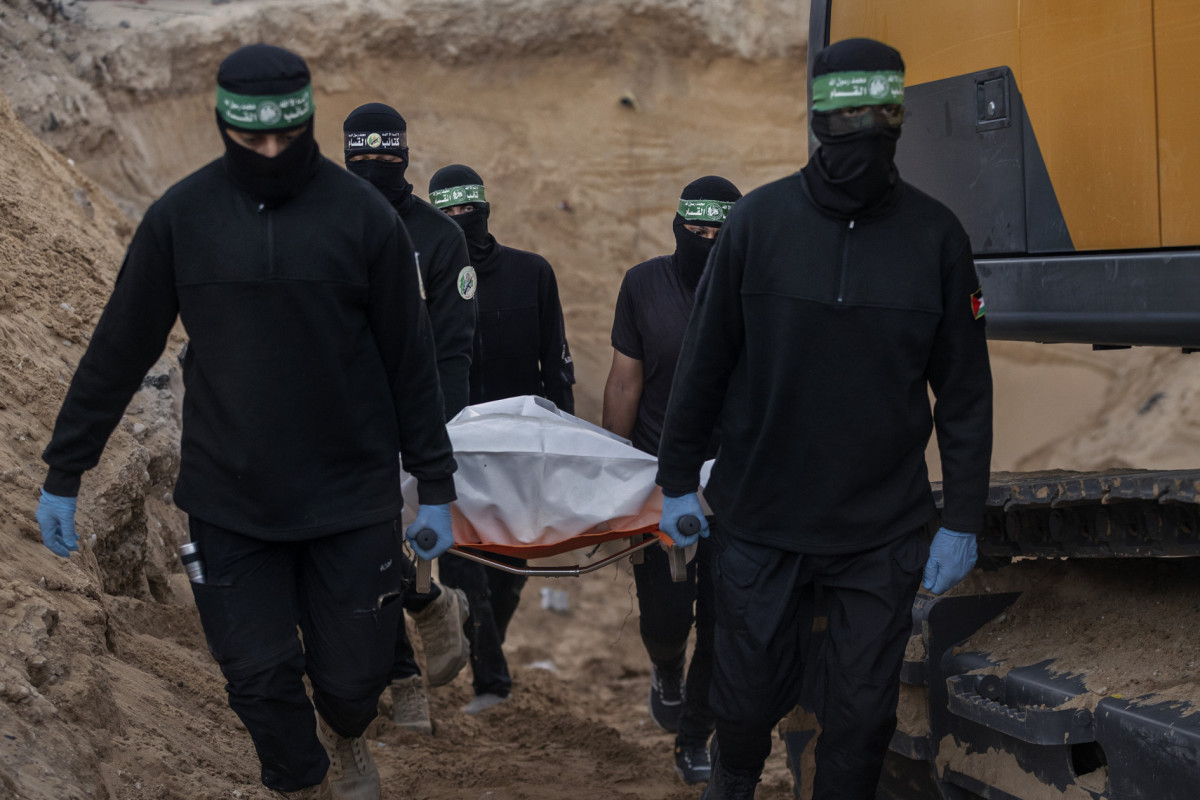
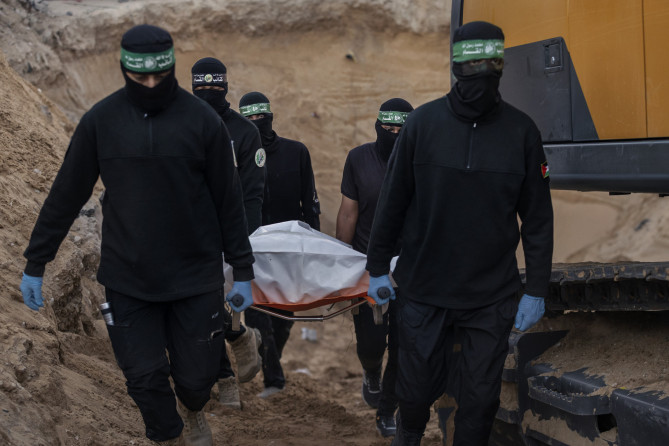
Members of Hamas’ armed wing carrying what was believed to be the remains of a hostage in Khan Younis in October. Under the terms of the ceasefire agreement, Hamas was required to turn over all the remaining hostages in Gaza, dead or alive, to Israel. (10/28/2025)
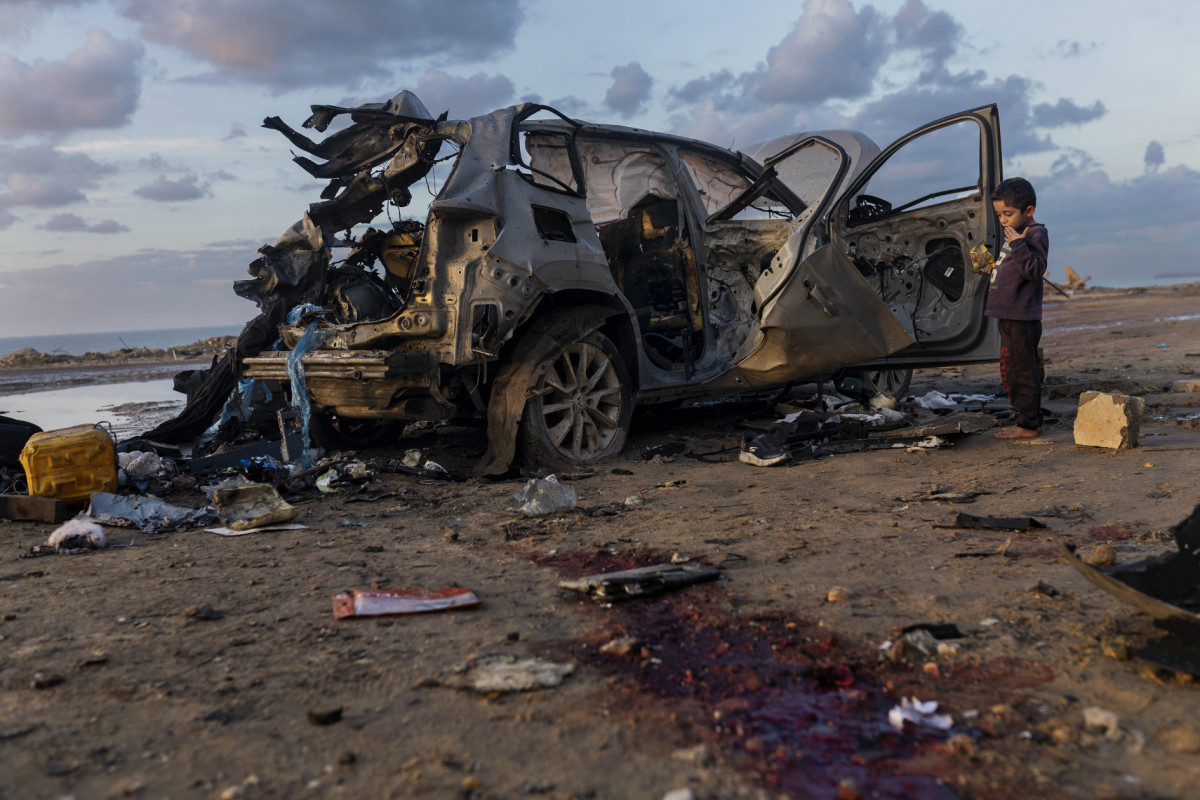
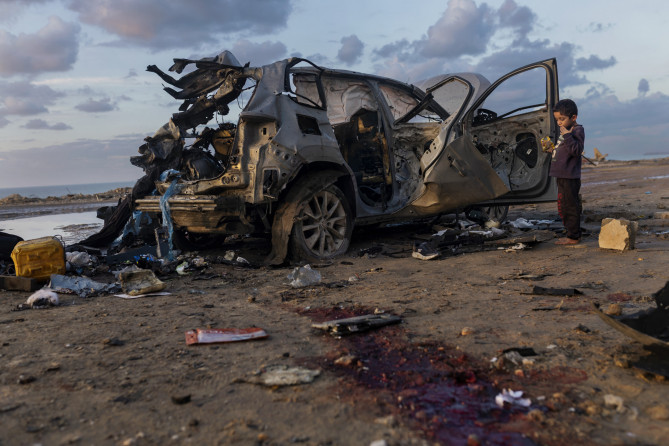
The Israeli military struck and destroyed a car in Gaza that the military said had been carrying a senior Hamas commander and three other Hamas fighters. Despite the ceasefire, Israel continued to strike some targets in Gaza. Gaza health authorities say many civilians have also been killed in the strikes, including children. (12/13/2025)
Biography
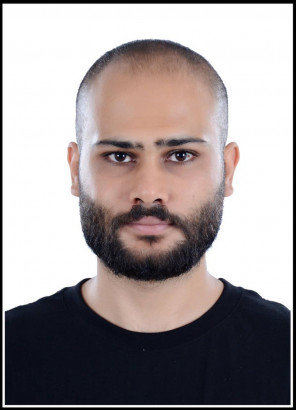
Saher Alghorra is a photojournalist who was born, lives and works in Gaza.
He got his first camera in 2017, and immediately began chronicling the fragile existence of everyday Palestinians.
Mr. Alghorra began his work as a freelance photojournalist in 2021 with many international agencies and institutions. His work has appeared in The Guardian, Time magazine, The Telegraph and The New York Times. In July 2023, he became the ZUMA Press Wire Service Chief Photo-Journalist in Gaza.
In 2023, an image of his was chosen as one of TIME Magazine 100 best photos of the year. In 2024, he won Best in Show at the Communications Arts Photography Annual, for his coverage for ZUMA in Gaza during the ongoing war.
Mr. Alghorra has a degree in public relations, media and photography from the University of Palestine.