Finalist: Bowl EP, by Nazareth Hassan

A play focused on two skateboarders, aspiring hip-hop artists who begin to compose an album, with downtime fueling their creative process and nascent romance.

Nominated Work

Bowl EP

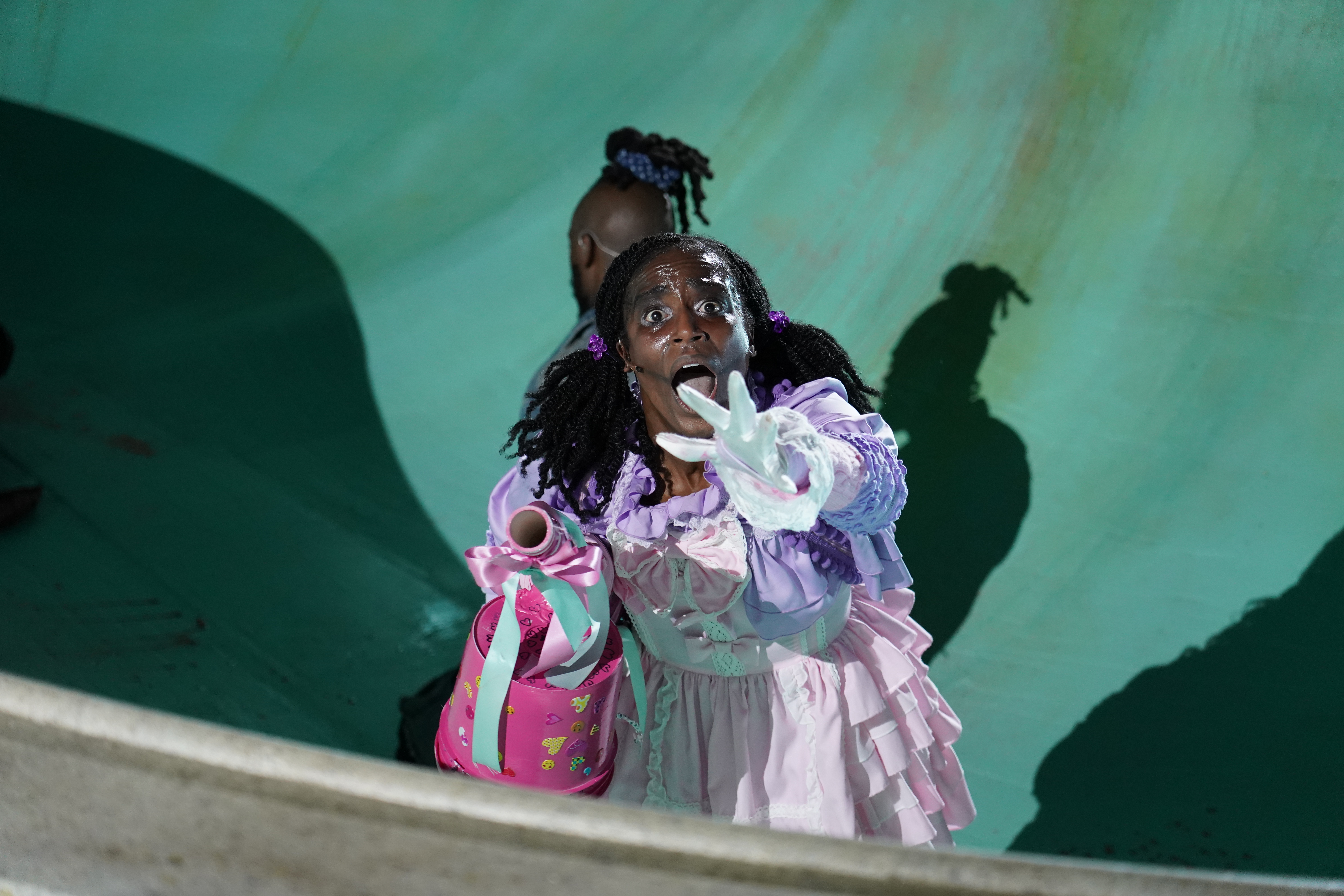
"Do you like my heart emoji?" (Production Still)

New York Times Critic’s Pick
Written and directed by Nazareth Hassan
Music by Free Fool
Produced by Vineyard Theatre and National Black Theatre
In association with The New Group
Presented at Vineyard Theatre

Kelly K Klarkson and Quentavius da Quitter need to find a name for their rap group. Through flirty interludes, cringy overshares, and practicing their ollies, they grow increasingly closer. Skating and Smoking. Skating and Drinking. Skating and exorcising a demon. With live skateboarding and original music, enter Bowl EP:

a skate park
in the middle of a wasteland
at the edge of the galaxy

A co-production with National Black Theatre, in association with The New Group, Bowl EP is an experience at once intimate and epic. Written and directed by Nazareth Hassan, 2024-2025 Tow Foundation Artist-in-Residence at Vineyard Theatre, with music by Free Fool.

Runtime is 80 minutes with no intermission.

-- from the Vineyard Theatre production page

Biography

Nazareth Hassan is a writer, director, musician, and performer. Performance and theater works include Bowl EP at The Vineyard Theater, Untitled (1-5) at The Shed (text published by 3 Hole Press), VANTABLACK at Theatretreffen Stückemarkt in Berlin, Security Theater at Judson Memorial Church, and Memory A at Museo Universitario del Arte Contemporaneo in Mexico City. Their first interdisciplinary book, Slow Mania, will be published in 2025 by Futurepoem. In 2022-2023, they were the dramaturg at the Royal Court Theatre in London. They were a 2023–25 Jerome Hill artist fellow and the 2024-25 Tow Playwright in Residence at The Vineyard Theatre.

Winners

Prize Winner in Drama in 2026:

Bess Wohl

A striking blend of comedy and sincerity that explores the legacy of the consciousness-raising feminist groups of the 1970s, using the story of the playwright’s mother to demonstrate how the movement grew out of conversation, and that anyone experiencing the play has joined the discussion. Drama

Finalists

Nominated as finalists in Drama in 2026:

Talene Monahon

A drama that uses the historical lens of the Armenian American experience to illustrate the enduring hypocrisies of our country’s racialized system of immigration.

The Jury

Helen Shaw(Chair)

Theatre Critic, Brooklyn, N.Y.

Quiara Alegría Hudes*

Playwright and Author, New York City

Branden Jacobs-Jenkins*

Playwright and Professor in the Practice of Theater and Performance Studies, Yale University

Charles McNulty

Theatre Critic, Los Angeles Times

Harvey Young

Dean, College of Fine Arts; Interim Vice President for the Arts; Professor of English, Theatre Arts, American Studies and African American & Black Diaspora Studies, Boston University

Winners in Drama

Branden Jacobs-Jenkins

A play about the complex dynamics and legacy of an upper middle class African-American family whose patriarch was a key figure in the Civil Rights Movement, a skillful blend of drama and comedy that probes how different generations define heritage.

Eboni Booth

A simple and elegantly crafted story of an emotionally damaged man who finds a new job, new friends and a new sense of worth, illustrating how small acts of kindness can change a person’s life and enrich an entire community.

Sanaz Toossi

A quietly powerful play about four Iranian adults preparing for an English language exam in a storefront school near Tehran, where family separations and travel restrictions drive them to learn a new language that may alter their identities and also represent a new life.

James Ijames

A funny, poignant play that deftly transposes "Hamlet" to a family barbecue in the American South to grapple with questions of identity, kinship, responsibility, and honesty.

2026 Prize Winners

M. Gessen of The New York Times

For an illuminating collection of reported essays on rising authoritarian regimes that draw on history and personal experience to probe timely themes of oppression, belonging and exile.