Finalist: Staff of The Wall Street Journal, notably Jared Malsin
Nominated Work
Under the Assad regime, Saydnaya prison became a mass-killing machine; ‘a symbol of shame for the whole world’
By Jared Malsin and Hamza Bonduk | Video by Ben C. Solomon and Belle Cushing | Photographs by Manu Brabo for WSJ
SAYDNAYA, Syria—Inside Bashar al-Assad’s most-notorious death factory, the hangings had become routine.
Once a month, around midnight, the guards at Saydnaya prison would call the names of the condemned, usually dozens at a time. They wrapped nooses around their necks, then dragged tables from beneath their feet with a scraping that echoed through the building. Those in nearby cells heard a gagging sound as the men choked to death.
Then, in mid-March of 2023, the pace picked up dramatically, according to six witnesses.
“They gathered 600 people and killed them in three days, about 200 each night,” said Abdel Moneim Al-Qaid, a 37-year-old former rebel soldier who was arrested after handing himself in for what he thought was an amnesty deal with the government.
The 2023 mass killing, previously unreported, came just as the Syrian president was poised to break out of his international isolation. After more than a decade of using bombing, torture, and chemical attacks to crush an internal insurrection, Assad was deep in talks with regional players that would lead Syria to rejoin the Arab League. Some Arab states and Western officials viewed the rebellion as a lost cause, and sought to embrace Assad and freeze the conflict.
The sudden collapse of the Assad regime late last year revealed just how badly the international community miscalculated. In one of their first acts as they swept into Damascus in the predawn darkness on Dec. 8, rebels stormed the prison and shot the locks off the doors, freeing the remaining prisoners and pulling back the veil on one of the worst examples of systematic state killing since World War II.
Inside the prison, a pair of concrete buildings ringed by razor wire on a mountainside near Damascus, Assad’s regime carried out industrial-scale torture and death that likely killed tens of thousands of people over more than a decade. The regime orchestrated the killing in a bureaucratic manner rarely seen in recent history. Assad’s security apparatus kept meticulous records of the detainees’ transfer to the prison and other facilities, court documents and death certificates of those executed.
“It’s the worst atrocity of the 21st century in terms of the number killed and the way a government was directly involved,” said Stephen Rapp, a former U.S. ambassador-at-large for war crimes. “I do draw a line to the Nazis and to Soviet Russia in terms of the organized nature of state terror.”
Several former prisoners connected the March massacre to purported reforms Assad decreed later that year as a part of its push to regain international acceptance. Later in 2023 Assad abolished the military field court that sent many detainees to Saydnaya, and commuted death sentences for some prisoners. Former detainees and war crimes experts believe the regime may have been getting in one last mass killing before those moves slowed the machinery of death.
The fact that the survivors are now able to speak openly, allowing their names and faces to be published, shows how the collapse of the regime has transformed Syrian society. The men who ended up in Saydnaya during the war included military deserters and defectors, rebel soldiers and peaceful activists. The former detainees interviewed for this article also included a nuclear scientist and an engineer who was arrested simply for being Facebook friends with another man who was critical of the regime.
Their testimony exposes the full extent of the torture and killing inside the prison after years in which information about the abuses emerged in reports by United Nations investigators, rights groups like Amnesty International and Human Rights Watch and civil society organizations such as the Syrian Justice and Accountability Center, the Syrian Emergency Task Force and the Association of Detainees and Missing Persons of Sednaya Prison.
In other words, the world knew about Saydnaya, but failed to stop the atrocities that took place inside.
“This prison is a symbol of shame for the whole world. Not just for Syria,” said Emad Al-Aqra, a professor now working on prisoner rehabilitation and transitional justice in Syria, who was jailed in 2011 for speaking on TV against the regime and spent about a year in Saydnaya.
This account is based on interviews with 21 former Saydnaya detainees, two former regime officials involved in the killings and nearly a dozen Syrian and international war-crimes experts, as well as a review of hundreds of pages of Assad regime documents found in the prison and other Syrian security facilities. Wall Street Journal reporters also visited the prison three times in an effort to document evidence of the atrocities.
Saydnaya, known in official regime documents as the “First Military Prison,” was the largest of dozens of execution centers that Assad’s regime set up in an attempt to instill fear in the Syrian population and break the 2011 uprising and armed rebellion against his rule.
The public’s name for the prison—“Saydnaya,” after the small mountain town where it is located—became a synonym in Syria over the last 14 years for the regime’s abduction and killing of its own citizens. “Lost in Saydnaya” became a way of saying someone was arrested and never seen again.
In addition to the many thousands killed in organized executions, former detainees and war crimes experts say perhaps an equal number of people died in Saydnaya from torture and extreme conditions, including beatings with pipes and rods, along with starvation, thirst and disease.
Held in lice-ridden, steel-walled cells with a single slot for a window, prisoners were forbidden from looking guards in the eyes, or they would risk incurring a beating so severe it would leave them bleeding out on the floor.
“Saydnaya was a nightmare. It was one big massacre. Almost everyone who went in didn’t come out,” said Ali Ahmed Al-Zuwara, a farmer from rural Damascus who was arrested at the age of 25 for dodging military service in 2020.
The hundreds who walked free in December represented a tiny minority among the many thousands of Syrians who went missing during the war. Some 160,123 Syrians were forcibly disappeared by the Assad regime throughout the war according to the Syrian Network for Human Rights, a respected watchdog group.
Some of the families of the missing still hold out hope that their relatives are alive. Others have begun a strange kind of mourning, in which they have begun to accept that their loved ones are dead, while lacking answers about how or when they died, let alone being able to bury them.
“Even though we know he ended up in Saydnaya, we don’t know what happened to him. We never received a body,” said Dina Kash, whose husband, Ammar Daraa, a wholesale distributor, was arrested and disappeared at the age of 46 in 2013. The family confirmed in December that he was sent to Saydnaya from documents found in an intelligence headquarters after the fall of the regime.
“We have to say, ‘May god have mercy on his soul,’ but we always follow that with ‘whether he’s alive or dead.’”
Built in the 1980s during the rule of Bashar al-Assad’s father, Hafez Assad, the First Military Prison in Saydnaya and the vast security state it represented passed on to the son when he assumed power in 2000.
In the spring of 2011, revolution swept the Middle East. After protests ousted the longtime presidents of Tunisia and Egypt in January, huge throngs of Syrians surged into the street to call for greater political freedom.
When the uprising began, Mohammed Abdel Rahman Ibrahim, a 26-year-old with thick glasses and a soft voice, was tutoring students using his degree in advanced mathematics. He was still living with his parents in a concrete house on the southern fringe of Damascus in a neighborhood of auto mechanics and delivery drivers.
That summer he was conscripted into Assad’s army and sent to guard an air base in northern Syria used by government warplanes to drop bombs on rebel positions in nearby Aleppo.
Unable to stomach the regime’s violence, he defected in January 2013, joining an opposition brigade near Damascus, but grew exhausted and quit fighting after a few months. Fleeing to an area of southern Syria held by the opposition, he spent four years teaching math and working in a corner shop, living in a kind of internal exile, unable to go home to Damascus without fear of arrest.
In 2018, the government offered an amnesty, supposedly guaranteed by Russia, to some rebels in the south. Tired of living in fear of crossing government checkpoints, Ibrahim decided to take the deal.
He arranged to turn himself into a military police headquarters in Damascus. When he arrived, he handed his ID and a copy of the amnesty papers to an officer.
“F— you, who gave you this?” the officer said, tossing the papers on the floor. After four days of questioning, he was blindfolded and taken to Syria’s Air Force Intelligence headquarters in Mazzeh Airbase. Officers told him to sign a document confessing to killing government soldiers.
Jamil Hassan left behind a legacy of deaths and torture when he escaped the Syrian revolution last year. Now his former victims are trying to bring him to justice.
By Jared Malsin and Summer Said
Photography by Manu Brabo for WSJ
DAMASCUS, Syria—During 13 years of revolution and war, the Syrian dictatorship of President Bashar al-Assad set a high water mark for cruelty in the 21st century, disappearing tens of thousands of perceived political opponents and flattening entire neighborhoods. Now that the regime has fallen, the hunt is on for one of Assad’s most brutal enforcers.
Maj. Gen. Jamil Hassan, the former head of Syria’s Air Force Intelligence agency, was notorious as an architect of the regime’s collective-punishment campaign to break the rebellion.
Shadi Haroun, a young leader of the Arab Spring protests that spread to Syria, met the general face-to-face in 2011 after he was arrested and brought to Air Force Intelligence headquarters at Mezzeh air base in Damascus. In a four-hour encounter, Hassan questioned him in a level but domineering voice.
“I will keep killing to keep Bashar Assad in power,” the general warned, according to Haroun. “I will kill half the country if I have to.”
The protests continued, and the general delivered on his threat. Under his orders, Air Force Intelligence approved the bombing of civilian neighborhoods, played a role in chemical attacks and tortured and disappeared thousands of Syrians. In secret meetings with Assad and other leaders, he pushed the Syrian president to take an ever-harder line.
“Those taking part in the protests are no longer protesters. They are terrorists” and “must be eliminated,” he said in a speech to other Syrian officers in July 2011, according to a witness whose testimony was collected by the Commission for International Justice and Accountability, or CIJA, a nonprofit that gathers evidence for use in war-crimes prosecutions.
Speaking approvingly of China’s 1989 massacre in Tiananmen Square, Hassan later argued that killing more people at the outset would have crushed the Syrian rebellion sooner. “If the Chinese state had not settled the student chaos, China would have been lost,” he told a Russian news agency in 2016.
“He was a psychopathic personality,” said Haroun, who is now a national figure in the campaign for justice in Syria after surviving years in Saydnaya prison, a notorious execution center.
Hassan is now one of the world’s most hunted war-crimes suspects. Convicted in absentia in France for his role in crimes against humanity, he is subject to an arrest warrant in Germany and wanted by the Federal Bureau of Investigation for his alleged role in the kidnapping and torture of American citizens.
Like many other regime officials and government leaders, Hassan fled Syria when Assad’s regime collapsed last December. Assad flew with his wife to Russia. Other regime officials scattered across the Middle East. Hassan’s hideout is uncertain, but multiple current and former Syrian and Western officials suspect he is in Lebanon, where former regime intelligence officials are rebuilding a network of support.
France and Syria have sent requests to the Lebanese authorities asking for Hassan’s arrest, according to a French official. A senior Lebanese judicial official said his government doesn’t have confirmed information about Hassan’s whereabouts.
The hunt is one of the most important tasks on Syria’s difficult road to reckoning with the violence of the civil war, which left victims and unresolved grievances across the country.
Many lower-ranking police, soldiers and bureaucrats were permitted to seek amnesty from Syria’s new government, a process intended to stabilize the country while pursuing some of the worst alleged criminals from the old regime—including Hassan.
“Every Syrian, including me, would be happy if he is arrested,” said Abdulbaset Abdullatif, the head of Syria’s National Commission for Transitional Justice, which was set up by new Syrian President Ahmed al-Sharaa earlier this year. “His hands are covered in Syrian blood.”
“Jamil Hassan is like Eichmann to Assad’s Hitler,” added Mouaz Moustafa, the executive director of the Syrian Emergency Task Force, an advocacy group in Washington.
Hassan was born into Syria’s Alawite community in 1953 near the town of Qusayr on the country’s border with Lebanon. He joined the military and rose through the ranks under President Hafez al-Assad, the family patriarch who seized control of Syria in a coup in 1970 and founded a dynastic dictatorship that ruled for half a century.
As a young officer, Hassan was sent in 1982 to help crush a Muslim Brotherhood uprising in the western city of Hama. Assad’s forces killed tens of thousands and flattened much of the city in a crackdown that made clear the regime intended to stay in power at any cost. The world was horrified by the massacre. Hassan saw it as a model. “The decision at that time was a wise one,” he said in the 2016 Russian news-agency interview.
Documents reveal how Syria’s fallen government hid hundreds of abducted children during civil war
By Isabel Coles | Photographs by Rena Effendi for WSJ
DAMASCUS—The resemblance was striking. The boy in the photograph had the family’s same thick eyebrows and looked about 17, the same age Ahmed Yaseen would now be—if he was still alive.
Could it be him, his aunt Naila al-Abbasi wondered? More than 12 years had passed since the boy and his five sisters had disappeared, after Syrian military intelligence detained them and their parents in the early years of the uprising against President Bashar al-Assad.
Six months after rebels toppled the Assad regime in a seismic moment for the Middle East, many Syrians are still searching for missing relatives, including an estimated 3,700 children.
An investigation by The Wall Street Journal, based on secret documents from the Assad regime and conversations with former detainees and corroborated by Syria’s current government, found that at least 300 children like Ahmed were forcibly separated from their families and placed in orphanages after being detained during the country’s civil war.
“He looks very similar,” said al-Abbasi, who had scrolled through hundreds of photographs on Syrian orphanages’ websites before finding this one. “The nose, even the mouth.”
More than 112,000 Syrians arrested since the start of an uprising against Assad in 2011 remain unaccounted for, according to the Syrian Network for Human Rights. That figure is comparable to the number of people who have disappeared in Mexico’s drug wars, though Syria’s population is only a fifth the size.
Children are often used to punish or pressure opponents in war. Russia has taken thousands of children from Ukraine. Decades after Argentina’s military dictatorship ended, families are still finding missing relatives seized as newborns and adopted by military couples.
Dealing with this brutal legacy is a crucial challenge for the new Syria, whose government, led by an Islamist group that cut its past ties with al Qaeda, is trying to assert its control over a country riven by sectarian tensions. Syria’s presidency said in May that it will set up commissions to probe crimes committed under Assad, compensate victims and trace the missing.
But it is a huge and complex task for a government beset with other pressing issues, including a battered economy.
Failure to address the issue of missing people “could contribute to cycles of violence,” said Kathryne Bomberger, director general of the International Commission on Missing Persons.
One family’s story
At the time of their abduction, the Yaseen children were living in the relatively affluent Dumar neighborhood of Damascus. Their mother, Rania al-Abbasi, was a national chess champion who ran a successful dental clinic.
In photographs Rania posted on social media, the children are pictured smiling alongside SpongeBob and Spider-Man performers during a trip to Syria’s coast. Other pictures show Ahmed on a playground swing; wearing a cardboard crown; and with his hair gelled neatly into a crest.
When the uprising against Assad began, relatives urged them to leave Syria. The family had a history with the regime: Rania’s father—a prominent religious scholar—had spent 13 years in prison under Assad’s father, President Hafez al-Assad, because of his oppositional views. Islamists were often considered a threat by the secular Assad regime.
After Rania’s father was released, the family went into exile in Saudi Arabia, where Ahmed was born. But his parents wanted to raise him and his sisters where they had roots and returned to Damascus in 2009.
“She thought she was safe,” said Rania’s younger sister, Naila, a doctor who remained in Saudi Arabia with much of the family. Between six children and work, Rania had no time to get involved in political activity or protests, even if she supported their demands.
But she did give generously to Syrians displaced by the government’s crackdown. And her father, from abroad, had voiced support for the uprising. It was enough to bring the regime’s fist down on the family.
On March 9, 2013, Syrian intelligence agents came for Rania’s husband, Abdurrahman Yaseen. Two days later, they returned and took Ahmed and the other children, between 1 and 14 years old, along with their mother.
The father’s fate eventually came to light in a cache of 50,000 images smuggled out of Syria by a forensic photographer who defected in 2013. The grim catalog contained photographs of some 6,786 Syrians who had died in custody, some with their eyes gouged out. Among the images was one of Abdurrahman.
Still, there was no sign of Ahmed, his siblings or Rania.
The strongest lead came from another mother who had been detained with her children the year after al-Abbasi and her family. Freed in a prisoner exchange in 2017, Rasha al-Sharbaji revealed that security services had seized her five children and placed them in an orphanage run by SOS Children’s Villages, an international charity with several locations in Syria. She said she recovered her children from the charity after being released.
Asking around, relatives learned that four sisters with age gaps similar to four of the Yaseen girls were living in one of the centers of SOS Children’s Villages. But orphanage staff were too afraid to speak, according to family members, and a lawyer appointed to ask the authorities received no answers.
An online video of Syrian prisoners liberated after the regime’s fall offers a desperate father a clue: His son may still be alive
By Ben C. Solomon and Belle Cushing
“Finding Shadi” follows the story of Suleiman al-Youssef, a father in Damascus, as he searches for his missing son, Shadi, who disappeared into Syria’s prison system more than a decade ago.
Shadi was 25 years old when he was arrested at a checkpoint in 2013. His family said he hadn’t been politically active, but like many young men during the country’s uprising, he was taken by security forces without explanation and never heard from again. For years, Shadi’s family attempted to trace his whereabouts in the vast network of secret detention sites maintained by the oppressive Assad regime.
On Dec. 8, 2024, Damascus was liberated and Bashar al-Assad’s regime overthrown; the doors of prisons were suddenly opened, allowing prisoners who had been held for years to walk free. Videos of released detainees began circulating online, offering glimpses of hope for families like Suleiman’s, who had no word of their detained loved ones for years. In one of those videos, Sulieman saw a quick glimpse of a gaunt man in a black sweatshirt rushing out of Saydnaya prison.
“When I saw the video, I knew,” Suleiman said. “It’s my son. Even if he was among millions of people, I’d still be able to recognize him.”
We met Suleiman in a hospital in central Damascus just days after the liberation. We followed him as he embarked on a winding and emotionally charged search across the city, trying to retrace the steps of the man in the video by interviewing shopkeepers, bystanders and anyone who might have seen him after his release.
Suleiman’s story is just one of hundreds of thousands like it in Syria. More than 100,000 Syrians remain forcibly disappeared by the Assad regime, according to the Syrian Network for Human Rights. Saydnaya prison, where Suleiman thinks his son may have been held, became internationally known as one of the most brutal and secretive detention sites in the country. Since the start of the Syrian civil war, tens of thousands of detainees are believed to have died in custody from torture, starvation, illness or execution.
As we documented Suleiman’s search, our team did our own investigation. We spent months scouring missing persons groups online, meeting with activists, former detainees and experts on Syria’s prison system to find leads that could identify the man in the video and bring answers to Suleiman’s family.
Suleiman’s personal journey mirrors the experience of so many Syrians trying to trace loved ones in a country long defined by secrecy, trauma and mass incarceration. What began as a search for one man became an exploration of identity and memory as Syria and its citizens attempt to rebuild.
In the months after the fall of the Assad regime, Syrians have continued to discover large-scale burial sites, sometimes by chance. ‘Everyone who’s missing now…they’re buried in the ground somewhere.’
By Jared Malsin and Hamza Bonduk | Photography by Manu Brabo for WSJ
IZRAA, Syria—Early one morning last December, Dr. Mamdouh Zoubi drove to a farm on the edge of this small town in southern Syria to collect the bodies in a newly found mass grave, one of more than 100 turned up across the country.
The new owners of the farm, which had been sold days earlier, shortly after the fall of President Bashar al-Assad’s regime, had stumbled across the bodies that morning and alerted Dr. Zoubi, who is one of the only forensic specialists in the area. The burial site, now used as a tomato farm, was next to a military checkpoint that served for years as a base for Assad’s soldiers.
By nightfall, rescue workers had found 31 bodies in various states of decay in a corner of the farm. The bodies had been layered on top of one another, suggesting multiple rounds of burial over several years, confirming the fears of the doctor and others in the town who suspected the local regime commander had been dumping the remains of the disappeared.
“We found exactly what we expected, a mass grave. To be honest I expected to find more bodies,” said Dr. Zoubi, whose own brother died in a military police headquarters years earlier. “Everyone who’s missing now, if they didn’t show up after the liberation, they’re buried in the ground somewhere.”
After more than a decade of unspeakable and unending violence, the challenge in Syria is no longer finding mass graves. A monthslong investigation by The Wall Street Journal revealed the country is awash in them.
Since the collapse of the Assad regime on Dec. 8 last year, ordinary Syrians are reporting sites that had long been an open secret. Other cadavers have been discovered by chance, as Syrians sift through the rubble of bombed buildings and reclaim farmland disused during the war.
The gravesites range from vast fields holding tens of thousands of victims of industrial-scale killing to smaller plots containing dozens of bodies like the one in Izraa. The International Center for Transitional Justice and the Syrian group Lawyers and Doctors for Human Rights has so far counted 134 mass graves throughout the country.
There are surely more. There were just so many bodies to bury. The Assad regime, one of the world’s most brutal, jailed and killed thousands of perceived opponents over its 50 years in power. The 2011 uprising that aimed to unseat Assad, and his violent response over the next decade and a half, left half a million dead. That includes people killed in Russian and regime bombings of rebel-held areas and Assad’s chemical attacks on his own people. Killings by rebel groups and years of rampaging by Islamic State added to the toll. A 2023 earthquake killed tens of thousands across Turkey and Syria.
At the hospital where Dr. Zoubi works, he numbered and photographed each corpse along with the scraps of belts, scarves, jackets, and pants found with them. A few of the deceased had worn military uniforms.
Dr. Zoubi stored the cadavers in the hospital’s morgue for two weeks. When no one claimed them, he kept teeth and other DNA samples from each of the bodies, which were buried again in the local Martyrs’ Cemetery, a desolate compound with rows of white headstones of soldiers killed in Syria’s 1973 war with Israel.
The layers of mass graves and tangle of killing events has produced one of the most complex challenges ever faced by a country emerging from dictatorship—how to bring closure to the families of victims and the country as a whole when the sheer scale overwhelms all available tools. The work of war-crimes investigators is time-consuming under the best of circumstances. Scientists in Bosnia are still working to identify some 1,000 of the 8,000 bodies from the 1995 Srebrenica massacre.
“I don’t know exactly if there is a direct comparison, but this is going to be very complicated,” said Kathryne Bomberger, the director general of the International Commission on Missing Persons, an intergovernmental organization initially founded in 1996 to address the fate of the missing from the war in the Balkans and that is now aiding Syria. “It’s the length of time plus the myriad of circumstances from migration to natural disasters to criminal activity to enforced disappearances.”
The Syrian government, along with international agencies such as the International Committee of the Red Cross, is preparing to embark on a long, uncertain and painstaking process to collect DNA samples from surviving family members and match them with the dead. That effort will be paired with the parallel work of matching teeth with dental records, and by combing through recovered regime documents and other evidence.
At stake in any investigation is whether Syria will be able to turn the page on the civil war, or whether it will teeter back into violence. Though the country has been calmer this year than at any time since 2011, two bouts of sectarian violence and a standoff between the new government and separate militias in the country’s south and northeast threaten to push the country back into conflict.
The enormity of the challenge isn’t lost on Mohammad Reda Jalkhi, the new head of Syria’s National Commission for the Missing. The law professor and his small staff of civilian experts are developing a plan for a comprehensive probe of the mass graves, but enacting his plan would require an army of forensic specialists, DNA testing equipment and other resources that he estimates could cost as much as $200 million.
Buried in secret
In the spring of 2011, when revolution swept the Middle East and Syrians filled the streets demanding change, Bashar al-Assad’s government set in motion a campaign of arrests designed to instill fear in the population.
Inside its prisons and security facilities, the regime systematically executed thousands while untold others died as a result of beatings and other methods of torture along with deprivation of food, water, and medical care. Many thousands likely died in a single facility, Saydnaya prison outside of Damascus, where guards would hang dozens and sometimes hundreds of detainees at a time.
Around that time, the trucks carrying the bodies would rumble at night twice a week into a cemetery in the town of Najha, on a sandy stretch of land lined with pine trees, on the road to the airport south of Damascus.
There at night, a cluster of municipal officials and workers would wait for the trucks, summoned by military intelligence officers to bury the bodies. The vehicles often had markings on their sides like ordinary refrigerator trucks used to bring groceries to market, remembered Muhammad Afif Naifeh, who worked in the funerary department of the Damascus governorate.
A truck driver for the Syrian military’s medical services division said that, in the beginning, the bodies arrived in plastic bags. But before long the security men hauled in the bodies uncovered, marked with numbers signifying which prison or security branch they had died in, along with a number assigned to them. The numbers, he said, were often written on their chests and foreheads.
During one stretch in 2012 and 2013, the driver took the bodies to a mass gravesite near the town of Al-Tall, on a hilltop overlooking Damascus. While other workers pushed the bodies into the pit, he would stand off to one side, smoking and looking at the lights of the city.
“The smell was unbearable,” he said. “It was like a horrific nightmare.”
Using a code known within the system, Assad’s intelligence services would refer to the mass graves as “a known place.” Instead of explicitly referring to deaths resulting from torture or execution, death certificates would simply say that a detainee’s heart had stopped.
Documents reviewed by the Journal tell the stories of many ordinary Syrians who were swept up in the crackdown, interrogated, and who later died in prison and ended up in mass burial sites.
A young man, “M,” was arrested in the Damascus countryside for allegedly burning tires and joining protests in June 2012. After his arrest, the head of the Air Force Intelligence Special Missions Branch wrote to the head of the Air Force Intelligence Directorate, asking for “appropriate action” to be taken against him, according to a document recovered by the Syrian Justice and Accountability Center and shared with the Journal.
Years later, in May 2019, one senior military police official wrote to another in reference to M, who by now had died in custody. The first official, the head of the Military Police’s Investigation and Prisons Branch, said there was no approval to hand over M’s body to his family. He said the prisoner should be buried in “a known place.”
The investigators
It’s a Wednesday morning in August and Dr. Anas Hourani and his two colleagues are washing bones.
Discovered days earlier in a well in the countryside outside the city of Hama, the bodies had been sent to Damascus to be examined by Dr. Hourani and his team at the Syrian Identification Center, a forensic lab set up earlier this year.
After soaking for years in the well in a field of olive groves, the bones were so commingled the scientists weren’t yet sure how many bodies there were. Roughly seven, they figured. They would have to reassemble the bones into individual skeletons, then try to match teeth with medical records. If that failed, they would give each body a number and save a DNA sample for future testing. Scraps of clothing would be saved in drawers in case relatives could identify them.
Dr. Hourani and his small team are old friends who know each other from the early days of the 2011 revolution against Assad, when they worked to support what was then a peaceful uprising. One of his deputies, Aamer Saraqibi, secretly treated wounded protesters in his house.
Intelligence files found in Damascus prison complex reveal details of cases that led to brutal detentions; a wife records a husband
By Jared Malsin, Asmaa al-Omar and Hamza Bonduk | Photography by Manu Brabo for WSJ
DAMASCUS—The family of Abdu Kharouf, a moderate Muslim preacher in a dirt-poor section of Damascus, had been haunted for half a decade by questions of how exactly he ended up in a prison run by Syria’s feared intelligence services, where he was interrogated and died.
They knew the basics. In July 2020, a Syrian intelligence officer had summoned the 60-year-old imam and asked him to help mediate a dispute between two local families. When Kharouf arrived at the appointed location, agents stuffed him into the back of a truck and drove him to a walled security complex in the city center.
There, in a basement prison not far from luxury restaurants and hotels, the imam died, the family would learn later that year. They never received his body.
An explanation emerged last month when they read for the first time part of Kharouf’s state security file, which was among thousands of pages of Syrian military intelligence documents discovered by The Wall Street Journal. The files were part of a yearlong investigation into crimes committed by the regime of former President Bashar al-Assad. Opposition forces overthrew Assad, who fled to Russia, in December 2024.
The documents said Kharouf was arrested in an investigation that included testimony from one of his own relatives—a distant cousin, who intelligence officers said gave up the imam’s name during an interrogation in the same basement after he was detained that same summer.
The cousin, a former rebel fighter, accused Kharouf of aiding the opposition to Assad, the document said, even though Kharouf’s immediate family said he avoided politics for years after a brief period of initial support for the uprising that began in 2011, dutifully reading out government-approved sermons every Friday at the city’s Ikhlas Mosque.
The cousin, Mahmoud Kharouf, strongly denied in an interview that he ever mentioned the imam’s name, even during the weeks that security officers tortured him inside the prison. His denials did little to convince Abdu Kharouf’s family, who have refused to speak to the cousin for years.
The case is one of hundreds uncovered by the Journal that reveal new details about the brutal surveillance system built by the Assad regime to maintain its grip on power.
Like the Stasi of East Germany and Stalin’s secret police, it thrived on instilling fear at an almost molecular level in Syrian society, turning neighbors, friends and spouses against one another.
Once ensnared by the secret police, many victims vanished for good: More than 160,000 people were forcibly disappeared by the Assad regime since 2011, according to a count by the Syrian Network for Human Rights. Assad’s industrialized machinery of death killed many thousands who were then buried in mass graves, according to U.S. and Syrian war crimes investigators, human rights groups, U.N. documentation and the Journal’s own investigations.
Syrians are only now starting to make sense of the trauma and paranoia caused by the system a year after the regime’s collapse. Many still question whom they can trust, and who informed on whom.
Syria’s new government said it is planning to investigate the Assad regime’s abuses, but a full accounting would be a vast undertaking that has yet to begin in earnest.
The Journal’s reporting has started to pull back the veil on the system, thanks to more than a thousand pages of documents from Syrian military intelligence reviewed and photographed inside the Kafr Sousah security complex near the city’s famed Umayyad Square.
Some of the files were found stashed in a hidden repository discovered when rebels punched through a brick wall when they seized the building. Other files were piled on the desks of intelligence officers who fled the compound days earlier, leaving behind guns, empty bottles of Scotch, extinguished cigarettes and half-drunk glasses of tea as rebels closed in on the capital on Dec. 8, 2024.
Once ensnared by the secret police, many victims vanished for good: More than 160,000 people were forcibly disappeared by the Assad regime since 2011, according to a count by the Syrian Network for Human Rights. Assad’s industrialized machinery of death killed many thousands who were then buried in mass graves, according to U.S. and Syrian war crimes investigators, human rights groups, U.N. documentation and the Journal’s own investigations.
Syrians are only now starting to make sense of the trauma and paranoia caused by the system a year after the regime’s collapse. Many still question whom they can trust, and who informed on whom.
Syria’s new government said it is planning to investigate the Assad regime’s abuses, but a full accounting would be a vast undertaking that has yet to begin in earnest.
The Journal’s reporting has started to pull back the veil on the system, thanks to more than a thousand pages of documents from Syrian military intelligence reviewed and photographed inside the Kafr Sousah security complex near the city’s famed Umayyad Square.
Some of the files were found stashed in a hidden repository discovered when rebels punched through a brick wall when they seized the building. Other files were piled on the desks of intelligence officers who fled the compound days earlier, leaving behind guns, empty bottles of Scotch, extinguished cigarettes and half-drunk glasses of tea as rebels closed in on the capital on Dec. 8, 2024.
The documents show how Assad’s four main intelligence agencies spied on peaceful activists, militants, visiting diplomats, United Nations staff and even on each other. They detailed what they considered to be crimes, including carrying U.S. dollars, possessing unregistered SIM cards and speaking against the government, even in private.
The intelligence officers scribbled notes on wiretapped phone calls and typed thousands of pages of reports on opposition activities. They fielded reports from other branches of the security services and from a network of spies throughout Syria, the Middle East and Europe. The documents include confessions extracted under torture, which the Journal confirmed through interviews with people named in the papers.
Among the cases in the documents verified by the Journal: A prominent actor whose own wife was asked to put off plans to divorce him and instead secretly record his conversations; a government spy who was recruited to keep tabs on a diplomatic conference in Prague; and a teenager who was tortured into a false confession that he joined an armed group.
Faysal Itani, a Syrian-Lebanese political analyst whose name appeared in the documents for his role in organizing the Prague conference, said he grew up with a constant awareness of the Syrian mukhabarat, or secret police, all around him.
“They’ve always just been there,” said Itani, who now works for the New Lines Institute in Washington. “For me it’s scarcely believable that the regime isn’t there anymore. It’s like losing a friend that I hate, just disappeared after 30 years.”
The documents also show how Assad’s intelligence agents encouraged Syrians to report on each other, leaving behind a legacy of distrust.
Family betrayal
Firas Al-Faqir, an actor with a baritone voice, initially supported the protests against the Assad regime and signed an artists’ statement calling for government reforms. But he backed away when the regime launched its deadly clampdown, continuing to work at a state TV building where he filmed Ramadan soap operas and a morning talk show.
At home, however, he continued to vent his frustrations with the government to his wife, Hala Deeb. In one dinner-table conversation in early 2020 with Hala and her mother, he unloaded about the state’s dependence on Russia and Assad’s handouts to business elites.
In the spring of 2020, Hala abruptly demanded a divorce, he said. Staying close to her family in the Mediterranean city of Tartus during the Covid-19 pandemic, she sent him a voice message, playing back a piece of his diatribe that had been secretly recorded. She wanted money, she said, or she would send the recordings to the secret police.
The intelligence documents show that soon after, Hala did hand over at least one recording. A report dated July 2020 said military intelligence received information that Faqir was speaking against the government in his home, listing his criticisms of the regime. It said his wife wanted a divorce “because she cannot tolerate talk that offends the Senior Political Leadership.”
The security service directed a source to persuade her to postpone the divorce in order to gather more information on the actor, the document said.
Unaware of the secret report but now anxious that he was under surveillance, Faqir saw Hala and her family one last time in Tartus later that summer. “Why are you speaking against the president?” he recalled Hala asking. Faqir denied to her ever criticizing the government.
A few weeks later, Faqir said, his boss called him to his office, where an intelligence officer was waiting. Faqir told the officer his wife had filed a false complaint against him. The officer took notes and left.
Security men showed up to question him at least twice more. Faqir then mostly stayed in his apartment, terrified he would be arrested if he went to work. A glimmer of hope came when a military doctor he once interviewed on a TV show offered to intervene with intelligence officials. Faqir’s anxiety finally started to ease when months went by and he wasn’t arrested.
Faqir, now 47 and divorced, read his intelligence file late one night this month while sitting next to a fountain in the stone courtyard of a Damascus hotel.
“It’s the hardest thing in existence to be stabbed in the back by the person who loves you, your own wife,” he said.
Hala, who moved to Dubai, declined to comment.
Branch 215
The documents digitized and reviewed by the Journal come from several units of the intelligence services that were housed in the Damascus security complex. They include Military Intelligence Branch 215, a unit whose officers tortured and executed prisoners as a part of the regime’s campaign to break the spirit of Syrians who opposed Assad, according to human rights groups, witnesses and former regime officials.
A range of ordinary Syrians were among those spied on, according to the documents and verified by interviews. One was a member of the well-known civil defense group the White Helmets from near the city of Homs, who ended up spending years in detention including in the brutal Saydnaya prison over his work with the rescue organization, which operated in areas controlled by rebels.
Another, a former municipal official from near the city of Hama, was reported to intelligence services simply for posting on social media about a joyous video call with relatives abroad—an act the regime typically saw as a sign of possible links to political opponents.
A range of files show the regime’s extensive spying on U.N. operations in the country, recording U.N. personnel’s movements and activities. One report from 2014 described a UNHCR delegation’s visit to a displacement shelter in Aleppo, listing the names and ID numbers of each member of the five-person group along with their hotel and details of their cars.
The delegation’s leader, Yoko Aksaka, a senior UNHCR official now on leave from the U.N., told the Journal that the file was proof of what she suspected was constant surveillance during her time in Syria.
“Whatever you say, even now what I’m saying, probably I should assume somebody hears,” she said.
Within the labyrinth of tunnels beneath Branch 215, intelligence officers crowded people they picked up into a prison with windowless concrete rooms, former detainees said. The prison included coffinlike cells for solitary confinement and other rooms strewn with chunks of human hair, blood stains and bullet casings when Journal reporters visited after the regime’s fall.
Ali Hamdan, a 47-year-old former military forensic official who is now cooperating with international war-crimes investigators, said in an interview with the Journal that his unit cataloged between three and 10 dead bodies each day from Branch 215 between 2012 and 2015.
Many had fractured skulls, burn marks and signs of electric shocks, he said. Forensic photographs of dead detainees, smuggled out of Syria by a whistleblower during the war, include many marked as coming from Branch 215.
Young rebel
Another report uncovered by the Journal, on a cluttered desk near an empty bottle of Glenfiddich whisky, tells the story of a teenage boy in a patterned sweatshirt identified as Mahmoud Hammani.
The intelligence service said they detained him in 2014 at the age of 17 on suspicion of joining a rebel group. According to the file, he signed a written confession and said he had thrown rocks at security forces and helped observe regime military positions for the rebels. Afterward, he was released.
Syrian intelligence tracked the young man for much of the next decade, the report said.
Located by the Journal, Hammani today is a gaunt 28-year-old serving in the security forces of Syria’s new government. He pulls long shifts of guard duty in the city center and still lives with his family in a working class Damascus suburb.
After flicking through the digitized version of his file on a laptop, Hammani lit a cigarette and told the story behind the papers. At the time, his hometown was besieged by regime forces after a rebel group formed there. Security men seized him and threw him into the back of a truck and drove him to Branch 215.
Officers stripped him naked, strung him up by his wrists and shocked him with electricity, he said. They accused him of working with rebel commander Malath Salloum, the leader of a local branch of the mainstream Free Syrian Army, and demanded to know: “If you saw a Syrian soldier in front of you, would you kill him?”
In Hammani’s retelling, he relented after four days, applying his thumbprint to a written confession, which he wasn’t allowed to read. In the document, contained in a pink folder, Hammani confessed to aiding Salloum’s militia by observing regime positions. “The truth is that I am an opponent of the ruling regime,” said the document.
The confession was a lie, he said. He had no role in the armed rebellion.
Hammani said he was let go because his brother paid a bribe. The documents said his case was thrown out in court for lack of evidence.
Salloum left greater Damascus in 2016, agreeing to a truce with the government in exchange for safe passage to the rebel-held north. He returned this year, settling in his cousin’s stone house after nearly a decade in exile in the north and in Istanbul. He remembered being aware of Hammani as a teen who was too young to fight. “He was under 18. I didn’t give him a gun!”
After learning about the intelligence file from the Journal, he drove to Hammani’s house. “Why did you give my name to the intelligence?” said Salloum, who is now 45.
“They were beating me. I would have said anything to make it stop,” Hammani replied.
Salloum eyed the young man warily, got back in his car and drove away. As far as he was concerned, he said, Hammani was a collaborator.
Finding answers
Like many others, Kharouf, the imam in Damascus, had initially backed the movement against Assad when it erupted, family members said. But he pulled away when the uprising turned violent, preaching against armed attacks on the government and forbidding his three sons from joining militant groups.
In 2014 he signed an amnesty deal with the government, agreeing to give up opposition activity in exchange for a pardon. Everywhere he went, he carried his amnesty papers folded in his shirt pocket in case of trouble, his sons said.
After a year’s forced hiatus, Kharouf went back to work for Syria’s religious endowments ministry, giving approved sermons to his congregation. At night, he cheered his favorite soccer team, Real Madrid, with his sons in their one-story concrete house.
When the security men took him away in July 2020, the family went into shock. They phoned an uncle who had ties with the security services and had helped arrange Kharouf’s amnesty papers years earlier. But there was nothing he could do, he said.
Weeks went by and the family heard nothing. In September, his wife visited an office of the Syrian civil registry. The officials gave her a document, reviewed by the Journal, saying Kharouf had died in mid-August of 2020, but authorities refused to hand over the body.
An acquaintance who had been detained in the facility at the same time later told the family he saw the imam beaten to death with a chair. The Journal couldn’t independently verify the cause of the imam’s death.
One of the military intelligence documents, from July 2020, cited an interrogation of the imam’s cousin, Mahmoud Kharouf, who admitted to participating in the armed rebellion. He told interrogators that the imam had been working with rebels by giving religious approval for the rebels to carry out executions in the early days of the war.
“He was one of the supporters of the armed terrorist movement at the beginning of the current events in the country,” the document said of Kharouf.
The cousin, Mahmoud Kharouf, still lives nearby in a low-slung house on a muddy road, though the two families never speak.
In an interview, he denied that he ever mentioned the imam’s name, even during torture when he was forced to sign a confession saying he had fought with rebels. Crammed into the basement of Branch 215, the security men beat him on the legs with a green plastic pipe, he said. He was blindfolded and couldn’t even read what he was signing until he was shown the document by a judge in a later court hearing, he recalled. He still walks with a limp from the beating.
“The regime ruined my whole life,” he said, bursting into tears.
Abdu Kharouf’s immediate family said they believe the intelligence documents, having long suspected their cousin turned on them. Seeing the records brought some measure of closure, they said.
“Now we know,” said Mahrous Kharouf, the preacher’s eldest son. “We’ve been waiting for evidence. This person was the reason for his death.”
“I’m relieved,” Mahrous added, reflecting on his father’s life. “Now we know for sure he didn’t do anything wrong.”
Hastily abandoned documents show how the fallen government’s vast intelligence apparatus struggled to comprehend and stop the rapid rebel advance
By Isabel Coles, Jared Malsin and Asmaa Al-Omar
Days after rebels routed the Syrian army from a major city in the north, a five-page report landed on the desk of military-intelligence officers in Damascus with an alarming diagnosis.
Elite troops sent to bolster Aleppo’s defenses had been forced to retreat as the regime’s army withdrew “in a crazy and spontaneous way.” Soldiers fled “in a hysterical manner,” leaving weapons and military vehicles behind, read the postmortem from a senior military-intelligence officer in the city dated Dec. 2.
By then, fighters for Hay’at Tahrir al-Sham, or HTS, already had a second city in their sights. As they gained ground in following days, reports rolled into the eight-story concrete headquarters of Branch 215, a feared part of Syrian dictator Bashar al-Assad’s vast security apparatus, in central Damascus. The reports detailed the speed and direction of rebel advances—and increasingly frantic plans and orders aimed at slowing their progress.
The trove of thousands of pages of top-secret intelligence documents—discovered in the building by reporters for The Wall Street Journal in December—chronicles the remarkably rapid unraveling of the despotic regime that had ruled Syria with an iron fist for decades.
As HTS sped across Syria, the government, in its public pronouncements, played down the extent of rebel advances and sought to project an air of confidence. Internal communications among the forces trying to protect the regime, however, were marked with escalating alarm.
In the end, the officers and men of Branch 215 abandoned their posts, too, leaving behind a pile of uniforms, weapons and ammunition along with empty whiskey bottles, stubbed-out cigarettes and reams of intelligence reports, some annotated in binders, others just heaped in stacks. When the Journal visited Branch 215’s offices, a mosaic of President Bashar al-Assad had his eyes and mouth gouged out.
“They kept operating until the last second,” said Nanar Hawach, a senior analyst for Syria at the International Crisis Group. “They are the main pillar of the former Syrian regime.”
The surprising success of HTS’s offensive, and the stunning collapse of the regime’s army, represented an epic intelligence failure in Syria and outside it. Until that moment, it was widely believed that Assad had prevailed after 13 years of civil war. Backed by Russia and Iran, Syrian government forces had retaken control over most of the country, with rebels largely confined to a pocket in the northwest.
That changed in November, when HTS leaders noticed that Iran, Hezbollah and others helping defend Assad were facing setbacks and Russia was increasingly preoccupied with its war in Ukraine. HTS launched a surprise attack, advancing quickly toward Aleppo.
As rebels approached the city on Nov. 28, a circular sent from a headquarters to all branches of the intelligence apparatus there raised combat readiness to 100%, suspending holidays until further notice. Two days later, the rebels were inside.
The dispatch documenting the army’s collapse begins by noting the arrival of an Ilyushin military transport plane from Damascus with 250 military-intelligence personnel, including members of Branch 215, armed with rocket-propelled grenades and heavy machine guns in a last-ditch effort to hold the city. Within hours of deploying on Nov. 29, they came under attack from drones.
Brig. Gen. Nicolas Moussa, the intelligence officer who wrote the report, said that repeated efforts to rally army units failed as soldiers fled, abandoning weapons and military vehicles. Lack of air support and artillery cover added to the panic, he wrote.
“The wounded lay on the ground with nobody to treat or evacuate them,” the report said.
In unusually blunt language, the report called attention to rot within Assad’s military. A failure of military leadership had led to “slackness” in the ranks and security breaches, the report said. Critical information about troop positions was leaked during the attack, it said. “Officers and personnel have been distracted by material concerns and pleasures,” the report said. Military personnel had resorted to “illegal methods” to repair equipment and secure their livelihood, citing a lack of resources and a dire economy.
The diagnosis echoed what analysts have observed for years. With the economy ravaged by war and sanctions, Assad had also furloughed some soldiers, cut rations for conscripts, and came to rely heavily on local militias and foreign fighters mobilized by Iran. Inflation had eroded the value of regular soldiers’ salaries, and corruption was rife.
The fall of Aleppo made clear that the rebel assault posed a serious challenge to Assad’s grip on power.
A report on Nov. 30 warned: “We have received information about contacts and coordination between terrorist groups in northern Syria and terrorist sleeper cells in the southern region and Damascus environs” and called for tighter surveillance and security measures.
Branch 215 was ordered to deploy armed rapid response units to the gates of the capital.
After taking Aleppo, the rebels launched an assault on the city of Hama, threatening the next in a spine of cities that had been at the center of Assad’s strategy for holding on to power even as he ceded control of other parts of the country.
As the rebels advanced, one intelligence report suggested the Syrian army launch a surprise assault on HTS’s rear, hitting their nearby home base of Idlib, taking advantage of its sparse defenses. The operation could sow chaos and ease pressure on Syrian forces around Hama, it said.
No such action appears to have been taken.
Reports cautioned that rebels would disguise themselves as regime forces by carrying portraits of Assad and raising the Syrian flag. Others warned the rebels were rigging ambulances with explosives. One on Dec. 4 warned that HTS’s elite Red Brigades would infiltrate Hama that night.
The rebels seized the city the following day. The victory was a tipping point, leaving just one major population center, Homs, between the rebels and the capital. Meanwhile, other rebel groups across the country joined the fight, with opposition groups from the south pushing north toward Damascus.
As the rebels pressed on, the intelligence services increasingly focused on security in the capital, dwelling even on what seemed like minutiae.
One intelligence branch reported that several individuals had recently moved from rebel-held territory in the northwest to a suburb of Damascus, warning they might be sleeper cells. HTS had instructed agents in rural Damascus to be ready to activate, according to another report.
In the city center, “unusual activity” was reported among bearded men wearing black leather jackets on the upscale Shaalan Street. Agents monitoring a public square flagged as suspicious a group of shoe shiners as well as an unfamiliar woman selling vegetables who wore heavy makeup under her veil and spoke with an accent indicating she was from eastern Syria.
“Request CCTV footage from commercial store owners to review any suspicious movement,” recommended the memo.
Some in the regime tried to marshal forces to defend the capital. An order issued at midnight on Dec. 5 in the name of the president commanded an armored unit to return to Damascus from Deir Ezzour in the east.
Abdurrahman al-Shweinikh, a low-ranking officer in the unit who was two months into a stint of mandatory military service, said in an interview he realized the rebels wouldn’t be stopped. “I decided to flee,” he said.
As the rebels closed in, informants provided a deluge of intelligence on their supposed whereabouts. One pinpointed a chicken farm where there were 20 “terrorists” and two tanks. Another source said a cave in rural Idlib was being used as a headquarters by HTS.
It isn’t clear if the information was accurate or whether it was acted upon.
Fear of foreign intervention ran high as the regime’s grip weakened. The intelligence services’ Palestine Branch, notorious among Syrians for its torture of detainees, warned that terrorists near Syria’s border with Israel intended to launch an attack “with the support of the Zionist enemy.”
A source among U.S.-backed rebels based near the Jordanian border informed Syrian intelligence the U.S. had instructed them to advance on the eastern Daraa countryside and the historic city of Palmyra, according to a report sent on Dec. 5.
Turkish forces were escorting trucks loaded with equipment and heavy weapons across the border into the Syrian rebels’ base of Idlib, according to a source code-named BD2-01.
As the rebels advanced from the north, other armed opposition groups closed in from the south. A report sent to the operations room said small groups riding motorcycles had taken control of military checkpoints, seizing an infantry fighting vehicle and two vehicles mounted with heavy machine guns.
“The situation in Deraa province is disturbed,” the report assessed on Dec. 6.
An intelligence officer posted in Deraa told the Journal that there was growing disorder as reports poured in about rebel gains. Even before the offensive, the regime’s control over the south was tenuous, he said. Military checkpoints and outposts were little more than a symbolic statement of the regime’s presence—and a source of income for personnel who could extract bribes to supplement their meager salaries.
Most of his colleagues were from the regime’s loyalist heartland along Syria’s coast and began to leave days before Damascus fell. “They were all thinking of their home—not here,” said the officer, who stayed until the day before Assad escaped to Moscow.
On the ground, the army continued to crumble. “Everyone wanted to flee—even the officers,” said First Warrant Officer Ahmad al-Rawashideh, whose unit operated a Russian-made jamming station on the front line near Homs. After six years of compulsory service, he said he had little interest in obeying orders to fight.
The 37-year-old soldier waited for sundown then shed his army uniform and rifle and joined a group of other soldiers who went to hide in a nearby village until the fighting was over.
Just days before Damascus fell on Dec. 8, there were orders to move troops and equipment to keep up the fight. The third tank division was to transport 400 automatic rifles, 800 magazines and 24,000 bullets to a battalion in the Tartus region on the coast, home to a key Russian naval base and a stronghold of the Assads’ Alawite sect. Reinforcements for the 14th Special Forces Division’s base west of Damascus were due to depart at midday on Dec. 7.
On the eve of the regime’s collapse, a report with a reference to its source covered up with whiteout addressed the rebels’ expected approach toward Damascus, predicting they would reach the suburbs in two days and capture Saydnaya prison, where political dissidents were jailed and tortured. The timing was wrong, but the latter prediction proved prescient. Rebel forces stormed into the prison and freed detainees hours after Assad fled the country.
The document ended with a signoff the intelligence officers used right through their very last messages, one that that showed their determination to keep the regime going:
“Review and do what is necessary.”
Aroub Hammoud and Saleh al-Batati contributed to this article.
Biography
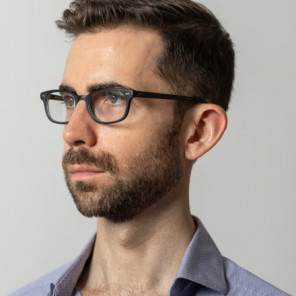
Jared Malsin is a Middle East correspondent for The Wall Street Journal based in Istanbul, covering Turkey, Syria and the wider region.
During more than a decade of working as a foreign journalist, Jared’s work has often focused on the struggle between democracy and authoritarianism across the region and the world. He lived for about five years in Cairo reporting and writing on the long aftermath of Egypt’s 2011 revolution and 2013 military coup.
Jared joined the Journal in 2018 as a correspondent based in Cairo covering North Africa. Since moving back to Istanbul in 2021, he has covered political and economic crises in Turkey and the transition from tyranny and civil war in Syria. He has contributed to the Journal’s coverage of Russia’s invasion of Ukraine including as a reporter on the ground in the country during the war.
In a previous job as Middle East bureau chief for Time Magazine, Jared reported from the front lines of wars in Iraq and Syria and covered the 2016 military coup attempt in Turkey. He has also reported from Saudi Arabia, Libya, Tunisia, Lebanon, Israel and the Palestinian territories.
As a freelance journalist Jared wrote for publications including The New York Times, The Guardian and Bloomberg Businessweek. He has a bachelor’s degree in political science from Yale University and a master’s in journalism and Near Eastern studies from New York University. He has also dedicated years to the study of the Arabic language.