For distinguished criticism, using any available journalistic tool, Fifteen thousand dollars ($15,000).

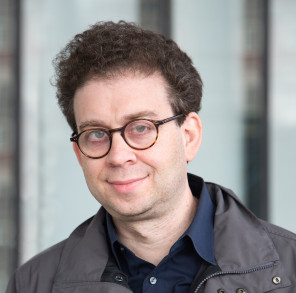
Mark Lamster of The Dallas Morning News

For his rigorous and passionate architecture criticism, using wit and expertise to amplify his opinions and advocate for city residents.

Winning Work

October 16, 2025

Why demolishing I.M. Pei's iconic building would be a financial boondoggle and an architectural travesty.

Of all the irresponsible, ill-conceived, short-sighted, counter-productive, cynical, philistine and downright dumb ideas I've heard in my time writing about Dallas, the prospect of razing City Hall stands alone. Demolishing architect I.M. Pei's iconic building would be an act of epic mismanagement indefensible on aesthetic, environmental, financial or moral grounds.

And yet, next week the City Council will begin deliberations on the future of City Hall, the ostensible justification being a deferred maintenance bill likely to exceed $100 million. That cost has exposed the building to critics who say it is ugly (a matter of taste) and dysfunctional (blame decades of neglect and underfunded maintenance) and to those who would love to get their hands on its prime downtown real estate.

The pending redevelopment of the convention center, which will open up a swath of adjacent land, has made the City Hall site especially appealing as a potential spot for a new basketball arena for the Dallas Mavericks, a prospect that has downtown's developer class rubbing their collective hands in anticipation.

There is a word for this: boondoggle. Dallas taxpayers would be paying an enormous premium - and giving up their majestic, centrally located seat of government - for the benefit of real estate interests, the building industry and the billionaire owners of the basketball team that shipped the city's favorite son out of town in the middle of the night and then raised ticket prices.

While the price to repair City Hall may be large, it is dwarfed by the potential cost of a new building. Willis Winters, the broadly respected architect and former director of the city's Park and Recreation Department, has estimated the expense of replacement at $825 million, and that's not including the enormous costs (both financial and environmental) of demolishing a titanic work of poured-in-place concrete, a project that would cover downtown in dust for ages.

If the Mavs want a new arena downtown, there are numerous other potential locations, including land already being opened up by the reorientation of the convention center. (The city has yet to present a compelling vision for what will occupy this space even as it spends billions on the project.) Whatever the location, the Mavs should pay for their arena themselves, without a penny of public money.

Why Dallas can't have nice things

There is something sadly familiar about this story. Like a spoiled child who leaves toys out in the rain, Dallas refuses to take care of its most precious objects - Fair Park, the Kalita Humphreys Theater, the buildings of the Arts District - leading to staggering costs for repair and questions about whether those landmarks are worth saving. This correlates with another Dallas tradition: the treatment of its built history as disposable. Dallas always seems willing to wipe away its past when moneyed interests come calling.

The striking brutalist form of Dallas City Hall is polarizing. The style - which takes its name from the French word for concrete, not because of its appearance - has lately come under fire from the administration of President Donald Trump, which has effectively mandated traditional and classical architecture be the default style of federal buildings. While City Hall may not be your favorite flavor of architecture, it is absolutely a masterwork, thoughtfully designed and immaculately constructed under the direction of I.M. Pei, one of the most significant figures in postwar American architecture. After visiting the building before its official opening in 1978, Ada Louise Huxtable, the dean of American architecture critics, extolled its "breathtaking" spaces, calling it a "major work of architecture and urban design."

Its destruction would arguably represent the most egregious demolition of an American public building since New York's Penn Station was torn down in the 1960s, an act of philistinism that essentially launched the modern preservation movement. Losing the building would also represent perhaps the biggest stain on the city's reputation since the assassination of President John F. Kennedy. This would be grimly ironic given that the building was a key component of Mayor J. Erik Jonsson's efforts to reshape Dallas in the wake of that tragedy.

Within the architecture community, there is broad opposition to any effort to demolish the building. "Preservation Dallas believes that Dallas City Hall should be repaired - not replaced," reads a statement from the organization. "This is an opportunity for Dallas to show that the people's building - our City Hall - can be continually cared for and not abandoned. Because if City Hall is up for real estate grabs, are any of our city structures really safe?" The American Institute of Architects is also in opposition. "City Hall should not be demolished," says Zaida Basora, the executive director of the AIA's Dallas chapter.

It is unclear whether the city can legally move forward with such a project, at least in the near term. In March, the city's landmark commission unanimously voted to begin the designation process for the building, a move that places a two-year moratorium on any alteration to the structure without the commission's approval. Any attempt to circumvent that moratorium would presumably be subject to expensive litigation from preservation and citizen groups.

False narratives

Throughout its life, the building has been dogged by misperceptions that feed critics and exacerbate its real flaws. Chief among these contentions is that its tilted concrete façade was intended as a representation of overwhelming governmental authority. It was just the opposite. The smaller footprint of the base was intended to draw visitors into the building and its soaring atrium, and to not immediately overwhelm them with an intimidating and confusing warren of offices and officials.

Its open plan was meant to foster cooperation and to literally and figuratively reveal the process of government to the public. "It was a great joy to work in this building, to experience its drama and spatial delights, its materiality, its elegance and its quiet solitude," says Winters, who worked there for nearly 30 years.

Another misperception offered as an excuse to replace the building is the belief that Pei only added the pylons that front the building because Erik Jonsson worried its slanted front made it look like it was going to fall over. If the building is a compromise, according to this logic, it is not worth saving. But this is almost certainly an urban legend, probably spawned by a series of editorial cartoons by the Dallas Times Herald's Bob Taylor that showed Jonsson physically holding up the building for which he was the leading proponent.

In every known drawing and model of the project, the pylons are present and essential to the logic of the building, providing visual stability (they are not load-bearing) and a means of emergency egress (they contain the building's fire stairs). Even if the pylons were an early intervention prompted by Jonsson, it would hardly be damning; architects should collaborate with clients during the design process, and the result here is successful on aesthetic and functional levels.

An opportunity

Beyond years of neglect, Dallas City Hall is plagued by a bureaucratic growth that has stuffed its halls beyond their intended capacity, taxing its design and its mechanical systems. That misuse is not a justification for demolition. Moving some departments off-site would be far more economical than commissioning a new building, especially at a time when vacancy rates in the downtown core are alarmingly low. Using some of that space for city workers would inject welcome life into the area while relieving the burden on City Hall.

Alternatively, the city could build an annex on the area directly behind City Hall, space now occupied by surface parking that Pei intended as a place for expansion.

In undertaking an overhaul of the building, Dallas can look to the example of Boston, which recently completed a restoration of its own brutalist City Hall, and then designated it as a city landmark. Part of that work entailed the redesign of the barren plaza fronting that building, introducing more landscaping and an elaborate playground for kids. Dallas should consider a similar project, as Pei's 4.7-acre plaza has never been a success, failing to activate the surrounding area or become a vibrant gathering space in its own right.

Bringing City Hall up to an acceptable condition for those who work and visit the building will be expensive, but it is the only option that respects the city's heritage while being responsible with the civic purse. The city, it should be noted, had no problem spending $140 million to restore the Cotton Bowl, a building that essentially hosts one marquee event per year.

City Hall was conceived to represent Dallas at its best. It is bold, forward-looking, ambitious, generous and optimistic. In the evening, when the warm Texas sun sweeps across its front façade, it achieves a beauty that is close to the sublime. Destroying it would be an unforgivable act of self-harm.
November 12, 2025

City leaders seem bent on leaving the iconic building without consulting voters.

It's difficult to steal a building, and even harder when that building is made of poured-in-place concrete and roughly the size of an aircraft carrier. But that is precisely what is happening to Dallas City Hall - a monumental theft transpiring in plain sight - with the City Council seemingly bent on plans to abandon the building to developers who will surely demolish it, all without any serious consultation, let alone permission, from the people who own it, namely you, the Dallas taxpayer.

If this were a heist film, it would still be in the plotting stages. Alas, there will be no movie stars on hand this Wednesday, when the City Council is set to direct city staff to investigate the benefits of selling the building in the name of economic development and to determine the costs of moving the city government to a downtown office tower.

The situation is the product of a confluence of events: a deferred maintenance bill that, over the course of less than a month, has somehow ballooned from around $100 million (which seemed grossly inflated) to as much as $595 million (if you believe city staff); the redevelopment of the adjacent convention center, which has made the City Hall site an attractive target for developers; and the Dallas Mavericks' desire for a new downtown arena.

Is it a coincidence that City Hall's deferred maintenance has become an urgent issue as the convention center development and arena discussions have accelerated? It's hard to believe there is no connection. "I am concerned about the transparency of this process because there has been little, if any, engagement with Dallas residents about this important issue," says council member Paul Ridley, one of a small minority fighting to stop the steal, as it were. "I have concern that there is momentum to move forward with a plan to abandon City Hall."

A farce

The push to ditch architect I.M. Pei's iconic building has unfolded over the course of several council hearings that have achieved a level of farce unusual even by Dallas standards. It began with a meeting of the council's Finance Committee on Oct. 21, at which city staff put forward a deferred maintenance bill exceeding $100 million without having undertaken a comprehensive condition assessment or structural analysis of the building. Staff members also admitted they had no data on the costs or economic impact of a move out of City Hall. This prompted the committee chair, Chad West, to pull a random real estate developer out of the audience to opine on the benefits of moving to a downtown office tower. Not surprisingly, he endorsed that proposal.

This was followed, on Nov. 3, by a joint hearing of the council's Finance and Economic Development committees at which West said the self-evidently rushed process was not being rushed because "we've been talking about deferred maintenance in our real estate portfolio for years." Mostly, the council had been sweeping the issue under its fraying carpet.

Next came a bombshell revelation from Ridley, who had discovered that $7 million in 2017 city bond funds specifically allocated for building repair had not been spent and were sitting unused on the city's books, along with an additional $69 million in unencumbered bond funds that could conceivably go to building renovation. City staffers say less than that $7 million is left on the books, but there remain funds available for repairs.

Until a serious review of the building is done by a team of professional architects and engineers, any estimate of the deferred maintenance costs presented by city staff should be considered with extreme skepticism. According to a review of the city's assessments conducted this month by Zaida Basora, the executive director of the Dallas chapter of the American Institute of Architects, the actual costs for outstanding repairs to the building are between $25 million and $32 million. Basora is an authority on the building's condition; as a longtime senior city staffer, she had direct oversight over City Hall bond projects.

Just as the costs for repair seem grossly exaggerated, the potential expense of moving city government into a downtown office tower seems wildly optimistic. "They really haven't looked at what it will cost for comparable space," says Ridley, of the city's staff. To that point, a city government is not a standard commercial tenant; beyond the need for office space, it requires council chambers, ceremonial spaces, spaces for protest and extensive parking for city workers, city vehicles and the public, among other bespoke demands.

"There seems to be this mentality that we're better off abandoning what we have and moving into some shiny new building instead of investing the money in an already paid-for building," says Ridley. "To me that just doesn't make economic sense."

The city's track record of evaluating properties does not inspire confidence. This past April, city officials admitted the building acquired to house the city's building permitting department would have to be auctioned off because it did not - and this is not a joke - meet building code. "For such a large, impactful real estate acquisition, the City failed to be as thorough as it should have been," City Manager Kimberly Bizor Tolbert said in a report at the time.

Warnings from history

If that is not an effective warning, an examination of the city's development history should be.

Only the most senior of Dallas senior citizens can remember that downtown was once a bustling and crowded place. Now it is plagued by countless empty surface lots where buildings once stood. What happened? Developers demolished them, hoping for newer, bigger, more profitable projects, only to have the economy and their hubris undermine their fantasies.

It is not hard to imagine City Hall being razed only for the economy to turn and for the site to become yet another empty parking lot. There is, in any case, already plenty of vacant land downtown primed for development, including the space directly south of City Hall and some 30 acres that will be freed up by the reorientation of the convention center - a space large enough for a new arena.

Not that I would recommend building one. The Mavericks don't need a new arena; they want a new arena. Although their current home, the recently upgraded American Airlines Center, is no architectural masterpiece, it is in fine condition. The reason the team's owners want a new home is simple: They want to control the surrounding development. In Victory Park, they don't.

Indeed, one subject that has not been addressed in any of the discussions about City Hall is Victory Park, the anodyne urban development only starting to emerge as an active neighborhood after decades of struggle. Removing its anchor tenant would be an enormous setback to its fragile status. More to the point, what is being proposed for the area around City Hall - an up-from-scratch development anchored by an arena - is simply another version of Victory Park. Why should it work any better on the other side of downtown? The city would simply be privileging one area for development at the expense of another, whack-a-mole style.

There is a certain irony here. Among the complaints about Pei's City Hall design is that it is an exemplar of the urban renewal movement of the 1960s, when cities replaced historic buildings with new, often over-scaled architecture. That is precisely what proponents of City Hall's demolition are calling for today: a whole new district dominated by a massive arena and a titanic convention center.

Do as I say, not as I do

The City Council's disregard for economic reality might be eclipsed by its indifference to the rule of law. Earlier this year, the city's Landmark Commission began the designation process for City Hall, initiating a two-year moratorium on any alterations to the building without the commission's approval. But, because the building is city-owned, the council could withdraw it from consideration by the commission, an act of hypocrisy that would kneecap the commission ever after. "Do as I say, not as I do" is not a reasonable position for a city government.

Even if City Hall can be sold without public consent, neither city staff nor the City Council has explained how the same might be true of City Hall Plaza. The 1967 bond that paid for the plaza defined it as a park, and it is similarly defined that way in the city's Downtown Parks Master Plan. According to Texas state law, designated park land may not be sold unless "the sale is submitted to the qualified voters of the municipality at an election and is approved by a majority of the votes received at the election."

Would a majority of Dallas voters approve such a measure? I don't know, but I do think they should have an opportunity to weigh in on the broader question of City Hall's fate. There is already considerable evidence that they believe it should be maintained: A town hall meeting on the subject drew a large crowd opposed to any demolition and an online petition calling for the preservation of the building has received well over 3,300 signatures. That petition accurately describes City Hall as "a masterpiece of modern architecture and civic pride."

It deserves better from our civic leaders.

June 18, 2025

Architecture critic Mark Lamster on the kiosk program that will make city streets and sidewalks worse.

Of all the things Dallas should not be doing, creating more obstructions on our already blighted sidewalks would have to be somewhere close to the top of the list.

You would think the City Council might appreciate this, but last week that body voted to make Dallas streets even more crowded than they are by agreeing to move forward on a contract that will place 150 digital kiosks - electronic billboards that look like giant iPhones - on city streets over the next three years.

It's a good example of the phenomenon I've taken to calling Dallas Logic, that being the city's propensity to make decisions that seem to flout common sense and undermine its long-term objectives, often in the name of progress.

"We're sacrificing the walkability and the safety of pedestrians in our most congested urban environments. We're sacrificing the quality of life and the aesthetics in those same areas," said Paul E. Ridley, one of four council members to vote against the proposal. (He was joined by Carolyn King Arnold, Cara Mendelsohn and Mayor Eric Johnson in the 11-4 decision.)

The principal justification for the program is economic, albeit with unconvincing nods to social equity and wayfinding. According to the city's estimates, each kiosk will generate roughly $20,000 per year in revenue from advertising. Over the course of the contract, if it is extended to the full 20 years, that would mean roughly $67 million for the city.

It sounds like an enormous sum, but it's anyone's guess what the real value of that money will be in 2045, and in the context of an annual city budget that approaches $5 billion, it is a relative pittance.

For these reasons, the advocacy groups Downtown Dallas Inc., Uptown Dallas Inc., the Arts District and the Real Estate Council have opposed the plan. "The potential small revenue generation is not worth the decreased safety and connectivity issues associated with the installation of these kiosks," the leaders of those institutions wrote in the opinion pages of this paper. The Dallas Morning News editorial board has also repeatedly argued against the kiosks.

Dallas already has an advertising kiosk program, and it is a good argument for not having another. There are currently 137 static (that is, nondigital) kiosks clogging city streets, mostly in the area in and around downtown. Residents are no doubt familiar with the ugly, barrel-shaped structures, as they have a habit (according to both informal observation and a census by the city) of making sidewalks impassable, especially for those with disabilities.

The proposed digital kiosk program would take some measures, though not enough, to prevent this kind of obstruction. Kiosks could only be placed on sidewalks with a minimum width of 8 feet, and would require at least 18 inches between the kiosk and the curb and 4 feet between the kiosk and the property line. This is wide enough to allow a wheelchair to pass and may be sufficient on a residential street, but it is hardly adequate for a highly trafficked downtown sidewalk, and that is where most of the kiosks will be. Two people will barely be able to walk side-by-side on such a narrow path.

According to proposed terms of the city's contract with IKE Smart City, the kiosk vendor, 12% of the ad space on the kiosks would be turned over to the city for wayfinding, transit and visitor information, emergency messaging and other promotional content. Of the 150 kiosks to be installed, 30 would be in areas that have high scores in the city's "Equity Impact Assessment" - a tool for the measure of communities with vulnerable populations - and all would be required to provide free Wi-Fi connection within 150 feet.

Those features have earned the program some support among local arts advocates, who would benefit from free advertising. "I really believe that it's an opportunity to radically increase the visibility and access for grassroots arts organizations like ours," Paulina Dosal-Terminel, the managing director of the Oak Cliff nonprofit Artstillery, told the City Council. "These digital kiosks provide a platform for hyperlocal art to reach a broader public, and more importantly they reflect back the vibrancy of the community often left out of the mainstream cultural narrative."

That benefit does not seem worth the cost, and the other advantages seem largely redundant, seeing as most of us walk around with internet-connected smartphones in our pockets. The installation of the kiosks raises other concerns, among them digital privacy and the potential disruption of city infrastructure (power lines, for example). The city's poor record of monitoring the current kiosk program for compliance with city standards - let alone its maintenance of the Dallas streetscape, generally - does not inspire confidence.

Nearly 60 years ago, Lady Bird Johnson embarked on a campaign to beautify America, a project that entailed the removal of unsightly advertising billboards from the nation's streets and highways. "Too often we have sacrificed human values to commercial values under the bright guise of progress," she said.

It would be nice if Dallas would take that admonition to heart, and put an end to the digital kiosk program before it makes life in the city more challenging than it already is.


May 30, 2025

The Safe in the City plan is a good start, but just a start.

Are you scared of downtown Dallas? I get it if you are.

The streets can seem lonely, especially at night. Drivers treat traffic laws as optional, and that's when they're not using the streets as a drag-racing strip. Crossing one of the downtown's potholed thoroughfares on foot can feel like a real-life version of the arcade game Frogger. Homelessness remains a problem, with many of those individuals experiencing mental health issues. Last year saw a disturbing uptick in violent crime in the city's core.

Those real troubles are exacerbated by rhetoric that characterizes cities as veritable dens of criminality and iniquity. It is a brand of anti-urban sentiment that has been an unfortunate part of the American character from the earliest days of independence: In one of his more lamentable pronouncements, no less than Thomas Jefferson declared cities to be "pestilential to the morals, the health and the liberties of man."

Countering centuries-old perceptions is a tall order, but the recently unveiled Safe in the City initiative is an admirable response to the conditions in the Dallas core. A joint project led by Downtown Dallas Inc. (DDI) and the city, the plan combines increased police presence with a sustained effort to provide services and shelter to the unhoused (and not simply arrest them for vagrancy or move them to less visible places).

Judging by the early statistics, it is having a positive impact. According to DDI, crime in the core has fallen by 29% from last year, with an even greater drop in violent assaults. More than 200 people who had been living on downtown streets have been rehoused.

It's nice to see the city addressing the core's troubles pro-actively, albeit with a healthy push from the downtown business community represented by DDI. (Grant Moise, CEO of DallasNews Corporation and publisher of The Dallas Morning News, has been an organizing voice in the initiative.) But public safety requires something more than an absence of criminality. Statistically, the greatest threat to life and limb is not physical assault but automotive collision. Speeding cars and trucks are a constant menace to the well-being of anyone downtown (not to mention the rest of the city).

While the promise of increased traffic enforcement - a component of the Safe in the City plan - is a most welcome development, it is a Band-Aid and not a cure for a disease designed into the fabric of the city. Elongated blocks with radiused corners, for example, encourage drivers to speed. More broadly, they signal the city's continuing propensity to privilege automobiles over pedestrians and cyclists.

If Dallas is serious about improving safety, it needs to take steps to calm traffic, especially at critical intersections. The city could, for instance, turn certain streets into what the Dutch refer to as woonerfs, streets where automobiles are forced to slow down and share space with pedestrians and cyclists. The city might also consider closing Main Street to automotive traffic, transforming it into a pedestrian mall linking Dealey Plaza to Deep Ellum.

More immediately, it must address the broken and obstructed sidewalks that are a persistent hindrance and safety hazard, forcing walkers into traffic. Protected lanes for cyclists barely exist, though a new bike plan, approved by the City Council this week, would improve conditions.

Better public transit is probably the best way to get people out of their cars, which means fighting efforts to reduce funding for DART.

Though younger generations might find it hard to believe, there was a time when downtown Dallas was a bustling place that lured rather than spurned pedestrians. The 1955 film Report to Dallas offers a telling depiction of that lost city, with footage showing waves of people making their respective ways across streets filled with trolleys and buses in a ballet of syncopated movement.

That film was produced by the Dallas Citizens Traffic Commission, an independent advocacy group, and in its worldview, those clogged streets were a problem, an impediment to the free flow of traffic.

The condition of downtown streets today is very much a product of that mindset, which dominated planning in the city for more than a half century and remains deeply embedded in the city's collective psyche.

Dallas, thankfully, is moving beyond that outdated thinking. An increasing residential population is a welcome testament to that shift. Indeed, there is nothing that would make the city more safe than having more people out and about and enjoying the many amenities - parks, restaurants, shops, cultural institutions - downtown has to offer.

As the late D Magazine writer and advocate for Dallas pedestrians Zac Crain put it, "You should go for a walk." Just be sure to look both ways, and mind the broken sidewalks.


May 23, 2025

Architecture critic Mark Lamster on why the swishy, $3 billion colossus is a roll of the dice on civic transformation.

Here are a few things Dallas could do with $3 billion: repair all of its crumbling streets and sidewalks; build 10,000 units (give or take) of affordable housing; and plant enough trees to reduce temperatures and make the city more attractive. By my back-of-the-envelope estimations, Dallas could do all of this, and still have enough money to restore the local arts funding cut off this year by the federal government.

Or, we could build a new convention center.

That Dallas has decided on the convention center (which has been projected to cost $3.3 billion to $3.5 billion, although there is no firm budget) is unfortunate, if predictable. The city has a habit of building shiny new baubles (for example, the Arts District) in the hopes they will generate prosperity and prestige.

That is true of the proposed remaking of the Kay Bailey Hutchison Convention Center. According to its backers, the project will "open space for new development and an entertainment district," "catalyze local economic growth," "support housing development," "grow local business" and "elevate Dallas as a globally competitive city."

Those grand promises are conveyed in renderings that bathe a titanic glass-fronted building in an ethereal golden glow, like a Renaissance painter's baby Jesus.

The design is the work of Amplify Dallas, a consortium led by a pair of architecture firms, Atlanta-based Populous and the Dallas office of Perkins & Will. (Not to be confused with Inspire Dallas, the consortium of firms led by the developer Matthews that is overseeing the project.)

It takes the form of an enormous wedge that faces Lamar Street, shifting the configuration of the current center by 90 degrees, so that it runs north-south. Its six levels rise some 120 feet, with much of the structure jacked up on stilts to allow for vehicle drop off, parking, utilities and train tracks at ground level.

Visitors coming from the Cedars will cross an expanded and landscaped bridge across Interstate 30, leading from Botham Jean Boulevard to Lamar. "You might not even know the highway is there, especially if you aren't from Dallas," says Ron Stelmarski, leader of the project for Perkins & Will.

The western side of the project will be its back end, an area for loading and other infrastructural necessities. Unresolved is how the building would connect with the adjacent old Dallas Morning News campus, large portions of which the city recently agreed to purchase for more than $50 million.

The center's principal entry will be on the northern end of the building, facing downtown, and it opens into a vast atrium, the so-called Great Hall. From there, visitors proceed to an exhibition hall measuring 750,000 square feet - an area larger than 13 football fields. Meeting rooms occupy a level above that. An enormous ballroom with a double-height ceiling is perched on the building's roof, projecting out slightly to grab attention. In total the building consists of some 2,095,550 square feet, making it nearly 250,000 square feet larger than the current center.

It is exceedingly difficult to mitigate the impact of a building of that scale, to make it both manageable for the individual and appealing visually. Renderings, which can be deceptive, suggest the architects have done about as well as can be expected, giving the structure a curving profile and open base that disguises its bulk and invites public interaction. The cladding material used on its superstructure - still undetermined - and the extent of obtrusive digital display boards will do a lot to determine its overall effect. Dallas does not need another building-as-billboard, like the neighboring Omni Hotel.

"It's a building that's in motion, that has dynamism," says Stelmarski. "It wants to be a shape and a form that's like an embrace. It's really a big hug."

The biggest question posed by the design, and one that is unanswered, is what exactly it will be hugging. In renderings, the area to the east of the building - much of it now occupied by the current center - would be opened up for development, either for housing or an entertainment district or both. But there is no concrete plan to realize any of that building, a fact that is deeply concerning given that the venture has been sold to the public, at least in part, as a means of downtown transformation.

The economic prospects of the center are as speculative as that development. The convention business is in what Heywood Sanders, a professor at the University of Texas at San Antonio who studies the industry, calls a "consistent long-term decline." At the same time, regional competition is increasing: Austin, Houston and San Antonio are all in the midst of major convention center expansion projects.

Statistics on the economic impact of the current center - numbers that might support the proposed expansion - are difficult to come by, and projections for the new building are highly optimistic. "I haven't seen any serious analysis of the center's performance history or any serious presentation of the larger market reality," says Sanders.

Rosa Fleming, director of the city's Convention and Event Services department, has not responded to inquiries from The Dallas Morning News.

To spend such an enormous sum on a project with so few guarantees, and when there are so many other needs to be addressed, seems imprudent at best - a massive gamble of the civic purse. If a principal aim is to create more development and housing downtown, why not spend the money directly on that, instead of hoping a new conference center would somehow foster it?

In the end, Dallasites need to ask themselves what would be best for the city's future: a building that may or may not drive economic growth, or investment in the kinds of infrastructure that would make Dallas a more attractive, affordable and appealing place to live and visit.

It is not that hard a choice.


February 24, 2025

A new plan promises to transform the perennially struggling park. Can it work?

Does this sound familiar? A plan is announced to address some persistent Dallas problem (the state of Fair Park, the decaying Kalita Humphreys Theater, our perennially crumbling streets and sidewalks); we all get excited and argue about the relative merits and costs of the plan; time passes and the plan is either forgotten or shelved; a new plan that looks a lot like the old plan is introduced to solve the same problem, which has only gotten worse in the interim. Rinse and repeat.

Why do we do this to ourselves? It's a lot easier - politically, financially, logistically - to make a new plan than to follow through on an old one. The result is that Dallas can make you feel like you're living in a bizarro North Texas version of the film Groundhog Day.

The latest example of this cycle in action is a $30 million plan, commissioned by the Thanks-Giving Foundation and first presented to the City Council in January, to remake Thanks-Giving Square, the perennially underperforming downtown park designed by architect Philip Johnson. This follows a 2021 plan released by the Thanks-Giving Foundation to - you guessed it - remake that same park.

There has been a switch of architecture firms (from CallisonRTKL to Gensler) and a scaling up of ambition and budget (the projected cost of the 2021 plan was $12 million-$18 million), but the two proposals share the same fundamental idea: to open the park up to the community around it by expanding its footprint. The change in architect followed a visit by Kyle Ogden, president and chief executive of the Thanks-Giving Foundation, to downtown's AT&T Discovery District, the active (for Dallas) plaza designed by Gensler.

Of the proposed $30 million budget, $10 million has been promised by the North Central Texas Council of Governments contingent on the foundation raising $20 million.

An oasis within the city

That the design of Thanks-Giving Square needs to be rethought is not in question. In 1980, just three years after its opening, future Dallas Morning News architecture critic David Dillon noted the park's "high walls back people off instead of inviting them in, the way a roadblock diverts cars.

That problem was a product of Johnson's design concept, which was to create an oasis within the city, a place sequestered from the rough-and-tumble urban environment. "A great place needs to be hard to get to," he said. Dallasites have never risen to Johnson's challenge, the result being persistently poor traffic. Indeed, it was in part the example of Thanks-Giving Square that prompted James Burnett, the designer of Klyde Warren Park, to insist there be no barriers between that park and neighboring streets.

The sorry state of Thanks-Giving Square is a shame, both because downtown needs attractive public spaces that boost its vitality and because the endeavor was undertaken with such a genuinely altruistic spirit. Like City Hall and DFW International Airport, it was the product of civic introspection following the assassination of John F. Kennedy. The park was the brainchild of Dallas businessman Peter Stewart, who imagined an ecumenical space that would bring a traumatized and racially divided city together around the theme of gratitude. In 1964, he spearheaded the formation of the Thanks-Giving Foundation to make that idea a reality.

The result is the awkward 3-acre park we have today, which sits above a subterranean truck terminal and links to the city's partially built and underused pedestrian tunnel network. Johnson's spiraling 90-foot-tall chapel - a generous dollop of architectural whipped cream - gave it an instant icon, though his choice of a 9th-century Iraqi mosque as a model raised eyebrows. In The Boston Globe, critic Robert Campbell quipped that the chapel looked like it was designed to "commemorate Liberace's ascension into heaven." A more kindly reading would be that the admittedly kitschy design introduces a welcome bit of whimsy into an unforgiving downtown landscape.

The trick, of course, is getting people to appreciate and use Johnson's park. "It has to feel different. There has to be a different experience here," says Ogden. "I want the birds to start singing. I want the sun to come out. I want someone to give you a hug."

Grand ambitions

The key move, in both the 2021 and current proposals, is to appropriate one lane each from neighboring Ervay Street and Pacific Avenue, allowing the adjacent sidewalks to be transformed into landscaped park space. Johnson's original square (technically, triangle) would then become a park within a park, with sections of its concrete retaining walls pulled down to create better sight lines and access to the park interior. "We want to virtually eliminate the walls," says Ogden. The new plan would also extend the elevated catwalk that leads from the park to the chapel, bringing it out to the street and reducing its slope to make it ADA compatible.

In addition to taking back a lane, the new proposal would transform Pacific and Ervay into what the Dutch call a woonerf, an open street shared by pedestrians, automobiles and bikes. Permanent kiosks would be built along Pacific and leased out to vendors offering food and beverage service.

These are all excellent ideas (though food trucks would be cheaper and more flexible than permanent kiosks), and well conceived in Gensler's plans. But some of the proposal's grander ideas are less convincing. Most concerning is the plan for the west end of the park, a triangular plaza where Pacific and Bryan streets meet. The 2021 proposal introduced a modest event pavilion occupying part of this area - a space that could be rented out for private gatherings to help support the park financially. In the new iteration, this pavilion has grown to take up the entire plaza, glassing it in beneath a green roof that slopes down toward the main body of the park.

It's an unnecessarily dramatic and expensive move that surely accounts for a good chunk of the proposal's increased cost. More problematic is its potential impact, which would effectively create an additional barrier between the park and anyone approaching from the west - precisely the kind of obstacle that the rest of the plan is intended to ameliorate.

Other aspects of the plan also seem unrealistic, notably its ambition to establish Thanks-Giving Square as the central "hub" of downtown (a position it is not likely to take from Klyde Warren Park) and a more nebulous dream of becoming "the center of a movement to define a new cultural ideal for Dallas and give each of us a noble role in pursuing it." Certainly, the park does not need three 30-foot-tall sculptural figures (titled "Welcoming," "Belonging" and "Grateful") to attract attention to its mission - a corny idea that would compromise rather than complement Johnson's design.

It is precisely the kind of overly grand ambitions represented here that so often dooms civic projects in Dallas. While there is much to be admired in what the Thanks-Giving Foundation has put forward, it would do well to narrow the project's scope, and avoid the pitfall of over-promising and under-delivering (or not delivering at all). Four years from now, it would be nice to actually have a remade and newly vital Thanks-Giving Square, not another plan for a remade and newly vital Thanks-Giving Square.

For that, we'd all be grateful.

January 30, 2025

The inside story of how Dallas got its game-changing deck park.

Editor's note: This is the ninth installment in a series of essays by architecture critic Mark Lamster that tells the history of Dallas through the buildings and places that define the city.

Can you imagine downtown Dallas without Klyde Warren Park? It's hard, and that's saying something, as the 5.4-acre park suspended over the Woodall Rodgers Freeway is just over a decade old. But since its opening in 2012, it has become an essential part of the city's DNA, the front lawn Dallas never had.

It has, moreover, sparked a genuine (if slow-moving) renaissance of urban life in downtown Dallas, reversing a half-century of decline. It is no exaggeration to call it the most significant building project in Dallas since the city put the Trinity River between levees nearly a century ago.

To list the park's achievements is to understand the scale of its impact. To begin, there's the bridging of the freeway chasm between downtown and Uptown, bringing a long-lost connectivity to the area; it has spurred a wave of development and boosted the value of adjacent real estate; it has delivered (at least some) vitality to the neighboring Arts District; it has brought Dallas together, giving the city a central and inviting place open to all; and, most unlikely, it has made Dallas - Dallas! - a national model of progressive urban design.

Indeed, Klyde Warren Park has been so successful that the city is building two additional deck parks, and is putting Interstate 345 into a trench so that it can eventually be decked as well.

That the park exists at all is something close to a miracle, the product of an unlikely combination of visionary leadership, compelling design and immense fortune.

A bold new plan

The idea of decking Woodall Rodgers can be traced to the road's controversial planning in the late 1960s. At that time, there was considerable debate as to whether the highway would be elevated or depressed into a trench. The state wanted the less expensive, elevated option, but the city, backed by a report by urban planner Vincent Ponte - the man who gave Dallas its underground pedestrian network - insisted on the trench plan, with the idea that it would create less of a barrier between neighborhoods and could be capped in the future.

Following the road's completion, in 1983, Dallas Morning News architecture critic David Dillon reintroduced the decking concept, pointing to the 5.4-acre Freeway Park in Seattle, designed by landscape architect Lawrence Halprin and opened in 1976, as a potential model. A decade later, the landscape architect Kevin Sloan floated a plan to create an "esplanade" across the highway gulch, but it didn't go anywhere either.

The decking idea resurfaced in the early 2000s, driven by executives at Crescent Real Estate Equities, which owned property on either side of the freeway trench. It was then included in plans developed by the Inside the Loop Committee, formed in 2002 by Dallas Mayor Laura Miller to bring life to the city's languishing downtown. "You could fire a cannon on Main Street and no one would hear it," Miller recalls.

Independently, Crescent moved forward on the project, commissioning landscape architect James Burnett, who was already working with the company, to sketch out a plan for a park over the highway. "Being a young architect wanting to please a client, I was like, OK, let's do some drawings," says Burnett, a Louisiana native whose firm, the Office of James Burnett, was founded in Houston but based outside of San Diego.

As Burnett was developing the park plan, the Real Estate Council of Dallas (TREC), held its own competition for an idea that might help revitalize the city. The prize: $1 million in grant funding. Crescent submitted Burnett's scheme, and in 2004 it beat out 34 other entries. "They liked the boldness of it," the council's president, Linda Owen, told The News of the jury's decision.

By that time, the decking plan had found another champion, the man who would come to be the face of the project: Jody Grant, a banker with a Ph.D. in economics, boundless energy and a Rolodex filled with Dallas power players. Texas Capital Bank, which he founded in 1998, had its offices in Uptown, just a block from the freeway canyon.

Grant was uniquely qualified to lead the decking campaign because he had a history of successfully rethinking highway infrastructure. In the late 1970s, Grant was president of Fort Worth National Bank when that city was planning to expand Interstate 30, then a four-lane elevated highway running through downtown, to a whopping 10 lanes. Grant responded with an op-ed in The Fort Worth Star-Telegram offering a counterproposal that shifted the road outside the downtown core to the more southern location it now occupies.

Grant's piece sparked an opposition movement in Fort Worth. "The little old ladies with their umbrellas came out of the woodwork in favor of it," says Grant. The well-connected banker recruited local heavyweight Robert Bass to his cause, and together they formed an advocacy group, I-CARE (Citizen Advocates for Responsible Expansion), that sued to block the project, and eventually won the case in federal court.

Grant got wind of the Woodall Rodgers decking plan in the fall of 2004 during a meeting with Robert Decherd, then chief executive officer of The Dallas Morning News and chair of the Inside the Loop Committee. Given Grant's history of reforming highway infrastructure, the idea appealed to him, and soon he was meeting with representatives from Crescent and TREC director Linda Owen.

Together, the group formed the nonprofit Woodall Rodgers Park Foundation, and on Feb. 24, 2005, went public with its intentions. "It will be the great gateway to downtown, one that we need in the worst way," Grant told this paper. Grant and his wife, Sheila, donated $1 million to the organization, as did Texas Capital Bank. With that money, $500,000 pledged from Crescent and the $1 million seed funding from TREC, the foundation could begin making the decades-long dream a reality. Where the rest of the money to cover the park's projected $60 million cost would come from remained an open question.

Pie in the sky

In the effort to raise capital, the foundation had a key ally in Laura Miller, the Dallas mayor. If the park foundation could come up with $10 million in private funding commitments, Miller promised to match it with $20 million in the coming 2006 bond program. She also imposed a deadline - May 1, 2006 - for the foundation to produce that money.

That date came and went, leaving the park's political fate uncertain, but on May 10 Grant delivered a letter promising the full amount - largely from the real estate interests who owned property that would abut the park. That was good enough to get the park included in the city's $1.26 billion bond program. Lobbying in Austin scored $20 million from the state. In a matter of months, the park that was a mere dream had a $50 million bankroll. "This is one piece of pie in the sky that may just fall to earth," wrote The News' editorial board.

Funding was in place, but existential questions remained. A park can be many things - a place for leisure, a playground for children, a space for sporting events or a site for communal gathering and performance, to name just a few. Which of these would be prioritized in the park's limited footprint? Would its landscape be formal with gridded paths and plantings, as at Versailles, or more naturalistic, like New York's Central Park?

Here the park foundation's board adopted a standard Dallas strategy: hop on a plane to look at what was considered "world class," and then copy it, or at least use it for inspiration. In Chicago, the group visited Millennium Park, where the members were especially impressed with Frank Gehry's stainless steel bandshell. "We were just blown away by the architecture," recalls Grant. They also visited Burnett's recently completed Lakeshore East Park, a jewel of lawns and curving paths inside the Chicago loop.

In Houston, their tour took them to the Discovery Green and to the campus of Rice University to look at the Brochstein Pavilion, a pristine modern cafeteria designed by architect Thomas Phifer.

Perhaps most influential of the places visited was Bryant Park in midtown Manhattan, which had been transformed in the early 1990s from a grim and dangerous place into a vibrant destination. But it was not so much the design of the park that attracted the visitors from Dallas as the park's management, with its emphasis on security and year-round programming. "We saw the heart and soul of what we thought was the way a park ought to be run," says Grant.

The man responsible for Bryant Park's transformation was Dan Biederman, a protege of the urban planner William "Holly" White with an MBA from Harvard. Beyond any single design element, it was Biederman that the Dallas contingent took from Bryant Park, hiring his firm, Biederman Redevelopment Ventures, as a consultant.

The inevitable result of the site visits was a park that would have a little of everything, with pieces borrowed from everywhere. There would be a striking steel performance pavilion, like the one at Millennium Park; a stand-alone restaurant designed by Thomas Phifer, like the one at Rice; and an outdoor library with Parisian-style cafe furniture, like the one at Bryant Park. "We wanted it to feel like a park where you could grab a chair, move it around, get something to eat from a food truck, listen to a performance or just read a book," says Burnett.

That sense of informality extended to the park landscape. What was originally a rather rigid, gridded design evolved into something more free-flowing, with native plantings and a series of what Burnett called "outdoor rooms." A curving promenade - "the wiggle" - ran the park's length.

Impediments

The curving promenade remained in the final design, but several of Burnett's more inventive elements did not. One dropped idea was to have a section of the deck made of heavy-strength glass, so you could look down onto the highway below, aquarium style. The prospect of keeping it clean, given the pollution coming up from the road, was prohibitive. Also unbuilt was a proposed assembly of colored translucent panels that would have been suspended over the highway at the ends of the park. Sunshine would have projected the colors from the panels onto the road. "As you went under the park, you would have got this idea that you're going somewhere special," says Burnett. Cost and safety concerns killed that as well.

The greatest challenge facing the design team was not aesthetic but technical. Burnett was adamant that the park not be elevated or shielded from the neighboring streets. "We wanted to make sure that as you drove around the park, you could see into the park," he says. Open sight-lines were necessary both for security - a serious crime early in the park's history would have been devastating - and to encourage passersby to visit. The problem was that necessary clearance between the Woodall Rodgers roadbed and the bottom of the park's deck meant the deck had to be extremely thin, leaving little room to place park infrastructure - in particular, tree roots - below ground level.

The solution came from park engineers Carter & Burgess (acquired by Jacobs, during planning), who developed a system of parallel concrete box beams that would straddle the highway. Between the beams, shallow troughs could be filled with high-density foam and soil for the park's trees.

Another impediment was political. Burnett's design called for the closure of Harwood Street to traffic, so cars and trucks wouldn't run through the heart of the park. This met with vehement opposition from the neighboring Dallas Museum of Art, which feared the change would inconvenience visitors. The museum's trustees went so far as to bring in a consultant, the Harvard urban planning professor Alex Krieger, to lobby on the museum's behalf.

The compromise solution, agreed to in May 2007, was to place curb cuts and demountable bollards where Harwood met the park, allowing traffic to cross when the museum had special events. Those accommodations, in addition to the required reinforcement of the roadbed, cost the foundation some $3 million. But after all that was done, state and city traffic planners decided the crossing would be a safety hazard and insisted the road be closed permanently.

The original plan to start construction in 2007 with an opening anticipated in 2010 was already delayed when the global financial crisis hit. The foundation was still far short of the financing it would need for the park, which would end up costing just under $100 million. "Nobody wanted to see us. All of the philanthropies shut down and private donations disappeared," recalls Grant.

Then came a stroke of luck, albeit luck manufactured with considerable backroom politicking. In March 2009, the park received $16.7 million in federal stimulus money from the American Recovery and Reinvestment Act. "That put us over the finish line so we could start the park," says Grant.

Work finally began in October that year, with the rebuilding of the retaining walls along the highway trench, and the construction of a new center wall between the east- and west-bound lanes. In December 2011, 25 river birch trees were planted, the first of what would be more than 300 trees. Among the features Burnett would be most proud of was a botanical garden of native species at the western end of the park. "Rejoice!" wrote Mariana Greene, The News' then-gardening columnist, upon the park's opening in October 2012. "Dallas has joined the rarefied company of American urban spaces that have adopted the forward thinking motto, 'Right plant, right place.'"

Being watched

One thing the park did not have, for a long time, was a name. That changed in February 2012, when it was announced Dallas billionaire Kelcy Warren had bought the naming rights for an undisclosed sum, later revealed to be $10 million. Grant had recruited the gas pipeline tycoon at an investors club gathering at Warren's private island off the coast of Honduras. Warren selected his 9-year-old son, Klyde, as the park's namesake. "I did a lot of soul-searching before I decided to do this," Warren said at the time. "I want my son to know, 'You're being watched. You can't blend into the upholstery like your dad has done all his life.'"

It was, to say the least, an unconventional choice, one that did not follow city guidelines that encouraged donors to select names reflecting natural features, historic events or prominent figures. The park foundation, however, had been exempted from those rules, given the amount of private funding the park required.

There was something quintessentially Dallas about naming a public park for a child with no qualification that might recommend him for that honor. It was especially confounding given that the park did nothing to indicate it was built over land that had been part of the Latino community known as Little Mexico and adjacent to Freedman's Town, a community founded by formerly enslaved people. "If the park is to be a vital connection for Dallas, it needs to connect the present with this history," the activist Bill Betzen wrote in a letter to The News before the park opened.

Too much is never enough

However valid, that criticism did little to dampen enthusiasm for the park, which finally opened to the public at 9 a.m. Oct. 27, 2012. At the morning's ribbon cutting, Mayor Mike Rawlings promised the park would "be a hub of activity for this and future generations."

Crowds were slow to arrive - there was a downtown half-marathon that Saturday morning, causing traffic problems - but by afternoon the park was packed with visitors from the city and the suburbs alike who came to enjoy the park atmosphere and programming that included chess, mah-jongg, dog training, yoga, pétanque, knitting lessons and art and science programs for kids. The day culminated with a pop concert by local favorite Polyphonic Spree and a display of fireworks.

That philosophy of programmatic excess defines the park and makes it, aesthetically, something of an upended toy box, with its diverse goodies strewn about. There is little relationship, for example, between the park's allée of mini-arches with Japanese-style lanterns and the cool minimalism of Phifer's performance and restaurant pavilions. The park surely subscribes to the mantra of architect Morris Lapidus, champion of Miami Beach modernism: "Too much is never enough."

The park's benefactors have been testing the boundaries of that proposition ever since.

In 2018, the park foundation announced plans for an awkward, spiraling structure - part parking garage, part event space - to be located on a new, 1.7-acre deck on the western end of the park. Construction has yet to begin, but the city has committed $16.5 million to the $160 million venture.

Announcement of that project was followed two years later, in the midst of the COVID-19 pandemic, with the unveiling of plans for a Vegas-style fountain that would shoot jets of water 100 feet into the air. The $10 million price tag - paid for by Nancy and Randy Best - came just a few months after the city had furloughed 235 employees from the Park and Recreation department.

Burnett was opposed to the project, especially because it meant eliminating plantings at the eastern end of the park, but it went forward, opening in 2022. Today, Burnett is diplomatic. "I'm not glad they did it, but it does work for some people and I think it serves a need," he says.

These alterations, whatever one thinks of them, are markers of the park's inarguable success. More than 1 million people visit the park every year, and it has vastly boosted the value of neighboring real estate, generating - according to the park's foundation - more than $1 billion in development.

The institutions of the Arts District have benefited enormously from the added traffic to the area, and none more than the Dallas Museum of Art, once an adversary. Park visitors using the museum's garage have become a significant revenue stream for the museum, which is planning an expansion that would reorient its entry toward the park.

"The park has been so enormously successful, that the institutions that abut it are looking to be more porous on the sides where they were fortress-like," says Charles Birnbaum, founding director of the Cultural Landscape Foundation, a nonprofit based in Washington, D.C. "Klyde Warren Park has really become a poster child for the benefit of capping freeways." Cities including Austin and Peoria, Pittsburgh and San Diego have all looked to Dallas for inspiration.

For Dallas, the park has been nothing short of transformative, suturing a broken urban core while giving the city and the region beyond a generous space to gather and play.

The essays in this series will be collected in a volume to be produced by the nonprofit publishing house Deep Vellum. Read earlier installments on Millermore Mansion , the Adolphus Hotel , NorthPark Center , the Hyatt Regency and Reunion Tower , Fountain Place , City Hall , the Nasher Sculpture Center and the Republic Tower .

Biography

Mark Lamster is the architecture critic of The Dallas Morning News and a 2017 Loeb Fellow at the Harvard Graduate School of Design. In 2021, he was awarded the $50,000 Rabkin Prize for arts journalism. He has degrees from Johns Hopkins University and Tufts University.

For more than a decade, Lamster was a senior editor at Princeton Architectural Press in New York, where he developed a list of highly regarded titles. He has been a contributing editor to Architectural Review, Design Observer, and ID. His work has appeared in national publications and magazines, including The New York Times, the Los Angeles Times and The Wall Street Journal.

Lamster is the author of several books, including the critically acclaimed 2018 biography The Man in the Glass House: Philip Johnson, Architect of the Modern Century for Little, Brown & Company in New York.

Finalists

Nominated as finalists in Criticism in 2026:

Michael J. Lewis of The Wall Street Journal

For informed and insightful writing about architecture that brings the inanimate to life and reflects a deep understanding that buildings are at once visual and civic spaces.

Vinson Cunningham of The New Yorker

For sophisticated, accessible essays on the media, with an emphasis on television, that address shifts in culture, politics and American life with clear-eyed authority.

The Jury

Betsy Morais(Chair)

Editor-in-Chief, Columbia Journalism Review

Lyndsay C. Green

Dining and Restaurant Critic, Detroit Free Press

Wesley Morris*

Critic, The New York Times and Host, Cannonball

Emily Nussbaum*

Staff Writer, The New Yorker

Pamela Paul

Writer at Large, The Wall Street Journal

Winners in Criticism

2026 Prize Winners

M. Gessen of The New York Times

For an illuminating collection of reported essays on rising authoritarian regimes that draw on history and personal experience to probe timely themes of oppression, belonging and exile.