Pulitzer Prize Board 2015-2016

front row left to right: J. Diaz, R. Blau, K. Willey, P. Gigot, M. Pride, J. Dehli, G. Collins; back row left to right: N. Brown, K. Boo, J. Daniszewski, R. Beck, E. Robinson, S. Engelberg, A. Marqués, T. Shelby, S. Hahn, S. Coll (absent: L. Bollinger)
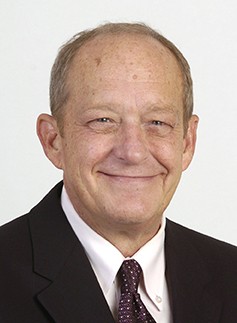
Randell Beck, as the prize-winning executive editor of the Argus Leader from 2001 to 2008, led his newspaper through numerous public service, investigative and First Amendment projects. Those included a legal battle that resulted in a landmark state Supreme Court ruling in 2005 unsealing more than 200 criminal pardons issued secretly by the governor of South Dakota.
Under his direction, the newspaper was also recognized as an industry leader for its recruitment and promotion of journalists of color. Beck chairs a panel of journalists and academics that organizes and hosts the largest training effort of its kind for young Native American journalists.
Beck recently received the Award for Editorial Leadership from the American Society for Newspaper Editors. Given annually since 2001, the award honors individuals who have “championed great journalism during their careers.” A graduate of the University of Missouri’s School of Journalism, he began his career at the now-defunct Memphis Press-Scimitar as a courts and police reporter in 1979. From 1983 to 1987, he worked at the Knoxville (Tenn.) Journal as reporter covering energy and environment issues. He joined the Kansas City Star in 1987 as a general assignment reporter and became an editor two years later. Beck became assistant managing editor at the San Bernardino County (Calif.) Sun in 1996. In 1998, he joined The News Journal in Wilmington, Del., and served as managing editor of that newspaper from 1999 to 2001.
Beck joined the Pulitzer Prize Board in 2008.
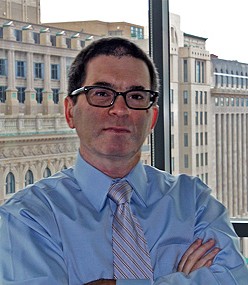
Robert Blau, a New York City native, has carved an eclectic path up the journalistic ranks. He wrote about music, reviewed movies and covered the police beat, before turning his attention to investigative reporting and editing. Following a Nieman Fellowship at Harvard University in 1997, he began overseeing all major enterprise at the Chicago Tribune, including its years-long probe of the failures of the criminal justice system in Illinois, which yielded numerous reforms and was emulated by news organizations across the country. In 2004, he was named managing editor of the Baltimore Sun, where he helped reengineer a web-first newsroom and led the paper's award-winning journalism. Blau joined Bloomberg News in 2008, where he directs a global team of investigative reporters and feature writers in collaboration with Businessweek magazine. Its projects have forced unprecedented transparency from the Fed, documented the human cost of the mining and cotton industries, and revealed how hedge funds recently exploited the Brexit vote. During his career, the stories Blau has shepherded have won numerous journalistic accolades, including the Polk, Loeb, Investigative Reporters and Editors, Goldsmith, Overseas Press Club and Pulitzer prizes. He is the author of "The Cop Shop," a memoir of covering crime in Chicago. He serves on the Nieman Foundation advisory board.
Blau joined the Pulitzer Prize Board in 2011.
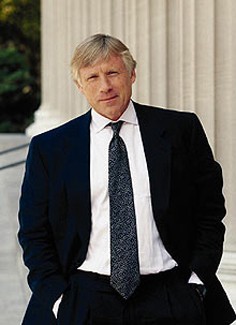
Lee C. Bollinger is a renowned legal scholar, with an expertise in free speech and the First Amendment. He is an alumnus of Columbia's Law School, where he is also a professor. He became president of Columbia University on June 1, 2002.
Born in Santa Rosa, California, Bollinger was raised there and in Baker City, Oregon. He went on to graduate from the University of Oregon in 1968 and received a J.D. from Columbia Law School. He served as a law clerk to Judge Wilfred Feinberg of the United States Court of Appeals for the Second Circuit and Chief Justice Warren Burger of the U.S. Supreme Court. Bollinger went on to join the faculty of the University of Michigan Law School in 1973, becoming dean of the school in 1987. He became provost of Dartmouth College in 1994 before returning to the University of Michigan in 1996 as president.
Bollinger has authored many articles and books on the subject of free speech such as "The Tolerant Society" (Oxford University Press, 1988) and "Images of a Free Press" (University of Chicago Press, 1991).
President Bollinger is married to artist Jean Magnano Bollinger. They have two children.

Katherine Boo, a staff writer for The New Yorker magazine, was a reporter at The Washington Post when her series on mistreatment of mentally challenged people in Washington, D.C., resulted in the 2000 Pulitzer Prize for Public Service for The Post. The Pulitzer citation praised her work for exposing "wretched neglect and abuse in the city’s group homes for the mentally retarded, which forced officials to acknowledge the conditions and begin reforms."
Boo is noted for her work focusing on poverty. In 2012, she won the National Book Award for Nonfiction for Behind the Beautiful Forevers: Life, Death and Hope in a Mumbai Undercity, which examined life in the airport slums of Mumbai, India. The book, which was a finalist for a Pulitzer Prize in Nonfiction, also won nonfiction prizes from PEN, the Los Angeles Times Book Awards, the New York Public Library and the American Academy of Arts and Letters.
Reared in and around Washington, D.C., Boo began her journalism career at the Washington City Paper and later worked at The Washington Monthly. She joined The Washington Post in 1993, serving first as an editor in the Outlook section, then as an investigative reporter. She left in 2001 to write for The New Yorker.
One of her New Yorker articles, "The Marriage Cure," examined efforts to teach poor people in an Oklahoma community about marriage in the hope that it would help them rise out of poverty. The piece won the National Magazine Award for Feature Writing in 2004. Another New Yorker article, "After Welfare," won the 2002 Sidney Hillman Award, honoring work that advances social justice.
Boo graduated summa cum laude from Barnard College and in 2002 received a MacArthur "genius" award. She is married to Sunil Khilnani, a writer and professor who directs the King’s India Institute at King’s College London.
Boo joined the Pulitzer Prize Board in 2013.
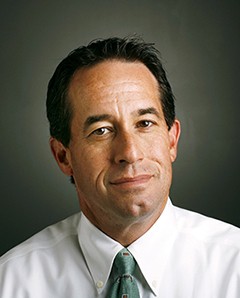
Neil Brown oversees the journalism published in the Tampa Bay Times, the largest circulation daily in the Southeast, as well as on the websites tampabay.com and PolitiFact.com, in the daily tabloid tbt*, and in Bay, a bimonthly magazine on fashion and real estate.
A native of Chicago, Brown began his career as a reporter at the Miami Herald, covering government and politics in Key West, West Palm Beach, Tallahassee and Miami.
In 1988, he joined Times Publishing Company as managing editor of Congressional Quarterly, a former Times affiliate in Washington, D.C. He directed the CQ newsroom in a first-of-its-kind special report "Where the Money Goes," which was a finalist for a National Magazine Award.
In 1993, Brown joined the then St. Petersburg Times as national/foreign editor. He was promoted to managing editor and executive editor, becoming editor in 2010. He was named to Times Publishing’s board of directors in 1997 and became a vice president in 2001.
During Brown’s leadership of the newsroom, the Times has won more national and state awards than at any time in its history, including five Pulitzer Prizes.
In a time of great business transformation, Brown has sought innovative collaborations to expand enterprise and accountability journalism. Most notable has been an ambitious expansion of fact-check journalism through the Times’ Pulitzer Prize-winning PolitiFact.com.
Brown is a past president of the Florida Society of News Editors, and served six years on the board of the American Society of News Editors. He is a four-time Pulitzer Prize juror.
Brown graduated Phi Beta Kappa from the University of Iowa in 1981 with a bachelor’s degree in political science and journalism. In 2010, he was inducted into the Hall of Fame at the university’s School of Journalism and Communications.
He lives in St. Petersburg with his wife, Iranian author and journalist Gelareh Asayesh. Their two children are in college.
Brown joined the Pulitzer Prize Board in 2015.
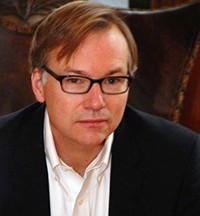
Columbia Journalism School Dean Steve Coll is a staff writer at The New Yorker, the author of eight books of nonfiction, and a two-time winner of the Pulitzer Prize. Between 1985 and 2005, he was a reporter, foreign correspondent and senior editor at The Washington Post. There he covered Wall Street, served as the paper’s South Asia correspondent in New Delhi, and was the Post’s first international investigative correspondent, based in London. He served as managing editor of the Post between 1998 and 2004. The following year, he joined The New Yorker, where he has written on international politics, American politics and national security, intelligence controversies and the media.
Coll is the author of "Ghost Wars: The Secret History of the CIA, Afghanistan, and Bin Laden, From the Soviet Invasion to September 10, 2001," published in 2004, for which he received an Overseas Press Club Award and a Pulitzer Prize. His 2008 book, "The Bin Ladens: An Arabian Family in the American Century," won the PEN/John Kenneth Galbraith Award for Nonfiction in 2009 and was a finalist for the Pulitzer Prize for Biography. His most recent books are "Private Empire: ExxonMobil and American Power" (2012), which won the Financial Times/Goldman Sachs Award as the best business book of 2012, and "Directorate S: The CIA and America's Secret Wars in Afghanistan and Pakistan, 2001–2016" (2018).
He has four children and is married to Eliza Griswold, the journalist and poet. He has a B.A. in English and history from Occidental College.
Coll was elected to the Pulitzer Prize Board in 2012 before becoming an ex officio member as dean in 2013.
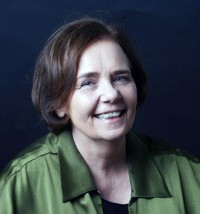
Gail Collins joined the editorial board of The New York Times in 1995 and six years later became the first woman editor of The Times’ editorial page. At the beginning of 2007, she stepped down and took a leave in order to finish a book, When Everything Changed: The Amazing Journey of American Women from 1960 to the Present. She returned to the paper as an Op-Ed columnist later in 2007.
Before joining The New York Times, Collins was a columnist at New York Newsday and the New York Daily News. She also was a financial reporter for United Press International.
Her first jobs in journalism were in Connecticut. She was a senior editor for Connecticut Magazine, a weekly columnist for the Connecticut Business Journal and the host of a public affairs program for Connecticut Public Television. She founded the Connecticut State News Bureau, which provided coverage of the state capitol and Connecticut politics. When she sold it in 1977, the CSNB was the largest news service of its kind in the country, with more than 30 weekly and daily newspapers.
Collins’ most recent book is As Texas Goes: How the Lone Star State Hijacked the American Agenda, published in 2012. She is also the author of America’s Women, Scorpion Tongues: Gossip, Celebrity and American Politics, a biography of William Henry Harrison and The Millennium Book, which she co-authored with her husband, Dan Collins, a writer and editor.
A native of Cincinnati, Collins is a graduate of Marquette University with a B.A. in journalism, and a graduate of the University of Massachusetts, Amherst, with an M.A. in government. She is a recipient of an Associated Press award for commentary, 1994; a Women in Communications Matrix Award, 1989; and a Meyer Berger Award, Columbia University, 1987. She was a Bagehot Fellow in Economic Journalism at Columbia in 1981-1982.
Collins joined the Pulitzer Prize Board in 2013.
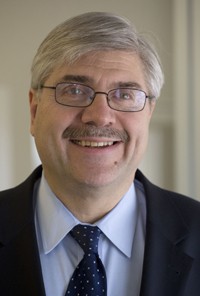
John Daniszewski became AP’s vice president for international news in 2009 after three decades as a reporter, editor and correspondent who has been on assignment in more than 70 countries in Europe, Africa, the Middle East, Latin America and Asia. He is responsible for more than 500 editors and reporters in some 100 bureaus outside the United States producing coverage from some of the most complex and challenging news-gathering environments. Daniszewski played a central role in AP’s opening of the first Western news and photo bureau in Pyongyang, North Korea, in 2012, and the Yangon, Myanmar, bureau earlier in 2013 -- the first return to that country by a Western news agency after decades of strict military rule. He worked for the Los Angeles Times from 1996-2006, serving as bureau chief in Cairo, Moscow, Baghdad and London. In 2001, he covered the aftermath of the 9/11 attacks in Pakistan and Afghanistan, and he stayed in Baghdad throughout the U.S. invasion and the toppling of Saddam Hussein's regime in 2003. He was part of a team that won an Overseas Press Club award in 2007 and that was a Pulitzer Prize finalist that year for coverage of Iraq’s descent into civil war. Daniszewski began his journalism career as a stringer for the AP while an undergraduate at the University of Pennsylvania. He joined the AP staff in Philadelphia in 1979 and later worked in Harrisburg and on the national and international editing desks in New York. In 1987, he was assigned overseas to Warsaw, Poland. There he covered the revival of Solidarity and the end of Communist rule. In 1989, he was shot and wounded in Timisoara, Romania, during the uprising against Nicolae Ceausescu’s communist regime. He later covered wars across the former Yugoslavia, including the siege of Sarajevo. In 1993, he became AP’s bureau chief in Johannesburg, South Africa. He led the AP’s coverage of the election of President Nelson Mandela and the end of apartheid before leaving in 1996 to go to the Times. He returned to AP as international editor in 2006 and was named a managing editor the next year. Daniszewski graduated from the University of Pennsylvania’s Wharton School. An Ohio native, he is married to Dru Menaker, senior media advisor for the international development organization IREX. They live in Nyack, NY, and have two children in college, Benjamin and Anna. He is a member of the North American Committee of the International Press Institute and the Board of Governors of the Overseas Press Club Foundation. John Daniszewski joined the Pulitzer Prize Board in 2013.

Joyce Dehli is an Edmond J. Safra Fellow-in-Residence at Harvard University for 2016-17 and former Vice President of News for Lee Enterprises. She joined the Pulitzer Prize Board in May 2008.
As Lee’s senior news executive for nine years, Dehli helped lead its journalists through a period of great professional change, challenge, and innovation. Lee publishes 50 daily newspapers across the country, including the St. Louis Post-Dispatch, the Arizona Daily Star in Tucson, the Wisconsin State Journal in Madison, and other mid-size and small newspapers and their affiliated digital products. She left Lee in 2015 to pursue a writing project, which is the focus of her Harvard fellowship.
A longtime journalist, Dehli began her career in Louisville, Kentucky at The Courier-Journal and The Louisville Times. After returning to her native state of Wisconsin, she worked for many years at the Wisconsin State Journal as a reporter, city editor, and managing editor. Public-service journalism, especially through enterprise and investigative work, was her chief focus.
Dehli was a 2002 Ethics Fellow at The Poynter Institute. Her professional service over the years has included membership on the University of Iowa’s School of Journalism and Mass Communication Professional Advisory Board, teaching and serving as a panelist at The Poynter Institute, speaking for the National Institute on Computer-Assisted Reporting on mining databases for local stories, and teaching data analysis to journalists. In March of 2008, Dehli served as a juror for the Pulitzer Prize in Local Reporting.
Dehli holds a bachelor's degree in journalism from Marquette University in Milwaukee and a master's degree in English literature from the University of Wisconsin-Madison. She and her spouse, Nicole Saylor, live in Washington, D.C.
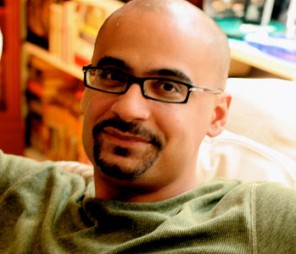
A creative writing professor at the Massachusetts Institute of Technology, Junot Díaz won the 2008 Pulitzer Prize for Fiction for his best-selling first novel, The Brief Wondrous Life of Oscar Wao.
The Pulitzer Board described the work as “a dazzling, richly layered novel about an overweight, nerdy Dominican-American teenager who comes of age in a multi-generational immigrant family, devouring comic books, spinning fantasies and searching for love.”
Widely acclaimed, the book also won the John Sargent Sr. First Novel Prize, the National Book Critics Circle Award, the Anisfield-Wolf Book Award and the Dayton Literary Peace Prize. “Funny, street-smart and keenly observed,” a New York Times review of the novel said. “An extraordinarily vibrant book that’s fueled by adrenaline-powered prose.”
Díaz was born in Santo Domingo, Dominican Republic, and emigrated to New Jersey as a child. Working his way through college, he graduated from Rutgers University with a degree in English.
Díaz preceded his Pulitzer-winning work with Drown, a debut collection of 10 short stories narrated by adolescent Dominican males living in hard-pressed communities in the Dominican Republic, New York and New Jersey. “These stories,” said Publisher’s Weekly, “chronicle their outwardly cool but inwardly anguished attempts to recreate themselves in the midst of eroding family structures and their own burgeoning sexuality.”
Díaz’s fiction has also appeared in The New Yorker, African Voices, Best American Short Stories (1996, 1997, 1999, 2000), in Pushcart Prize XXII and in The O'Henry Prize Stories 2009. He is the fiction editor at the Boston Review.
Much in demand as a speaker, Díaz has been honored frequently for his work. He has received a Eugene McDermott Award, a fellowship from the John Simon Guggenheim Memorial Foundation, a Lila Acheson Wallace Readers Digest Award, the 2002 Pen/Malamud Award, the 2003 US-Japan Creative Artist Fellowship from the National Endowment for the Arts, a fellowship at the Radcliffe Institute for Advanced Study at Harvard University and the Rome Prize from the American Academy of Arts and Letters.
Diaz joined the Pulitzer Prize Board in 2010.
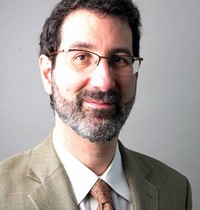
Stephen Engelberg became ProPublica's editor-in-chief on Jan. 1, 2013. He oversees its day-to-day editorial operations, long-term projects and Web strategy. During his time as managing editor, ProPublica became the first online news organization to win Pulitzer Prizes. In 2010, it won the Investigative Reporting prize for chronicling the life-and-death decisions by a hospital’s exhausted doctors when they were isolated by the floodwaters of Hurricane Katrina. A year later, it won the National Reporting prize for exposing Wall Street practices that contributed to the nation’s economic meltdown.
Before joining ProPublica, he worked for The Norfolk Virginian-Pilot, The Dallas Morning News, The New York Times and The Oregonian of Portland, Ore., where he was a managing editor. During his years at The Oregonian, the paper won the Pulitzer for Breaking News Reporting and was a finalist for its investigative work on methamphetamines and on charities intended to help the disabled.
Engelberg was with The Times for 18 years, including stints in Washington, DC, and Warsaw, Poland, as well as in New York. After serving as the bureau chief in Warsaw following the collapse of Communism, he resumed work as an investigative reporter. Engelberg shared in two George Polk Awards for reporting: the first, in 1989, for articles on nuclear proliferation; the second, in 1994, for articles on U.S. immigration. He was a finalist for the Pulitzer Prize as a reporter in 1998 for an investigation of the crash of a commuter airplane.
Since 1996, Engelberg has concentrated on editing investigative projects. Engelberg was the first editor of The Times’ investigative unit and directed teams of reporters who won Pulitzer Prizes for national, foreign and explanatory journalism. Among the winning projects were ones that examined Mexican corruption (published in 1997) and the rise of Al Qaeda (published beginning in January 2001).
Engelberg is the co-author of "Germs: Biological Weapons and America’s Secret War." He shared an Emmy in 2001 for work on a documentary on biological warfare by the PBS program Nova.
A native of Lexington, Mass., Engelberg graduated from Princeton University in 1979 with a degree in history. He lives in Montclair, N.J., with his wife, Gabrielle Glaser, and three daughters.
Engelberg joined the Pulitzer Prize Board in 2012.
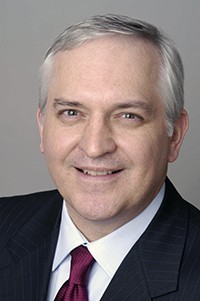
Paul Gigot has been the editorial page editor and vice president of the Wall Street Journal since 2001. He is responsible for the newspaper's editorials, op-ed articles, arts criticism and book reviews, and he directs the editorial pages of the Journal's Asian and European editions and the OpinionJournal.com website. He is the host of the weekly half-hour news program, the Journal Editorial Report, on the Fox News Channel. Gigot joined the Journal in 1980 as a reporter in Chicago, and in 1982 he became the Journal's Asia correspondent, based in Hong Kong. He won an Overseas Press Club award for his reporting on the Philippines. In 1984, he was named the first editorial page editor of The Asian Wall Street Journal, based in Hong Kong. In 1987, he was assigned to Washington, where he contributed editorials and a weekly column on politics, "Potomac Watch," which won the 2000 Pulitzer Prize for Commentary. Paul Gigot joined the Pulitzer Prize Board in 2007.
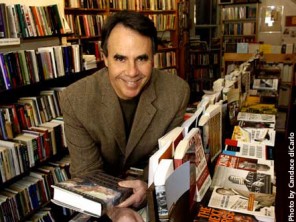
Steven Hahn, the Roy F. and Jeannette P. Nichols Professor of History at the University of Pennsylvania, has written extensively about the American South, African-American history and the international history of slavery, emancipation and race. In 2004, he won the Pulitzer Prize for history for A Nation under Our Feet: Black Political Struggles in the Rural South from Slavery to the Great Migration. The book also received the Bancroft Prize (best book in American history), and the Merle Curti Prize in Social History given by the Organization of American Historians.
Hahn’s historical work has taken many forms. His other books include The Roots of Southern Populism (1983), The Countryside in the Age of Capitalist Transformation (1985) and, most recently, The Political Worlds of Slavery and Freedom (2009). He is also co-editor of Freedom: A Documentary History of Emancipation (2009). Currently, he is writing a book for the Penguin/Viking History of the United States series entitled, A Nation without Borders: The United States and Its World, 1830-1900, as well as a textbook for Bedford-St. Martin’s Press, Colonies, Nations, Empires: A History of the United States and the People Who Made It.
Hahn’s articles have appeared in the American Historical Review, Past and Present, the Journal of Southern History, and the Journal of American History, as well as in The New Republic, Dissent, Le Monde Diplomatique, and the Chronicle of Higher Education.
Through the years, Hahn’s scholarship has often been recognized with major awards. In 1984, The Roots of Southern Populism received the Allan Nevins Prize of the Society of American Historians and the Frederick Jackson Turner Award of the Organization of American Historians (best first book in American history). In 1991, his article, "Class and State in Post-emancipation Societies," in the American Historical Review, received the ABC-Clio History and Life Award for the best essay in the journal literature. He is also the recipient of numerous fellowships, including ones from the John Simon Guggenheim Foundation, the American Council of Learned Societies, and the Center for Advanced Study in the Behavioral Sciences at Stanford. He is an elected member of the Society of American Historians.
Hahn received his Ph.D. from Yale University (1979) and has also taught at the University of Delaware, the University of California at San Diego, and Northwestern University. He has delivered keynote addresses at many scholarly conferences and university events and has been appointed Pitt Professor at Cambridge University, Lawrence Stone Visiting Professor at Princeton University, and the Nathan I. Huggins Lecturer at Harvard University. His teaching has been recognized with major awards at the University of California at San Diego, Northwestern, and the University of Pennsylvania.
Hahn has been an expert witness on behalf of the Lawyers Committee for Civil Rights Under Law and the NAACP Legal Defense Fund, and for the past three decades, he has been actively involved in promoting the teaching of history in the public schools in cooperation with the American Council of Learned Societies, the California History Project, and the Gilder Lehrman Foundation. For two years in Chicago he worked with the Odyssey Program, making college-level courses available to interested, though economically disadvantaged, adults.
Hahn lives in Bryn Mawr, Penn., and has two children, Declan, 17, and Saoirse, 14.
Steven Hahn joined the Pulitzer Prize Board in 2011.

As executive editor of The Miami Herald, Aminda Marqués Gonzalez has oversight and responsibility for the newspaper’s print and online news operation, which reaches 1.2 million readers a week.
A 1986 graduate of the University of Florida, she began her journalism career 25 years ago as a summer intern at the newspaper covering community news. During nearly a decade of local reporting, Marqués went on to cover Hialeah, the second largest city in the newspaper’s home county, and followed the landmark case involving the Santeria religion to the U.S. Supreme Court.
She moved to editing in 1994, where she directed government reporting, local politics and breaking news. Named deputy metro editor in 2000, she oversaw metro, state and community news operations. From 2002 to 2007, Marqués was Miami bureau chief for People magazine, overseeing coverage for the southeast U.S., the Caribbean and Latin America.
She returned to The Miami Herald in 2007 as a multimedia editor to help launch Miami.com, the newspaper’s entertainment website. As executive features/Sunday editor, she directed a redesign of the lifestyle sections from tabloid to broadsheet. She also was responsible for the newsroom’s enterprise stories and for oversight of the Sunday paper.
Named managing editor in 2010, Marqués led a wide-ranging newsroom reorganization building teams around content, design and the distribution of stories across platforms. During her tenure as managing editor, The Miami Herald was a 2011 Pulitzer Prize finalist for coverage of the earthquake in Haiti.
In November 2010, Marqués was named executive editor, the newspaper’s first Hispanic editor and only the second woman to hold the post. During her editorship, The Miami Herald was a 2012 finalist for the Pulitzer Prize in Public Service for a series detailing the state’s systemic failures in regulating assisted-living facilities.
She is a member of the National Advisory Board of the Poynter Institute, sits on the board of the Associated Press Media Editors and has served as a Pulitzer journalism juror. She was named one of the 2011-2012 Alumni of Distinction for the University of Florida College of Journalism and Communications. Marqués and her husband have two children.
Marqués joined the Pulitzer Prize Board in 2012.
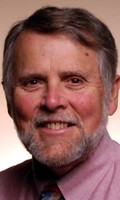
Mike Pride is the administrator of the Pulitzer Prizes and editor emeritus of the Concord (N.H.) Monitor, where he ran the newsroom for 30 years.
During his tenure as editor of the Monitor, the paper was often cited for excellence in journalism. TIME once described it as one of the best papers in the country, and it was chosen as a New England Newspaper of the Year 19 times. The National Press Foundation named Pride national editor of the year in 1986 for guiding the Monitor’s coverage of the Challenger disaster. He later won the Yankee Quill Award for contributions to New England Journalism.
Pride was a Nieman Fellow at Harvard University in 1984-85 and has also been a fellow at Stanford University and a scholar-in-residence at Gettysburg College. He has written extensively about politics, poetry, journalism and history and in the early 2000s served as a regular columnist for Brill’s Content. His work has also appeared in Newsweek, The Boston Globe, the Baltimore Sun, Historical New Hampshire, Green Mountains Review, Sewanee Review, Nieman Reports, Columbia Journalism Review and many other publications.
He has authored or co-authored four books on New Hampshire history: My Brave Boys, The New Hampshire Century, Abraham Lincoln in New Hampshire, We Went to War and Our War. He also helped Steve Raymond, a Bataan Death March survivor, compile and publish his memoir, Too Dead to Die.
Pride grew up in Florida. He attended the University of Florida and the University of South Florida, where he received a B.A. in American Studies and also did graduate work in American history. He served in the US. Army from 1966 to 1970. Before his move to New Hampshire, he worked at the St. Petersburg Times, The Tampa Tribune, the Clearwater Sun and the Tallahassee Democrat.
Pride served on four Pulitzer Prize journalism juries and judged the American Society of Newspaper Editors writing awards. He was a member of the Pulitzer Prize board from 1999 through 2008. He became administrator of the prizes in 2014. He and his wife Monique live in New York City and Goshen, N.H.
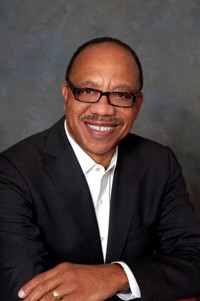
Eugene Robinson is a columnist and associate editor of The Washington Post, where he has worked since 1980. His twice-weekly column on the paper’s op-ed page debuted in February 2005 and is now syndicated by the Washington Post Writers Group to 262 newspapers.
In 2009, Robinson won the Pulitzer Prize for Commentary for his columns about the 2008 presidential campaign and the election of President Barack Obama.
Before becoming a columnist, Robinson held a variety of jobs at at the Post, including city hall reporter, city editor, South America correspondent, London bureau chief, foreign editor and assistant managing editor. During the 1987-88 academic year, he was a Nieman Fellow at Harvard University.
A native of Orangeburg, S.C., Robinson graduated from Orangeburg High School, where he was one of a handful of black students on a previously all-white campus. At the University of Michigan, he was the first black co-editor-in-chief of the student newspaper, The Michigan Daily. He began his career at the San Francisco Chronicle, where he participated in coverage of the Patty Hearst kidnapping.
For nearly a decade, Robinson has appeared regularly as a political analyst and commentator on MSNBC. A member of the National Association of Black Journalists, he was elected to the organization’s hall of fame.
Robinson is the author of three books: Coal to Cream: A Black Man’s Journey Beyond Color to an Affirmation of Race; Last Dance in Havana; and Disintegration: The Splintering of Black America. He is married, has two sons and lives in Arlington, Va.
Robinson joined the Pulitzer Prize Board in 2010.
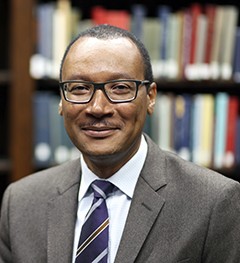
Tommie Shelby is an Africana studies scholar whose writings focus on racial and economic justice and on the history of black political thought. He is the Caldwell Titcomb Professor of African and African American Studies and of Philosophy at Harvard.
Shelby’s first book, "We Who Are Dark: The Philosophical Foundations of Black Solidarity" (2005), explores the relationship between race, identity, solidarity and justice through a philosophical reconsideration of leading African American thinkers from the era of slavery to the post-Jim Crow era. He coedited "Hip Hop and Philosophy: Rhyme 2 Reason" (2005), which brings the classic debates of Western philosophy to a general audience through the idiom of hip-hop culture, and "To Shape a New World: Essays on the Political Philosophy of Martin Luther King, Jr." (2018).
He is also the author of "Dark Ghettos: Injustice, Dissent, and Reform" (2016). Characterized by Columbia University philosopher Robert Gooding-Williams as "a major, groundbreaking contribution to both philosophical and public policy discourse about the ghetto poor," it received the 2016 Book Award from the North American Society for Social Philosophy.
Shelby’s numerous academic articles have appeared in journals such as Philosophy & Public Affairs, Ethics, Political Theory, Critical Inquiry, Du Bois Review and Daedalus. He has also written for The New York Times Book Review, Boston Review, The Root and The Chronicle of Higher Education. From 2006 to 2014, he was co-editor of Transition, a literary and cultural magazine with a focus on Africa and its Diaspora.
A native of Jacksonville, Fla., Shelby received his B.A. from Florida A&M University and Ph.D. from the University of Pittsburgh. He began his academic career as an assistant professor of philosophy at The Ohio State University. He has been on the faculty at Harvard since 2000.
Shelby is married to the writer and editor Jessie Scanlon. They live with their daughter and son in Cambridge, Mass.
Shelby joined the Pulitzer Prize Board in 2015.

Keven Ann Willey, a native of Washington, D.C., became vice president and editorial page editor of The Dallas Morning News in November 2002. Her editorial department’s Bridging Dallas' North-South Gap advocacy won the 2010 Pulitzer Prize for editorial writing. Her department's four-year campaign to amend the state constitution to require legislators to publicly record their votes by name was a finalist for the 2008 Pulitzer Prize. Willey received the 2007 Mayborn Award for Community Service from the Texas Daily Newspaper Association and the 2007 James Madison Award from the Freedom of Information Foundation of Texas for the recorded votes effort. Those editorials also won the 2004 Scripps Howard Foundation National Journalism Award for Distinguished Service to the First Amendment.
Willey attended the University of Arizona and studied briefly in Europe and in Guadalajara, Mexico. She spent the majority of her college career at Northern Arizona University in Flagstaff, where she graduated magna cum laude in 1980 with a bachelor’s degree in journalism with emphasis in political science and Spanish. She is a 2015 graduate of the Women Director Development Program at the Kellogg Graduate School of Management at Northwestern University and a 2001 graduate of the Management Development Program, co-sponsored by the Kellogg school and Medill School of Journalism. She was a 2001 Hoover Fellow at Stanford University.
Willey began her journalism career at The Associated Press in Phoenix, and later in 1980 joined The Arizona Republic in Phoenix. She spent 1987 to 1988 covering the presidential campaign and has covered eight national political conventions. Willey became The Republic’s political columnist in 1989 and was named editorial page editor in 1998. Under her direction The Republic’s editorial pages were twice named finalists for the Pulitzer Prize.
A 2008 Pulitzer Prize jurist, Willey was the 2006-07 president of the Texas Associated Press Managing Editors and is a former board member of the National Conference of Editorial Writers (renamed the Association of Opinion Journalists). She has chaired the Futures Committee for the Tate Lecture Series at Southern Methodist University and is a member of the World Affairs Council of Dallas-Fort Worth.
In years past, Willey won many awards for news, column and editorial writing. She is a former president of the First Amendment Coalition of Arizona and a founding board member of First Amendment Funding Inc. Her work has appeared in The New York Times, and she has been featured on PBS, NPR, CNN, C-SPAN and numerous other television and radio stations nationwide.
Willey joined the Pulitzer Prize Board in 2008.