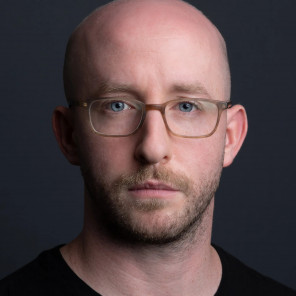
Finalist: Brett Murphy and Anna Maria Barry-Jester of ProPublica

For an authoritative and consequential examination of the Trump administration’s freeze of humanitarian aid through the U.S. Agency for International Development, coverage that illuminated how the dismantling of the agency placed hundreds of thousands of people at risk, contradicted official assurances that lifesaving programs remained active and led to preventable deaths.

Nominated Work

Biography

Brett Murphy joined ProPublica in 2022, where his work on the junk science of 911 call analysis won a George Polk Award, among other honors. The following year, he was part of the team that won the Pulitzer Prize for public service for its reporting on how a set of politically connected billionaires provided lavish gifts and travel to Supreme Court justices over many years. Previously, Murphy worked as an investigative reporter at USA Today, where he won several journalism awards, including the international Livingston Award for an investigation into a U.S. military attack on its own security forces in Afghanistan, which killed dozens of civilians, including as many as 60 children. His series on widespread labor abuses in California’s port trucking industry was a finalist for the 2018 Pulitzer Prize and spurred a raft of reforms. Before USA Today, Murphy covered courts and hurricanes for the Naples Daily News and other Gannett newspapers, and he co-founded the “Local Matters” newsletter, a weekly roundup of the best investigative and watchdog reporting from newsrooms around the country.
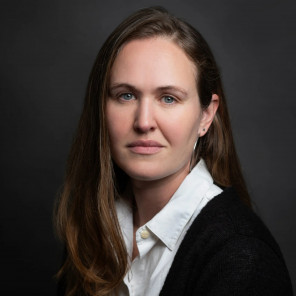
Anna Maria Barry-Jester joined ProPublica as a reporter focusing on global health in 2022. She has reported extensively on public health and environmental issues, including infectious disease outbreaks, the Flint water crisis and American gun deaths. Previously, she documented and co-reported the first international news stories on an epidemic of chronic kidney disease affecting agricultural workers in Central America and Southeast Asia for the Center for Public Integrity and other outlets. During the COVID-19 pandemic, she reported on the troubled public health response as well as the impact on state and local health departments for KFF Health News, collaborating with The Associated Press and “This American Life.” Her work has been honored with a Gerald Loeb Award, an AAAS Kavli Science Journalism Gold Award, the Investigative Data Journalism prize from the Online News Association and a communications award from the National Academies of Sciences, Engineering and Medicine, among others.

Winners

Prize Winner in Explanatory Reporting in 2026:

Susie Neilson, Megan Fan Munce and Sara DiNatale of the San Francisco Chronicle

For their series “Burned,” which showed how insurance companies using algorithmic tools have failed Californians who lost their homes to fire by systematically undervaluing their properties, denying claims and making it impossible for them to rebuild. Explanatory Reporting

Finalists

Nominated as finalists in Explanatory Reporting in 2026:

Staff of Bloomberg

For reporting on a new generation of so-called “revolutionary” cancer drugs that revealed how pharmaceutical companies, lobbyists and medical entrepreneurs have reaped huge profits while failing to show that the drugs have extended people's lives.

The Jury

Philip Bennett(Chair)

Producer, FRONTLINE

Ann Gerhart

Deputy Managing Editor, The Washington Post

Paul Haven

Vice President and Head of Global News Gathering, Associated Press

Keith Herbert

Assistant Managing Editor for Investigations, Newsday

Amalie Nash

Vice President/Journalism, Knight Foundation

Bruce Orwall

Head of Enterprise, The Wall Street Journal

Maurice Tamman

Editor in Charge, Data & Computational Journalism, Thomson Reuters

Winners in Explanatory Reporting

Sarah Stillman of The New Yorker

For a searing indictment of our legal system’s reliance on the felony murder charge and its disparate consequences, often devastating for communities of color.

Caitlin Dickerson of The Atlantic

For deeply reported and compelling accounting of the Trump administration policy that forcefully separated migrant children from their parents, resulting in abuses that have persisted under the current administration.

2026 Prize Winners

M. Gessen of The New York Times

For an illuminating collection of reported essays on rising authoritarian regimes that draw on history and personal experience to probe timely themes of oppression, belonging and exile.