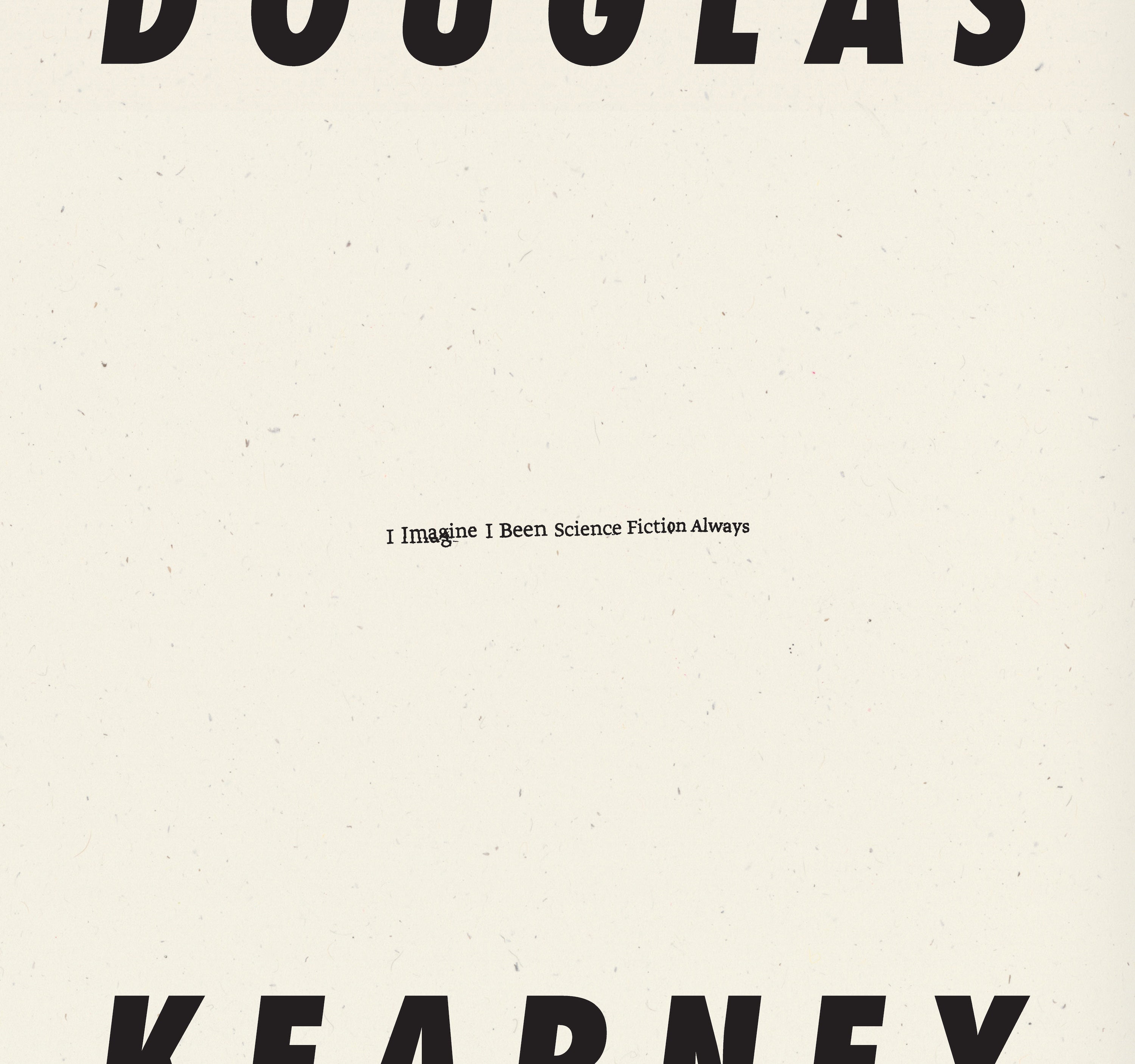
Finalist: I Imagine I Been Science Fiction Always, by Douglas Kearney (Wave Books)

A multiverse of poems that burst off the page in vivid innovative structures, deploying collage, comix, music, typography, wordplay and fiction to push literary boundaries.

Nominated Work

I Imagine I Been Science Fiction Always


On the heels of Sho (winner, Griffin Poetry Prize) and Optic Subwoof (Pegasus Award in Poetry Criticism), Douglas Kearney's visual poetry masterpiece, I Imagine I Been Science Fiction Always, pushes further into Kearney's long-time practices of performance typography, collaging pre-existing media sources to create singular, multiplicitous texts that defy neat categorization. Through AfroFuturistic exploration of these techniques, Kearney presents a sustained consideration of precarious Black subjectivity, cultural production as self-defense, the transhistoric emancipatory logics of the preposition over, Anarcho-Black temporal disruption, and seriocomic meditations on the material and metaphysical nature of shadow. Engaging a rich history of visual poetics, I Imagine I Been Science Fiction Always almost predicts its endurance as a visionary work of genius.
Biography

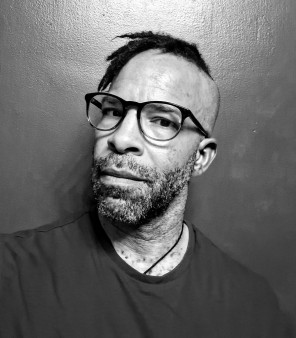
Douglas Kearney has published nine books ranging from poetry to essays to libretti. His most recent poetry book is I Imagine I Been Science Fiction Always, a collection of visual poetry. He is also the author of a collection of talks he presented for the Bagley Wright Lecture Series titled Optic Subwoof (Wave Books, 2022). His poetry collection, Sho (Wave Books, 2021), is a Griffin Poetry Prize and Minnesota Book Award winner, and a National Book Award, Pen America, Hurston/Wright, Kingsley Tufts, and Big Other Book Award finalist. He is the 2021 recipient of OPERA America’s Campbell Opera Librettist Prize, created and generously funded by librettist/lyricist Mark Campbell. Kearney is a 2022 McKnight Writing Fellow. A Whiting Writer’s and Foundation for Contemporary Arts Cy Twombly awardee with residencies/fellowships from Cave Canem, The Rauschenberg Foundation, and others, he teaches creative writing at the University of Minnesota–Twin Cities.
 

Winners

Prize Winner in Poetry in 2026:

Juliana Spahr

A collection in which the poet takes stock of her personal disillusionment, which she uses to interrogate her relationship to her art form, community and politics. Poetry

Finalists

Nominated as finalists in Poetry in 2026:

Patricia Smith

A bold re-imagining of the “new and selected” form where the poet enters into dialogue with her earlier poems, transforming a career retrospective into an engagement with earlier selves.

The Jury

Tracy K. Smith(Chair)*

Boylston Professor of Rhetoric and Oratory; Professor of African and African American Studies; and Susan S. and Kenneth L. Wallach Professor at the Harvard Radcliffe Institute, Harvard University

Camille Dungy

University Distinguished Professor and Director, Creative Writing Program, Colorado State University

J. Michael Martinez

Assistant Professor of English and Creative Writing and Director, Center for Literary Arts, San Jose State University

D.A. Powell

Professor, Program in Writing, University of San Francisco

Elizabeth Willis

Professor of Poetry, Iowa Writers' Workshop

Winners in Poetry

Marie Howe

A collection drawn from decades of work that mines the day-to-day modern experience for evidence of our shared loneliness, mortality and holiness.

Brandon Som

A collection that deeply engages with the complexities of the poet’s dual Mexican and Chinese heritage, highlighting the dignity of his family’s working lives, creating community rather than conflict.

Carl Phillips

A masterful collection that chronicles American culture as the country struggles to make sense of its politics, of life in the wake of a pandemic, and of our place in a changing global community.  

Diane Seuss

A virtuosic collection that inventively expands the sonnet form to confront the messy contradictions of contemporary America, including the beauty and the difficulty of working-class life in the Rust Belt.

2026 Prize Winners

M. Gessen of The New York Times

For an illuminating collection of reported essays on rising authoritarian regimes that draw on history and personal experience to probe timely themes of oppression, belonging and exile.