
Finalist: A Flower Traveled in My Blood: The Incredible True Story of the Grandmothers Who Fought to Find a Stolen Generation of Children, by Haley Cohen Gilliland (Avid Reader Press/Simon & Schuster)

A beautifully written and well-reported book on Argentina’s Dirty War, told through the eyes of the mothers and grandmothers who sought the truth about what happened to their “disappeared” loved ones and raised awareness of political repression in South America.

Nominated Work

A Flower Traveled in My Blood: The Incredible True Story of the Grandmothers Who Fought to Find a Stolen Generation of Children


NATIONAL BESTSELLER • A NEW YORK TIMES NOTABLE BOOK OF 2025 • THE WASHINGTON POST’S 5 BEST NONFICTION BOOKS OF 2025 • THE ATLANTIC’S 10 BEST BOOKS OF 2025 • THE NEW YORK PUBLIC LIBRARY'S BEST BOOKS OF 2025 • TIME MAGAZINE’S BEST BOOKS OF 2025 • NPR’S BEST BOOKS OF 2025

“[An] astonishing story…Powerful…Harrowing…Absorbing and lucid…You would have to harden your heart to be unmoved by the Abuelas’ quest.” —Jennifer Szalai, The New York Times Book Review (front-cover review)

“Inspiring…A triumphant saga of ordinary people doing extraordinary things in the face of pure malevolence.” —Hampton Sides • “Enthralling…Written with the nail-biting verve of a thriller.” —Publishers Weekly (starred review) • “Extraordinary...A harrowing and timely reminder of what happens when democracy succumbs to despotism.” —Adam Higginbotham • “[A] cinematically detailed, deeply researched narrative.” —The Washington Post • “Piercing, emotional...Will resonate for generations.” —Kirkus Reviews (starred review)

A remarkable new talent in narrative nonfiction delivers the epic true story of a group of courageous grandmothers who fought to find their grandchildren who were stolen.

In the early hours of March 24, 1976, the streets of Buenos Aires rumble with tanks as soldiers seize the presidential palace and topple Argentina’s leader. The country is now under the control of a military junta, with army chief Jorge Rafael Videla at the helm. With quiet support from the United States and tacit approval from much of Argentina’s people, who are tired of constant bombings and gunfights, the junta swiftly launches the National Reorganization Process or El Proceso—a bland name masking their ruthless campaign to crush the political left and instill the country with “Western, Christian” values. The junta holds power until 1983 and decimates a generation.

One of the military’s most diabolical acts is kidnapping hundreds of pregnant women. After giving birth in captivity, the women are “disappeared,” and their babies secretly given to other families—many of them headed by police or military officers. For mothers of pregnant daughters and daughters-in-law, the source of their grief is twofold—the disappearances of their children, and the theft of their grandchildren. A group of fierce grandmothers forms the Abuelas de Plaza de Mayo, dedicated to finding the stolen infants and seeking justice from a nation that betrayed them. At a time when speaking out could mean death, the Abuelas confront military officers and launch protests to reach international diplomats and journalists. They become detectives, adopting disguises to observe suspected grandchildren, and even work alongside a renowned American scientist to pioneer groundbreaking genetic tests.

A Flower Traveled in My Blood is the rarest of nonfiction that reads like a novel and puts your heart in your throat. It is the product of years of extensive archival research and meticulous, original reporting. It marks the arrival of a blazing new talent in narrative journalism. In these pages, a regime tries to terrorize a country, but love prevails. The grandmothers’ stunning stories reveal new truths about memory, identity, and family.
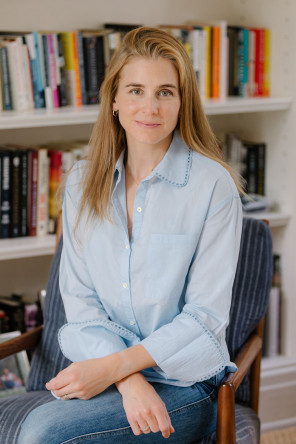
Biography

Haley Cohen Gilliland is a journalist and the director of the Yale Journalism Initiative. She previously worked at The Economist for seven years, four of which were spent in Buenos Aires as the paper’s Argentina correspondent. Following her time at The Economist, she has focused on narrative nonfiction—bringing history and current events to life through fact-based storytelling. She has published long-form feature articles in The New York Times, National Geographic, Bloomberg Businessweek and Vanity Fair, among other publications. She lives in New York state with her husband, two children, and dogs. A Flower Traveled in My Blood is her first book.
 

Winners

Prize Winner in General Nonfiction in 2026:

Brian Goldstone

A feat of reportage, analysis and storytelling focusing on the issues that have created a national crisis of family homelessness among the so-called working poor. General Nonfiction

Finalists

Nominated as finalists in General Nonfiction in 2026:

Kevin Sack

A sensitive exploration of a church massacre in Charleston, South Carolina, a rigorously researched and reported story of faith, African American institutions, the legacy of slavery and what remains after devastating losses.

The Jury

Luis Alberto Urrea(Chair)

Distinguished Professor in Creative Writing, University of Illinois Chicago

Marcia Chatelain*

Africana Studies Undergraduate Chair and Presidential Penn Compact Professor of Africana Studies, University of Pennsylvania

Andrea Elliott*

Author and Investigative Reporter, The New York Times

David Greenberg

Distinguished Professor of History and Journalism & Media Studies, Rutgers University

David George Haskell

Writer, Biologist and former William R. Kenan Jr. Professor of Biology and Environmental Studies, Sewanee: The University of the South; Adjunct Professor, Department of Environmental Sciences, Emory University

Winners in General Nonfiction

Benjamin Nathans

A prodigiously researched and revealing history of Soviet dissent, how it was repeatedly put down and came to life again, populated by a sprawling cast of courageous people dedicated to fighting for threatened freedoms and hard-earned rights.

Nathan Thrall

A finely reported and intimate account of life under Israeli occupation of the West Bank, told through a portrait of a Palestinian father whose five-year-old son dies in a fiery school bus crash when Israeli and Palestinian rescue teams are delayed by security regulations.

Robert Samuels and Toluse Olorunnipa

An intimate, riveting portrait of an ordinary man whose fatal encounter with police officers in 2020 sparked an international movement for social change, but whose humanity and complicated personal story were unknown. (Moved by the Board from the Biography category.)

Andrea Elliott

An affecting, deeply reported account of a girl who comes of age during New York City’s homeless crisis–a portrait of resilience amid institutional failure that successfully merges literary narrative with policy analysis.

2026 Prize Winners

M. Gessen of The New York Times

For an illuminating collection of reported essays on rising authoritarian regimes that draw on history and personal experience to probe timely themes of oppression, belonging and exile.