For a distinguished and appropriately documented book of nonfiction by an American author that is not eligible for consideration in any other category, Fifteen thousand dollars ($15,000).

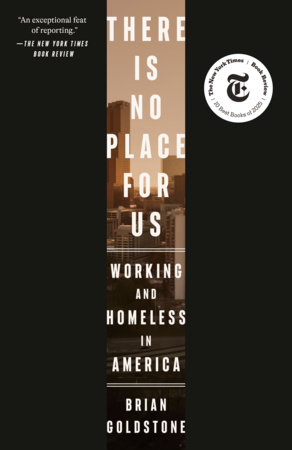
There Is No Place for Us: Working and Homeless in America, by Brian Goldstone (Crown)

A feat of reportage, analysis and storytelling focusing on the issues that have created a national crisis of family homelessness among the so-called working poor.

Winning Work

There Is No Place for Us: Working and Homeless in America


ONE OF THE NEW YORK TIMES AND THE ATLANTIC’S TEN BEST BOOKS OF THE YEAR

Through the “revelatory and gut-wrenching” (Associated Press) stories of five Atlanta families, this landmark work of journalism exposes a new and troubling trend—the dramatic rise of the working homeless in cities across America.

“An exceptional feat of reporting, full of an immediacy that calls to mind Adrian Nicole LeBlanc’s Random Family and Matthew Desmond’s Evicted.”—The New York Times Book Review (Editors’ Choice)

WINNER OF THE LOS ANGELES TIMES BOOK PRIZE • FINALIST FOR THE ANDREW CARNEGIE MEDAL AND THE BERNSTEIN AWARD • A BEST BOOK OF THE YEAR: NPR, The Washington Post, Atlanta Journal-Constitution, Elle, New America, BookPage, Shelf Awareness

The working homeless. In a country where hard work and determination are supposed to lead to success, there is something scandalous about this phrase. But skyrocketing rents, low wages, and a lack of tenant rights have produced a startling phenomenon: People with full-time jobs cannot keep a roof over their head, especially in America’s booming cities, where rapid growth is leading to catastrophic displacement. These families are being forced into homelessness not by a failing economy but a thriving one.

In this gripping and deeply reported book, Brian Goldstone plunges readers into the lives of five Atlanta families struggling to remain housed in a gentrifying, increasingly unequal city. Maurice and Natalia make a fresh start in the country’s “Black Mecca” after being priced out of DC. Kara dreams of starting her own cleaning business while mopping floors at a public hospital. Britt scores a coveted housing voucher. Michelle is in school to become a social worker. Celeste toils at her warehouse job while undergoing treatment for ovarian cancer. Each of them aspires to provide a decent life for their children—and each of them, one by one, joins the ranks of the nation’s working homeless.

Through intimate, novelistic portraits, Goldstone reveals the human cost of this crisis, following parents and their kids as they go to sleep in cars, or in squalid extended-stay hotel rooms, and head out to their jobs and schools the next morning. These are the nation’s hidden homeless—omitted from official statistics, and proof that overflowing shelters and street encampments are only the most visible manifestation of a far more pervasive problem.

By turns heartbreaking and urgent, There Is No Place for Us illuminates the true magnitude, causes, and consequences of the new American homelessness—and shows that it won’t be solved until housing is treated as a fundamental human right.
Biography

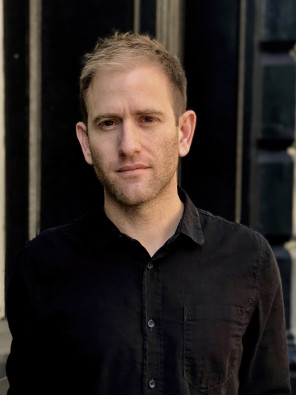
Brian Goldstone is a journalist whose longform reporting and essays have appeared in The New York Times, Harper’s Magazine, The New Republic, The California Sunday Magazine and Jacobin, among other publications. He has a Ph.D. in anthropology from Duke University and was a Mellon Research Fellow at Columbia University. In 2021, he was a National Fellow at New America. He lives in Atlanta with his family.

Finalists

Nominated as finalists in General Nonfiction in 2026:

Haley Cohen Gilliland

A beautifully written and well-reported book on Argentina’s Dirty War, told through the eyes of the mothers and grandmothers who sought the truth about what happened to their “disappeared” loved ones and raised awareness of political repression in South America.

Kevin Sack

A sensitive exploration of a church massacre in Charleston, South Carolina, a rigorously researched and reported story of faith, African American institutions, the legacy of slavery and what remains after devastating losses.

The Jury

Luis Alberto Urrea(Chair)

Distinguished Professor in Creative Writing, University of Illinois Chicago

Marcia Chatelain*

Africana Studies Undergraduate Chair and Presidential Penn Compact Professor of Africana Studies, University of Pennsylvania

Andrea Elliott*

Author and Investigative Reporter, The New York Times

David Greenberg

Distinguished Professor of History and Journalism & Media Studies, Rutgers University

David George Haskell

Writer, Biologist and former William R. Kenan Jr. Professor of Biology and Environmental Studies, Sewanee: The University of the South; Adjunct Professor, Department of Environmental Sciences, Emory University

Winners in General Nonfiction

Benjamin Nathans

A prodigiously researched and revealing history of Soviet dissent, how it was repeatedly put down and came to life again, populated by a sprawling cast of courageous people dedicated to fighting for threatened freedoms and hard-earned rights.

Nathan Thrall

A finely reported and intimate account of life under Israeli occupation of the West Bank, told through a portrait of a Palestinian father whose five-year-old son dies in a fiery school bus crash when Israeli and Palestinian rescue teams are delayed by security regulations.

Robert Samuels and Toluse Olorunnipa

An intimate, riveting portrait of an ordinary man whose fatal encounter with police officers in 2020 sparked an international movement for social change, but whose humanity and complicated personal story were unknown. (Moved by the Board from the Biography category.)

Andrea Elliott

An affecting, deeply reported account of a girl who comes of age during New York City’s homeless crisis–a portrait of resilience amid institutional failure that successfully merges literary narrative with policy analysis.

2026 Prize Winners

M. Gessen of The New York Times

For an illuminating collection of reported essays on rising authoritarian regimes that draw on history and personal experience to probe timely themes of oppression, belonging and exile.