Finalist: Nicholas Kristof of The New York Times
Nominated Work
When he returns to the White House, President-elect Trump is widely expected to slash funding for women’s health organizations around the world, and people on the left and the right alike are focused on what that means for abortions.
But the impact of any Trump cuts would go far, far beyond abortions, and would probably be devastating to millions of women and girls worldwide. Trump’s approach would reduce the availability of contraception and likely increase maternal mortality and cervical cancer.
When he was president in 2017, Trump framed similar cuts as “protecting life in global health.” But a study published by The National Academy of Sciences estimated that over Trump’s four years in office, this policy led to 108,000 deaths of children and mothers in poor countries.
So I wish Trump could meet some of the women and girls who will be collateral damage. They are people like a 16-year-old girl sitting forlornly on a hospital bed I met in Ambovombe, in the remote and impoverished south of Madagascar. The girl, Sambiasie (who has only one name), told me she and her boyfriend relied on an injectable contraceptive, costing her 40 cents every three months — and then she ran out of money.
“I didn’t have the money, so I missed an appointment,” she told me. For want of 40 cents, she became pregnant. Her boyfriend then dumped her. She had to drop out of school. Then she had a miscarriage.
You may be thinking: She was irresponsible to have sex if she couldn’t afford a contraceptive. True, of course. But were you ever young? It’s hard to see how less availability of contraception won’t mean more pregnancies, more girls dropping out of school, and probably more abortions as well.
Republicans once were champions of family planning: President George H.W. Bush was so devoted to the cause that his colleagues nicknamed him Rubbers. But increasingly the G.O.P. has sought to eviscerate the United Nations Population Fund, the largest provider of contraceptives in poor countries.
After taking office, Trump is expected to end all American funding for the U.N. Population Fund, as he did in 2017. (President Biden restored it.) Trump is also likely once again to impose an expansive form of what critics call the “global gag rule,” ending all support for global health organizations that do not oppose abortion. (Biden rescinded the gag rule.)
All this will be hotly debated by men in suits in Washington, but it will play out in the lives of exhausted women in places like Madagascar.
In a slum in the capital, Antananarivo, I visited a mobile clinic that provides free contraception, cervical cancer screenings and treatment for sexually transmitted infections. The clinic is a lifeline for women like Linah Ravaosoloarimalala, 25, who has three children and wants to stop there. She is homeless, living in a market and has neither the money to pay for contraception nor the ability to stop procreating.
“When my husband is drunk, he comes to me and forces me to have sex,” she said quietly. “If I say I want family planning, he beats me.”
The advantage of contraceptive shots is that a violent partner doesn’t have to know about them, and she was able to get one in the mobile clinic. But that option may not be possible after Trump takes office.
The mobile clinic is one of four that were operated in the capital by MSI Reproductive Choices, a global women’s health nonprofit. But Trump cut all funding for MSI in 2017 under the global gag rule, so two of the clinics were taken out of service. The U.N. Population Fund has paid for the remaining two clinics, including the one where Ravaosoloarimalala received her injectable contraceptive, but its existence will be in doubt if the Population Fund loses American funding.
Claims from conservatives that their efforts are about “protecting life” are a red herring. Madagascar already bans all abortions, even to save the life of a mother, and in any case, American law has long prevented aid from going to pay for abortions.
That said, without access to contraception, women and girls will get pregnant — and some will find under-the-table ways to terminate pregnancies. Indian-made misoprostol, an ulcer medication that also induces abortions, is widely available in poor countries; I found that even at a rural pharmacy in Madagascar, it’s easy to buy without a prescription, no questions asked, for 50 cents a pill.
One study by three Stanford scholars found that in the past the global gag rule was associated with increases in abortions. “Reduced financial support for family planning may have led women to substitute abortion for contraception,” the scholars concluded.
After Trump cut American funding for the U.N. Population Fund in 2017, the result in Madagascar was that condoms, injectables, I.U.D.s and implants became hard to find for a time, health workers say. There’s no data, but somehow I doubt that people stopped having sex.
In America, we sometimes take family planning for granted. In much of the world, access is transformational.
“I’ve wanted family planning a long time,” said Annick Harenasoa, 18, a high school senior who came to a Population Fund-supported clinic for her first injectable contraceptive. “If this clinic didn’t exist, I think I would get pregnant. I wouldn’t achieve my dreams.”
Five of her classmates had already become pregnant and dropped out of school, she said.
I’m on my annual win-a-trip journey, for which I choose a university student to travel with me to cover neglected global issues. I wanted the winner, Trisha Mukherjee, to observe the gap between how Americans see issues and what actually unfolds in places like Madagascar.
The American right is concerned that the Population Fund is complicit in abortions, but after decades of covering global health, I can flatly say that is wrong. Indeed, by providing contraception, the fund has hugely reduced unplanned pregnancies, and thus reduced abortions.
And let’s be clear: “Reproductive health” is not the same as abortions. Too many people equate the two, but the Population Fund saves women’s lives in childbirth. It fights taboos about menstruation that, as Mukherjee noted in an article from this trip, keep millions of girls out of school. It opposes child marriage and female genital mutilation. It tackles AIDS. It repairs obstetric fistulas. It combats violence against women. It provides screenings for cervical cancer.
Is it sometimes an unwieldy bureaucracy? Of course! It’s the United Nations. But it’s also lifesaving.
“If this clinic didn’t exist, I would have just waited to die,” Lydia Vavitiana, 28, a cervical cancer survivor, told me at the Population Fund-supported clinic in Ambovombe. “It saved my life.”
Cervical cancer isn’t controversial like abortion, and so rarely gets discussed — which means it also doesn’t get addressed. It kills some 350,000 women a year worldwide, overwhelmingly in poor countries; in three dozen countries, it kills more women than any other cancer. It’s an excruciating and humiliating disease, sometimes diagnosed in part by the stench of rotting flesh.
So thank goodness for groups like the U.N. Population Fund and MSI, for taking on reproductive health in a way that isn’t performative or ideological but actually saves lives.
Reproductive health is, in fact, an area of huge global success. In Madagascar, women averaged seven children each until the mid-1970s and now, partly because they can control when they become pregnant, average just three or four. Maternal mortality worldwide has halved over the last 35 years. AIDS is no longer a death sentence.
Whether that progress can be sustained is now less clear. MSI says that the Trump administration’s gag rule in 2017 cost it $120 million, enough to prevent six million unintended pregnancies and 20,000 maternal deaths. In Madagascar, MSI had to cut its staff from 539 health workers to 139.
I realize that Washington gets caught up in its own political fevers and deliriums. But I hope that administration officials will understand that if they cut off funding for the U.N. Population Fund and for women’s health organizations like MSI, this will not be an ideological triumph of one American political faction but the death knell for women and girls just like their own mothers, sisters, wives and daughters.
The world’s richest man is boasting about destroying the United States Agency for International Development, which saves the lives of the world’s poorest children, saying he shoved it “into the wood chipper.”
By my calculations, Elon Musk probably has a net worth greater than that of the poorest billion people on Earth. Just since Donald Trump’s election, Musk’s personal net worth has grown by far more than the entire annual budget of U.S.A.I.D., which in any case accounts for less than 1 percent of the federal budget. It’s callous for gleeful billionaires like Musk and President Trump to cut children off from medicine, but, as President John F. Kennedy pointed out when he proposed the creation of the agency in 1961, it’s also myopic.
Cutting aid, Kennedy noted, “would be disastrous and, in the long run, more expensive.” He added: “Our own security would be endangered and our prosperity imperiled.”
Perhaps that’s why Russia has praised Trump’s move.
In contrast with Kennedy, the Trump administration braids together cruelty, ignorance and shortsightedness, and that combination seems particularly evident in its assault on American humanitarian assistance.
One person has already died of bird flu in the United States, and there is growing concern of a pandemic — yet Trump’s suspension of foreign aid has interrupted bird flu surveillance in 49 countries, according to the Global Health Council, a U.S.-based nonprofit.
Remember the American panic over the Ebola outbreak in West Africa in 2014? (Trump was particularly hysterical back then.) In the end, an Ebola pandemic was averted — in part because of U.S.A.I.D.’s work in Guinea, Liberia and Sierra Leone.
As it happens, another Ebola outbreak has just been reported in Uganda, with 234 contacts identified so far. U.S.A.I.D. would normally help suppress it — but now Trump and Musk have put it out of commission.
Another hemorrhagic fever, called Marburg virus, broke out in Tanzania last month. Aid workers are rushing to contain the virus, but again Trump has made the United States AWOL, leaving the world a little more vulnerable.
A disclosure: In 2012, U.S.A.I.D. made some games for India and Africa based on a book my wife and I wrote, “Half the Sky.” U.S.A.I.D. did not pay us anything for this, and the games did a good job promoting deworming, girls’ education and safe pregnancy.
I’ve seen U.S.A.I.D. operate all over the world, and it’s a mixed picture. It is fair to complain that U.S.A.I.D. is endlessly bureaucratic and that too much of the aid goes to so-called Beltway bandit American contractors rather than to needy people abroad.
Yet there’s no basis for the White House mythology that U.S.A.I.D. is an enclave of woke waste, reflected in Trump’s claim that it spent about “$100 million on condoms to Hamas” (he doubled his previous claim of $50 million).
Hmm. Male condoms cost the U.S. government 3.3 cents each, so that would be three billion condoms. By my calculation, for Hamas to use up that many condoms in a year, each fighter would have to have sex 325 times a day, every day.
That might wipe out Hamas as a fighting force more effectively than Israeli bombardment.
In any case, the actual amount of U.S. assistance spent on condoms for Gaza in recent years appears to have been not $100 million but $0.
Trump’s policies are as reckless as his rhetoric. I’d welcome some restructuring of U.S.A.I.D. But this isn’t restructuring but demolition — a blow to our values and interests alike.
Musk lambasted U.S.A.I.D. as “a criminal organization.” In fact, many of its employees have risked their lives in the best tradition of public service. The U.S.A.I.D. Memorial Wall honors 99 people killed while working for the agency in places such as Sudan, Haiti, Afghanistan and Ethiopia.
I’ve seen genuine improvements in U.S.A.I.D. over the years. Its public-private partnership to tackle lead poisoning, announced last year, was a model of American leadership. And so from my travels, this is what U.S.A.I.D. has come to mean to me:
I’ve seen women and girls with obstetric fistula, a horrific childbirth injury, get a $600 surgery that gives them back their lives — and this is something that U.S.A.I.D. supports.
I’ve seen men humiliated by elephantiasis and grotesquely enlarged scrotums, occasionally requiring a wheelbarrow to support their organs as they walk. And U.S.A.I.D. has fought this disease and made it less common.
I’ve seen children dying of malaria (and I’ve had malaria), and I’ve seen U.S.A.I.D. help achieve major strides against the disease over the last two decades.
I’ve seen southern Africa ravaged by AIDS. And then President George W. Bush’s landmark program against AIDS, called PEPFAR and implemented in part through U.S.A.I.D., transformed the landscape. I saw coffin makers in Lesotho and Malawi grumble that their business was collapsing because far fewer people were dying. PEPFAR has saved 26 million lives so far. (In the coming months, I’ll see if I can calculate how many lives are lost to Trump’s cuts in aid.)
I’ve seen the suffering of communities where people in middle age routinely go blind from trachoma, river blindness or cataracts — and the transformation when U.S.A.I.D. helps prevent such blindness.
Trump scoffed that U.S.A.I.D. was “run by radical lunatics.” Is it radical lunacy to try to save children’s lives? To promote literacy for girls? To fight blindness?
If this is woke, what about the evangelical Christians in International Justice Mission, which, with U.S.A.I.D. support, has done outstanding work battling sex trafficking of children in Cambodia and the Philippines? Does Trump believe that rescuing children from rape is a radical lunatic cause?
Trump’s moves are of uncertain legality, not least because U.S.A.I.D. was established by Congress, but the outcomes are indisputable. Around the world children are already missing health care and food because of the assault on the agency that Kennedy founded to uphold our values and protect our interests.
To billionaires in the White House, it may seem like a game. But to anyone with a heart, it’s about children’s lives and our own security, and what’s unfolding is sickening.
I see Secretary of State Marco Rubio as a good man doing bad things, but perhaps he thinks even worse of me: He recently suggested that I was a liar.
While testifying before Congress, Rubio claimed that the Trump administration’s dismantling of the United States Agency for International Development had not cost any lives.
“No children are dying on my watch,” he asserted. At another point in the hearing, he broadened his statement to include adults as well: “No one has died because of U.S.A.I.D.”
This is ludicrous: The only debate is whether to measure the dead in the thousands, tens of thousands or hundreds of thousands. So Representative Brad Sherman, a California Democrat, challenged Rubio, citing reporting overseas by me and by Reuters of individuals who died as a result of the shutdown of American humanitarian aid.
“That’s a lie,” Rubio said. “False.”
So let me help Rubio with the truth. Meet Evan Anzoo, a 5-year-old boy who was born with H.I.V. in South Sudan:
I mentioned Evan in a column in March from South Sudan. This was a child as precious as yours or mine. Evan’s life was in our hands, and for five years America kept him alive with antiretroviral medicines costing less than 12 cents a day, through the President’s Emergency Plan for AIDS Relief, or PEPFAR. This was a program started by President George W. Bush that has saved more than 26 million lives so far, and it turned the tide of AIDS around the world and built enormous good will toward the United States.
Then along came President Trump and his freeze on most humanitarian aid in January. How could a 5-year-old orphan possibly obtain medicine on his own? Evan weakened and soon died of an opportunistic infection.
If Rubio needs further reminder of the human toll, this little girl is Achol Deng, 8, who likewise died when she lost access to antiretrovirals because of the U.S.A.I.D. freeze.
I share these photos of Evan and Achol because it strikes me as doubly offensive not only to cause unnecessary deaths of such children but also to deny these deaths and call them lies. The denials erase these children and dodge all responsibility.
It was Elon Musk who first insisted that “no one has died.” Now Rubio has doubled down.
Rubio is smarter than this and better than this; over the years he has shown himself knowledgeable about foreign affairs and has demonstrated compassion. I was relieved when he became secretary of state, for I want smart, experienced people around Trump.
When I reached out to Rubio to ask about the “lies” comment and the suggestion that no one had died, he declined to be interviewed. But he seemed to back off and presented a more sensible response — albeit a complete evasion.
“America is the most generous nation in the world, and we urge other nations to dramatically increase their humanitarian efforts,” a senior State Department official said in a statement.
It is true that the United States has donated more in total humanitarian aid than any other country, although some European nations donate several times as much per capita. However, the United States by slashing aid set an example that Britain and France promptly followed, compounding the suffering.
Trump is right that U.S.A.I.D. needed reform. But American aid overall still saved about one life every 10 seconds, based on estimates by the Center for Global Development.
The transfer of U.S.A.I.D. into the State Department wouldn’t necessarily be a bad idea if it were done carefully. But simply shuttering the agency with no transition has been catastrophic. An “impact counter” developed by an economist estimates that about 300,000 people have died so far from the reductions in American assistance, two-thirds of them children. The death toll is said to be rising at a rate of 103 per hour.
I’m not sure it’s actually that high, partly because I’ve seen some laid-off health workers continue to work without pay and some health ministries step up to pick up the slack. And it takes time for children to weaken and die. Yet while nobody knows the true number — partly because the cancellation of programs means that no one is counting the dead — the flat denial of any deaths at all is preposterous.
Rubio chooses not to make the argument that I believe is Trump’s true position: We want tax cuts (disproportionately benefiting the rich), so we need to cut funds in the budget from people who are so marginalized that they can’t complain.
So Evan and Achol died.
To deny the reality of dying children not only insults the memory of children starving to death in Sudan and Yemen and Afghanistan; it also insults the intelligence of Americans.
On the edge of a lush jungle here in West Africa, the heavy metal doors of a warehouse creak open. Inside are boxes piled high with millions of doses of medicines donated by Merck and other pharmaceutical companies for a United States aid program. Yet the medications are gathering dust, and some are approaching their expiration dates and may have to be destroyed, at immense expense.
It’s an excellent example of the waste that President Trump claims was rife in the United States Agency for International Development. (“Absolutely obscene,” as he put it in February.) But this waste of drugs exists only because his administration shut down U.S.A.I.D. and canceled plans to distribute these medicines, even though the pills cost America nothing and are ready to use.
Each tax dollar invested in mass administration of drugs like these leverages $26 in donated medicines, making the effort astoundingly cost-effective. One of the medications languishing in this warehouse is sufficient to protect 7.6 million children and adults from a parasitic disease called river blindness. Other donated medicines in the warehouse would rid more than two million children of worms, plus protect 1.4 million kids from a debilitating parasitic ailment called schistosomiasis that causes pain, weakness and bloody urine.
These medicines also have the side benefit of protecting against worms that cause elephantiasis, a disfiguring and humiliating ailment.
“People come to ask for these drugs,” Tamba Koroma, the warehouse’s watchman, told me. “We tell them we can’t distribute them.”
I’ve been traveling through Sierra Leone and Liberia to gauge the impact of Trump’s closing of U.S.A.I.D., to see how bad things have gotten since an earlier trip through South Sudan and Kenya. Here’s what I see: Children are dying because medicines have been abruptly cut off, and risks of Ebola, tuberculosis and other diseases reaching America are increasing — while medicines sit uselessly in warehouses.
After Elon Musk boasted about feeding U.S.A.I.D. “into the wood chipper” over a weekend, he claimed that no one had died as a result. Secretary of State Marco Rubio repeated that claim just last month.
So I challenge them both: Come with me on a trip to the villages where your aid cuts are killing children. Open your eyes. And if you dare to confront actual waste and abuse — the kind that squanders lives as well as money — join me in the village of Kayata, Liberia, where in April a pregnant mother of two, Yamah Freeman, 21, went into labor.
Freeman, a lively woman known for her friendliness to all, soon hemorrhaged and began bleeding heavily, so villagers frantically called the county hospital to summon an ambulance. U.S.A.I.D. previously supplied ambulances to reduce maternal mortality, but this year the U.S. stopped providing fuel, leaving the ambulances idle. Ambulance crew members said they’d be happy to rescue Freeman, if someone would only come and buy them gas.
It’s more than 10 miles through the jungle on a red mud path from Kayata to the hospital, but villagers were determined to try to save Freeman’s life. The strongest young men in the village bundled her in a hammock and then raced down the path, shouting encouragement to her as she lay unconscious and bleeding. They didn’t make it: She died on the way, along with an unborn son.
So when I hear glib talk about waste and abuse in U.S.A.I.D., I think of how we American taxpayers purchased ambulances for Liberia at a cost of more than $50,000 each and then abruptly cut off gasoline funds, leaving a young mom to bleed to death.
Freeman is buried in an unmarked grave on the edge of the forest. Her two daughters, ages 3 and 6, weep for their mother. “The three of us sit together and cry,” said Freeman’s younger sister, Annie.
One of the most dangerous things a woman can do in a poor country is get pregnant. The Guttmacher Institute estimates that American assistance has prevented some 34,000 maternal deaths per year around the world. That suggests that ending such aid may lead women to perish in pregnancy approximately once every 15 minutes.
Come also to the village of Vonzua in western Liberia, where a woman named Bendu Kiadu is mourning her child Gbessey, who was just 1 year old.
Gbessey caught malaria in March. In normal times, a community health worker would have administered simple medicines for malaria, and the United States noted just last year that it provided “vital” and “critical” support to fight malaria in Liberia. But the closing of U.S.A.I.D. led to the collapse of some supply chains, so health workers had no malaria medicine to offer Gbessey.
Kiadu rushed the child to a clinic, but it, too, had run out of malaria medicine. The next day, Gbessey died.
Now Kiadu’s youngest child, Osman, is also seriously ill with malaria, and the community health workers and the clinic still have no malaria medicine. She worries that she will lose two of her children within months.
“Our children are dying because of a lack of medicine,” Kiadu told me.
How often does this happen? The Trump administration is also dismantling data collection, making it difficult to count the deaths it is causing. By one American economist’s online dashboard, about 350,000 people worldwide have died so far because of cuts in American aid. My guess is that the figure isn’t so high, partly because it takes time for children to weaken and die, but that the rate of deaths will accelerate.
We can’t save every child in the world, I realize, and it’s fair to note that not every U.S.A.I.D. program was brilliant and lifesaving. The agency could have used reforms. Yet it’s also true that at a cost of only 0.24 percent of gross national income, we provided humanitarian aid that saved about six lives every minute around the clock, based on rough estimates from the Center for Global Development. That is what we have undone.
One of America’s most heroic achievements in the past half-century was turning the tide of AIDS and saving, so far, some 26 million lives through the President’s Emergency Plan for AIDS Relief, or PEPFAR, started by President George W. Bush in 2003. In particular, PEPFAR made much less common the horror of H.I.V.-positive women inadvertently infecting their babies during childbirth.
And now mother-to-child transmission may be rising again.
At clinic after clinic that I visited in Sierra Leone, staff members reported that they were out of H.I.V. test kits and could no longer test pregnant women for the virus. And if doctors and nurses don’t know which women are H.I.V.-positive, they can’t block transmission during childbirth.
In May two children were born with H.I.V. here in the town of Makeni, health workers told me. One, Ibrahim Koroma, died within days. The other, whom I won’t name because of stigma surrounding H.I.V., is alive.
In Totota, Liberia, midwives are caring for three pregnant women with H.I.V. but have only enough medicine to prevent mother-to-child transmission for one of them. They don’t know what they will do or what to tell H.I.V.-positive people worried about whether antiretrovirals will continue to be available.
“I asked my supervisor what to do,” said Telmah Smith, one of the midwives. “And he said, ‘Pray that U.S.A.I.D. will come back.’”
Rubio claims that most of PEPFAR has been preserved, but the American aid system is now in such chaos that even many programs that have nominally been preserved are dysfunctional. I’ve already reported on AIDS orphans dying in South Sudan because the community health workers who brought them medicine have been laid off. And near Bo, Sierra Leone, I spoke to H.I.V.-positive people who told me that antiretrovirals ran out for them from March through May.
Now they again have access to medicines, but in the meantime, three people died for want of antiretrovirals: Gbossay Conteh, a 39-year-old woman; James Kamara, a 32-year-old man; and Mommy Kargbo, a 27-year-old woman.
Jonathan Gassama, a gaunt 39-year-old with AIDS who has a 2-year-old son, deteriorated sharply when he couldn’t get medication and is extremely frail. He hopes that with medicines restored, he may recover but isn’t sure.
“I think of death all the time,” he told me. I said America’s secretary of state had claimed no one had died because of aid cuts, and he shook his head weakly. “It is a lie that no one has died,” he said. “And maybe I will die because of medical decisions in Washington.”
Another factor that risks a resurgence of H.I.V. is a lack of condoms. The U.S. had committed to supply six million condoms to Liberia this year, a majority of the country’s total, and without them, there will be more H.I.V. infections, unplanned pregnancies and sexually transmitted infections, said Leonard Kamugisha of the U.N. Population Fund in Liberia.
The abruptness of Trump’s moves made the situation worse, leaving no period to adjust. Officials described how U.S.A.I.D. committed to upgrading a medicine warehouse in eastern Liberia. Contractors removed the roof, and then the agency sent an immediate stop-work order. So instead of benefiting from aid, Liberians now have to deal with a medicine warehouse that has no roof.
Some readers may think: Of course it’s sad that children are dying, but why is it our job to save their lives?
To those unmoved by moral arguments, I’d note that President John F. Kennedy created U.S.A.I.D. in 1961 to advance our interests as well as our values. We confront China not only with warships but also with aid programs in Africa that build soft power and international support. The collapse of American aid programs is a gift to Beijing, which has been reaching out to some African countries now in desperate need.
“We are in touch with China,” said Dabah Varpilah, the chair of the health committee in the Liberian Senate. “China is making a lot of inroads into our country, with infrastructure and so on, but until now we have depended mostly on the U.S. for health.”
Aid programs also protect Americans from a threat that aircraft carriers are helpless to combat: disease. U.S.A.I.D. and the World Health Organization (which the United States is now withdrawing from) track outbreaks of diseases like Ebola to extinguish them before they can spread.
So aid cuts are at a level where they undermine our national interest as well as corrode our souls. They are a braid of recklessness, incompetence and indifference — and “indifference” is generous, for the disregard is so deliberate that it bleeds into cruelty.
How else to describe the cutoff of programs keeping young H.I.V.-positive children alive with medicines costing less than 12 cents a day?
We have been better than this, and I think we still are. Republicans in Congress will have to search their consciences as they decide in coming days whether to back a rescission package that would slash foreign aid that they previously approved; they should note that there is still time for them to blame Musk for the aid shutdown and work with Rubio to limit the number of children dying unnecessarily.
I know my readers will be asking how they can help, and one route is advocacy. Groups like Results.org offer excellent resources for encouraging members of Congress to do the right thing.
For those wishing to donate, one nonprofit to consider is Helen Keller Intl, which works to prevent blindness and to provide better nutrition and was meant to distribute the drugs in that warehouse in Sierra Leone. If it can raise the money privately, it can go forward so at least some children will be protected from blindness, worms and Washington’s savage indifference.
Another excellent option is a rapid response fund of urgent and vetted suspended U.S.A.I.D. projects, prepared by a team at the Center for Global Development in Washington. These include projects in Sudan, Haiti and Myanmar.
We can all take inspiration from the no-nonsense health workers I’ve seen responding to the funding crisis. In one Liberian village, I met John Flomo, a lean, graying community health worker offering simple medicines and techniques to save children’s lives in rural villages. He worked for an impressive nonprofit called Last Mile Health, which was founded in Liberia by American health workers and Liberian civil war survivors, but then U.S.A.I.D. cut these health workers loose and stopped paying them.
Flomo hasn’t been paid in months but still wears his U.S.A.I.D. vest and helps children survive malaria or malnutrition.
“I will continue to save my people,” he told me.
Do we really mean to abandon dedicated health workers like Flomo who are struggling to help sick or starving children — kids as precious as our own? Have our hearts grown so icy that we don’t care as the world’s richest men crush the world’s poorest children?
The Trump administration has claimed that no one has died because of its cuts to humanitarian aid, and it is now trying to cancel an additional $4.9 billion in aid that Congress already approved. Yet what I find here in desperate villages in southwestern Uganda is that not only are aid cuts killing children every day, but that the death toll is accelerating.
Stockpiles of food and medicine are running out here. Village health workers who used to provide inexpensive preventive care have been laid off. Public health initiatives like deworming and vitamin A distribution have collapsed. Immunizations are being missed. Contraception is harder to get. Ordinary people are growing weaker, hungrier and more fragile. So as months pass, the crisis is not easing but growing increasingly lethal — and because children are particularly vulnerable, they are often the first to starve and the first to die.
It’s difficult to know how many children are dying worldwide as a result of the Trump aid cuts, but credible estimates by experts suggest that the child death toll may be in the hundreds of thousands this year alone — and likely an even higher number next year. In short, President Trump’s cuts appear to be by far the most lethal policy step he has taken.
Some will think, at least this is saving taxpayers money. But hold on.
I obtained a June 3 State Department memo, headed “sensitive but unclassified,” saying that the shutdown of the U.S. Agency for International Development will cost taxpayers $6.4 billion over two years. The memo, the subject of earlier reporting by Bloomberg Government, said the money is necessary to manage “litigation, claims, residual payments and closeout activities.”
That’s enough money to save more than one million children’s lives. Instead, it is being used to shut down programs that save lives.
Let me introduce Trump to the mothers of children that his cost-cutting has killed.
Valentine Tusifu, a 36-year-old refugee from the Democratic Republic of Congo, is mourning her 10-year-old daughter, Jibia. The girl excelled in school here in Rwamwanja, ranking third out of 58 students in her fourth-grade class, and dreamed of becoming a nurse.
But the family had to pull Jibia out of school in May when the loss of American funding led to a mass firing of teachers. Jibia cried inconsolably, her mother recalled, as the girl became an elementary school dropout.
Then it got worse. The family’s mosquito nets developed holes, but with aid cuts, the health center had run out of new nets, so Jibia slept unprotected. She contracted malaria. Normally, a village health worker would have handed out an inexpensive medicine, but that system disintegrated along with aid budgets, and so did the supply of anti-malaria medication.
So Jibia’s mom took the girl, feverish and vomiting, to the local health center, but it, too, had run out of necessary medicines. Doctors say they tried to rush the girl to a regional hospital. But ambulances were unavailable because drivers had been laid off as a result of cuts in U.S. assistance.
By the time Jibia arrived at the hospital, the malaria had destroyed her red blood cells, leaving her urine dark with their residue, medical records show. A person normally has a hemoglobin level above 10; Jibia’s stood at just 2.9. So she desperately needed a blood transfusion, but Uganda’s blood transfusion program relied on American support and is now struggling. A transfusion was unavailable.
So Jibia died on July 7.
“It was aid cuts,” her mom told me — without bitterness or any sense of entitlement, simply stating a fact that is obvious on the ground here. “People are dying every day and night.”
Indeed, one tangible consequence of Trump’s presidency is child-size graves being dug around the world. While Secretary of State Marco Rubio has claimed that the aid cuts haven’t killed anyone, he should look up from his talking points and learn the truth.
The mortality rate for newborn babies has doubled this year in both the refugee settlements in Uganda I visited, Nakivale and Rwamwanja, according to Medical Teams International, which is trying to provide medical care despite the cuts. The upshot is that about three additional newborns are dying each week in Nakivale alone — and that is just one of 13 refugee settlements in Uganda facing similar problems.
One reason for the crisis here: The United States slashed humanitarian aid to refugees in Uganda, from more than $200 million in 2024 to $38 million so far in 2025, according to U.N. figures, even as the number of refugees has surged. More is said to be on the way, and that will help. But aid cuts have meant that 20,000 medical workers have lost their jobs in Uganda in the last few months. Globally, some 86 percent of U.S.A.I.D. contracts have been canceled, according to the Center for Global Development.
Estimates of the death toll from the Trump cuts vary. One online impact counter maintained by an infectious disease expert puts the total at 330,000 children and 160,000 adults so far.
A recent study published in The Lancet estimated that the cuts will cost the lives of about 690,000 children under the age of 5 in 2025, and 829,000 next year. The study estimated that some 3.1 million children under age 5 would die during Trump’s second term because of his cuts in humanitarian assistance.
That amounts to 88 children dying each hour of Trump’s second term because of his aid policy.
In April and May, the World Food Program had to halt support for 63 percent of refugees in Uganda (and even the rest of the refugees now receive very little), the United Nations says. For the last few months, most have received nothing at all.
Elina Ndacyayisaba, 27, told me that her husband abandoned the family in May after the World Food Program assistance ended. With no food in the house, her 1-year-old son, John Abraham, began to fade away.
American aid cuts had made ambulance service unreliable, so she carried John for three hours to a health center. John was diagnosed with severe acute malnutrition and dehydration, but doctors told me that the health center had run out of necessary supplies to help.
John Abraham died on Aug. 7.
His mom is now eight months pregnant and caring for her three surviving children. It was afternoon when I interviewed her, and I asked her what she and her three children had eaten so far that day.
“Nothing,” she said.
“What did you eat yesterday?” I asked.
“Nothing,” she said. Two days earlier, she said a bit defensively, she and the children had each eaten several bananas that a neighbor had given them.
One of America’s proudest programs has been the President’s Emergency Plan for AIDS Relief, or PEPFAR, founded by President George W. Bush with the strong backing of America’s evangelical Christians. It turned the tide of AIDS and has saved 26 million lives — but the Trump administration has withheld some of its funding, and the administration has developed a plan to wind it down.
Despite the claims of some administration officials that they are preserving PEPFAR, that’s not what I see on the ground. About 65 percent of PEPFAR awards have been canceled, and from South Sudan to Sierra Leone to Uganda, I find people getting sick and dying because of PEPFAR dysfunction — and this, too, seems likely to accelerate as people go without antiretroviral drugs and viral loads grow.
Pascaline Nkunda, 32, is a Congolese woman who was raped by soldiers and infected with H.I.V. She fled to Uganda and was able to get antiretrovirals through American aid — until April. Since then she has been unable to get the drugs, and the virus is gaining ground.
“I feel myself weakening,” she told me. She is terrified that she will be gone with no one to care for her five children.
Some AIDS medications also need to be taken with food, which is a problem for the starving population here even if H.I.V. patients can get the medicines. One woman, Denise Mukamusoni, confronted me on the dirt path as I passed her home; she wept as she explained that she was off her AIDS medication because she had no food to take it with. A doctor explained to me that with food and medicine simultaneously scarce because of the cuts, the winner is the virus.
Another reason the suffering is accelerating is that the cuts the United States imposed led other nations, including Britain and France, to slash assistance as well. One recent study estimated that less than half as much money will be spent on global health assistance this year as was spent in 2021.
I understand that Americans are weary of international burdens and don’t feel it is their job to save every impoverished person. But a bed net that would have saved Jibia costs $2. The antiretrovirals that keep Nkunda alive cost less than 12 cents a day.
Do we really believe that the richest nation in the history of the world couldn’t afford a $2 net for Jibia?
It’s true, of course, that aid programs should be reviewed and assessed. I saw U.S.-financed dental clinics for refugees in Uganda that had been closed because of the U.S.A.I.D. shutdown, but U.S. taxpayers may not understand why they should pay for people in Uganda to get dental care when many Americans are in constant dental pain and can’t get care. Then again, it’s likewise true that aid historically has benefited Americans as well as foreigners, by reducing threats from diseases that spring up abroad and by winning friends overseas in ways that support national security.
Some Africans have chafed at the dependence that aid fosters and think this is an opportunity, albeit a dangerous one, for countries to take more responsibility for themselves. Dr. Ahmed Ogwell, an African health leader and now C.E.O. of a health nonprofit called Village Reach, says that the unraveling of America’s aid causes problems but also creates “an opportunity for the global south and particularly Africa to reorganize itself and deliver health care within its own context.”
Whatever one thinks of that argument, the thoughtless and rushed way in which the U.S. Agency for International Development was fed “into the wood chipper,” as Elon Musk described his work, is resulting in children dying at a pace that appears to be accelerating.
In June, I argued that some of the initial estimates of the death toll from aid cuts probably overstated the casualties because health ministries and relief organizations were able to cushion some of the cuts, and stockpiles of medicines and emergency food delayed the harshest impact. That cushion is disappearing. What I found in Uganda is that the devastation is now beginning to hit with full force.
Uganda has been extraordinarily welcoming to nearly two million refugees from Congo, South Sudan and other neighbors — to me its generosity to others is a reason to be generous to Ugandans as well — for it is better off than some other African countries. If the situation is now this desperate here, imagine what it is like in Congo, the Central African Republic, South Sudan and Sudan.
The lives at stake are of children like Fred Irasubiza, a bit more than 6 months old.
Fred, who weighs just 6.6 pounds, is close to death from starvation. He is a wizened child with sticks for arms and big eyes that look at the world with pain. It’s not clear if he will celebrate his first birthday.
Fred lives in the Rwamwanja settlement, where the number of children with severe acute malnutrition has more than tripled in the last few months as aid has been reduced, said Dr. Janney Oyugi, who runs health programs in the settlement. Oyugi, who works with Medical Teams International, used to have six nutritionists on hand to help starving children like Fred; four had to be laid off.
As it happens, there’s a miraculous substance to save the lives of children like Fred. It’s a peanut paste stuffed with micronutrients in a single-serving foil packet, and it has saved millions of lives over the last two decades. Known as Plumpy’Nut or R.U.T.F., for ready-to-use therapeutic food, it costs just 50 cents a packet, and the United States has historically been a generous donor of it.
A severely malnourished child like Fred should get two packets of R.U.T.F. a day, but supplies are now so low that nurses can give him only half a packet a day. That saves 75 cents a day but may cost him his life.
As Fred starves, the Trump administration is sitting on huge stockpiles of R.U.T.F. purchased under the Biden administration. The State Department holds 300,000 cases in warehouses of Mana Nutrition, a Georgia company that makes it, and 185,535 more cases sit in the warehouse of another manufacturer, Edesia Nutrition, in Rhode Island, where we pay to store it
So, Secretary Rubio, why do you have taxpayers pay storage costs that amount to more than $600,000 so far for this lifesaving peanut paste, rather than rush it to children like Fred who may die for want of it? The storage bill is increasing by $10,000 a day.
Yet it’s also true that there are hints that the Trump administration is beginning to find some footing on aid. It has begun to place new orders for R.U.T.F. and has plans to move these stockpiles. It is preparing to hand over its food aid stockpiles to U.N. agencies to distribute to those in need. And it announced this month that PEPFAR will distribute lenacapavir, an important new drug that prevents AIDS transmission, in at least eight countries next year. These are real and positive steps; they just don’t make up for the larger pattern of chaos and cutbacks.
We’ve figured out over the last 25 years how to save children’s lives very cheaply, with R.U.T.F., vitamin A supplementation, mosquito nets, antiretrovirals and vaccinations. (Gavi, the Vaccine Alliance, a global partnership, has saved an astonishing 18 million lives, but the United States cut off funding for it this year.)
What I’ve seen in my reporting this year on the Trump aid cuts — in South Sudan, Kenya, Sierra Leone, Liberia and now Uganda — is that regardless of what the Trump administration claims, these kinds of highly effective interventions are falling apart.
This is maddening, for saving a child costs less than the $30 or so for the coffin in which he is buried.
“I’m selling more coffins than ever before,” Tonny Bauer, one of many coffin makers in Rwamwanja, told me. “It’s the busiest time in the 10 years I’ve been doing this.”
He used to sell about three coffins a week, he said, but since this spring he has been selling five or more a week. “I sold two just yesterday. But I’m not happy about it.”
For those wondering how they can help at a personal level, here are a few suggestions. First, Medical Teams International is working heroically in the areas I visited to provide medical care with diminished budgets. Second, R.U.T.F. is a miracle substance for severely malnourished children, so it’s worth supporting groups that make it, such as Edesia Nutrition and Mana Nutrition. Finally, since many of those I interviewed were Congolese refugees, a strong option is Panzi Foundation, led by the Nobel Peace Prize winner Dr. Denis Mukwege, who runs a hospital in Congo and stands up to warlords in an effort to achieve peace so civilians no longer have to flee.
Some readers may think: Of course it’s sad when a child dies, but we have our own problems. Let’s solve the challenges in our backyard before worrying about Africans.
So I’ll leave Safi Kalenga to respond. Kalenga, 39, cherished her first grader, Daniella, an 8-year-old who loved school and delighted in singing at church.
Yet in June Daniella caught typhoid and malaria, the ambulances weren’t running, medicines were out of stock — and Daniella died. “If I’d had a little more support, my child would be here right now,” Kalenga told me, speaking wistfully rather than angrily. And then she broke down. “I loved my child so much,” she said through tears.
I asked her what she would say to Americans who question why they should pay to save children like Daniella.
“It’s just a number to you,” she said. “But my child would be alive today if you could provide just a bit of medicine and food. We’re not helpless. We just need a bit of support, and for want of it we are losing our children.
“We cannot blame you,” she added. “But if only you could look at my child as you look at your own child, how would you feel?”
President Trump claimed he was tackling “tremendous waste” and inefficiency as he dismantled America’s foreign aid system.
Yet what I find as I travel through remote villages is closer to the opposite: Trump has broken a lifesaving structure, squandering billions of taxpayer dollars while magnifying waste and inefficiency alike, costing dollars as well as lives.
Take as a microcosm the Rwamwanja health center in the southwestern corner of Uganda, where I’ve spent a week exploring the impact of the Trump aid cuts. Women often died in childbirth here, so in 2019 the United States helped build an operating theater in the area so that women could get C-sections to save their lives and their babies’ lives.
This worked. There were 120 C-sections a month, and last year there was not a single maternal death here, according to Medical Teams International, the nonprofit providing medical care in the area.
Today the operating theater remains in place, carefully tended and spotless. The equipment is ready for patients. Surgeons and nurses are standing by. The anesthetic machine is plugged in. But because of the cuts in U.S. funding, there was no longer money to hire a staff anesthetist — meaning that when I visited, there were no C-sections or other surgeries.
“All this is going to waste,” said Dr. Tom Oria of Medical Teams International. Now women in obstructed labor sometimes must be rushed to a hospital an hour away.
That’s another problem. The United States bought ambulances for the health center some years ago, but America no longer pays for drivers or fuel.
“We have ambulances, but if you have no driver, you can’t move,” lamented Dr. Janney Oyugi, a surgeon who manages the hospital.
So pregnancy has become more deadly here.
“Today we almost lost a mom,” Dr. Oria told me. The woman was in obstructed labor and needed a C-section. She found a ride to another hospital and survived, but delays led to a ruptured uterus and an abdominal hysterectomy; she will never have other children.
It’s true, of course, that the American aid operation could have used sensible reforms; too much money was spent on programs with unclear returns. But the Trump administration’s caricature of the U.S. Agency for International Development as liberal waste presided over by “radical lunatics” is grotesque. Until this year, U.S. assistance amounted to just 22 cents for every $100 of gross national income, while saving a life approximately once every 10 seconds. Can any other government agency claim so impressive a return?
Trump is right, of course, that we should administer aid efficiently. So I was distressed to visit a set of warehouses in the Ugandan capital, Kampala, containing family-planning supplies that had been purchased by the U.S. government — and gathering dust. In the warehouse, these pallets of condoms and other supplies had sat frozen for more than six months because the administration didn’t seem to know how to manage them.
The warehouse, the size of a football field, has a computerized stocking system to manage the inventory. When I saw endless cartons of condoms, marked “U.S.A.I.D. from the American people,” I asked a manager how many were in the warehouse.
The answer came in a moment from a laptop: 16.7 million American-purchased condoms.
The warehouse also has 395,000 vials of injectable contraceptives, along with 497,878 female condoms and endless pallets of condom dispensers, syringes, safety boxes for used needles and other goods — all paid for by U.S. taxpayers and sitting useless since Trump dismantled U.S.A.I.D.
At least Trump isn’t destroying them. The Trump administration plans to incinerate a different stockpile of $9.7 million worth of contraceptives the United States had purchased. Nonprofits like MSI Reproductive Choices wanted to take the contraceptives — pills, IUDs and implants — and distribute them to women in need, but the administration rejected the proposal. The administration also rejected proposals to sell the contraceptives to recoup millions of dollars for taxpayers. Instead it intends to spend an estimated $167,000 to destroy the materials.
Consider mpox, which the Africa Centers for Disease Control and Prevention calls a public health emergency. Mpox, formerly called monkeypox, is a debilitating disease caused by a contagious virus that has affected 29 African countries, with more than two million doses of the vaccine against mpox urgently needed. The United States had pledged one million doses of the vaccine — but 780,480 of those doses are now too close to expiration to ship, the Africa C.D.C. told me, confirming reporting by Politico. So hundreds of thousands of people now won’t be protected.
The State Department also confirmed, after reporting by The Atlantic, that the administration let nearly 500 metric tons of emergency food aid expire and then incinerated it — a painful mismanagement of aid.
I obtained a State Department memo describing an even larger stockpile, 3,397 metric tons of vegetable oil in Djibouti, that was at risk because it will expire in January and February. Shipping and distribution take months, so that oil should have been allocated earlier. But, embarrassed by the destruction of the other food aid, this time the State Department hurriedly gave the vegetable oil to the World Food Program, and it appears it will all be distributed in time to hungry Ethiopians.
The Trump administration also eliminated data reporting and analysis that was meant to ensure that spending was effective. “In trying to cut waste, we’ve instead destroyed oversight, creating waste on a far greater scale,” Anjali Richards, who worked as a senior data analyst at U.S.A.I.D. until this year, told me.
Trump’s drive against waste produces waste everywhere I look. In my last column, I reported on a June 3 State Department memo indicating that the cost to American taxpayers of shutting down U.S.A.I.D. will be $6.4 billion over two years — enough to save more than one million children’s lives. And in June in Sierra Leone, I visited a warehouse full of millions of doses of donated medicines meant to prevent river blindness, schistosomiasis and intestinal parasites. The United States had backed out of a commitment to distribute the medicines, so they were stuck in a locked compound — with some expiring this month.
After a heroic fund-raising effort by some of my readers and by Helen Keller Intl, it looks as if at least some of the drugs will be distributed before they expire. (I have the best readers!) But more funds are still needed for the distribution effort in Sierra Leone and elsewhere.
Staff members at U.S.A.I.D. told me that the aid system was in chaos all spring and layoffs of qualified people — coupled with the distrust that political appointees felt for career officials — magnified the dysfunction. Everything seemed paralyzed, the insiders said.
For example, U.S.A.I.D. hired a ship to carry 50,000 metric tons of grain to Yemen, but after the ship left port the administration decided to cancel aid to Yemen. Officials didn’t know what to do with a ship at sea full of grain, and the shipowner was warning the U.S. would face charges of at least $25,000 for each day of delay. Finally, officials said at the last minute to drop off the cargo in Sudan, where the U.N. took custody of the grain.
Insiders say that there has been some progress in overcoming the chaos. The State Department has decided to hand over stockpiles of food to U.N. agencies and to place some orders, and the gears of a slimmed-down operation are moving again. Political appointees still distrust career officers but apparently recognize the need to work with them to avert disaster and embarrassment. So some humanitarian programs in malaria, AIDS and food assistance from American farmers are likely to find their footing — yet aid will still be only a shadow of what it once was, and many hundreds of thousands of children are forecast to die as a result.
One fundamental challenge is the deep ideological suspicion of the Trump administration toward U.N. agencies — even the World Food Program, which won a Nobel Peace Prize, is led by Cindy McCain of the United States and has an unparalleled global logistical operation to deliver food. “We were instructed multiple times not to fund W.F.P. or UNICEF,” said a former U.S.A.I.D. official in the Trump administration.
I obtained a May 15 internal memo that says that the Sudan aid effort “is aggressively pursuing ways to divest programming away from U.N. agencies” and toward nonprofits such as Samaritan’s Purse, which is led by the Rev. Franklin Graham, a supporter of Trump. There’s nothing wrong with channeling aid through Samaritan’s Purse, which is an effective aid group that does fine work in Sudan and elsewhere, but this disdain for the U.N. system creates its own inefficiency.
Yes, the U.N. system is a bureaucratic labyrinth and is frustrating to deal with; it’s also indispensable. The U.N. is omnipresent and is almost unmatched in its capacity to move vast quantities of aid to troubled parts of the world. Already, Trump’s decision to cut funding for the U.N. Population Fund means less availability of contraception, probably thousands of additional maternal deaths and a setback in efforts against female genital mutilation. Bypassing the World Food Program and UNICEF will entail more waste, inefficiency and child deaths.
The talk about waste and inefficiency may sound vague, so what does it mean in reality? Meet Alice Manariyo, a woman from Burundi I spoke with in Uganda. She is Tutsi but married her love, a Hutu. When she was two months pregnant, a gang abducted her husband, who hasn’t been heard from since. She fled to Uganda and doted on her son, Gy Gael, who turned 8 years old in June.
Secretary of State Marco Rubio continues to claim, as he told George Stephanopoulos this week, that “no one has died because the United States has cut aid.” But Gy Gael suffered an infection this summer and couldn’t get appropriate antibiotics because the aid cuts have left the area health center without medications. Gy Gael became septic. He died Aug. 17.
“I can say that my son died because of aid cuts,” Manariyo told me dully. “If doctors had support, my child would be alive.”
Biography
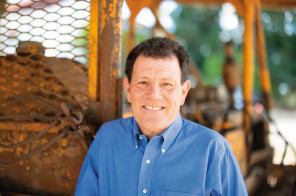
Nicholas Kristof joined The New York Times in 1984 and has been a columnist since 2001. He is a two-time Pulitzer Prize winner (for his coverage of Tiananmen Square and the genocide in Darfur) who writes op-ed columns that appear twice a week. His columns have often focused on global health, poverty and gender issues. Kristof is recognized for having "rewritten opinion journalism" [Washington Post] with his emphasis on human rights abuses and social injustices, such as human trafficking, climate change, and race in America. He has lived on four continents, reported on six, and traveled to more than 150 countries. His co-author with his wife, Sheryl WuDunn, of five best-selling books, including the No. 1 best-seller Half the Sky (2009). Their most recent book is Tightrope, published in 2020.