
Finalist: Born in Flames: The Business of Arson and The Remaking of the American City, by Bench Ansfield (W.W. Norton & Company)

An elegantly written and scholarly account of large-scale arson instigated by landlords that wiped out wide swaths of apartment buildings and tenements in New York City from 1968 to the early 1980s, especially in working-class and poor neighborhoods.

Nominated Work

Born in Flames: The Business of Arson and The Remaking of the American City


Winner of the 2026 Los Angeles Times Book Prize for History
Winner of the 2026 Anisfield-Wolf Book Award in Nonfiction
Winner of the 2026 Francis Parkman Prize for the Best Book in American History from the Society of American Historians
Winner of the Frederick Jackson Turner Award from the Organization of American Historians
Winner of the New York City Book Award
Winner of the Athenaeum of Philadelphia Literary Award

Nominated for the NAACP Image Award for Outstanding Literary Work-Nonfiction
Finalist for the Gotham Book Prize
Shortlisted for the 2026 J. Anthony Lukas Book Prize
One of The New York Times's 100 Notable Books of 2025
A Kirkus Reviews Best Book of 2025
The Skipped History Podcast Best Book of the Year

“[R]evelatory…Deeply researched and masterfully told.” —Brian Goldstone, New York Times Book Review

The explosive account of the arson wave that hit the Bronx and other American cities in the 1970s—and its legacy today.

“Ladies and gentlemen, the Bronx is burning!” That legendary and apocryphal phrase, allegedly uttered by announcers during the 1977 World Series as flames rose above Yankee Stadium, seemed to encapsulate an entire era in this nation’s urban history. Across that decade, a wave of arson coursed through American cities, destroying entire neighborhoods home to poor communities of color.

Yet as historian Bench Ansfield demonstrates in Born in Flames, the most destructive fires were not set by residents, as is commonly assumed, but by landlords looking to collect insurance payouts. Driven by perverse incentives—new government-sponsored insurance combined with tanking property values—landlords hired “torches,” mostly Black and Brown youth, to set fires in the buildings, sometimes with people still living in them. Tens of thousands of families lost their homes to these blazes, yet for much of the 1970s, tenant vandalism and welfare fraud stood as the prevailing explanations for the arson wave, effectively indemnifying landlords.

Ansfield’s book, based on a decade of research, introduces the term “brownlining” for the destructive insurance practices imposed on poor communities of color under the guise of racial redress. Ansfield shows that as the FIRE industries—finance, insurance, and real estate— eclipsed manufacturing in the 1970s, they began profoundly reshaping Black and Brown neighborhoods, seeing them as easy sources of profit. At every step, Ansfield charts the tenant-led resistance movements that sprung up in the Bronx and elsewhere, as well as the explosion of popular culture around the fires, from iconic movies like The Towering Inferno to hit songs such as “Disco Inferno.” Ultimately, they show how similarly pernicious dynamics around insurance and race are still at play in our own era, especially in regions most at risk of climate shocks.
Biography

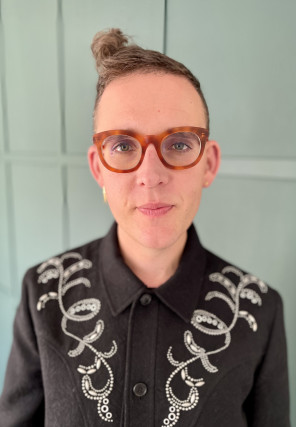
Bench Ansfield is an assistant professor of history at Temple University. Ansfield holds a PhD in American studies from Yale University and won the Allan Nevins Prize for the best dissertation in American history from the Society of American Historians. They live in Philadelphia, Pennsylvania.
 

Winners

Prize Winner in History in 2026:

Jill Lepore

A lively and engaging narrative that investigates why the Constitution is so difficult to amend, including a review of noteworthy failed amendments proposed by marginalized groups. History

Finalists

Nominated as finalists in History in 2026:

Scott Anderson

A superbly written and dramatic account of the downfall of the Shah of Iran, American miscalculation and the revolution that ushered in an Islamic state, history that is timely today.

The Jury

Jacqueline Jones(Chair)*

Professor Emerita; Ellen C. Temple Chair in Women’s History and Mastin Gentry White Professor of Southern History, University of Texas at Austin

Ada Ferrer*

Dayton-Stockton Professor of History, Princeton University

Caroline Elkins*

Professor of History and of African and African American Studies; Thomas Henry Carroll/Ford Foundation Professor of Business Administration; Affiliated Professor of Law; and Founding Oppenheimer Director, Center for African Studies, Harvard University

Adrian R. Lewis

David Pittaway Professor in Military History, University of Kansas

John Wood Sweet

Professor of History, University of North Carolina at Chapel Hill

Winners in History

Edda L. Fields-Black

A richly-textured and revelatory account of a slave rebellion that brought 756 enslaved people to freedom in a single day, weaving military strategy and family history with the transition from bondage to freedom.

Jacqueline Jones

A breathtakingly original reconstruction of free Black life in Boston that profoundly reshapes our understanding of the city’s abolitionist legacy and the challenging reality for its Black residents.

Jefferson Cowie

A resonant account of an Alabama county in the 19th and 20th centuries shaped by settler colonialism and slavery, a portrait that illustrates the evolution of white supremacy by drawing powerful connections between anti-government and racist ideologies.

Ada Ferrer

An original and compelling history, spanning five centuries, of the island that became an obsession for many presidents and policy makers, transforming how we think about the U.S. in Latin America, and Cuba in American society.

2026 Prize Winners

M. Gessen of The New York Times

For an illuminating collection of reported essays on rising authoritarian regimes that draw on history and personal experience to probe timely themes of oppression, belonging and exile.