Finalist: Photography Staff of The New York Times
Nominated Work
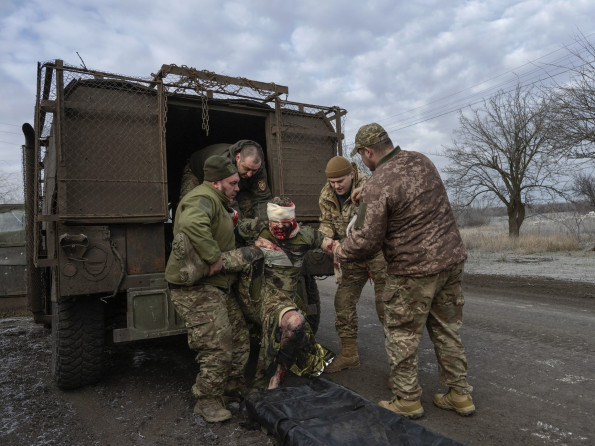
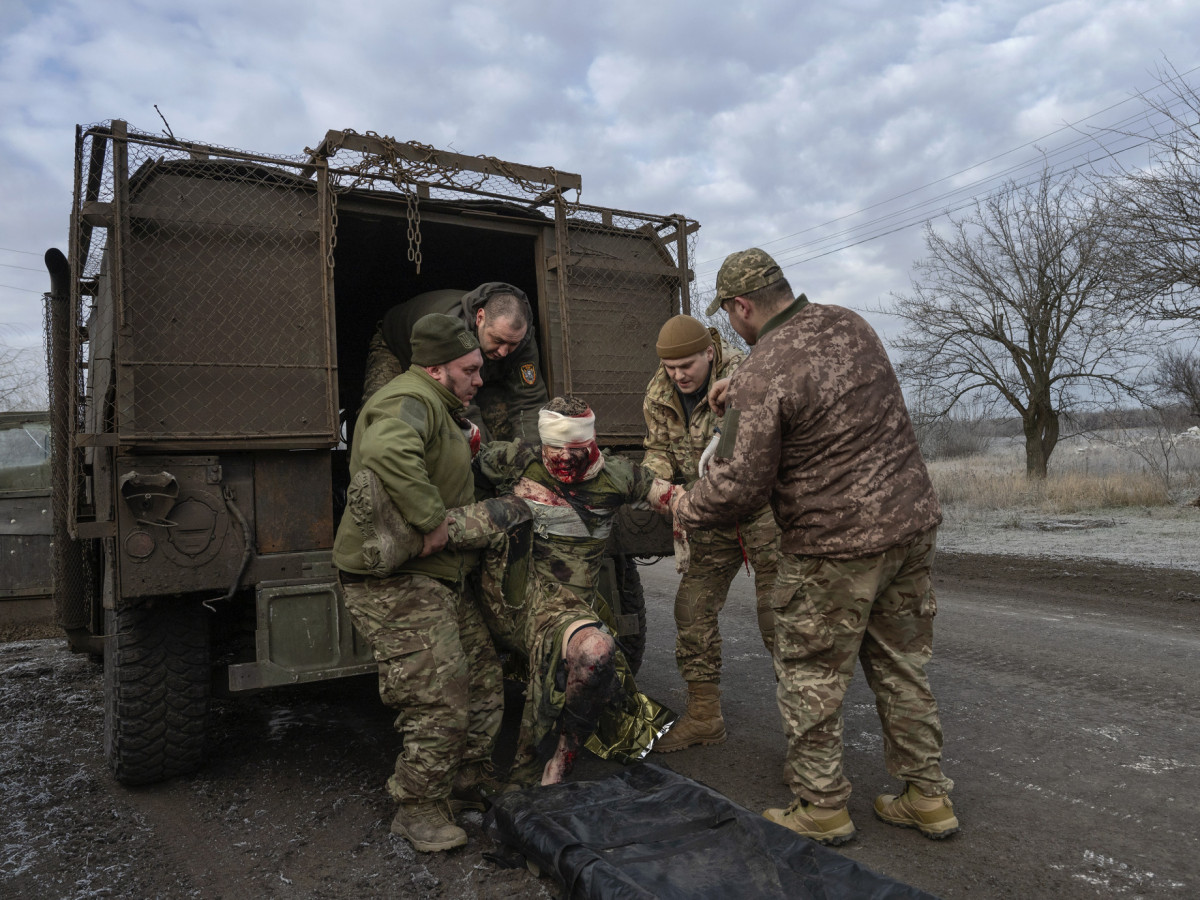
A paramedic team evacuated a 26-year-old soldier injured in a drone attack in eastern Ukraine. When Russia invaded Ukraine in 2022, artillery, missiles, tanks and trench warfare dominated the fight, often echoing the world wars. Now, drones rule the battlefield. They have far surpassed conventional arms as the war’s most lethal weaponry. (Laetitia Vançon; 01/06/2025)
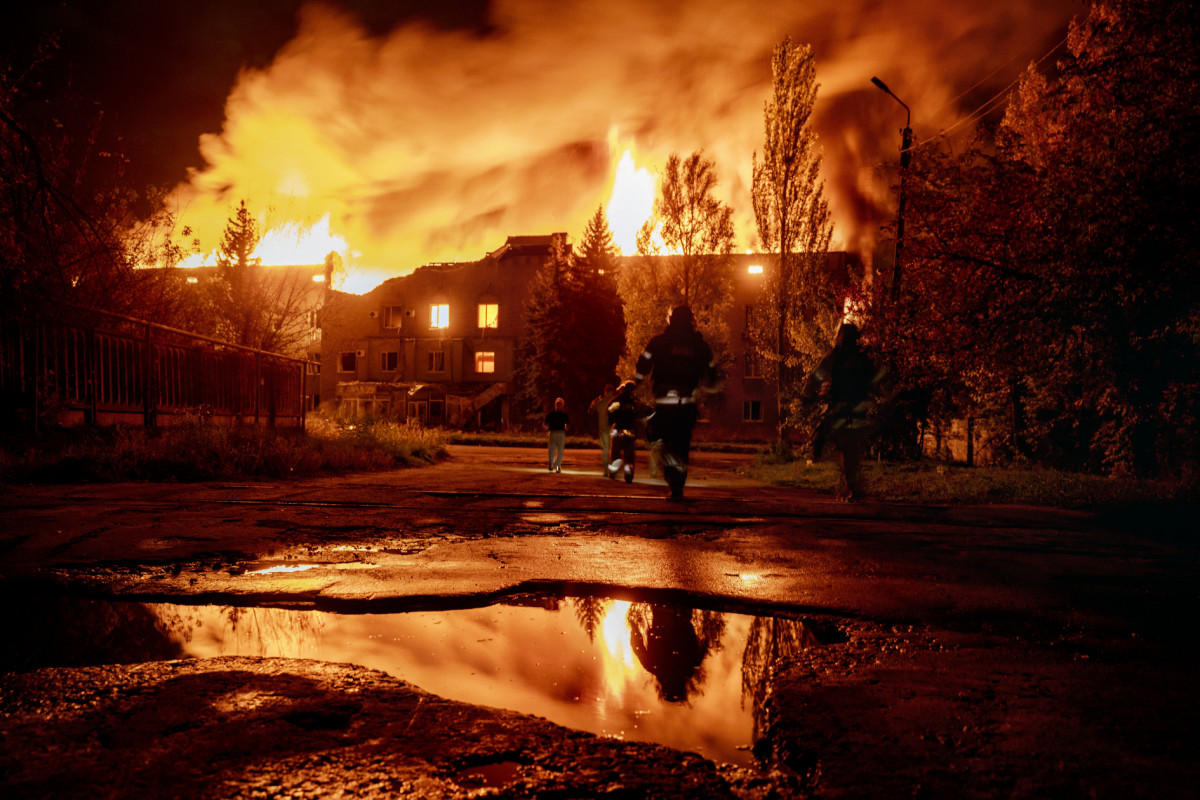
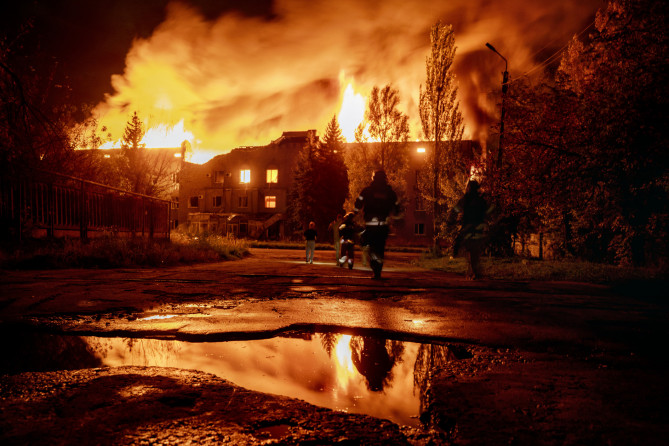
A Russian drone attack left an administrative building in flames in Sloviansk in eastern Ukraine. Russia’s long-range drone program has overwhelmed Ukraine’s air defenses and made bedtime for many residents a time of dread. (Tyler Hicks; 10/08/2025)
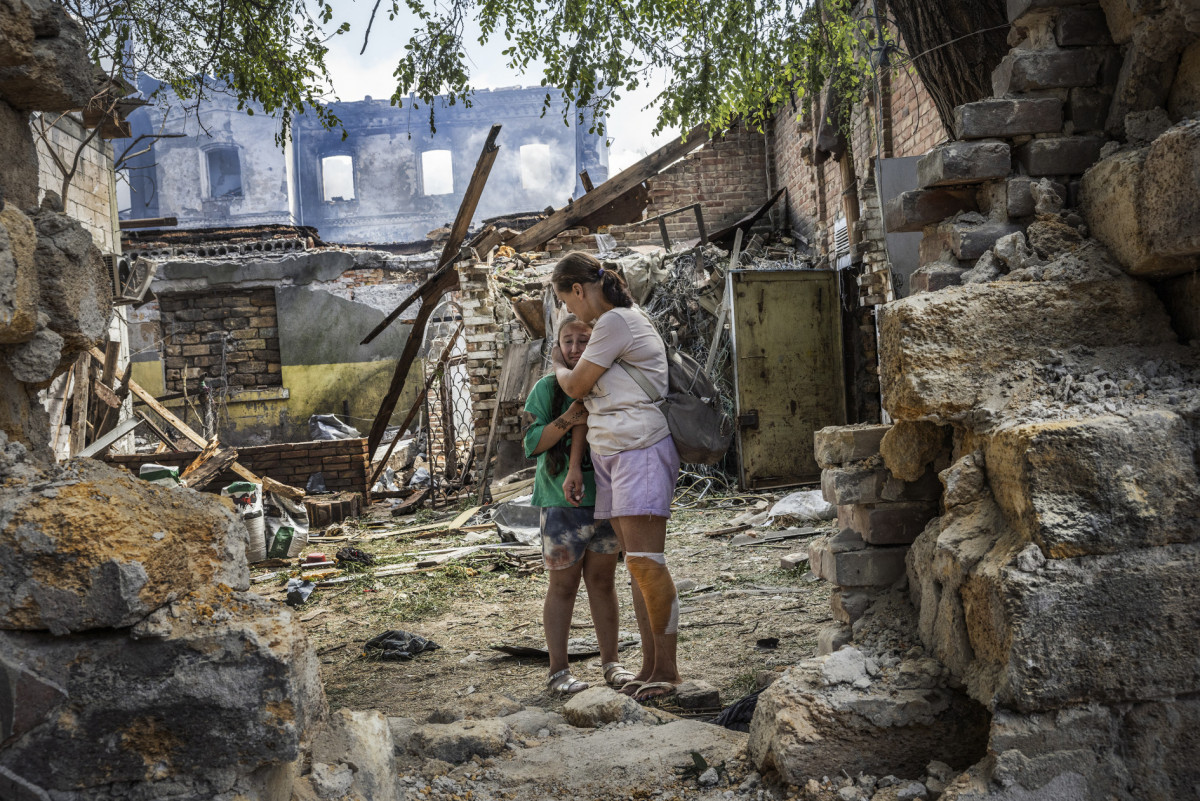
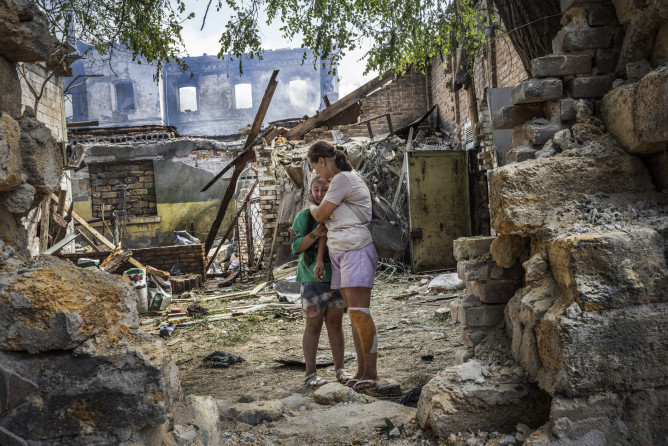
Natalia Harbuznia, 39, comforts her daughter Victoria after Russian drones struck a neighborhood in Odesa, Ukraine, as Russian attacks escalated over the summer. Two days before this attack, Russia launched 728 exploding drones and decoys in one nightly barrage, according to Ukraine’s air force. (David Guttenfelder; 07/11/2025)
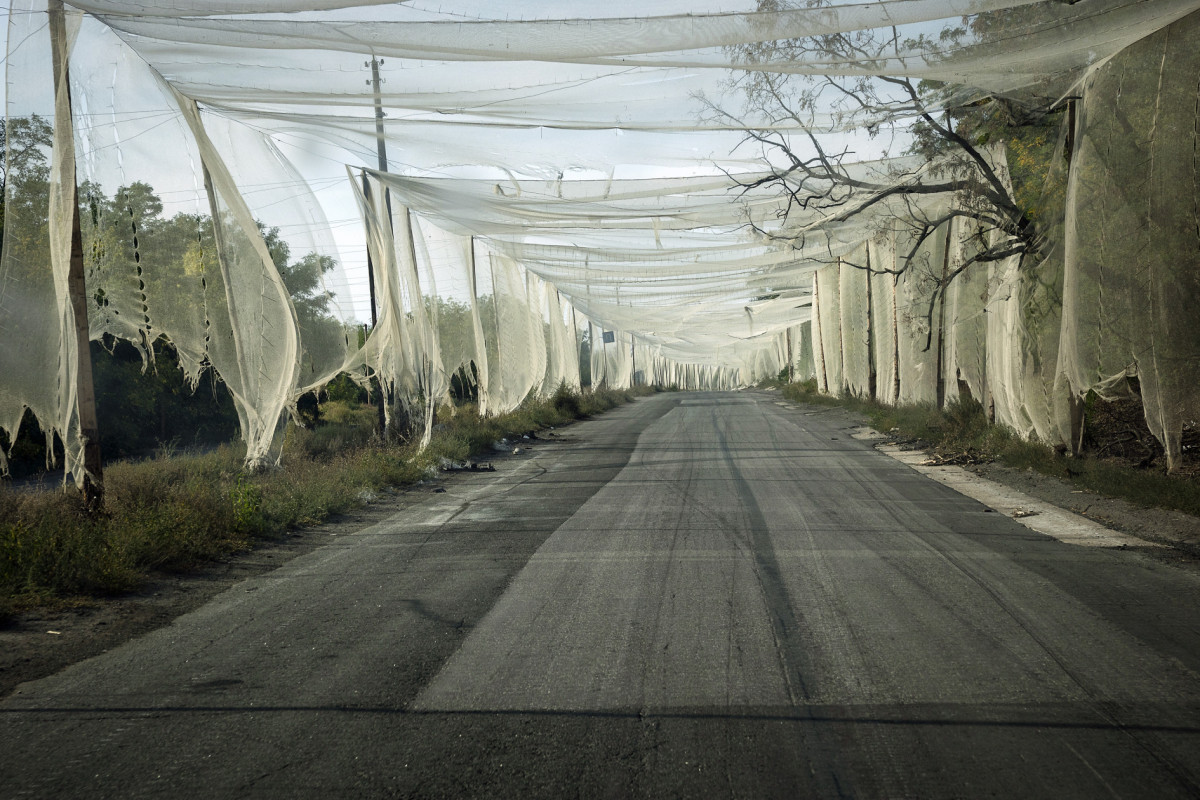
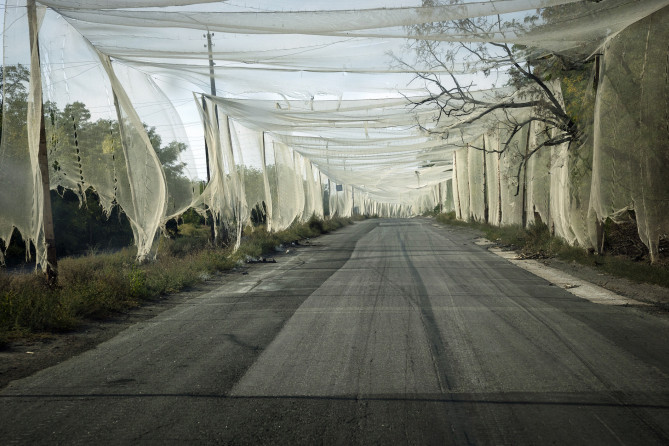
Nets, erected over roads near artillery positions or military checkpoints to protect against armed Russian drones, on the outskirts of the mostly abandoned city of Kostiantynivka, in Eastern Ukraine. The anti-drone netting has become a familiar part of the landscape. Its purpose is to thwart the Russian drones that now swarm above the front lines and swoop in on practically anything that moves, whether an armored vehicle racing to resupply troops or a wounded soldier crawling to safety. (Tyler Hicks; 06/15/2025)
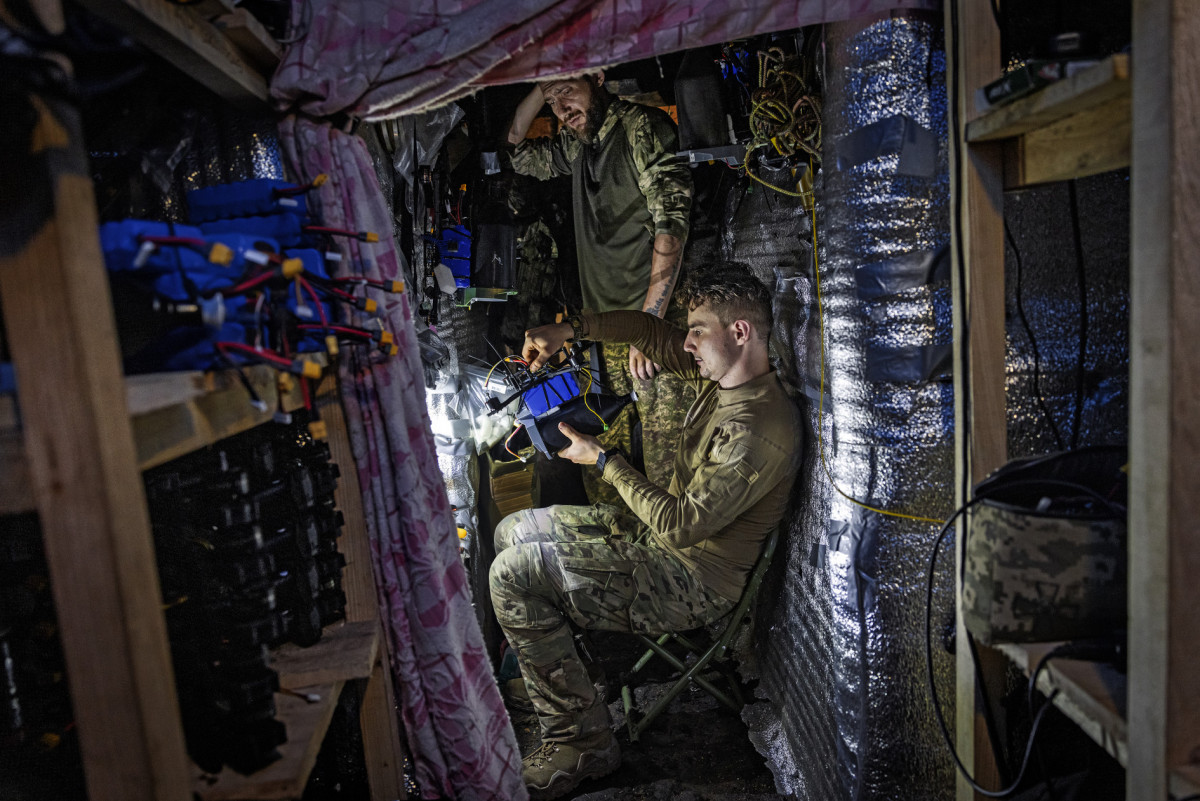
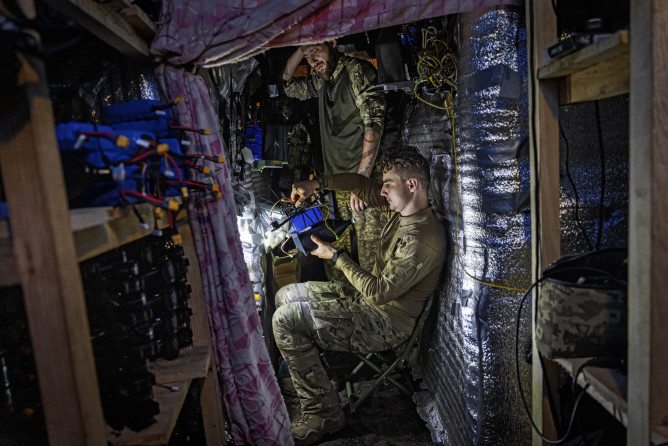
Ukrainian soldiers building and arming a fiber optic FPV (first-person-view) drone inside their unit’s underground bunker as they prepare to launch combat missions against Russian infantry in the Kharkiv region of Ukraine. Armed first-person-view drones blend the power of anti-tank projectiles, the range of mortars and the accuracy of sniper fire, but with an added feature: aerial agility. They can fly horizontally or vertically, change speed or direction, stop in midair, loop around corners and slip through windows, doors or an open hatch. (David Guttenfelder; 07/14/2025)
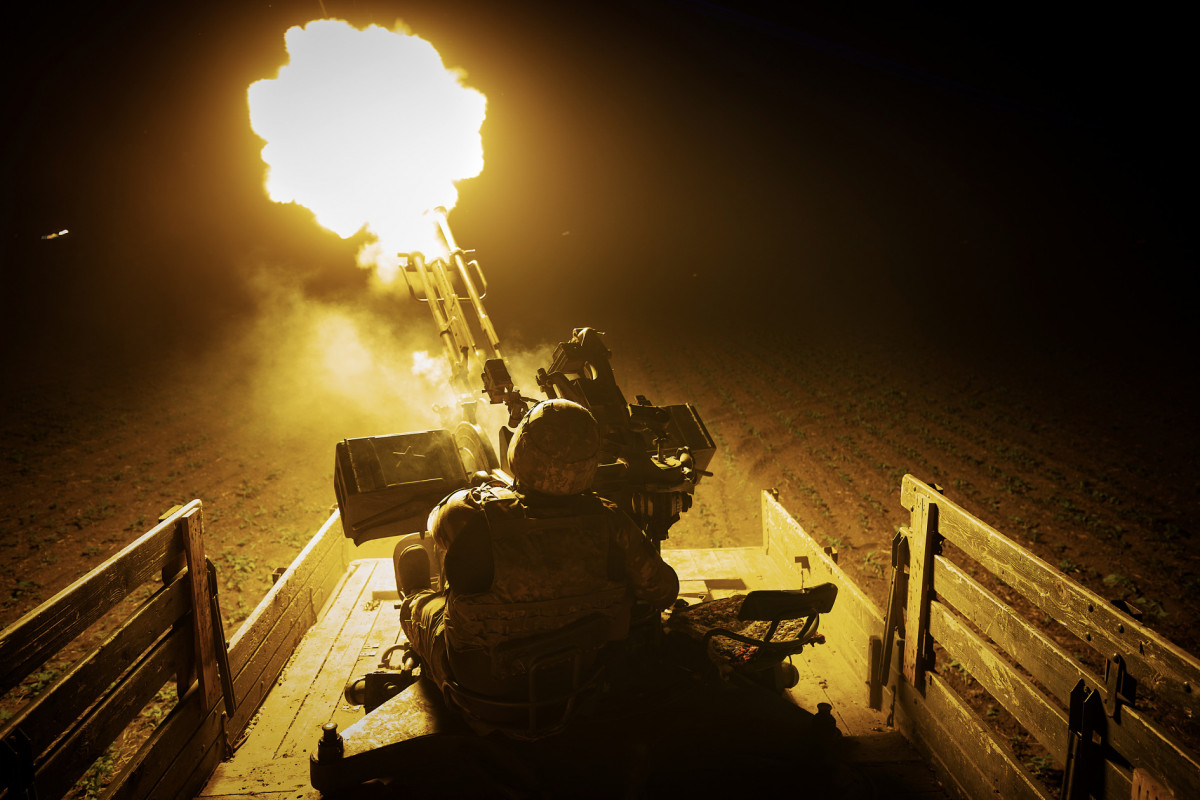
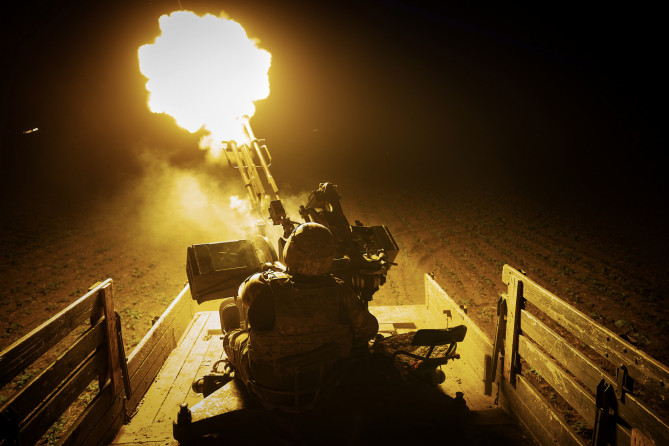
A defense unit using a Soviet antiaircraft weapon to shoot down Russian drones in the Dnipropetrovsk region. Near the front lines, deploying expensive, Western-provided air defense systems would risk their destruction. Soldiers instead must rely on less effective, Soviet-era weapons. (Tyler Hicks; 06/03/2025)
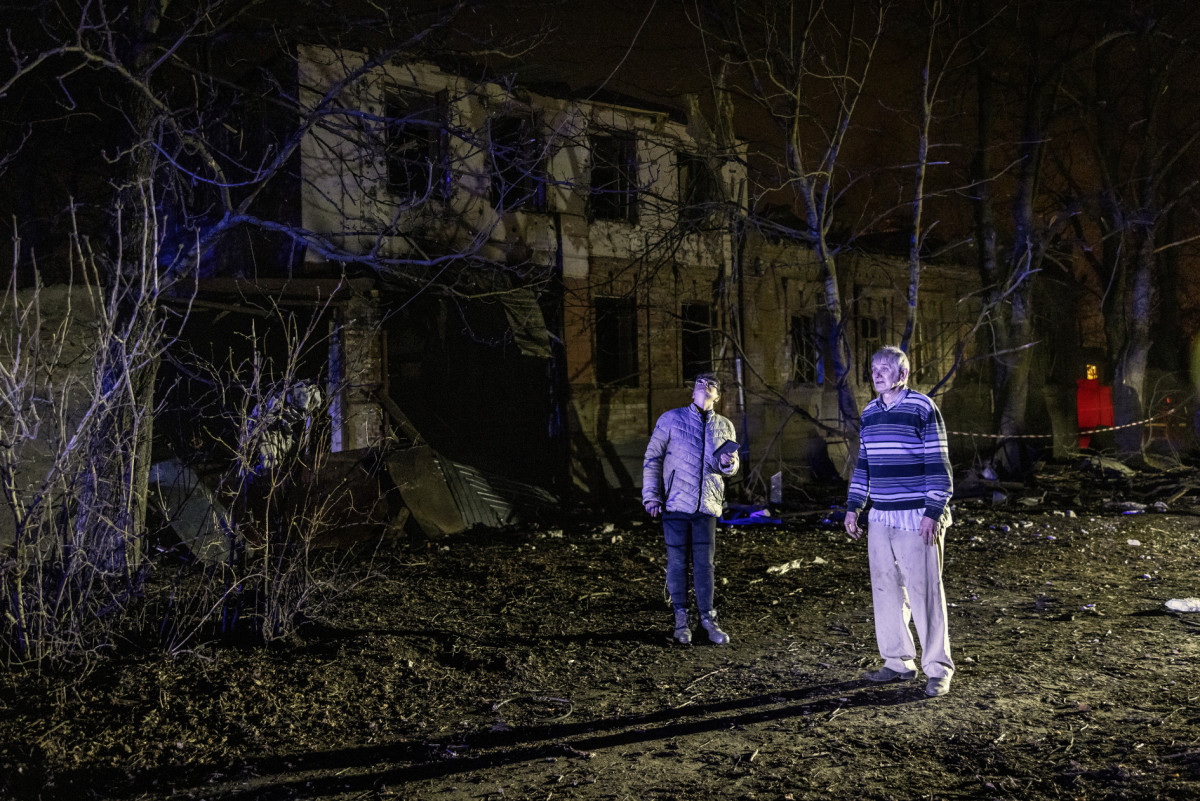
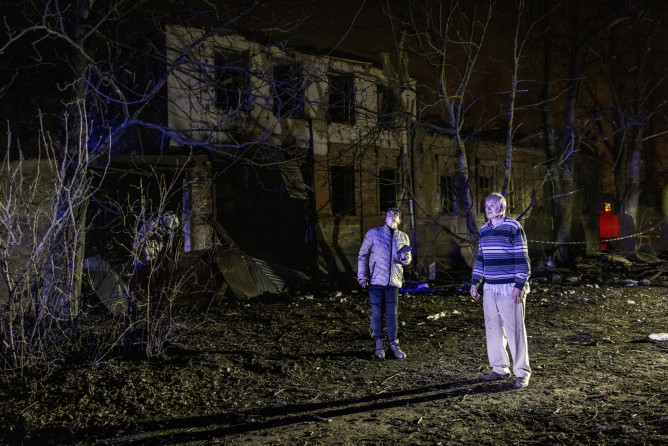
Residents stared up at the sky after a Russian drone struck their street in a residential neighborhood of Kharkiv, damaging houses and killing one person. Soon after, a second air-raid alert sounded and first responders urged people to find shelter again. Even though another attack could have been imminent within minutes, a team of workers was already boarding up shattered windows and smashed doors--a testament to the frequency of such attacks and the speed at which Ukrainians work to restore a semblance of order. (Finbarr O'Reilly; 03/29/2025)
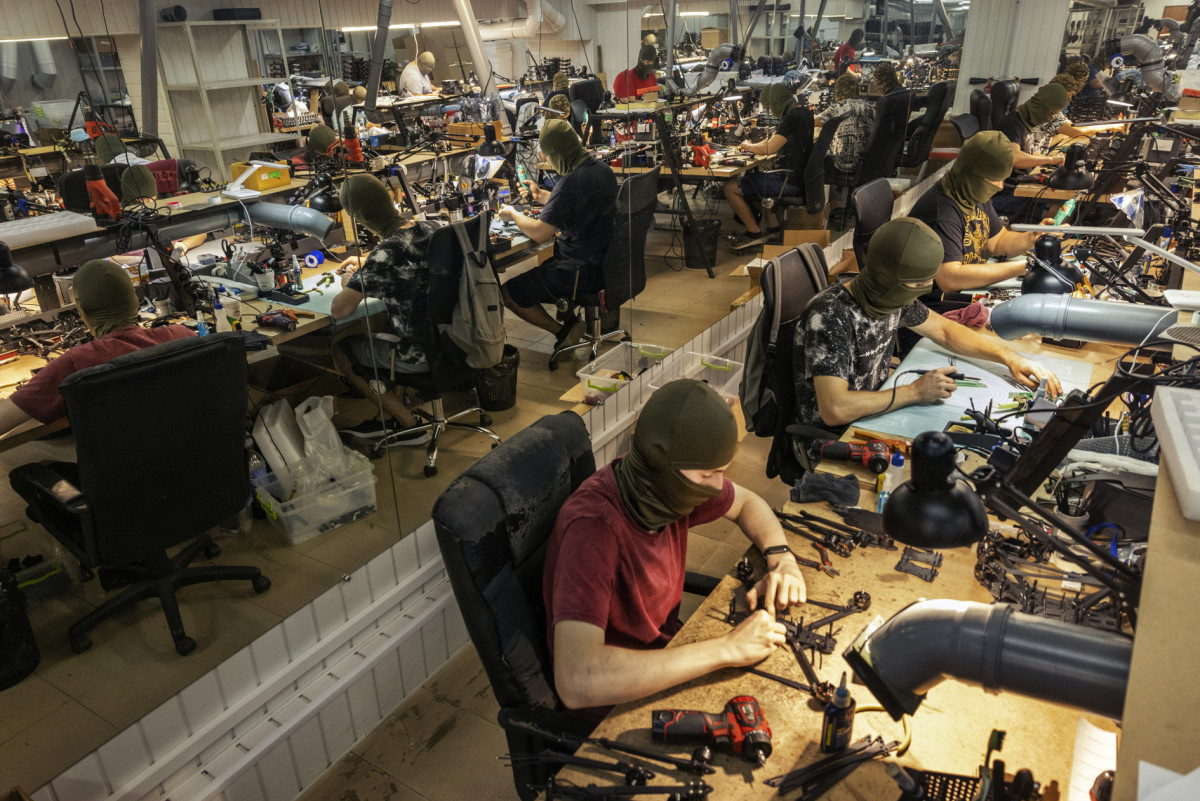
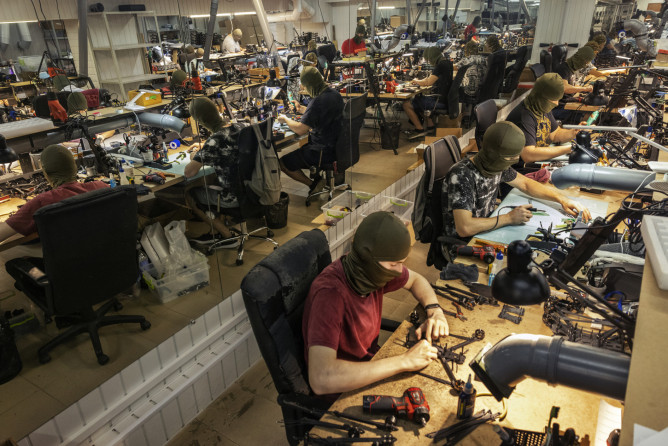
In central Ukraine, in a basement underneath a strip mall, people assembled suicide quadcopters destined for the front line. The proliferation of drone warfare mobilized not only the military but also private citizens. Across the country, abandoned houses and hidden basements were transformed into small factories, where FPV drones were mass-produced using 3D printers. (David Guttenfelder; 09/06/2024)
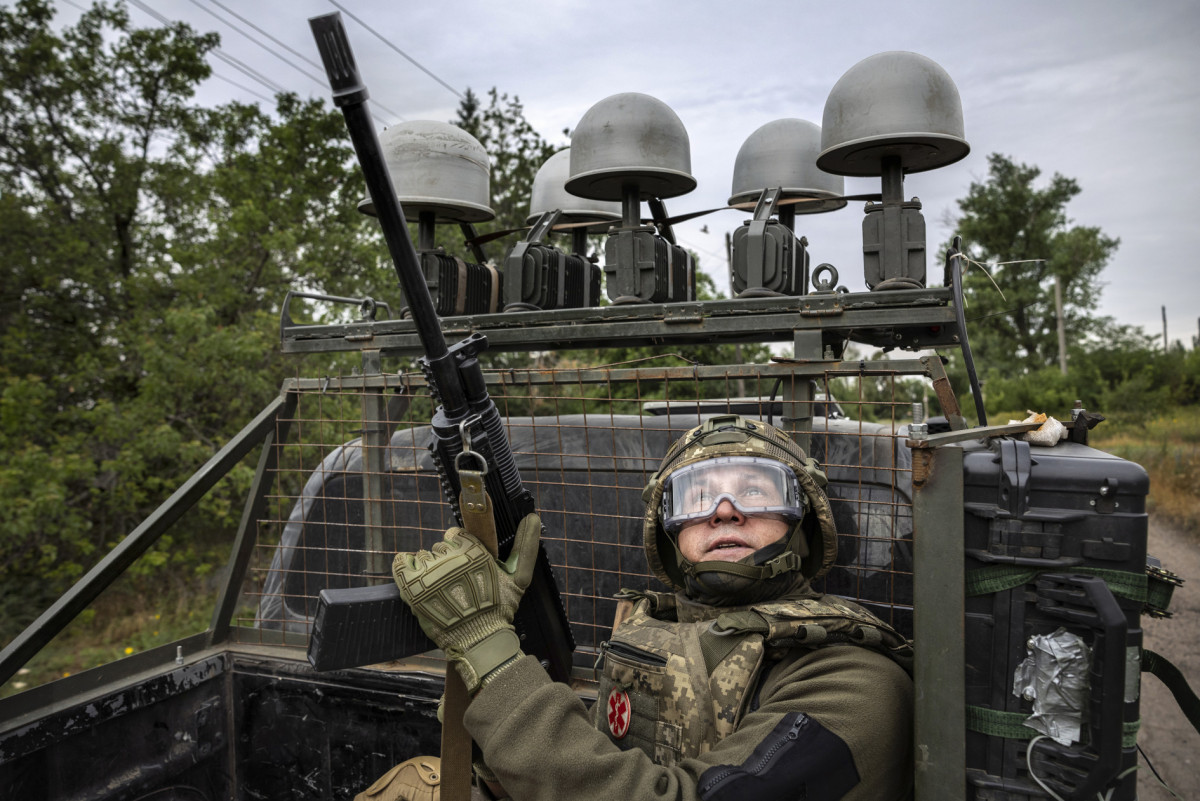
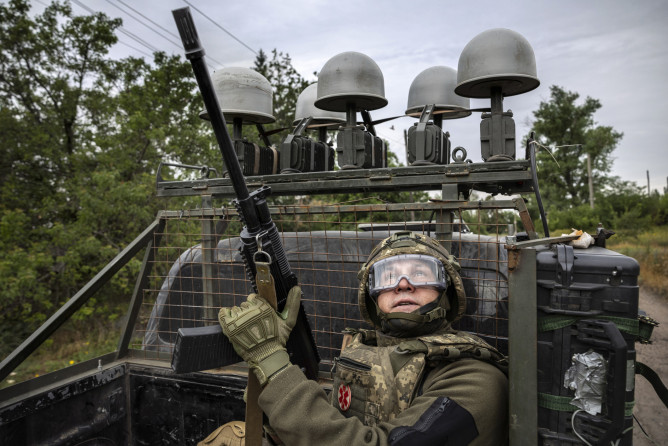
A Ukrainian soldier scanned the sky for armed Russian drones as he rode in a military truck through Kostiantynivka. Mounted on the truck were frequency-jamming devices, but they were largely useless. By this time in June, the Russians had begun deploying hardwired drones immune to electronic jamming. So soldiers have had to resort to more basic defenses like rifles, shotguns, fishing, nets, fences and evasive driving. (David Guttenfelder; 06/19/2025)
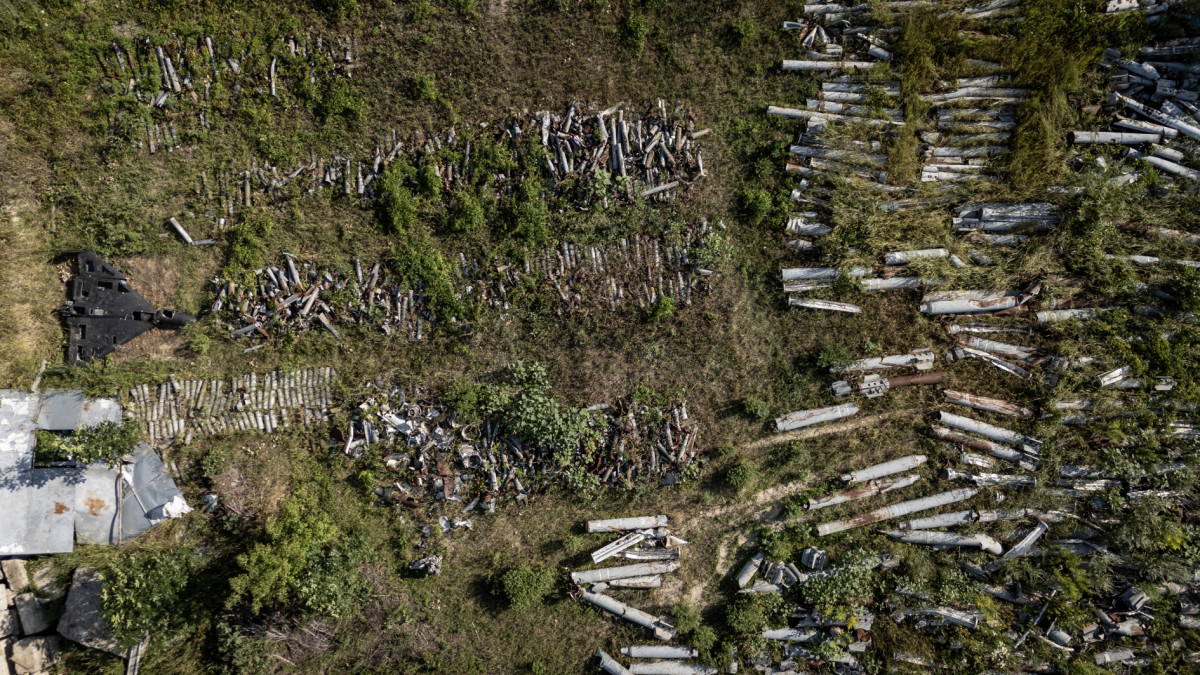
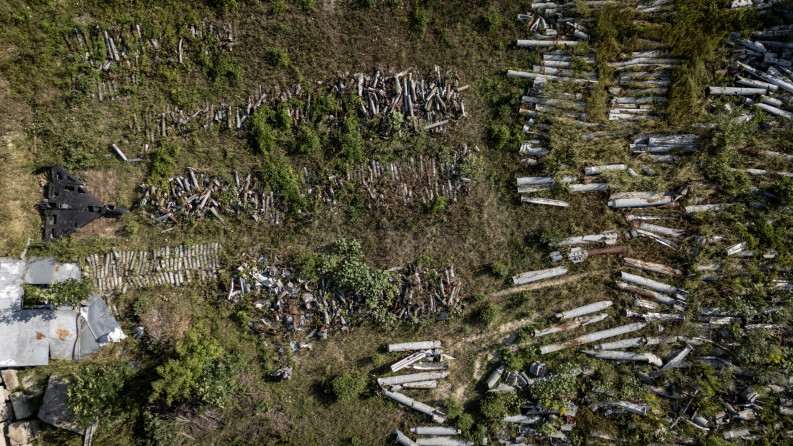
A drone, left, in a grassy field surrounded by Russian missiles, in a “graveyard” of war ordnance in Ukraine’s Kharkiv region. The drone had been recently suppressed by Ukrainian electronic warfare systems, forced to the ground, and disarmed. The scattered remains of Russian weapons were collected by Ukrainian war crimes prosecutors from sites of Russian attacks across the Kharkiv region since Russia’s invasion began. Once dominated by missiles and rockets, the field now contains the wreckage of long-range, weaponized drones, reflecting a dramatic shift in recent months. (David Guttenfelder; 07/16/2025)
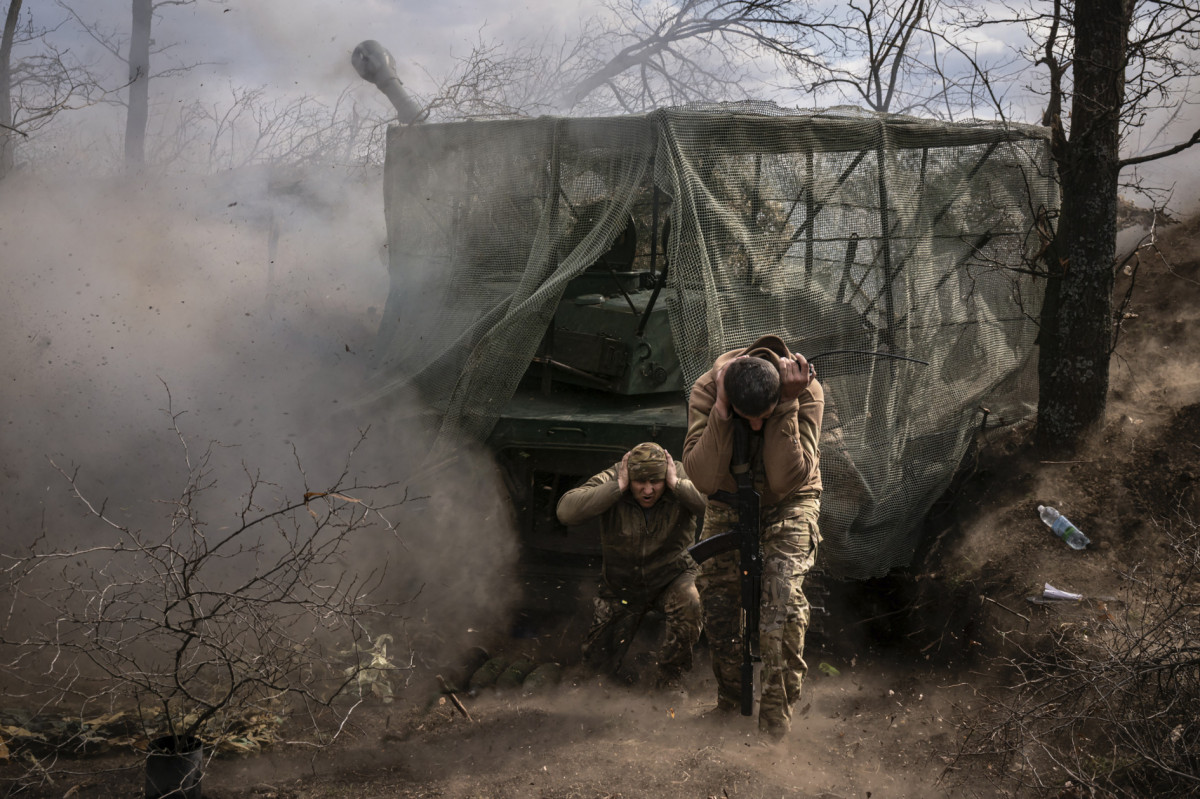
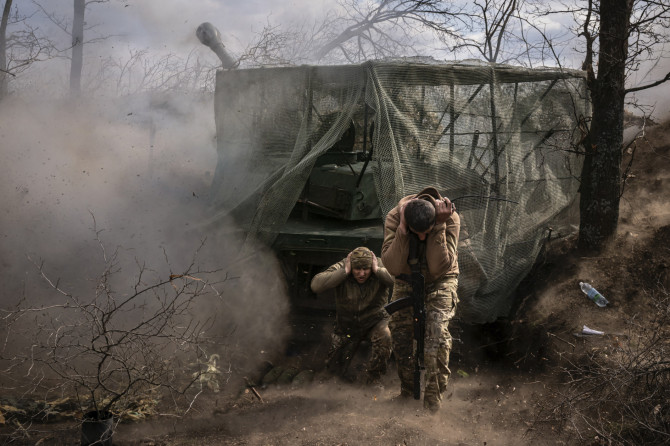
An artillery crew firing a howitzer toward Russian targets from a position in the Donetsk region. The artillery weapon was housed under a metal cage and camouflaged netting to avoid being detected by enemy drones. (Nicole Tung; 03/22/2025)
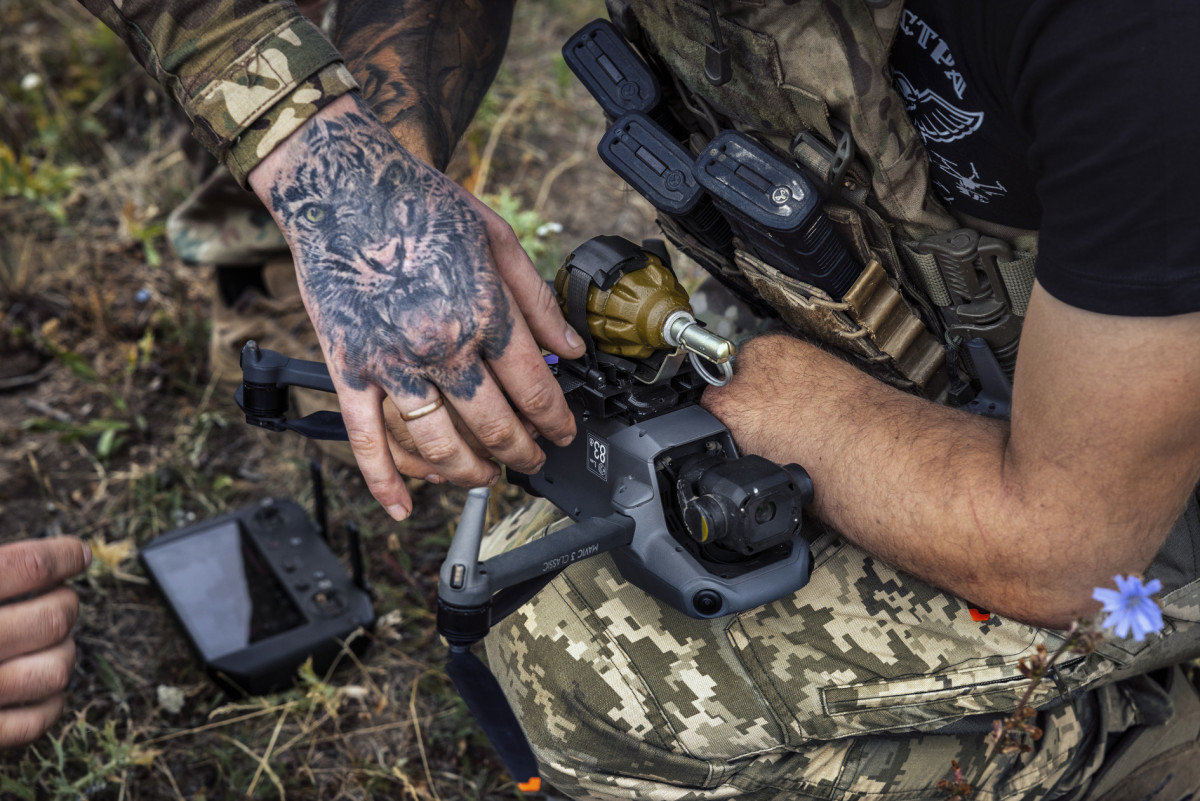
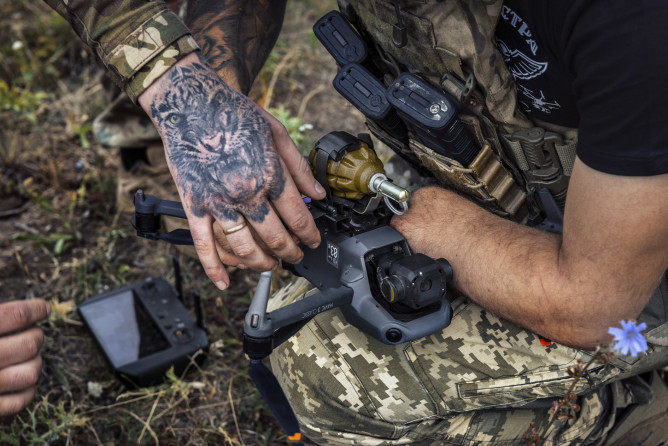
Vitalii Ivashchenko, a 26-year-old Ukrainian soldier, using the stump of his amputated arm to steady a drone, as he and a fellow soldier attach a live grenade to it during an assault training session for new recruits in Sloviansk. Now a senior sergeant, Ivashchenko lost part of his left arm in the summer of 2022, when a Russian tank shell exploded as his unit assaulted a Russian position. His injury ended one chapter of his service but opened another. The true scale of Ukrainian military casualties is difficult to measure, yet the constant demand for troops has pushed the country to allow wounded soldiers and amputees like Ivashchenko limited roles and a chance to return to the fight. Piloting, spotting, training and commanding drone teams have become vital ways for injured veterans and amputees to continue contributing, underscoring how modern warfare has reshaped both the battlefield and the meaning of service. (David Guttenfelder; 08/05/2024)
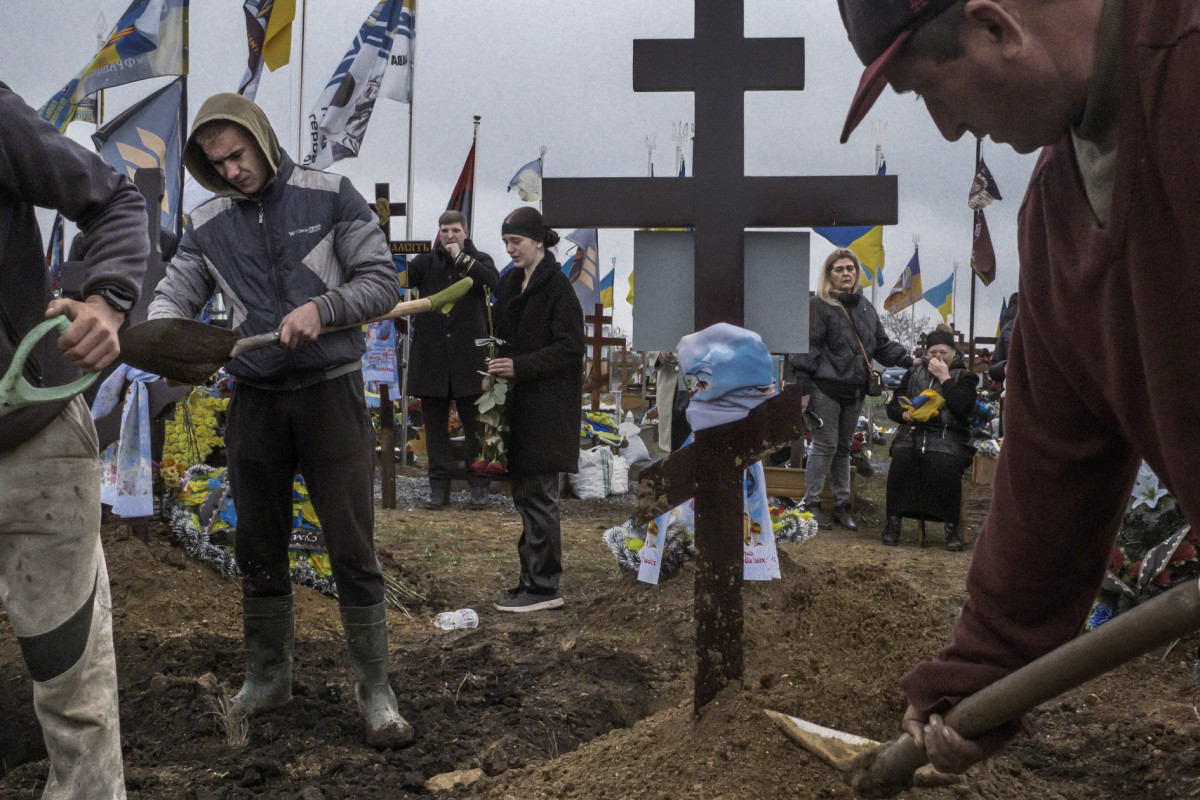
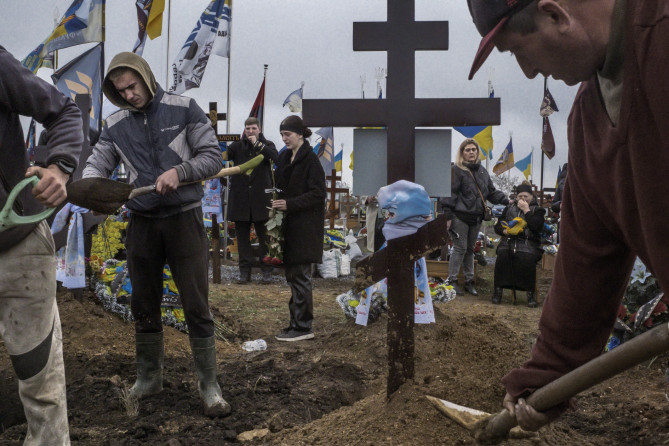
Anastasia, center, watched as gravediggers threw dirt onto the coffin of her father, Vasyl Rusov, at a cemetery on the outskirts of Odesa, Ukraine. Rusov was hit in the chest by a Russian drone while on a combat mission on the outskirts of L’vove, a village in the Kherson region. The funeral began under the sound of an air raid siren. (Mauricio Lima; 11/09/2025)
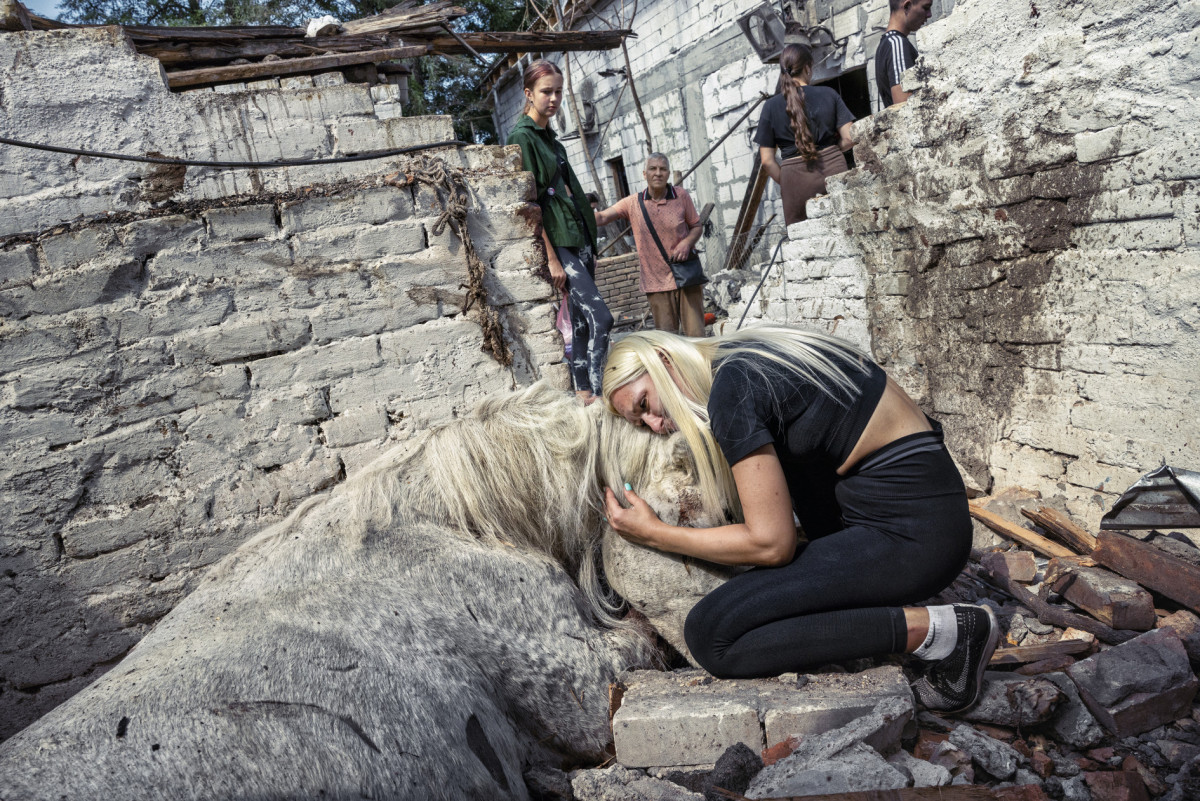
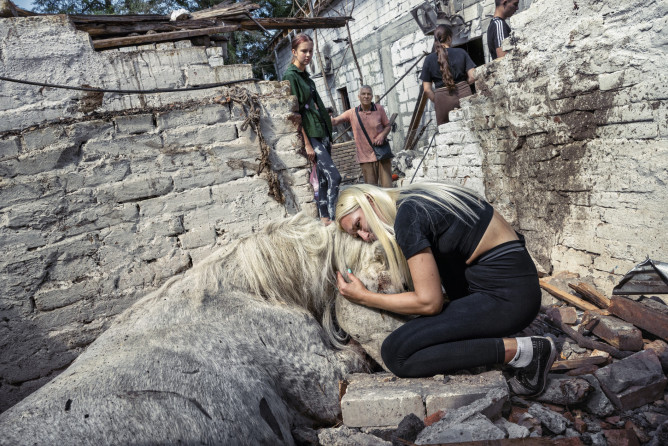
Yulia Vasiakina cried and hugged her 20-year-old horse, Kamelia, which was killed during a Russian drone barrage in Odesa. The city’s ports and power infrastructure have been the repeated focus of Russian drone barrages in 2025. (David Guttenfelder; 07/11/2025)

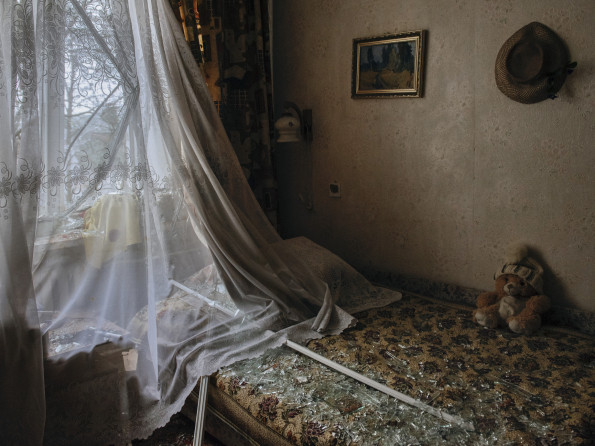
Debris from a Russian drone strike in Chernihiv, Ukraine. The guest bedroom, where the resident’s grandchild stays during visits, was covered in glass. (Laetitia Vancon; 12/08/2025)